


Saudi CEDA Reviews Vision 2030 Progress

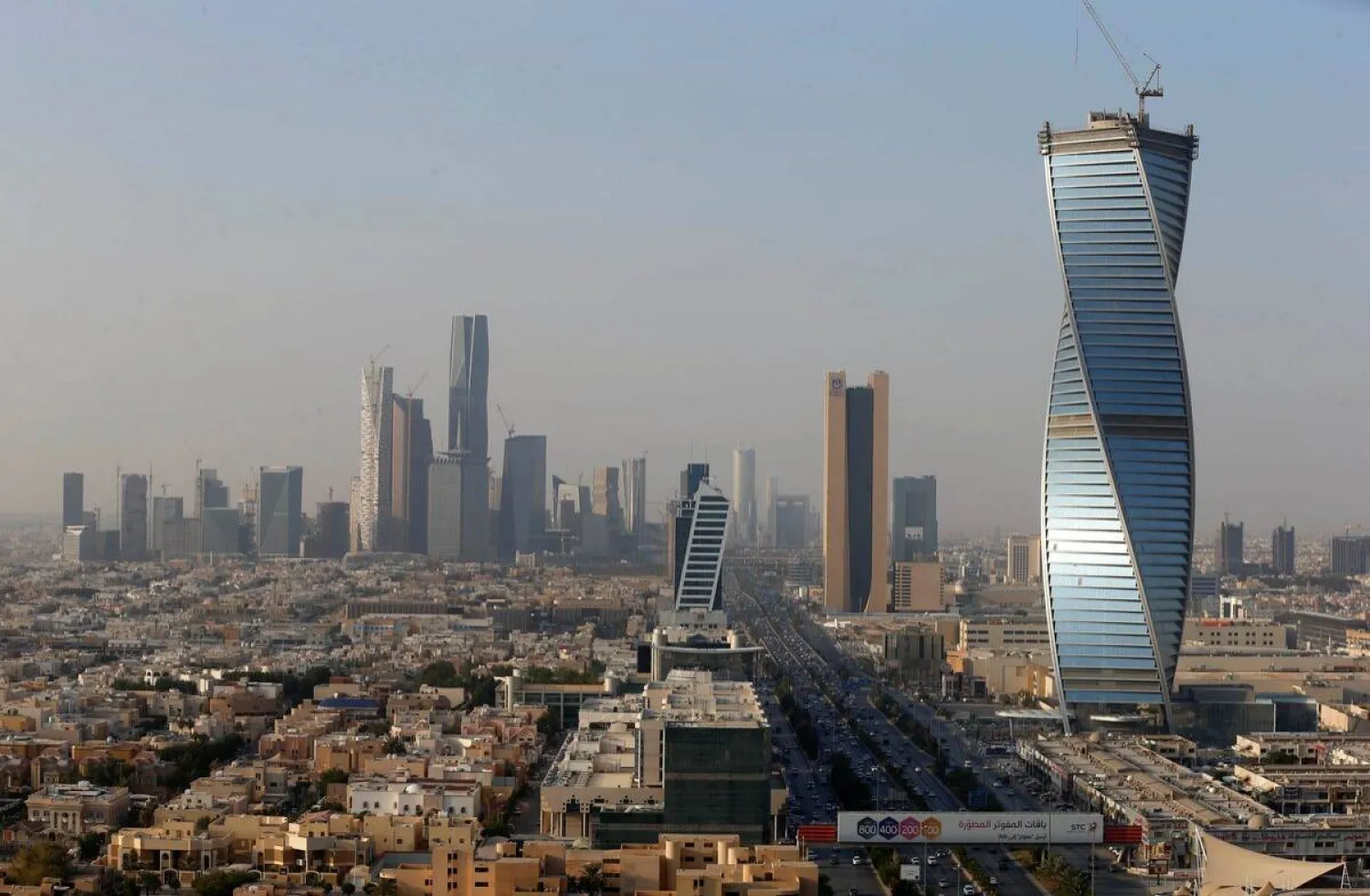
Buildings are seen in Riyadh, Saudi Arabia, December 18, 2017. REUTERS/Faisal Al Nasser 
TT

Saudi CEDA Reviews Vision 2030 Progress

Buildings are seen in Riyadh, Saudi Arabia, December 18, 2017. REUTERS/Faisal Al Nasser 

Saudi Arabia’s Council of Economic and Development Affairs (CEDA) held a virtual meeting to consider a package of strategic reports outlining the Kingdom’s economic and development trajectory.

The council issued the 2025 annual report on Saudi Vision 2030, showing clear progress across its three pillars — a vibrant society, a thriving economy and an ambitious nation — while underscoring the resilience of the national economy, supported by prudent fiscal policies and solid logistics infrastructure.

The report highlighted qualitative advances during the Vision’s second phase, reflecting its flexibility and ability to adapt to changing conditions in line with its third phase. It emphasized efforts to build on gains achieved in the first two phases and accelerate implementation by sharpening priorities and advancing national programs and strategies.

Resilience amid global developments

CEDA also discussed the monthly report from the Ministry of Economy and Planning, which covered global economic developments and growth prospects in light of current regional events and their repercussions for both major and emerging economies.

The report examined the impact of geopolitical tensions on Gulf economies and supply chains, as well as their potential implications for Saudi Arabia’s economic and financial outlook. It pointed to the Kingdom’s “exceptional resilience,” supported by strong economic and fiscal policies and robust logistics infrastructure.

Public sector performance

The council reviewed a presentation by the National Center for Performance Measurement of Public Agencies (Adaa) on its 2025 annual performance report. The findings showed continued positive performance by government entities in meeting targets, reflecting stable delivery and efficient execution.

The report also outlined the center’s work in strengthening the measurement of national strategies and reviewing strategic documents to ensure that indicators and initiatives fully cover all objectives. It included results from the latest evaluation cycle of performance management practices across public entities.

CEDA also discussed a presentation by the National Center for Privatization (NCP), highlighting key results for the second half of 2025, including the performance of supervisory committees and progress on major projects. The presentation showed improved overall performance and an increase in the number of privatization projects during the period.

Grand Mosque services and infrastructure

The council discussed a presentation by the Royal Commission for Makkah City and Holy Sites on projects in the central area of the Grand Mosque in Makkah. The briefing addressed the use of advanced technologies to monitor and manage waste, measures to facilitate the movement of vehicles and goods into the central area, and steps to enhance safety procedures and intensify oversight of expansion projects to ensure the safety of worshippers.

It also outlined a three-year plan covering systems related to health, safety, security and the environment.

Governance and policy updates

Moreover, CEDA saw a report on the updated national framework for governance, risk, compliance and internal audit functions, including its pilot application across selected government entities, proposals for broader implementation and mechanisms to measure compliance.

The council also considered a number of procedural matters, including a draft national intellectual property policy.

It was briefed on the semiannual report of the ministerial committee on social support and subsidies, as well as updates from the committee on improving the balance of payments and advancing economic diversification.

Further briefings included a monthly report on progress in implementing the executive plan to host regional headquarters of international organizations, a quarterly report from the standing committee for price monitoring, and summaries of the latest consumer price index and wholesale price index reports, along with the underlying data.



US Extends Sanctions Waiver on Russian at-Sea Oil by 30 Days

 US Secretary of the Treasury Scott Bessent arrives at meeting of G7 Finance Ministers and Central Bank Governors in preparation for the summit of heads of State and government to be held in June 2026 in Evian, in Paris on May 18, 2026. (AFP)
US Secretary of the Treasury Scott Bessent arrives at meeting of G7 Finance Ministers and Central Bank Governors in preparation for the summit of heads of State and government to be held in June 2026 in Evian, in Paris on May 18, 2026. (AFP)
TT

US Extends Sanctions Waiver on Russian at-Sea Oil by 30 Days

 US Secretary of the Treasury Scott Bessent arrives at meeting of G7 Finance Ministers and Central Bank Governors in preparation for the summit of heads of State and government to be held in June 2026 in Evian, in Paris on May 18, 2026. (AFP)
US Secretary of the Treasury Scott Bessent arrives at meeting of G7 Finance Ministers and Central Bank Governors in preparation for the summit of heads of State and government to be held in June 2026 in Evian, in Paris on May 18, 2026. (AFP)

The US Treasury secretary on Monday said Washington was extending by 30 days its sanctions waiver for Russian oil cargoes already at sea, as global energy prices continue to surge due to the Iran war.

The latest "temporary 30-day general license" will "provide the most vulnerable nations with the ability to temporarily access Russian oil currently stranded at sea," Treasury Secretary Scott Bessent said in a social media post.

Monday's announcement is the second time US authorities have extended the temporary measure, which is meant to address oil supply shortages sparked by the US-Israel war on Iran.

Iran's retaliatory action has targeted US regional allies and virtually blocked the Strait of Hormuz, through which roughly a fifth of the world's oil and gas supplies normally pass.

The previous waiver for Russian at-sea oil expired on May 16.

Global oil prices have spiked since the start of the war, with US consumers feeling the pinch of gasoline costs that are more than 50 percent higher than when the war began.

The United States first issued a sanctions waiver on Russian oil cargoes that were at sea in March.

The moves have been criticized by Ukrainian President Volodymyr Zelensky, whose country has been locked in war with Russia since its 2022 invasion.

Bessent said the extension would "provide additional flexibility" and "will help stabilize the physical crude market and ensure oil reaches the most energy-vulnerable countries.


IEA Chief Warns Commercial Oil Inventories Are Depleting Rapidly, Only Weeks Left

Organization for Economic Cooperation and Development (OECD) Secretary-General Mathias Cormann and International Energy Agency (IEA) Executive Director Fatih Birol talk on the day of a G7 finance ministers' and central bank governors' meeting in Paris, France, May 18, 2026. (Reuters)
TT

IEA Chief Warns Commercial Oil Inventories Are Depleting Rapidly, Only Weeks Left

Organization for Economic Cooperation and Development (OECD) Secretary-General Mathias Cormann and International Energy Agency (IEA) Executive Director Fatih Birol talk on the day of a G7 finance ministers' and central bank governors' meeting in Paris, France, May 18, 2026. (Reuters)

Fatih Birol, head of the International Energy Agency, said on Monday that commercial oil inventories were depleting rapidly with only a few weeks' worth left due to the Iran war and the closure of the Strait of Hormuz to shipping.

Birol, who is participating in the Group of Seven finance leaders meeting in Paris, told reporters that the release of strategic oil reserves had added 2.5 million barrels of oil per day to the market, but said these reserves "are ‌not endless".

The ‌onset of the spring planting and summer ‌travel ⁠seasons in the northern ⁠hemisphere will drain inventories more quickly as demand for diesel, fertilizer, jet fuel and gasoline increases, Birol added.

Asked about his comments in the G7 meeting, he said he described "a perception gap in the markets between the physical markets and the financial markets" for oil.

Birol said that before the US and Israel launched attacks on Iran at ⁠the end of February, there was a major ‌surplus in the oil markets, and ‌commercial inventories were very high. But the situation has rapidly shifted due to ‌the war.

He said commercial inventories would last "several weeks, but we ‌should be aware of the fact that it is declining rapidly".

Last week, the IEA said global oil supply will fall short of total demand this year as the Iran conflict wreaks havoc on Middle East oil ‌production, and inventories were being drained at an unprecedented pace. The IEA had previously forecast a surplus this ⁠year.

Global observed ⁠oil inventories fell at a record pace in March and April, dropping by 246 million barrels, the IEA said in its latest monthly oil market report.

The 32-member IEA coordinated the largest-ever release of stocks from strategic reserves in March, agreeing to withdraw 400 million barrels in a bid to calm markets.

Around 164 million barrels had been released by May 8, it said.

Overall global oil supply will fall by around 3.9 million barrels per day across 2026 due to the war, the agency said, slashing its previous forecast, which had projected a 1.5 million bpd drop.


Operating Profits Drive Saudi Petrochemical Firms to Record 111% Jump in Earnings

SABIC’s manufacturing facility in Jubail (company website) 
TT

Operating Profits Drive Saudi Petrochemical Firms to Record 111% Jump in Earnings

SABIC’s manufacturing facility in Jubail (company website) 

Saudi-listed petrochemical companies posted a sharp improvement in financial performance during the first quarter of 2026, driven by a strong recovery in operating efficiency that pushed the sector’s net profits up 111.75 percent to more than SAR374.36 million ($92.57 million).

The turnaround reflected the success of major companies in adapting to global market changes, with the sector’s operating profits surging nearly fivefold to $548.97 million.

The strong momentum was fueled by higher average selling prices for most products, lower operating and administrative expenses, improved investment returns and a decline in non-recurring costs that had weighed on last year’s results.

Among the nine petrochemical companies listed on the Saudi stock exchange, Tadawul, six posted net profits: SABIC, SABIC Agri-Nutrients, Yanbu National Petrochemical Co. (Yansab), Saudi Industrial Investment Group (SIIG), Advanced Petrochemical Co. and Alujain Corp.

Three companies posted losses: Sahara International Petrochemical Co. (Sipchem), National Industrialization Co. (Tasnee) and Saudi Kayan Petrochemical Co.

According to filings on Tadawul, SABIC Agri-Nutrients recorded the highest profits in the sector, with first-quarter earnings rising 24.57 percent to SAR1.23 billion from SAR985 million a year earlier. The company attributed the increase to higher average selling prices for most of its products.

SIIG posted the second-highest profits, reporting SAR252 million in first-quarter earnings compared with SAR18 million in the same period last year, a jump of 1,300 percent.

The company said profits rose because of a significant increase in its share of earnings from jointly managed companies, supported by exceptional improvements in product selling prices and lower depreciation expenses after reassessing the useful life of fixed assets.

Advanced Petrochemical ranked third among profitable companies despite a 58.33 percent decline in earnings, posting a net profit of SAR30 million compared with SAR72 million a year earlier.

The company attributed the drop to depreciation expenses, fixed costs and financing expenses linked to the start of operations at Advanced Polyolefins Industry Co.

The sector’s total operating profits rose nearly fivefold in the first quarter, climbing 492 percent to SAR2.06 billion from SAR347.56 million during the same period in 2025.

SABIC led the sector in operating profits, recording SAR1.4 billion in the first quarter, up more than 383 percent.

SABIC Agri-Nutrients came second with operating profits of SAR1.17 billion, an increase of 36.29 percent, while SIIG ranked third with SAR252 million in operating profit, marking a rise of 1,160 percent.

Financial markets analyst and member of the Saudi Economic Association Sulaiman Al-Humaid Al-Khalidi told Asharq Al-Awsat that the petrochemical sector saw a notable turnaround in the first quarter as major firms regained a significant portion of profitability momentum, supported by better product prices, improved operating efficiency and easing exceptional pressures that had weighed on results last year.

He noted that the sharp rise in earnings was driven by several factors, notably higher average selling prices for petrochemical products and fertilizers, especially at SABIC Agri-Nutrients, which benefited from strong global demand and stable fertilizer markets.

Lower operating expenses also played a major role in boosting results, particularly at SABIC, which returned to profitability after a decline in non-recurring costs and lower administrative and research expenses.

Al-Khalidi added that SIIG benefited from exceptional product pricing, stronger contributions from joint ventures and lower depreciation expenses, allowing it to post one of the sector’s strongest profit jumps.

At the same time, companies such as Saudi Kayan and Tasnee continued to face challenges despite reducing losses, reflecting a gradual improvement in operating conditions as some input costs declined and factories resumed operations after maintenance and expansion work.

Al-Khalidi said the sector appeared headed toward greater stability compared with 2024 and 2025, supported by improving global industrial demand, recovering economic activity in major markets and continuing Saudi industrial and economic transformation projects.

He added that any further rise in oil and energy prices would support profit margins for petrochemical companies as firms focus on improving operating efficiency, reducing costs and expanding higher value-added products.

He continued that the sector appeared to be entering a phase of “smart gradual recovery” rather than a temporary boom, potentially allowing companies to achieve more balanced and sustainable financial results in coming quarters.

Selective improvement

Mohamed Hamdy Omar, chief executive of G World, told Asharq Al-Awsat that the sector’s financial performance improved selectively rather than uniformly.

He said companies tied to strong pricing conditions or better operating factors posted stronger results, while firms burdened by high fixed costs or affected by maintenance and expansion projects remained under pressure.

He pointed to SABIC Agri-Nutrients benefiting from higher average selling prices despite lower sales volumes and weaker contributions from joint projects, indicating pricing had a greater impact on profitability than volumes.

Omar added that SIIG’s sharp profit increase was driven by stronger earnings contributions from jointly managed companies and lower depreciation expenses following the reassessment of asset lifespans.

He said SABIC’s return to profitability was largely driven by lower non-recurring expenses that had burdened the comparison period in 2025, along with lower general and research expenses.

Omar further noted that profit growth across the sector was mainly driven by three factors: improved selling prices for some products, especially fertilizers; stronger operating and investment performance at some companies; and lower non-recurring costs, which particularly benefited SABIC.

Loss-making companies, meanwhile, remained under pressure from lower sales volumes, weaker prices, higher financing expenses and maintenance and expansion costs, as seen at Tasnee and Saudi Kayan, he said.

Omar expected the petrochemical sector to remain highly sensitive in coming quarters to global price movements in petrochemicals, fertilizers and energy markets.

“Volatility between companies may continue even if the overall trend remains positive,” he said, adding that stronger firms with pricing power and operating efficiency, such as SABIC Agri-Nutrients, would be best positioned to maintain healthy margins if market conditions remain supportive.

Omar added that SABIC would remain a key factor in shaping the sector’s direction, though sustaining profitability would depend more on reducing non-recurring items and improving the global industrial cycle than on any single factor.

“The sector is entering a phase of improving operating quality rather than merely a rapid cyclical recovery,” he said, adding that the sustainability of the recovery would depend on prices, global demand and disciplined capital and operating spending.