

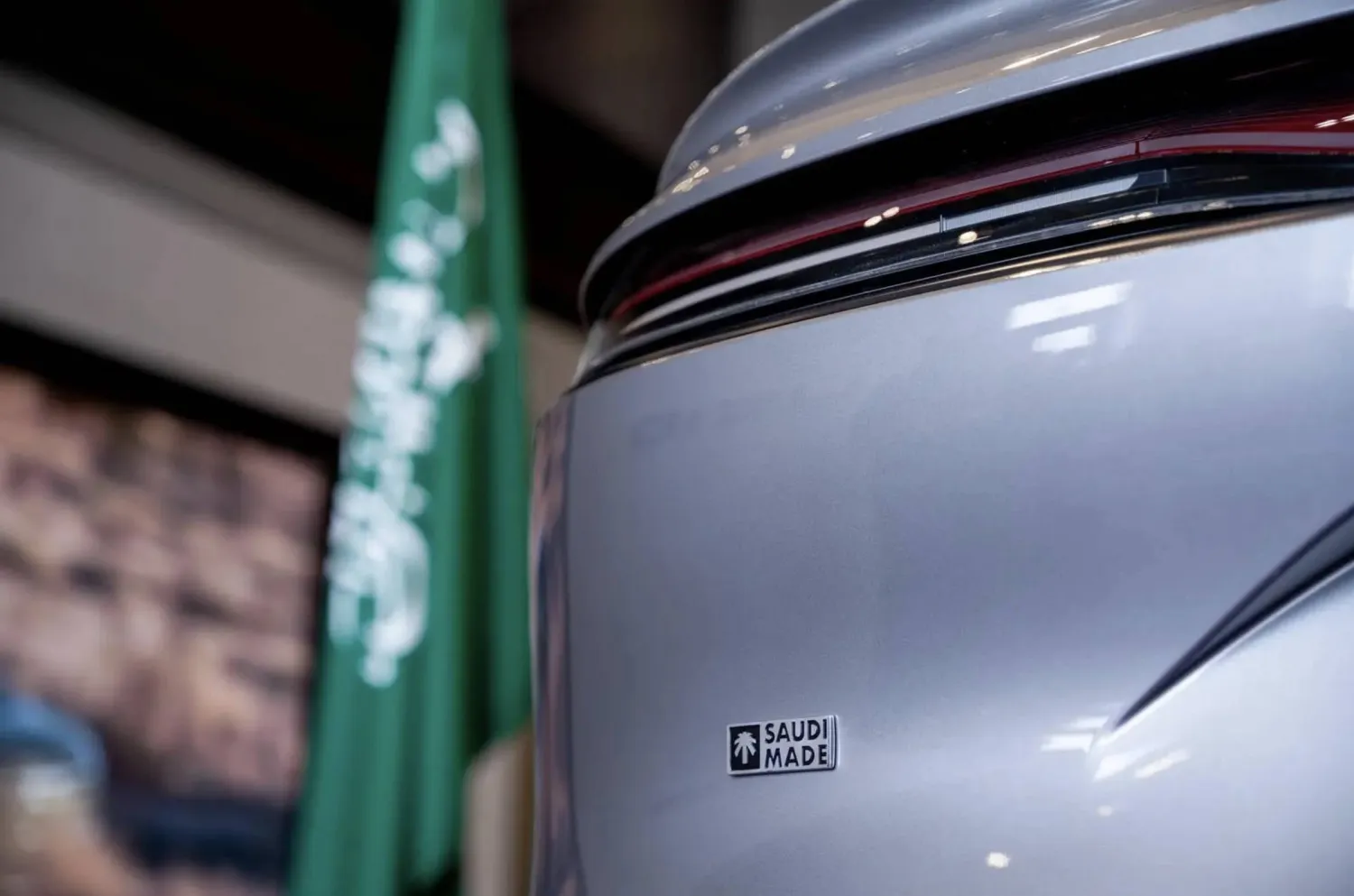

Saudi Arabia Advances Vision 2030 with Manufacturing, Localization, Economic Growth

Saudi Arabia Advances Vision 2030 with Manufacturing, Localization, Economic Growth
TT

Saudi Arabia Advances Vision 2030 with Manufacturing, Localization, Economic Growth

Saudi Arabia Advances Vision 2030 with Manufacturing, Localization, Economic Growth

As Saudi Arabia celebrated its 95th National Day on Tuesday, the Kingdom is showcasing rapid economic reforms designed to cement its role as a global business hub.

Powered by its Vision 2030 diversification strategy, Riyadh has rolled out regulatory reforms, investment incentives and talent programs that are attracting multinational firms. International companies are expanding amid localization and manufacturing projects, while new visa categories are luring foreign expertise to support ambitions to turn the Kingdom into a regional hub for technology, innovation and sustainability.

Saudi Arabia’s non-oil economy is forecast to grow 4.3% in 2025, supported by strong domestic demand and credit growth, Jadwa Investment said.

Technology hub

Digital infrastructure, flexible regulations and research incentives have made the kingdom a magnet for global technology players.

Chinese PC maker Lenovo said Saudi Arabia had established itself as a global hub combining technology, innovation and sustainability under Vision 2030.

Giovanni Di Filippo, the company’s vice president and general manager in Saudi Arabia, told Asharq Al-Awsat the firm had set up its regional headquarters in Riyadh and broken ground on a sustainable manufacturing facility that will produce millions of “Made in Saudi” computers and servers by 2026.

Through partnerships such as a recent tie-up with state-backed tech and industrial firm Alat, Lenovo aims to create jobs, build local skills, strengthen supply chains and bolster the kingdom’s digital economy.

Alat, launched by the Public Investment Fund in February 2024, seeks to establish Saudi Arabia as a global hub for sustainable industries and clean energy.

Labor market reforms

Alongside investments, Saudi Arabia is overhauling its labor market to attract global talent while training nationals.

Human capital is at the heart of the transformation, said Haider Hussain, managing partner for the Middle East and North Africa at immigration consultancy Fragomen.

He cited new visa categories, long-term residency pathways and human resources policies that have opened the door to international talent, alongside heavy investment in training young Saudis for a diversified economy.

He added that reforms in labor mobility reflect a strategic commitment to put people at the center of national transformation.

Future sectors

Saudi Arabia is also moving into frontier industries, including space. Martijn Blanken, chief executive of New Space Group, said the sector was a vital growth driver that boosts the Kingdom’s global standing in innovation.

He pledged to support local satellite services and space industries through technology transfer, localization and training to help Saudi Arabia become a leading player in the field in line with Vision 2030.

Investor appeal

Analysts say Saudi Arabia’s business environment is increasingly attractive thanks to digital infrastructure, special economic zones, flexible regulations, foreign ownership laws and training programs to boost local competitiveness.

The localization push is intersecting with rising foreign investment to create integrated supply chains and advanced manufacturing capacity, strengthening the Kingdom’s role as a regional hub for emerging technologies.

Economic outlook

The International Monetary Fund recently raised its forecast for Saudi Arabia’s real GDP growth to 3.6% in 2025, with momentum expected to continue in 2026, citing strong non-oil activity, historically low inflation and record-low unemployment.

With mega-projects underway and partnerships with global firms expanding, Saudi Arabia is pressing ahead with its long-term goal: building a diversified and sustainable economy.


Saudi Industry Ministry Signs MoUs to Advance Manufacturing Empowerment

The agreements were signed during the "Industrial Transformation Saudi Arabia 2025” Exhibition. SPA
TT

Saudi Industry Ministry Signs MoUs to Advance Manufacturing Empowerment

The agreements were signed during the "Industrial Transformation Saudi Arabia 2025” Exhibition. SPA

The Ministry of Industry and Mineral Resources has signed a number of memoranda of understanding (MoUs) with leading local and international companies to advance advanced manufacturing, support local content, and strengthen national supply chains, enhancing the regional and global competitiveness of Saudi industry.

The agreements were signed during the "Industrial Transformation Saudi Arabia 2025” Exhibition, organized by the ministry in partnership with Deutsche Messe and Riyadh Exhibitions Company Ltd.

The ministry signed two memoranda to provide innovative financing solutions for industrial establishments, strengthen national supply chains, and support local content.

Additionally, the ministry's National Center for Advanced Manufacturing and Production signed several memoranda of understanding with local and international industrial and advisory companies to support the path of advanced manufacturing, develop supply chains, enhance technological innovation, and boost the competitiveness of national factories, in line with the National Industrial Strategy and Saudi Vision 2030.

These strategic partnerships are part of the ministry's ongoing efforts to develop the Kingdom's industrial ecosystem, enable manufacturers to access the latest industrial solutions, support supply chain development, and stimulate innovation, contributing to the building of a sustainable industrial sector that competes regionally and globally.


China Says Working on Streamlining Rare Earth Export Licenses

FILE PHOTO: Workers transport soil containing rare earth elements for export at a port in Lianyungang, Jiangsu province, China October 31, 2010. REUTERS/Stringer/File Photo
TT

China Says Working on Streamlining Rare Earth Export Licenses

FILE PHOTO: Workers transport soil containing rare earth elements for export at a port in Lianyungang, Jiangsu province, China October 31, 2010. REUTERS/Stringer/File Photo

China said on Thursday it is working on streamlining rare earth export licenses - a key promised outcome after a meeting between US President Donald Trump and his counterpart Xi Jinping.

"The government is actively adapting," Commerce Ministry spokesman He Yadong told reporters at a weekly briefing, adding that authorities "were aligning themselves with general license mechanisms".

Reuters reported on Tuesday that at least three Chinese rare earth magnet makers had secured licenses enabling them to accelerate exports to some customers.

He did not say if new licenses had been issued.

China began designing the new rare earth licensing regime following a late October meeting between Trump and Xi that eased trade tensions between the two countries.


Saudi Aramco's Jafurah Gas Plant Begins Output with 450 Million Cubic Feet Per Day

The resources at Jafurah are now estimated at 229 trillion standard cu ft of gas and 75 billion barrels of condensates. (Saudi Aramco)
TT

Saudi Aramco's Jafurah Gas Plant Begins Output with 450 Million Cubic Feet Per Day

The resources at Jafurah are now estimated at 229 trillion standard cu ft of gas and 75 billion barrels of condensates. (Saudi Aramco)

The first phase of oil giant Aramco's Jafurah gas plant is complete and production has begun with a capacity of 450 million cubic feet per day, the Saudi finance ministry said on Tuesday.

The finance ministry, in its 2026 budget statement, listed the milestone as an achievement reached in 2025.

Jafurah's gas output will be used for domestic power generation, freeing up crude for export that is currently used for power in the kingdom.

Aramco has said its unconventional gas program at peak production is expected to generate electricity equivalent to displacing 500,000 barrels per day of oil.

The $100 billion Jafurah project, estimated to contain 229 trillion standard cubic feet of raw gas, is central to Aramco's ambitions to become a major global player in natural gas and boost its gas production capacity.

Aramco's gas production was 12.6 billion cubic feet per day at the end of September, up from 12 bcfd a year earlier.

Aramco last month said it was boosting its gas growth target to 80% above 2021 levels from a previous targeted growth of 60%.

In its 2021 annual report, Aramco said it reached a single-day record gas output at the time of 10.8 bcfd.

Aramco CEO Amin Nasser, who has called Jafurah a crown jewel in the company's portfolio, said during an earnings call last month the first phase was on track for completion by the end of this year.
