


Saudi Arabia, Taiwan Forge Strategic Partnership as Trade Surges 78%

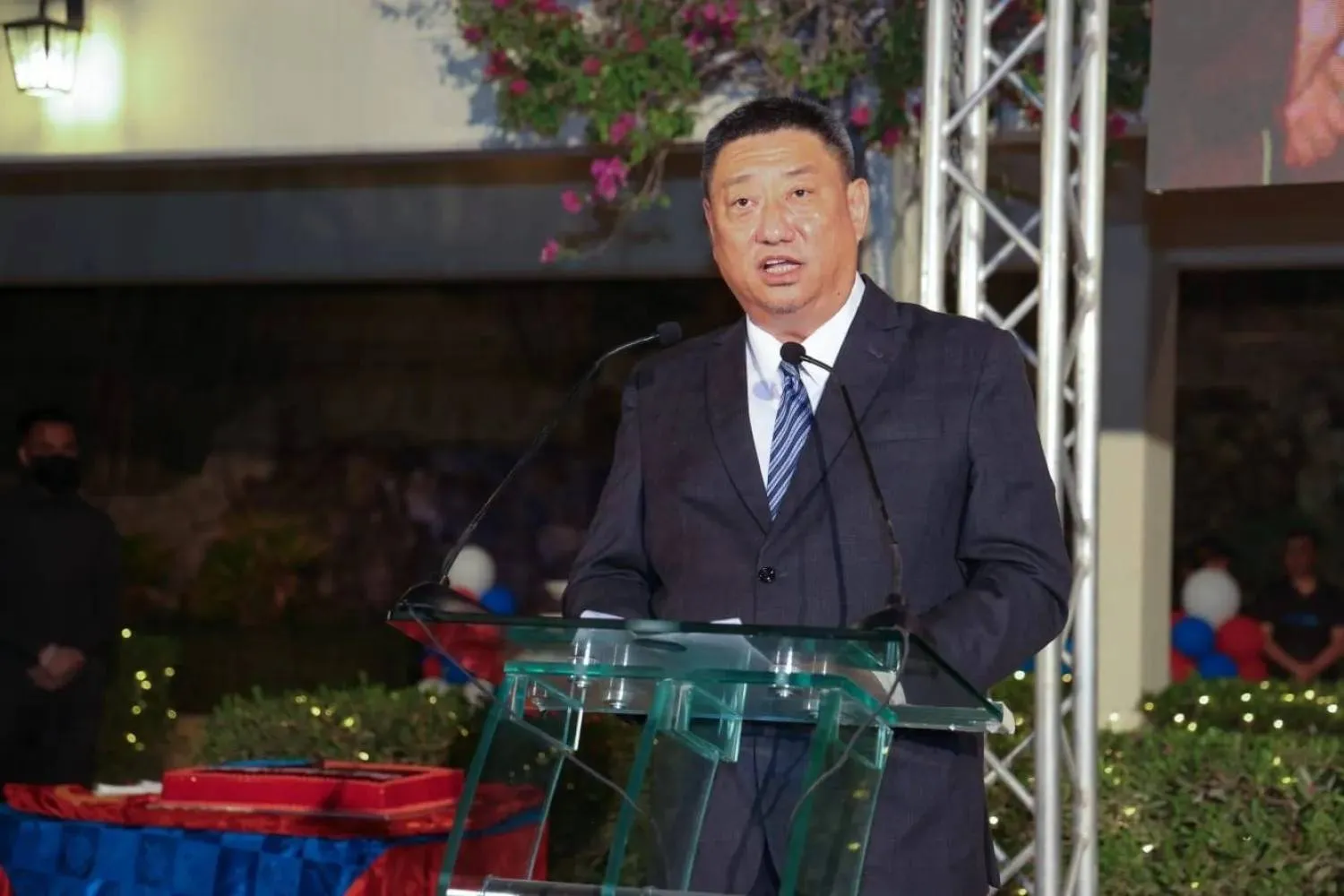
Taiwan’s economic representative to Saudi Arabia Sami Jang (Asharq Al-Awsat)
TT

Saudi Arabia, Taiwan Forge Strategic Partnership as Trade Surges 78%

Taiwan’s economic representative to Saudi Arabia Sami Jang (Asharq Al-Awsat)

Taiwan, a global leader in semiconductor manufacturing, considers Saudi Arabia an indispensable strategic partner, Taiwan’s economic representative to the Kingdom, Sami Jang, told Asharq Al-Awsat.


Jang highlighted that current cooperation focuses on future-oriented sectors such as electric vehicles and clean energy, supporting Saudi Arabia’s Vision 2030. He noted that bilateral trade has surged by an impressive 78% over the past five years.


Speaking to Asharq Al-Awsat, Jang emphasized Taiwan’s pivotal role in the global economy, pointing out that the island leads the world in key industries. He said the conditions for cooperation with Saudi Arabia strengthen this position.


Taiwan has made significant advances in artificial intelligence and semiconductors, producing more than 90% of the world’s chips, fueling global economic growth and making the island an indispensable partner across sectors.


Jang underscored that Taiwan currently leads the global industry, including markets in the United States, Japan, and Germany. Taiwan has been helping the world, and now it is leading it in semiconductor production. If its exports stopped, markets would stall. Taiwan now drives the global industry, he said.


On industrial collaboration between Taiwan and the United States, Jang noted that this year, Taiwan’s TSMC signed a $165 billion deal with the US, encompassing three factories and a research center. He added that this will pave the way for more deals announced by President Donald Trump during his visit to Saudi Arabia.


Advancing Saudi-Taiwanese Cooperation

Regarding Saudi-Taiwanese ties, Jang said Taiwan will continue to work diligently to ensure ongoing cooperation between the two sides, aiming to strengthen economic and trade partnerships and pursue the interests of both sides.


He reaffirmed that Taiwan's presence serves as a vital bridge for exchanging opportunities with the Kingdom.


He added that Taiwan is advancing cooperation with Saudi Arabia across multiple sectors, particularly electric vehicles and electronics.


Taiwan is committed to supporting partnerships between Taiwanese and Saudi companies, promoting industry and economic diversification in all sectors that contribute to this visionary goal. Sustainable development, clean energy, smart cities, and environmental protection remains Taiwan's top priorities, he added.


Jang said that as Taiwan’s representative to the Kingdom, he works tirelessly to secure a prosperous economic future for the two sides.


Bilateral Trade Shows Remarkable Growth

Jang highlighted the robustness of Taiwan-Saudi economic cooperation, describing his role as a vital bridge for exchanging expertise between the two sides. He provided the following trade figures:


Record growth in trade: Bilateral trade jumped from approximately 19.7 billion riyals ($5.2 billion) in 2020 to 35.1 billion riyals ($9.3 billion) in 2024.


Growth rate: This represents a 78% increase over five years.


Saudi exports: Growth was mainly driven by rising Saudi exports to Taiwan, particularly oil and chemical products, which rose 89.9% between 2020 and 2024, while Saudi imports from Taiwan increased 33.4% over the same period.



Indonesia Plans a Bill to Redenominate Rupiah Currency

Stacks of Indonesian rupiah banknotes equivalent to 800 million USD is displayed in the lobby of the Attorney General's Office building during the handover of assets recovered from the corruption case involving the provision of Crude Palm Oil export facilities, in Jakarta on October 20, 2025. (Photo by BAY ISMOYO / AFP)
TT

Indonesia Plans a Bill to Redenominate Rupiah Currency

Stacks of Indonesian rupiah banknotes equivalent to 800 million USD is displayed in the lobby of the Attorney General's Office building during the handover of assets recovered from the corruption case involving the provision of Crude Palm Oil export facilities, in Jakarta on October 20, 2025. (Photo by BAY ISMOYO / AFP)

Indonesia's finance ministry said it is planning a new bill to redenominate the rupiah in an effort to improve economic efficiency, maintain stability and improve the currency’s credibility.

"The bill on redenomination is a carryover draft bill that is planned to be finalized in 2027," a ministry regulation reviewed on Saturday showed.

The plan to slash zeroes from the currency has been discussed in past years, Reuters reported.

The last time the government submitted a draft to Parliament was in 2013. It proposed slashing three zeroes of the rupiah banknote, but the draft was shelved. It was not immediately clear how many digits would be removed under the latest redenomination plan.


China’s Central Bank Buys Gold for 12th Straight Month

A woman wearing a face mask walks on a street in Beijing, China, 06 November 2025.  EPA/WU HAO
A woman wearing a face mask walks on a street in Beijing, China, 06 November 2025. EPA/WU HAO
TT

China’s Central Bank Buys Gold for 12th Straight Month

A woman wearing a face mask walks on a street in Beijing, China, 06 November 2025.  EPA/WU HAO
A woman wearing a face mask walks on a street in Beijing, China, 06 November 2025. EPA/WU HAO

China's central banks added gold to their reserves for the 12th consecutive month in October, data from the People's Bank of China showed on Friday.

China's gold reserves increased from 74.06 to 74.09 fine troy pounds at the end October. This compares to 72.8 million ounces a year ago, a 1.8% increase.

According to the PBOC, the value of gold held by the PBOC was $297.21 billion at the end last month compared with $283.29 billion in September.

Gold spot was just above $4000 per ounce Friday, as the safe haven gained traction in the face of a weaker US dollar and as bets grew on the Federal Reserve cutting rates by December.

Gold prices were also supported by concerns over a long-term US shutdown, and the uncertainty surrounding US tariffs, according to Reuters.

In October, gold reached a new record of $4,381 an ounce.

Beijing has cut the value added tax for gold purchased via the Shanghai Gold Exchange or the Shanghai Futures Exchange.

China still hasn't released official data on gold production for the last quarter, so analysts are left without an update.

The PBOC halted their 18-month gold buying spree in May 2024. The central bank began buying gold again in November of that same year.


Oil Heads for Second Weekly Loss on Lingering Oversupply Concerns

Panamanian-flagged Caribbean Glory vessel with a capacity of 2 million barrels of oil, loads crude oil at a TLU (Tanker Loading Unit) in the Gulf of Morrosquillo, operated by Cenit, owned by Ecopetrol, in Covenas, Colombia October 1, 2025. REUTERS/Nelson Bocanegra
TT

Oil Heads for Second Weekly Loss on Lingering Oversupply Concerns

Panamanian-flagged Caribbean Glory vessel with a capacity of 2 million barrels of oil, loads crude oil at a TLU (Tanker Loading Unit) in the Gulf of Morrosquillo, operated by Cenit, owned by Ecopetrol, in Covenas, Colombia October 1, 2025. REUTERS/Nelson Bocanegra

Oil prices rose on Friday but remained on track for a second consecutive weekly loss after three days of declines on worries about excess supply and slowing US demand.

Brent crude futures rose 50 cents, or 0.8%, to $63.88 a barrel by 1243 GMT. US West Texas Intermediate crude was up 51 cents, or 0.9%, at $59.94.

Both benchmarks are poised to register weekly declines of more than 1.5% as leading global producers raise output.

"The market continues to weigh a rising oil surplus against mixed macro," said SEB analyst Ole Hvalbye, Reuters reported.

An unexpected US inventory build of 5.2 million barrels reignited oversupply fears this week, said IG Markets analyst Tony Sycamore.

US crude stocks rose more than expected on higher imports and reduced refining activity while gasoline and distillate inventories declined, the Energy Information Administration said on Wednesday.

Concern over the effects of the longest government shutdown in US history also pressured oil prices.

The Trump administration has ordered flight reductions at major airports because of a shortage of air traffic controllers while private reports are pointing to a weaker US labor market in October.

The Organization of the Petroleum Exporting Countries and its allies, known collectively as OPEC+, decided on Sunday to increase output slightly in December. However, the group also paused further increases for the first quarter of next year, wary of a supply glut.

European and US sanctions on Russia and Iran, meanwhile, are disrupting supplies to the world's largest importers, China and India, providing some support for global markets.

China's crude imports in October rose 2.3% from September and were up 8.2% from a year earlier at 48.36 million tons, customs data showed, against a backdrop of high utilisation rates at refineries in the world's largest oil importer.

"China kept importing elevated amounts of crude in October," UBS analyst Giovanni Staunovo said. "That move keeps those barrels away from the OECD, where inventories remain low."

Swiss commodities trader Gunvor said on Thursday that it had withdrawn its proposal to buy the foreign assets of Russian energy company Lukoil after the US Treasury called it Russia's "puppet" and signalled that Washington opposed the deal.

"Gunvor scrapping its Lukoil assets purchase suggests the US is maintaining its maximum pressure campaign against Russia, and potential strict enforcement of sanctions on Rosneft and Lukoil," said Vandana Hari at oil market analysis provider Vanda Insights.