


Nasser: Aramco Can Sustain 12 Million Barrels Per Day for a Year Without Extra Cost

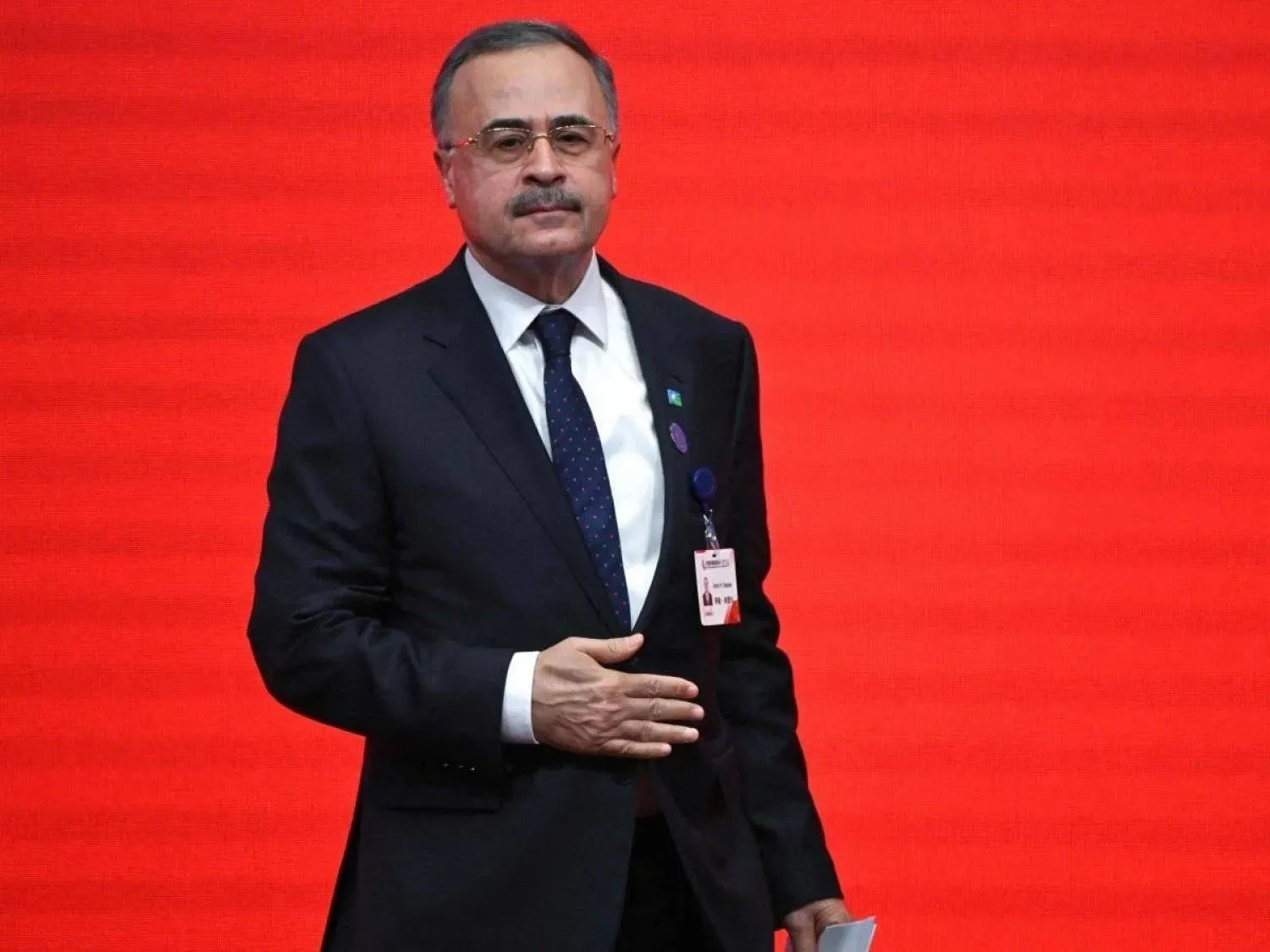
Saudi Aramco Chief Executive Officer Amin Nasser (AFP) 
TT

Nasser: Aramco Can Sustain 12 Million Barrels Per Day for a Year Without Extra Cost

Saudi Aramco Chief Executive Officer Amin Nasser (AFP) 

Saudi Aramco Chief Executive Officer Amin Nasser said on Monday that the company can sustain its maximum crude oil production capacity of 12 million barrels per day for an entire year without incurring additional costs.

Speaking at the Energy Intelligence Forum in London, Nasser said: “We are determined to remain dominant in oil thanks to a massive resource base, low costs, and one of the lowest upstream carbon intensities across the industry.”

According to Reuters, the Aramco chief projected that global oil demand will grow between 1.1 million and 1.3 million barrels per day this year, and by about 1.2 to 1.4 million barrels per day in 2026. He noted that Aramco’s extraction costs remain among the world’s lowest, around $2 per barrel of oil equivalent and $1 per barrel of gas.

Nasser added that despite a global economic slowdown, Aramco intends to expand its chemicals business. “Chemicals remain a key long-term growth area, supported by our proven strengths in feedstocks and conversion,” he said.

He warned that unrealistic assumptions about the pace of the energy transition have led to unintended consequences, calling for a more pragmatic approach to global energy policy.

“We also see resilient demand, and the pressing need for long-term investments in supply is now widely accepted,” he stated.

While acknowledging growth in electric vehicles and renewables, Nasser cautioned that these alternatives still cannot meet overall demand growth. He explained that even in advanced economies, high costs, technical constraints, and limited public acceptance make current transition pathways difficult to sustain.

He urged analysts and policymakers to “revisit their forecasts and scenarios” to reflect the continuing importance of oil and gas for decades to come, an adjustment he described as a “green light” for renewed investment in hydrocarbons.

Outlining Aramco’s strategy, Nasser said the company is accelerating gas development, capitalizing on some of the world’s largest conventional and unconventional reserves. The chemicals sector, he reiterated, will remain a core pillar of Aramco’s long-term growth.

He also underscored Aramco’s focus on technology and innovation, including artificial intelligence applications, lower-emission production, and expansion of its $7 billion global venture capital program.

“This balanced strategy,” Nasser said, “positions Aramco for a realistic energy future and creates sustainable, long-term value for stakeholders and shareholders worldwide.”


Ban on US Diesel Exports Would Hurt, Not Help Fuel Markets, Analysts Say

Gas and diesel prices are displayed at a Mobil station, Tuesday, Sept. 22, 2026, in Los Angeles. (AP Photo/Richard Vogel)
TT

Ban on US Diesel Exports Would Hurt, Not Help Fuel Markets, Analysts Say

Gas and diesel prices are displayed at a Mobil station, Tuesday, Sept. 22, 2026, in Los Angeles. (AP Photo/Richard Vogel)

US President Donald Trump on Tuesday said he backed the idea of a diesel export ban as a way to lower prices that have hit record highs due to a global supply shortage. But analysts and market watchers warn that such a measure would do little to ease high energy prices, and could worsen supply and economic disruptions around the globe, Reuters said.

Trump's comments come as average US diesel prices have jumped to a record $6.5107 a gallon, according to AAA. Diesel is critical to the global economy because it powers transportation, farm equipment and the machinery used to make and move goods.

Shortages in the fuel can lead to price spikes that stoke inflation by raising the cost of moving everything from groceries and consumer goods to industrial materials — already a major pain point for Trump and Republicans headed into the November midterm elections.

WHY ‌ARE DIESEL PRICES HIGH?

Diesel ‌prices have surged amid supply disruptions from Ukrainian strikes on Russia's refineries and the US-Iran ‌war, which ⁠has disrupted or ⁠halted trade along major routes including the Strait of Hormuz. The US is a major exporter of diesel, and countries have increasingly turned to it amid disruptions abroad.

The US exported a record 1.6 million barrels per day of diesel in August, up from about 1 million bpd in February before the war began. Top buyers include Brazil, Chile, Mexico, Peru, Morocco, France and the United Kingdom, according to Kpler.

US on-road diesel inventories have fallen to 96.97 million barrels, nearly 13% under the seasonal average for the previous five years. The drop in inventories comes even as refiners in the US are running at about 97% of capacity.

HOW WOULD A BAN IMPACT THE MARKET?

Major trade groups, including ⁠the American Petroleum Institute, oppose a ban on diesel exports.

"Restricting US diesel exports would wreak ‌havoc on fuel markets at home and abroad, destabilize refinery operations and deepen a global ‌refining crisis already putting upward pressure on US prices. Gulf Coast refineries produce more diesel than the region consumes, while geography and infrastructure constraints prevent ‌that surplus from simply being redirected to every US market that needs it," the API said in a statement.

A ban ‌on diesel exports would push up prices of diesel globally, while pushing down prices in the United States and hurting US refining margins, analysts warned.

"Initially, a diesel ban would send global prices skyrocketing... A ban could raise world prices by as much as 100%, given the fuel’s low price elasticity of demand," said energy economist Philip Verleger.

Any ban would likely push refineries to cut the amount of crude they process. If US refineries cut ‌runs, it would also lower the amount of gasoline and other products produced and push up prices for those fuels, analysts and traders said.

"Banning exports of diesel would drive refiners ⁠to cut runs because the physical ⁠market they can access would be cut, and no market participant in any market sells product at a loss. While an export ban might have a very short-term impact that lowers price, it would not be long-lived...," said Kenneth Medlock III, a fellow in Energy and Resource Economics at the Baker Institute for Public Policy.

WHAT ARE THE POLITICAL AND GEOPOLITICAL IMPLICATIONS?

Some Republican Senate candidates in the most competitive races for the November 3 elections called for administration to implement the export ban to try to alleviate high costs for Americans.

“It is more of political soundings than actual reality,” said Jim Mitchell, director of oil trading analytics at consultancy Wood Mackenzie.

While a diesel export ban could, in theory, lower prices in the United States, it would not ease tightness in Europe, which is structurally short diesel and relies heavily on supplies from the US Gulf Coast.

"That would seem pretty damaging to some key US allies," Mitchell said.

"A ban on US diesel exports, even if temporary, would have the same long-term effect as President (Richard) Nixon’s soybean embargo: the world would no longer view the United States as a dependable source," Verleger said. In 1973 Nixon imposed a temporary soybean embargo that angered importers including Japan and, some analysts say, led to greater dependence on Brazil for the commodity.


Oil Prices Fall after Trump Hails 'Good' Talks with Iran

FILE PHOTO: A small tanker sails near an oil refinery, in the Keihin Industrial Zone in Kawasaki, south of Tokyo, Japan March 17, 2026.  REUTERS/Issei Kato/File Photo
FILE PHOTO: A small tanker sails near an oil refinery, in the Keihin Industrial Zone in Kawasaki, south of Tokyo, Japan March 17, 2026. REUTERS/Issei Kato/File Photo
TT

Oil Prices Fall after Trump Hails 'Good' Talks with Iran

FILE PHOTO: A small tanker sails near an oil refinery, in the Keihin Industrial Zone in Kawasaki, south of Tokyo, Japan March 17, 2026.  REUTERS/Issei Kato/File Photo
FILE PHOTO: A small tanker sails near an oil refinery, in the Keihin Industrial Zone in Kawasaki, south of Tokyo, Japan March 17, 2026. REUTERS/Issei Kato/File Photo

Oil prices fell on Wednesday after President Donald Trump said US and Iranian representatives had met for "very good" talks at the United Nations.

The international benchmark, Brent crude, and main US contract, West Texas Intermediate, dipped to $98.91 and $89.93 per barrel respectively in early Asian trade -- well below the symbolic $100 mark they have smashed repeatedly since the Middle Eat war broke out in February, AFP reported.

The three-hour meeting was "very good", "very productive" and "they have another one scheduled in the very near future", Trump told reporters as he met Ukrainian President Volodymyr Zelensky.

Trump's announcement came just hours after he delivered a bellicose address to the UN in which he said he faced a "big decision" on whether to make a deal with Iran or "annihilate the Islamic Republic and do it quickly".

Nearly seven months after US-Israeli strikes on Tehran triggered the conflict, the foes remain at an impasse, with Iran keeping the Strait of Hormuz closed and the United States persisting with a counter-blockade of Iranian ports.

"The three-hour US-Iran meeting matters because it shifts the market from pure escalation pricing toward a genuine diplomatic process, even if a final deal still looks distant," said Stephen Innes at Quintex Intel.

Trump has pledged that oil would come down "as soon as" the United States wins the war.

The dip in oil prices came as the world's biggest crude exporter Saudi Arabia reportedly rebooted operations along its East-West Pipeline -- a crucial oil export route shut down by the conflict rocking the Middle East.

Riyadh said this month that drones launched from Iraq had forced the closure of the pipeline, which it had increasingly used to bypass the lockdown of the Strait of Hormuz by Iran.

The kingdom is aiming to resume exports later this week, Bloomberg quoted a source as saying.


Euro Zone Yields Fall after Iran Raises Prospect of Hormuz Reopening

Euro banknotes (Reuters)
TT

Euro Zone Yields Fall after Iran Raises Prospect of Hormuz Reopening

Euro banknotes (Reuters)

Euro zone bond yields fell for a second straight day on Tuesday, hitting their lowest in almost two weeks after Iran raised the prospect of reopening the Strait of Hormuz and Washington hinted it could restart talks with Tehran, pushing oil prices lower.

Germany's 10-year bond yield, the benchmark for the bloc, fell 1 basis point to 3.44% after rising as much as 4 bps earlier in the session. It fell 7 bps on Monday as energy prices retreated.

A senior Iranian official told Reuters that the strait, which carried about a fifth of global energy supplies before the war, could reopen within seven days if the US also lifts its blockade of Iranian ports.

The official added that Iran's delegation to a UN meeting in New York this week has full authority to revive diplomacy over the conflict.

US Secretary of State Marco Rubio told NBC's "Today" show that Washington was open to speaking with Tehran.

The dip in energy prices helped pull yields lower globally after a surge in recent weeks fuelled by expectations of further interest-rate hikes to combat energy-driven inflation. Traders are pricing in around 35 bps of additional European Central Bank tightening this year, down from 40 bps on Friday.

Germany's two-year bond yield, which is sensitive to interest-rate expectations, fell 1 bp to 3.19%, following a 6-bp drop on Monday.

Rabobank senior rates strategist Lyn Graham-Taylor said lower oil prices following the Iranian comments were weighing on bond yields.

Brent crude futures were last down 1% to $100 a barrel after earlier falling to $97.40, the lowest in two weeks.
