Kremlin Envoy Proposes a 'Putin-Trump Tunnel' to Link Russia and US https://english.aawsat.com/business/5198306-kremlin-envoy-proposes-putin-trump-tunnel-link-russia-and-us%C2%A0
Kremlin Envoy Proposes a 'Putin-Trump Tunnel' to Link Russia and US
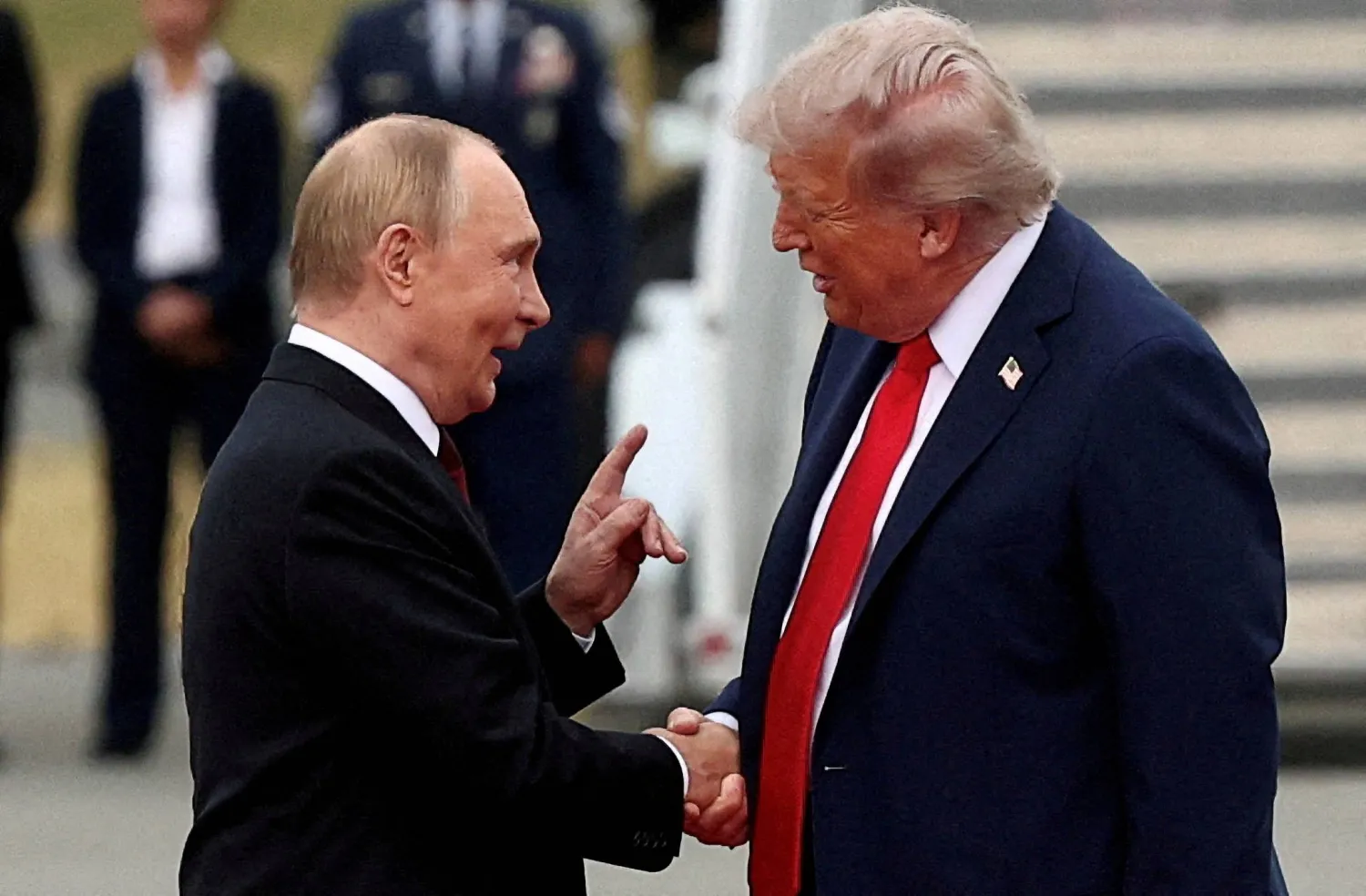
US President Donald Trump shakes hand with Russian President Vladimir Putin, as they meet to negotiate for an end to the war in Ukraine, at Joint Base Elmendorf-Richardson in Anchorage, Alaska, US, August 15, 2025. (Reuters)
TT
TT
Kremlin Envoy Proposes a 'Putin-Trump Tunnel' to Link Russia and US
US President Donald Trump shakes hand with Russian President Vladimir Putin, as they meet to negotiate for an end to the war in Ukraine, at Joint Base Elmendorf-Richardson in Anchorage, Alaska, US, August 15, 2025. (Reuters)
Russia and the United States should build a "Putin-Trump" rail tunnel under the Bering Strait to link the two countries, unlock joint exploration of natural resources and "symbolize unity", a Kremlin, a Kremlin envoy has suggested.
The proposal by Kirill Dmitriev, President's Vladimir Putin's investment envoy and head of Russia's RDIF sovereign wealth fund, envisages a construction project costing 8 billion dollars funded by Moscow and "international partners" to build a 70-mile (112-km) rail and cargo link in under eight years.
Dmitriev, who has helped spearhead a Russian charm offensive designed to revive US-Russia ties, floated the tunnel idea late on Thursday after Putin spoke to US President Donald Trump by phone and agreed to meet in Budapest to try to find a way to stop the war in Ukraine.
PROPOSAL TO INVOLVE COMPANY OWNED BY MUSK
"The dream of a US–Russia link via the Bering Strait reflects an enduring vision — from the 1904 Siberia–Alaska railway to Russia’s 2007 plan. RDIF has studied existing proposals, including the US–Canada–Russia–China railroad, and will support the most viable," Dmitriev wrote on X.
The Bering Strait, which is 51 miles (82 km) wide at its narrowest point, separates Russia's Chukotka region from Alaska. Ideas to link the two points have been around for at least 150 years, with various projects drawn up but never implemented.
Dmitriev, who has forged ties with Steve Witkoff, Trump's special envoy, and spoken of the possibility of US energy majors taking minority stakes in Russian projects in the Arctic, suggested the tunnel could be built by The Boring Company, a US tunnel construction company owned by Elon Musk.
"Imagine connecting the US and Russia, the Americas and the Afro-Eurasia with the Putin-Trump Tunnel - a 70-mile link symbolizing unity. Traditional costs are $65B+, but @boringcompany's tech could reduce it to <$8B. Let's build a future together," Dmitriev wrote to Musk on X.
There was no immediate public response to the idea from Musk or Trump.
Dmitriev said a similar idea - to build a "Kennedy-Khrushchev World Peace Bridge" - had been floated during the Cold War and published a sketch from that era of the route it might have taken, along with a graphic showing the route the new tunnel could take between Chukotka and Alaska.
"RDIF has already invested in and built the first ever Russia-China railroad bridge. The time has come to do more and connect the Continents for the first time in human history. The time has come to connect Russia and the US," said Dmitriev.
French Entrepreneur: Saudi Arabia is a Launchpad for Technology into Global Marketshttps://english.aawsat.com/business/5310994-french-entrepreneur-saudi-arabia-launchpad-technology-global-markets
French Entrepreneur: Saudi Arabia is a Launchpad for Technology into Global Markets
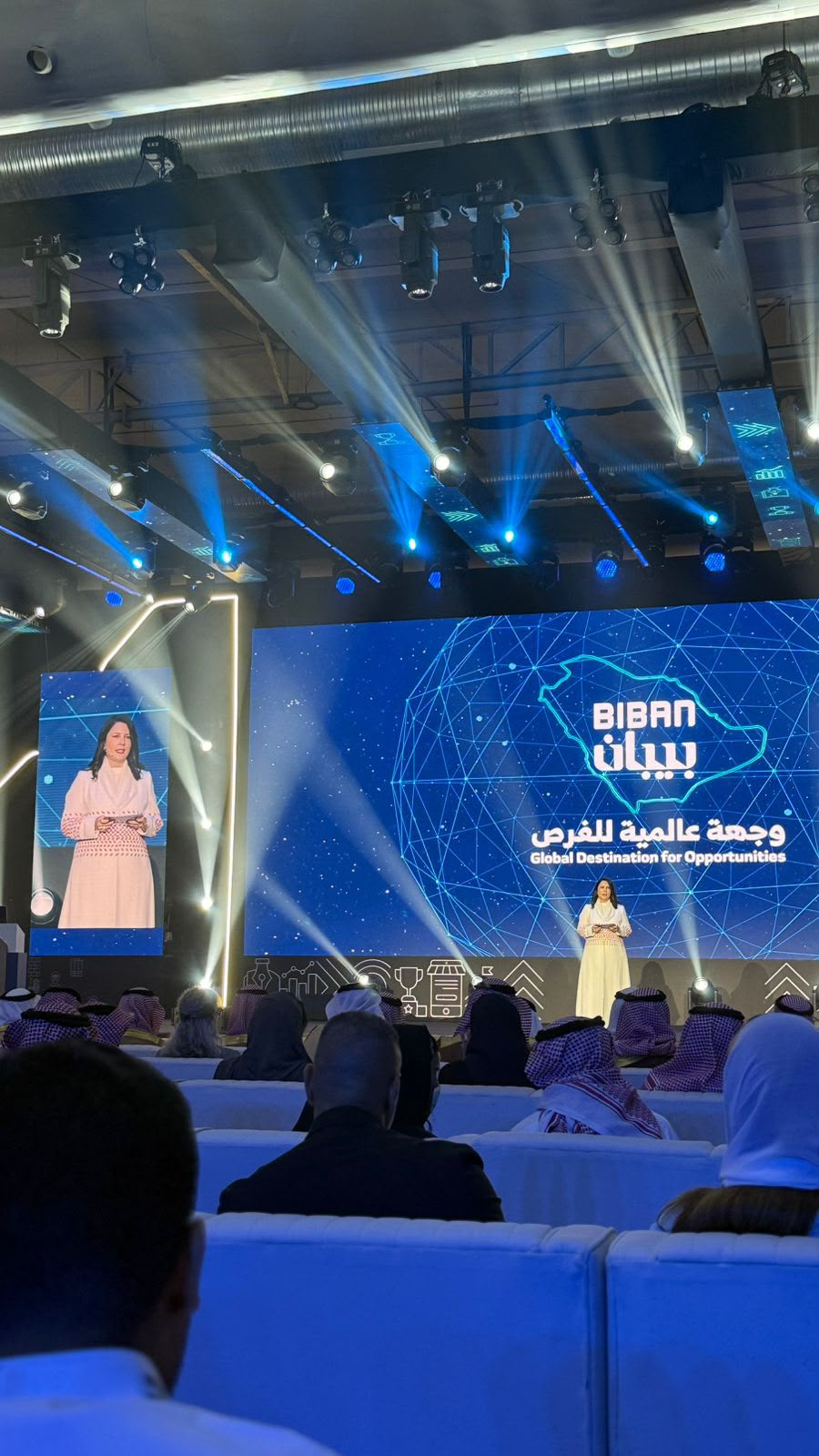
The Biban Forum in Riyadh, specializing in startups (SPA)
French entrepreneur and investor Julie Barbier does not see Saudi Arabia merely as a promising market for technology companies, but as a global launchpad that enables the testing, development, and scaling of breakthrough technologies.
The founder and CEO of Merit believes that the Kingdom's combination of digital infrastructure, capital availability, execution speed, and broad customer base makes it an attractive environment for building technology products that can subsequently expand into regional and international markets.
In an interview with Asharq Al-Awsat, Barbier said that the economic transformation driven by Vision 2030 has created a highly ambitious business environment that is quick to embrace new ideas, alongside the restructuring of major sectors including finance, tourism, transportation, trade, logistics, and government services.
She cited the experience of Merit, a global company specializing in engagement and incentive technologies, whose Saudi team achieves innovation efficiency levels 59 percent higher than the company's internal innovation benchmark and generates about eight innovation initiatives each week.
Barbier said Saudi Arabia has become one of the world's most attractive environments for launching, validating, and scaling new technologies, benefiting from high rates of digital adoption, a willingness among major institutions to collaborate with innovative solutions, abundant capital, and the simultaneous transformation of entire economic sectors.
She explained that these conditions provide entrepreneurs with access to real-world use cases and serious customers, allowing them to launch and test new products at scale before rapidly refining and adapting them for expansion into other markets.
In her view, the Kingdom's pace of transformation also encourages a greater willingness to challenge traditional methods, a critical factor when developing new solutions.
For Merit, which selected Riyadh as its regional headquarters, Barbier said the company's presence in Saudi Arabia gives it direct access to customers and partners while enabling it to develop and test products before introducing them internationally.
"That is why I see Saudi Arabia not simply as a technology market, but as a launchpad for companies with regional and global ambitions," she said.
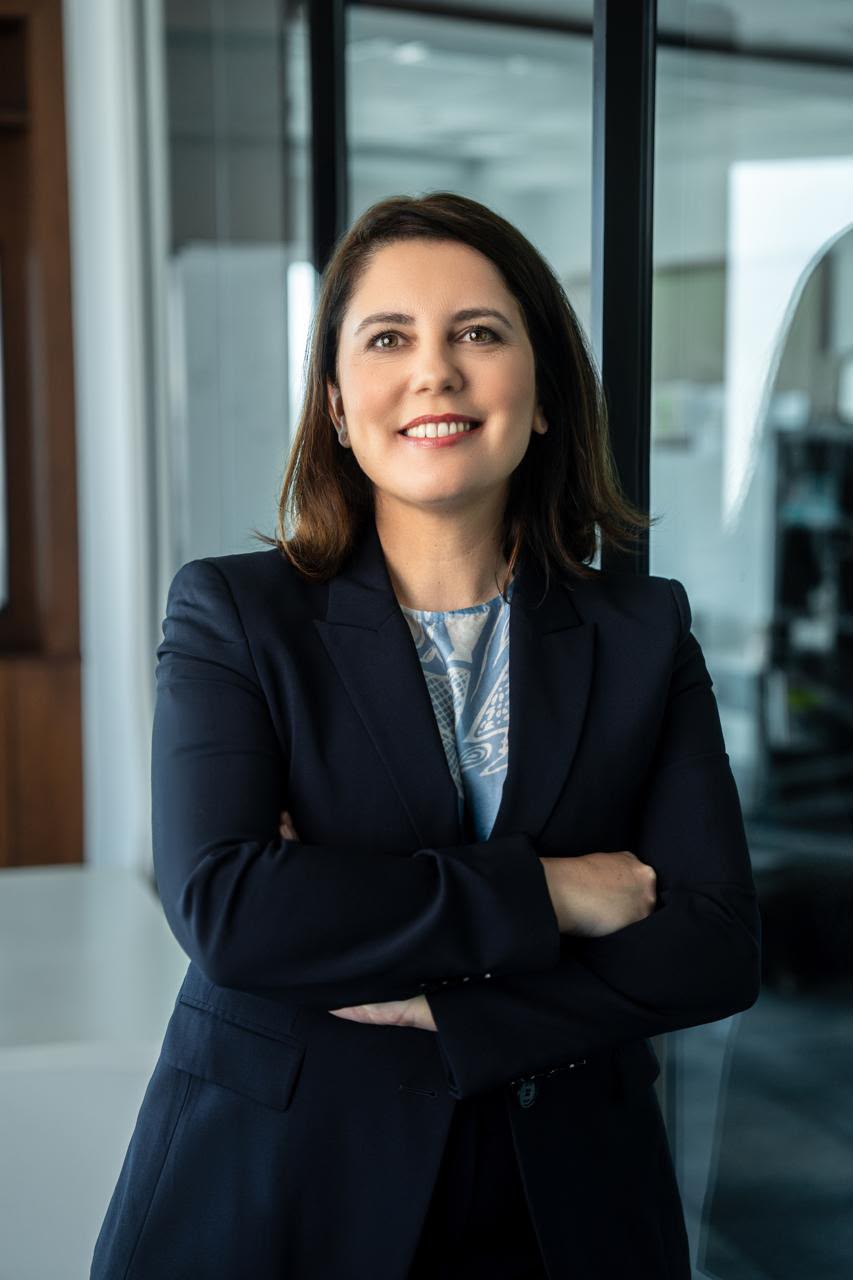
French entrepreneur and investor Julie Barbier (Asharq Al-Awsat)
Vision 2030: From Ambition to Rapid Execution
Barbier said one of Vision 2030's most significant contributions has been providing the Kingdom with a clear direction and a high level of ambition shared by government institutions, businesses, investors, and entrepreneurs.
"In a transformation of this scale, it is natural for some goals to progress faster than others, but the direction is clear and the momentum is strong," she said.
She believes that the clarity of ambition across the business ecosystem directly influences how new ideas are received. Decisions are made more quickly, experimentation is encouraged, and companies become more willing to adopt new ways of working.
Barbier likened Vision 2030 to a wave pushing the entrepreneurial ecosystem forward. Entrepreneurs and companies operating in the Kingdom are not merely benefiting from this momentum, she said; they are also helping to create it and moving in the same direction.
Merit's experience reflects that transformation. Although the company operates through approximately eight offices and employs staff from 24 nationalities, its Saudi team performs 59 percent better on the company's internal innovation index and launches around eight innovation initiatives each week.
According to Barbier, these figures are a practical demonstration of Vision 2030's impact.
"It is not simply a government strategy," she said. "It creates an environment that encourages people to work harder, experiment more, move faster, and think on a larger scale."
She added that this momentum has become part of Merit's strategic advantage: "We benefit from it and contribute to strengthening it."
A Digital Environment that Shortens the Path from Idea to Execution
Discussing her experience as a French entrepreneur and investor leading a global technology company from Riyadh, Barbier said what distinguishes Saudi Arabia's business environment is the speed with which decisions move from ambition to implementation, something entrepreneurs notice in their daily operations.
She noted that a wide range of services have become digital, from government services, digital identity, and payments to banking and business management. Many procedures that once required paperwork, appointments, or multiple intermediaries can now be completed digitally with increasing ease.
Barbier believes this digital transformation is not simply changing service delivery but is also reshaping the business mindset itself by raising expectations regarding execution speed and customer experience, while a broad technology infrastructure continues to be built across the Kingdom.
In this context, she highlighted the role of Saudi companies in strengthening the ecosystem. She noted that HUMAIN is developing capabilities in data centers, cloud infrastructure, models, and applications, while the government-owned company Elm serves as an example of how deeply technology has become integrated into sectors such as government services, finance, logistics, and business services.
Regarding Merit's decision to establish its regional headquarters in Riyadh, Barbier said the Kingdom's importance to the company extends beyond market size to include the environment it offers for product development, testing, and expansion.
"That is why we chose Riyadh as our regional headquarters," she said, "while continuing to develop products and technologies from Saudi Arabia that target global markets."
French entrepreneur and investor Julie Barbier at the Biban Forum in Riyadh (Asharq Al-Awsat)
The Future of Female Entrepreneurship in Saudi Arabia
Asked about the future of female entrepreneurship in the Kingdom, Barbier said: "I witnessed tremendous passion for entrepreneurship during my recent participation in the Saudi Unicorns Forum in Abha, where I met several female founders. What stood out was not only their ability to build companies, but also their level of ambition, commitment, and desire to expand and grow."
She noted that Saudi women are already active as founders, chief executives, investors, and decision-makers. What further strengthens their role, she said, is the growing entrepreneurial support ecosystem, which includes business leaders, investors, and experienced mentors who open doors, share expertise, and support the next generation of female entrepreneurs.
"I would also like to mention Princess Reema bint Bandar, the Custodian of the Two Holy Mosques' Ambassador to the United States, whose leadership and support have helped create more opportunities and support for the next generation of Saudi female entrepreneurs," she said.
Barbier added that Merit has witnessed similar progress internally across areas including product management, design, and marketing, where women directly influence the products the company develops, the decisions it makes, and the way it grows.
"Therefore, I do not believe the question today is whether Saudi women participate in entrepreneurship," she added. "They are already present and playing an active role. The next step is enabling more founders to scale by expanding access to capital, mentorship, and international networks, helping them build companies capable of growing regionally and globally."
HUMAIN, Mistral Collaborate to Advance Sovereign AI in Saudi Arabia and Regionallyhttps://english.aawsat.com/business/5310876-humain-mistral-collaborate-advance-sovereign-ai-saudi-arabia-and-regionally
HUMAIN, Mistral Collaborate to Advance Sovereign AI in Saudi Arabia and Regionally
Guests at the booth of Saudi AI company HUMAIN during the Future Investment Initiative conference in Riyadh (Company photo)
Saudi Arabia’s HUMAIN and French Artificial Intelligence company Mistral have announced a strategic collaboration spanning AI infrastructure, advanced model development, and the deployment of AI solutions in Saudi Arabia and across the region.
“Together, the companies will pursue the development and localization of advanced AI models, with initial areas of focus including cybersecurity and voice,” HUMAIN said in a statement on Monday.
“The companies also plan to develop frontier models that perform strongly in Arabic language to help support the broader region. This represents a collaboration in the hundreds of millions of Euros.”
“As part of the collaboration, Mistral will explore using HUMAIN's data center infrastructure to support growing local compute needs,” said the statement.
It added that the two companies also plan to develop a joint go-to-market strategy in the Kingdom focused on bringing advanced AI solutions to regulated industries.
CEO of HUMAIN Tareq Amin said on X that “the collaboration spans AI infrastructure, advanced model development and AI solutions, including plans to develop and localize frontier models with strong Arabic-language capabilities.”
According to the HUMAIN statement, “the collaboration is designed to meet growing demand for sovereign AI: AI that keeps data, intelligence, compute, and operations under the customer's control.”
“That means data can remain within customer-defined boundaries, models can be adapted and owned on open weights, training and inference can run on infrastructure and in jurisdictions the customer chooses, and AI systems can be deployed, governed, observed, and improved over time without ceding control of the learning loop to an external platform.”
The statement stressed its importance in financial services, manufacturing, telecommunications, cybersecurity, and the public sector.
Oil Steadies as Investors Weigh Impact of Latest US Sanctions on Iranhttps://english.aawsat.com/business/5310859-oil-steadies-investors-weigh-impact-latest-us-sanctions-iran
Tankers anchor near Venezuelan state oil company PDVSA's Jose terminal while waiting to load and discharge, in Puerto La Cruz, Venezuela August 9, 2026. (Reuters)
TT
TT
Oil Steadies as Investors Weigh Impact of Latest US Sanctions on Iran
Tankers anchor near Venezuelan state oil company PDVSA's Jose terminal while waiting to load and discharge, in Puerto La Cruz, Venezuela August 9, 2026. (Reuters)
Oil prices recovered ground on Tuesday after settling down more than 2% in the previous session, with investors assessing the impact of the latest US sanctions against Iran.
Brent crude futures rose 27 cents, or 0.3%, to $92.44 a barrel by 0330 GMT, while US West Texas Intermediate crude was up 37 cents, or 0.4%, at $85.38.
Both contracts settled lower on Monday, with US crude oil falling to a one-week low on profit taking after prices rallied over the previous two weeks.
"The market seems largely unfazed by Washington's push for tighter economic pressure on Iran, with traders treating the US effort to nudge partners away from Iranian trade as marginal rather than market moving," said ING commodity strategists in a note on Tuesday.
US Treasury Secretary Scott Bessent on Monday unveiled an expansion of sanctions to cut off Iran's economic lifeline, to force an end to the war between them, telling countries they would need to sever their business ties or risk being cut out of the dollar-based financial system.
However, he declined to identify the countries that would be targeted or reveal when those penalties would take effect, saying he would instead provide them time to comply with the new directive.
While US Defense Secretary Pete Hegseth said on Monday the US would not rule out using military force against Iran, the country is turning towards more economic coercion, which analysts said removed concerns about threats to Middle Eastern oil supply because of the war.
"Markets appear to be pricing economic pressure as a lower-risk path for physical supply than kinetic action, which is why the initial reaction was for oil to move lower rather than spike higher," said Tim Waterer, chief market analyst at KCM.
However, he warned, "Iran still retains the ability to respond by disrupting shipping, which continues to keep a residual premium in the oil price."
Iran is still maintaining it should have control over the key Strait of Hormuz, which before the war started in February typically carried cargoes equal to about 20% of global oil use. On Monday, it named 45 tankers that had broken its rules on crossing the strait and threatened action against them, including confiscating their cargoes.
The supply disruptions as a result of the US-Israeli war on Iran that started on February 28 have caused countries to draw down their commercial and strategic reserves.
On Monday, the Department of Energy reported stocks of crude oil in the US Strategic Petroleum Reserve fell by about 3.7 million barrels to 289.7 million barrels last week, the lowest since November 1982.
لم تشترك بعد
انشئ حساباً خاصاً بك لتحصل على أخبار مخصصة لك ولتتمتع بخاصية حفظ المقالات وتتلقى نشراتنا البريدية المتنوعة