


China's Economy Beats Forecasts, but War Darkens Outlook

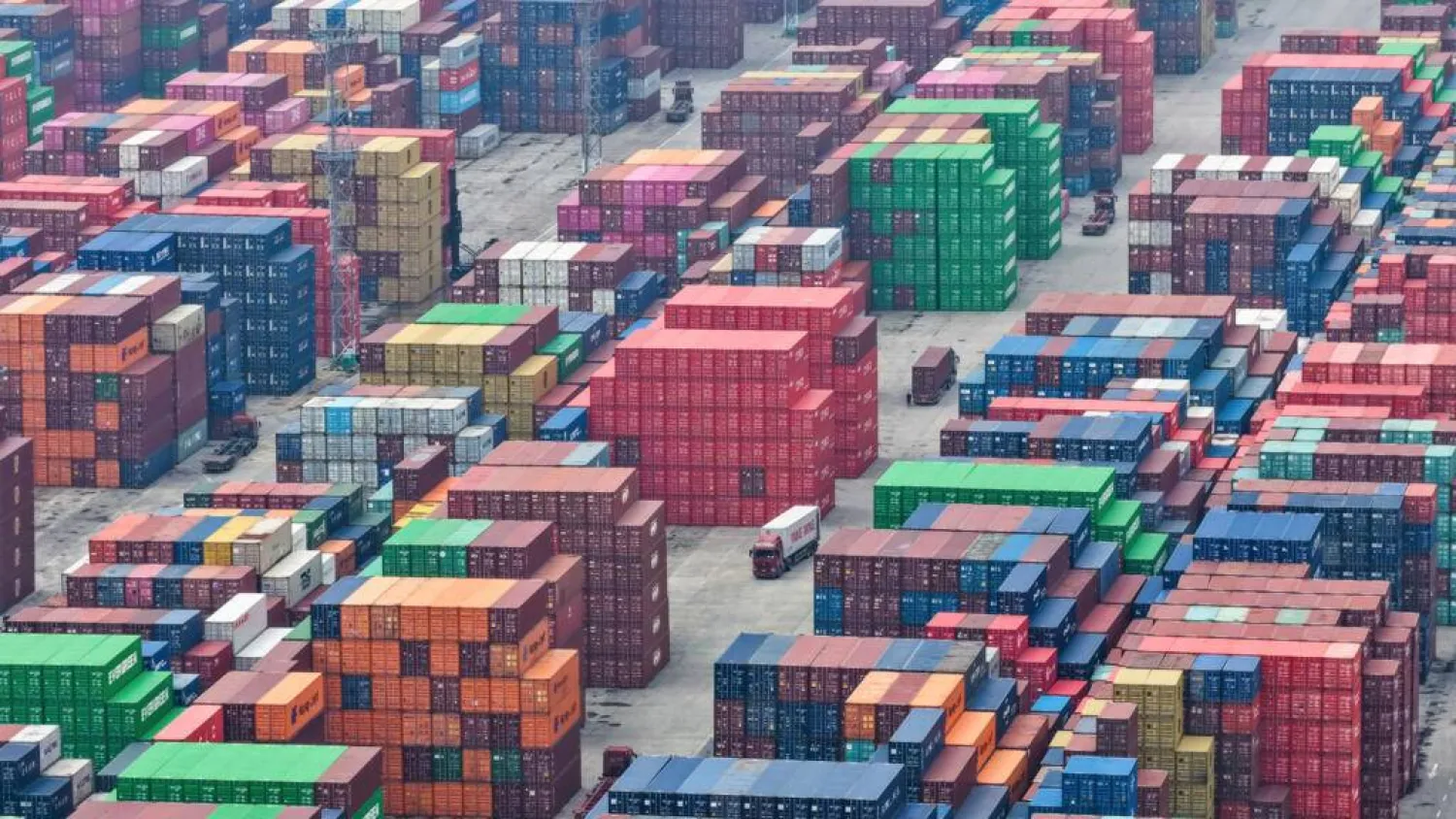
China's exports have helped support the economy but there are concerns about the impact on trade from the Middle East crisis. CN-STR/AFP
TT

China's Economy Beats Forecasts, but War Darkens Outlook

China's exports have helped support the economy but there are concerns about the impact on trade from the Middle East crisis. CN-STR/AFP

China's economy expanded more than expected in the first three months of the year, with official data Thursday indicating resilience in the face of a Middle East crisis that threatens to hit global growth.

The figures came despite a surge in world energy prices caused by the US-Israel war on Iran, which has stymied shipping through the crucial Strait of Hormuz, through which a fifth of the world's oil and natural gas passes.

Analysts say China's diversified energy supply shields it from immediate shocks, though a potential global downturn caused by the war could weaken demand for its exports, which have been propping up the country's economy.

Gross domestic product in the world's second-largest economy expanded 5.0 percent year-on-year in January-March, according to the National Bureau of Statistics (NBS).

The reading was slightly higher than an AFP forecast of 4.8 percent based on a survey of economists.

During the first quarter, China's economy "achieved a strong start to the year, further demonstrating its resilience and vitality", the NBS said in a statement announcing the data.

The reading came days after the International Monetary Fund cut its 2026 global growth projection, warning that the world economy could be "thrown off course" by the Middle East war.

It also reduced its forecast for China to 4.4 percent growth, from a previous estimate of 4.5 percent.

"The global economy is facing this next test of resilience as signs of unevenness lie beneath the surface," it said, noting that China's "domestic activity -- especially in the housing sector -- lags behind exports".

Beijing has set a 2026 target of 4.5-5.0 percent growth -- the lowest in decades.

A years-long crisis in the property sector and a persistent slump in domestic spending have left leaders reliant on exports to meet growth targets.

- Trade headwinds -

Outbound shipments have boomed, exemplified by the country's whopping $1.2 trillion trade surplus last year.

But data this week showed export growth slowed sharply in March, indicating that war in the Middle East was already taking a toll.

Thursday's NBS data also showed retail sales grew 1.7 percent on-year in March, well short of a Bloomberg forecast of 2.4 percent.

Industrial production rose 5.7 percent, the NBS said, beating a Bloomberg estimate of 5.3 percent but well down from the 6.3 percent seen in January and February combined.

The first-quarter acceleration in growth was fueled by exports, Zichun Huang of Capital Economics wrote in a note.

"We think growth will soften a bit over the rest of the year," she said.

"While the Chinese economy is holding up well, it is becoming ever more dependent on external demand," she said, noting that the Iran war "is likely to add to this trend".

A major international trade fair kicked off this week in Guangzhou -- a metropolis in China's southern manufacturing heartland -- where attendees told AFP the war is impacting their business.

Chinese exporters and Middle Eastern buyers at the opening day of the Canton Fair on Wednesday gloomily told AFP the Iran war had pummeled orders and led to price hikes.

Wang Jun, the deputy head of China's customs administration, this week acknowledged "many uncertainties and instabilities in the external environment".

"The impact of international geopolitical conflicts on global industrial and supply chains is still evolving in a complex manner," he said.



Foreign Investors Consolidate their Bets on Saudi Arabia as Economic Reforms Gather Pace

The King Abdullah Financial District in Riyadh. (SPA)
TT

Foreign Investors Consolidate their Bets on Saudi Arabia as Economic Reforms Gather Pace

The King Abdullah Financial District in Riyadh. (SPA)

Saudi Arabia is no longer just an oil-price bet for global investors. It is becoming a core emerging-market play. That is the view of Emmanuel Laurina, head of Middle East, Africa, and official institutions at State Street, one of the world’s major financial services and asset management firms.

Speaking to Asharq Al-Awsat, Laurina said a structural shift is reshaping how global institutions view the Kingdom, and why State Street is placing a major bet on its market.

Laurina explained that Saudi Arabia has moved from an oil-linked allocation to a central component of emerging-market portfolios.

The shift is being driven by a broader range of investable sectors, particularly finance, energy, and raw materials, giving investors real diversification in a world where many emerging markets are dominated by technology, he stressed.

Saudi Arabia’s inclusion in major global equity and bond indexes has helped anchor foreign inflows and strengthen the market’s role in international allocations, he said. Vision 2030 reforms have also widened opportunities beyond oil.

What is drawing investors now?

Laurina said market liberalization and the opening of share trading to foreign investors through the development of the Saudi Exchange, Tadawul, have helped attract liquidity and deepen international participation.

He also pointed to Saudi Arabia’s push into artificial intelligence and digital infrastructure as the Kingdom seeks strategic partnerships with major global technology companies.

In fixed income, Laurina said Saudi government bonds carry a strong A+ credit rating and offer a positive yield spread over US Treasuries, making them attractive for investors seeking dollar-denominated diversification.

Access has also improved sharply, he said. The abolition of the qualified foreign investor regime and the shift toward direct ownership of listed securities mark a major step forward.

Still, some structural limits remain. These include foreign ownership caps at individual and aggregate levels, and the need to trade through local brokers. Laurina said the listing of foreign exchange-traded funds in the Kingdom remains only partly developed because Saudi Arabia’s domestic market-making ecosystem is still limited.

New fund targets Saudi equities

Laurina said State Street recently launched an exchange-traded fund in partnership with the Saudi Public Investment Fund, giving international investors access to Saudi equities through a systematic active strategy that seeks to beat the benchmark across full market cycles.

The launch reflects rising client demand and a clear shift in the Saudi market’s composition, away from oil stocks and toward sectors such as healthcare, utilities and technology, he went to say.

ETFs, he said, are only one part of a wider ecosystem that includes institutional mandates, strategic partnerships, index-driven flows and growing activity in private markets, especially in Vision 2030 priority sectors.

Laurina said the Middle East and Africa are central to State Street’s future growth strategy.

The strategy rests on three pillars: building institutional asset classes in the Middle East and North Africa, internationalizing Sharia-compliant portfolios, and meeting growing demand for regionally focused investment solutions.

Riyadh became State Street’s 11th global investment center in 2024, he said, as the company continues to expand its local investment and research team.

Laurina said Saudi Arabia is now a pivotal market and a key growth engine in State Street’s Middle East and Africa strategy.


Standard Chartered CEO Seeks to Reassure Staff over AI-linked Job Cuts

FILED - 11 January 2012, China, Hong Kong: FILE PHOTO - A general view of the facade of Standard Chartered Bank branch in Hong Kong. Photo: Jens Kalaene/dpa-Zentralbild/dpa
TT

Standard Chartered CEO Seeks to Reassure Staff over AI-linked Job Cuts

FILED - 11 January 2012, China, Hong Kong: FILE PHOTO - A general view of the facade of Standard Chartered Bank branch in Hong Kong. Photo: Jens Kalaene/dpa-Zentralbild/dpa

Standard Chartered CEO Bill Winters sought to assuage staff concerns on Wednesday, a day after saying that the bank will cut thousands of jobs over the next four years as it moves to replace "lower-value human capital" with technology.

"Many of you will have seen media coverage following the Investor Event in Hong Kong, particularly the reporting around automation, AI, and workforce changes," Winters said in a memo to the bank's ⁠staff reviewed by ⁠Reuters.

"I know this may be unsettling when reduced to simple headlines or a quote out of context," he said.

A spokesperson for the bank confirmed the memo's content.

StanChart said on Tuesday it would cut 15% of ⁠its corporate function roles by 2030, which, according to a Reuters calculation, would result in nearly 8,000 redundancies out of its more than 52,000 staff in such roles.

The bank cited AI as a driver to slim its operations in its quest to increase profitability and tackle competition.

"It's not cost-cutting. It's replacing in some cases lower-value human capital with the financial capital ⁠and ⁠the investment capital we're putting in," Winters said on Tuesday.

In his memo to staff on Wednesday, Winters said the bank had been open that its workforce will evolve.

"Some roles will reduce in number, some will change, and new opportunities will emerge. We will continue to prioritize investment in reskilling and redeployment wherever we can," he said.

"Where changes do happen, we will handle them with thought and care," he added.


Ukraine Ally Britain Eases Sanctions on Russian Oil as Fuel Prices Surge Over Iran Conflict

A seized suspected Russian oil taker by the French navy is photographed in the Mediterranean Sea in Fos-sur-Mer, southern France, on Jan. 26, 2026. (AP)
TT

Ukraine Ally Britain Eases Sanctions on Russian Oil as Fuel Prices Surge Over Iran Conflict

A seized suspected Russian oil taker by the French navy is photographed in the Mediterranean Sea in Fos-sur-Mer, southern France, on Jan. 26, 2026. (AP)

The UK government has quietly watered down sanctions on Russian oil in an effort to shelter Britons from the cost-of-living squeeze triggered by the closure of the Strait of Hormuz.

A trade license that came into effect Wednesday permits the import of Russian oil that has been refined into jet fuel and diesel in third countries, such as India and Türkiye.

The US-Israeli war on Iran and Iran's closure of the strait, through which about a fifth of the world's oil usually passes, has sent fuel prices soaring around the world and sparked concerns about a shortage of jet fuel.

UK Treasury minister Dan Tomlinson said the changes are “for a time limited period and on a very specific issue.”

Britain has been one of Ukraine's strongest allies since Russia's full-scale invasion in 2022, and the government insist its sanctions against Russia remain among the toughest in the world.

But lawmaker Emily Thornberry, who chairs Parliament’s Foreign Affairs Committee, said Ukrainians would “feel very let down” by the move. She said Ukraine’s allies should keep squeezing Russia’s oil industry, because it “is absolutely crippling their economy.”

The US has also eased Russian sanctions. Earlier this week, Treasury Secretary Scott Bessent extended a 30-day sanctions waiver allowing the purchase of Russian oil shipments already at sea.

On Tuesday, finance ministers from the US, Britain and the other Group of Seven wealthy nations issued a joint statement reaffirming “our unwavering commitment to continue to impose severe costs on Russia in response to its continued aggression against Ukraine.”