


Saudi Arabia, Germany Eye Broader Cooperation in Energy, Infrastructure

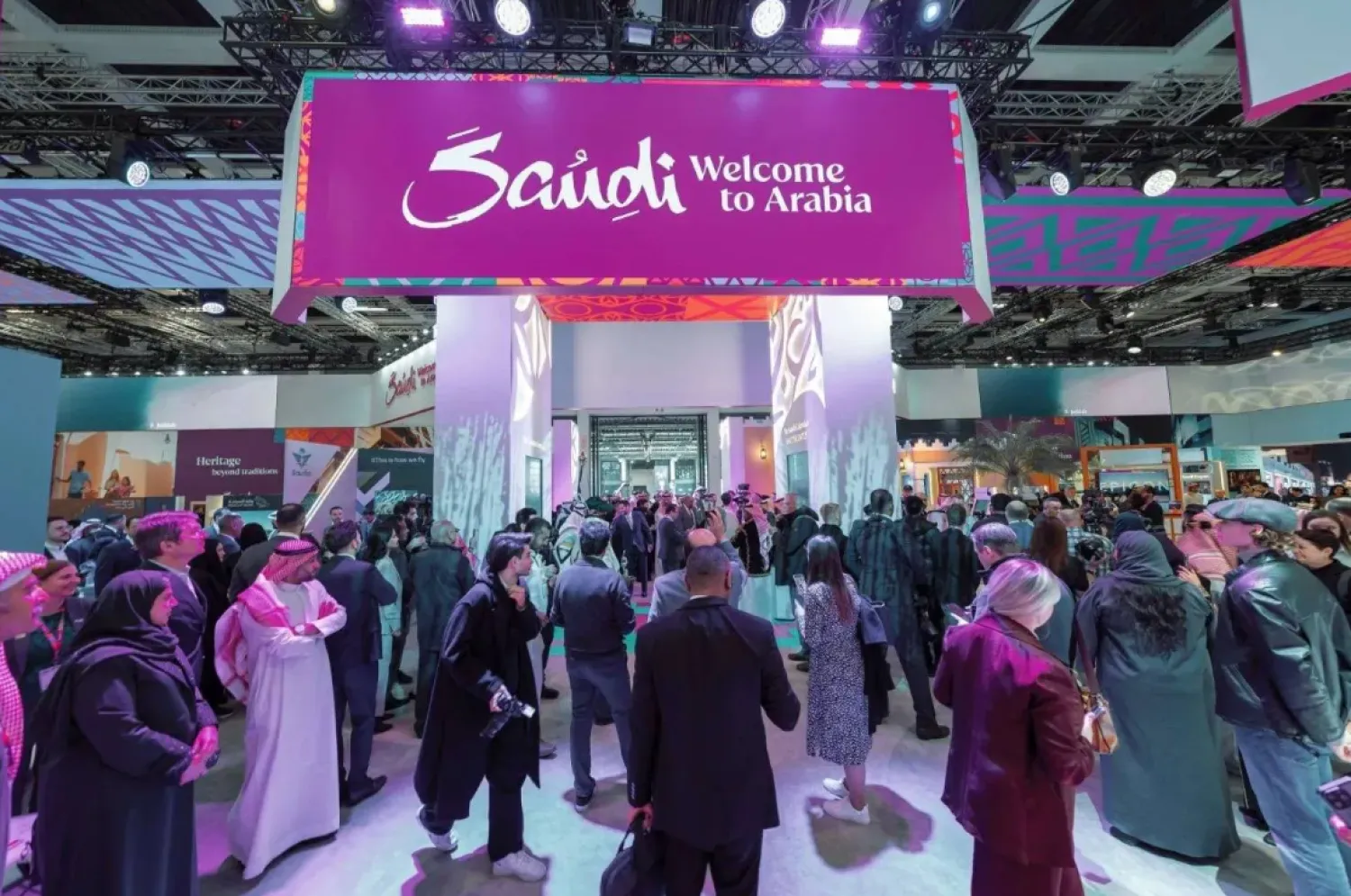
Saudi Pavilion at the Berlin Tourism Fair (Asharq Al-Awsat)
TT

Saudi Arabia, Germany Eye Broader Cooperation in Energy, Infrastructure

Saudi Pavilion at the Berlin Tourism Fair (Asharq Al-Awsat)

Bilateral relations between Saudi Arabia and Germany are witnessing a growing positive development, strengthened by recurring high-level talks and visits, with Riyadh considered as an important partner for Berlin as a regional power. The Kingdom is Germany’s second-largest trading partner in the Arab world, while Germany is the Kingdom’s fourth-largest supplier.

Florian Rohde, Head of Directorate Economic and Growth Policy at the German Ministry of Finance, told Asharq Al-Awsat that "Saudi Arabia is an important partner for Germany as a regional power. Bilateral relations are increasingly positive and have been further intensified by regular high-level talks and visits."

"Saudi Arabia is Germany's second-largest trading partner in the Arab world after the United Arab Emirates, while Germany is Saudi Arabia's fourth-largest supplier. Within 'Vision 2030' and the goal of restructuring the economy in Saudi Arabia, there are excellent opportunities for further expansion of trade and an increased cooperation in various economic and energy sectors between the two countries," he noted.

Rohde explained that cooperation between the two countries currently rests on a broad economic and investment partnership covering several fields, most notably energy, infrastructure, and renewable energy technologies.

He spoke about his participation in the recent Future Investment Initiative held in Riyadh, affirming that this initiative represents a leading platform for opening new horizons for qualitative and positive investment among nations.

"My participation in the Future Investment Initiative is primarily aimed at fostering dialogue and exploring opportunities for future cooperation with Saudi partners from both the public and private sectors. I see this forum as an excellent platform to exchange ideas on innovation, sustainability and investment priorities. I look forward to discussions that may lay the ground for future cooperation. Investment is the foundation for an economy´s growth and employment. Germany will continue to be an attractive destination for investment and one of the most open economies in the world."

Rohde noted that cooperation between Riyadh and Berlin is based on an extensive economic and investment partnership encompassing various sectors such as energy, infrastructure, and renewable energy technologies. He said that the Future Investment Initiative serves as a vital bridge to address current challenges and enhance opportunities for sustainable growth.

Rohde pointed out that in 2024, the volume of trade exchange between the two sides reached $11.3 billion, $9.4 billion of which represented German exports to Saudi Arabia, compared to $1.9 billion in imports.

"In 2024, the value of goods exported from Germany to Saudi Arabia was approximately 9.4 billion US dollars, and the value of goods imported was approximately 1.9 billion US dollars. In times during which the global economy is increasingly under pressure, our economic partnership has proven to be resilient – and is even becoming stronger."

According to Rohde, despite growing pressure on the global economy, the bilateral economic partnership has demonstrated resilience and continues to strengthen year after year.

He also expected Germany’s economy to witness noticeable improvement starting next year, driven by the domestic economy. He revealed that Germany plans to invest 500 billion euros ($574.4 billion) in infrastructure and climate protection over the next 12 years.

"Germany has made important decisions by investing 500 billion euros in infrastructure and climate protection over the forthcoming twelve years. The gross domestic product is expected to rise by 1.3 percent next year (2026) and by 1.4 percent in 2027."

Rohde acknowledged that global developments have affected Germany’s economy due to their impact on markets and increased volatility.



Indian Minister to Asharq Al-Awsat: We Expect Steady Growth in Tourism Between New Delhi and Riyadh

Saudi Minister of Culture Prince Badr bin Abdullah bin Farhan holding talks with India’s Minister of Tourism and Culture Gajendra Singh Shekhawat,X)
TT

Indian Minister to Asharq Al-Awsat: We Expect Steady Growth in Tourism Between New Delhi and Riyadh

Saudi Minister of Culture Prince Badr bin Abdullah bin Farhan holding talks with India’s Minister of Tourism and Culture Gajendra Singh Shekhawat,X)

India’s Minister of Tourism and Culture Gajendra Singh Shekhawat said he was optimistic about the future of tourism ties between his country and Saudi Arabia, saying that many young Saudis choose India as a favored tourist destination, while a good number of Indian tourists traveled to Saudi Arabia last year, expecting further steady growth in this movement over the coming years.

Building on this, he affirmed his country’s commitment to establishing broad practical cooperation with Riyadh, covering key sectors including economy, culture, and tourism. He also highlighted a set of challenges facing the global tourism sector, calling for joint governmental efforts to strengthen its resilience and adopt sustainability principles.

Speaking to Asharq Al-Awsat on the sidelines of the UN Tourism 26th General Assembly in Riyadh, the Indian minister said that global tourism is undergoing a major transformation that requires “stronger collaboration between governments and industry to enhance resilience, embrace sustainability, and ensure benefits are shared widely.” He looked forward to launching future joint production projects and initiatives with Saudi Arabia.

On this occasion, he congratulated Saudi Arabia for their successful hosting of the Assembly this year, noting that he had seized the opportunity to interact with his counterpart Ministers in Tourism and Culture during the visit, and to visit some prominent historical and cultural sites in the Kingdom.

Challenges Facing the Sector

The Indian minister acknowledged that the global tourism sector is going under a period of adjustment and facing multiple interconnected challenges, while international travel has rebounded post-pandemic, with many destinations still suffering from staff shortages, limited air connectivity, and uneven business recovery.

He added that climate change continues to pressure the sector to adopt sustainable practices, while geopolitical tensions and safety concerns affect traveler confidence. Tourists increasingly seek meaningful, tech-driven, and eco-conscious experiences, prompting destinations to rethink their travel offerings. Popular destinations face over-tourism, whereas emerging ones often lack the infrastructure for responsible growth. Persistent issues also include skills shortages, slow digital adoption among smaller operators, and the need for more inclusive and accessible tourism.

Tourism’s Economic Contribution

Regarding the size and economic contribution of tourism in India, and the steps taken by the Indian government to attract more foreign tourists, Shekhawat said that India is a prominent tourist destination and has shown consistent growth over the last few years.

He added that tourism contributes about 5% of the total GDP and supports close to 80 million direct and indirect jobs, serving as a principal source of foreign exchange earnings.

Shekhawat noted that his government has launched comprehensive reforms and focused investments to grow the tourism sector, including visa reforms, destination development, emphasis on healthcare and wellness tourism, and international partnerships.

He confirmed that India has opened the e-visa process where Saudi nationals can apply online and receive tourism visa within 72 hours.

India–Saudi Cooperation

Shekhawat emphasized that India and Saudi Arabia share deep-rooted cultural and historical ties based on centuries of exchange, trade, and people-to-people connections, stressing that cultural and tourism cooperation remain key pillars of our strategic partnership.

He said: “To further strengthen this bond, a Ministerial Committee on Tourism and Cultural Cooperation was established under the India–Saudi Arabia Strategic Partnership Council during the State Visit of Hon’ble Prime Minister of India to the Kingdom in April 2025.”

The Minister added: “During my current visit, I had a fruitful meeting with Saudi Minister of Culture, HH Prince Badr bin Abdullah bin Farhan Al-Saud and we also signed an MoU on Cultural Cooperation between our two countries. We discussed ways to enhance our cultural ties, promote exchanges between our cultural institutions, and intensify participation in each other’s cultural events and festival.”

Shekhawat concluded: “Many young Saudis choose India as a favored tourist destination, and a good number of Indian tourists traveled to Saudi Arabia last year. We expect these numbers to grow steadily over the coming years.”


Saudi Industrial Production Index Increases by 9.3% in September

GASTAT said Saudi Arabia’s Industrial Production Index for September 2025 rose by 9.3%. SPA
TT

Saudi Industrial Production Index Increases by 9.3% in September

GASTAT said Saudi Arabia’s Industrial Production Index for September 2025 rose by 9.3%. SPA

The General Authority for Statistics (GASTAT) announced on Monday that Saudi Arabia’s Industrial Production Index for September 2025 rose by 9.3% compared to the same month last year.

Compared to September 2024, the sub-indices for mining and quarrying and for manufacturing activities rose by 11.0% and 6.3%, respectively.

The sub-index for electricity, gas, steam, and air conditioning supply increased by 12.6%, while the sub-index for water supply, sewerage, waste management, and remediation activities grew by 9.2%.

The oil activities index increased by 10.1%, while the non-oil activities index rose by 7.3% compared to September 2024.


Riyadh, Ottawa Launch Foreign Investment Agreement and Reactivate Joint Commission

The Saudi Minister of Investment meets with the Canadian Minister of Trade. Asharq A-Awsat
TT

Riyadh, Ottawa Launch Foreign Investment Agreement and Reactivate Joint Commission

The Saudi Minister of Investment meets with the Canadian Minister of Trade. Asharq A-Awsat

Saudi Arabia and Canada have launched negotiations on a Foreign Investment and Protection Agreement in the Canadian capital, Ottawa, a move reflecting the shared commitment to strengthening bilateral economic relations.

The talks coincided with a visit by a high-level Saudi delegation led by the Minister of Investment, Eng. Khalid Al-Falih, during which both sides announced the reactivation of the Joint Economic Commission.

These developments are gaining significant momentum, supported by Canada’s endorsement of Saudi Vision 2030 and the two countries’ willingness to expand their economic partnership across vital and non-oil sectors.

The Canadian Ambassador to Saudi Arabia, Jean-Philippe Linteau, told Asharq Al-Awsat that Canada was thrilled to welcome Al-Falih.

“His meetings with Prime Minister Mark Carney, Minister of Trade Maninder Sidhu and Foreign Minister Anita Anand, as well as with senior Canadian business leaders, were a clear illustration of Canada’s desire to grow the economic partnership between Saudi Arabia and Canada,” said Linteau.

The diplomat added that “there is growing momentum because of Canada’s support for the Kingdom’s Vision 2030 goals and the visit helped advance key engagement on trade and investment as well as partnerships in sectors such as education, mining, AI and infrastructure.”

In 2024, Saudi Arabia was Canada’s largest merchandise trading partner in the Middle East. Two-way merchandise trade between the two countries in 2024 was valued at approximately $4.1 billion.

Over 150 Canadian companies are active in Saudi Arabia, offering competitive solutions in artificial intelligence and frontier technology, healthcare, infrastructure, mining, defense products, and creative industries.

During their meeting in Ottawa, Sidhu and Al-Falih announced the launch of negotiations for a Foreign Investment and Protection Agreement between Canada and Saudi Arabia. They also announced the reactivation of the Joint Economic Commission, a treaty-based mechanism to promote trade and economic initiatives of mutual benefit.

Sidhu and Al-Falih welcomed the October 23 signing of a memorandum of understanding between Export Development Canada and the Saudi EXIM Bank.

The increased partnership between Canada and Saudi Arabia will boost business opportunities, increase bilateral trade and unlock export opportunities and investments in Canadian and Saudi Arabian companies alike.

The two ministers also discussed future strategic sector partnerships between Canadian and Saudi Arabian companies, including in the areas of artificial intelligence and frontier technologies, healthcare, infrastructure, mining, defense, and creative industries.

They also met with business leaders and industry stakeholders, participated in a business round table with Invest in Canada and focused on deepening Canada-Saudi relations by highlighting commercial success stories between Canadian and Saudi companies.

“Saudi Arabia is an important market for Canada as our largest bilateral merchandise trading partner in the Middle East. We’re committed to advancing economic cooperation and mutually beneficial investment opportunities to foster greater commercial prosperity for Canadians and Saudis,” Sidhu said in a statement.

“I look forward to strengthening the relationship between our two countries and promoting continued cooperation for our businesses, industries and workers,” he added.