


Saudi Arabia Saves $2.4 Bn from 2,500 Gov’t Reform Projects

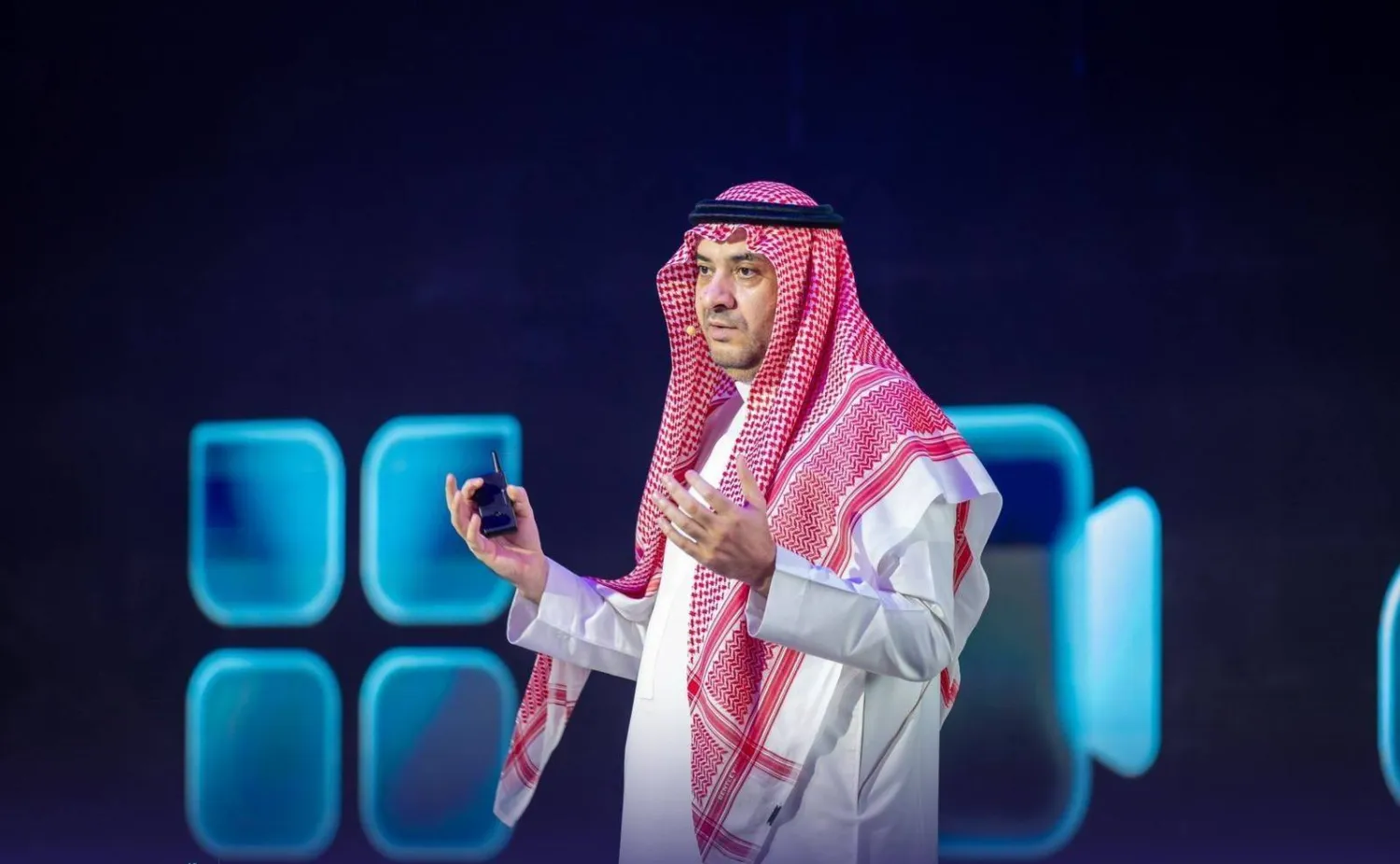
Faisal Al-Khamisi announcing the Beem platform at the Digital Government Forum (Asharq Al-Awsat)
TT

Saudi Arabia Saves $2.4 Bn from 2,500 Gov’t Reform Projects

Faisal Al-Khamisi announcing the Beem platform at the Digital Government Forum (Asharq Al-Awsat)

Saudi Arabia unveiled significant advances in its digital transformation during the fourth edition of the Digital Government Forum 2025 in Riyadh, a high-profile event that brought together more than 400 government entities and 2,000 decision-makers and global and local experts.

The forum, far from being just a discussion platform, highlighted Saudi Arabia’s rapid progress in digital services, with the kingdom ranking first regionally and third globally in the Digital Government Services Maturity Index.

Ahmed Alsuwaiyan, Governor of the Saudi Digital Government Authority (DGA), announced that a review of 2,500 government reform projects had generated savings of $2.4 billion.

The forum also saw the launch of pioneering technological initiatives, including Saudi Arabia’s plan to become the first country to launch a government marketplace for artificial intelligence agents, the rollout of the national business instant messaging platform “Beem,” the launch of the “Smart Court,” and the automation of the civil registry.

These initiatives underscore the kingdom’s accelerating drive toward Vision 2030 targets in expenditure efficiency and digital leadership.

In his opening remarks, Alsuwaiyan said Saudi Arabia held the top spot in the region and third globally in digital government services maturity, reflecting the rapid development of digital infrastructure and the efficiency of technological transformation across government entities.

He added that total savings reached 8.87 billion riyals ($2.4 billion) in the third quarter of 2025, covering more than 2,500 reform projects across over 120 government entities, as part of ongoing efforts to improve financial and administrative performance and spending efficiency.

Alsuwaiyan also noted that small and medium enterprises contributed 9.16 billion riyals, accounting for about 24% of total government procurement in 2024, highlighting the government’s commitment to supporting the private sector and boosting its role in economic development.

Government cloud service adoption rose to 41%, up from 14% in 2021, with total spending exceeding 25 billion riyals across more than 156 government entities by the end of Q3 2025, demonstrating the readiness of digital infrastructure and a shift toward more efficient and secure solutions.

The authority continues to lead government digital transformation efforts according to global best practices, contributing to Vision 2030 goals by enhancing financial sustainability and improving service quality for citizens and beneficiaries, he said.

Government AI Marketplace

Tareq Amin, CEO of Saudi AI company Humain, said Saudi Arabia would become the first country to launch a centralized government marketplace for AI agents. He described the kingdom’s unprecedented technological transformation, positioning AI as an integral part of every government and private sector activity.

AI is the enabling technology that will permeate everything done, whether in government, the private sector, or even at the consumer level, Amin told attendees.

He added that Saudi Arabia had the opportunity to distinguish its services and products globally, noting that Huamain was established to develop massive infrastructure and data centers hosting advanced chips and processors with liquid cooling architecture.

According to Amin, the company plans to build computing capacity of 1.9 gigawatts by 2030, rising to 6 gigawatts by 2034, in strategic partnerships with global firms including Nvidia and Qualcomm. Currently, Humain serves 150 countries through its inference ecosystem at roughly 47% lower cost than major international competitors.

Abdulwahab Al-Baddah, a DGA spokesperson, told Asharq Al-Awsat that Saudi Arabia ranks among the world’s leading countries, securing first place regionally for the third consecutive year in the UN ESCWA index, third globally according to the World Bank, and fourth in the UN e-Government Development Index.

Boosting Productivity and Digital Services

The forum also launched several initiatives, including the Beem business platform, an integrated instant messaging and collaborative work system developed by the Saudi Federation for Cybersecurity, Programming, and Drones in partnership with the DGA.

Beem is a nationally owned platform, developed locally with all data hosted within Saudi Arabia, designed to increase efficiency and productivity in government, corporate, and private sector environments.

It consolidates work tools in a single digital ecosystem, offering instant messaging, high-quality video meetings, file and task management, shared calendars, bilingual support in Arabic and English, advanced team organization tools, local secure cloud storage, and multi-organization account management.

Faisal Al-Khamisi, chairman of the Saudi Federation for Cybersecurity, Programming, and Drones, said Beem represented a strategic step in building national digital solutions to global standards, reflecting local expertise in advanced technology development and enhancing productivity while ensuring compliance with national regulations.

The platform relies on locally compliant infrastructure with secure data management, precise access control, and collaboration tools suitable for office, hybrid, and remote work environments, aligning with Vision 2030 digital transformation objectives.

Smart Court and Civil Registry Automation

The forum also introduced the “Smart Court,” a comprehensive digital system from the Board of Grievances that redesigns litigation processes using a realistic, simplified, and technology-integrated approach, improving service quality and supporting an advanced administrative judiciary.

Additionally, the “Education and Training Situation Room” was launched to analyze evaluation data, turning large datasets into actionable insights for education and training policy, contributing to national development.

The Ministry of Foreign Affairs launched the Unified Embassy Portal, consolidating all Saudi embassies’ websites under a single digital platform with consistent branding and improved user experience.

The civil registry system was also automated through the Absher Individual platform, allowing citizens, residents, and visitors to manage civil records electronically, covering over 61 services, including data updates, birth and death certificates, and marriage and divorce documentation.

Government Website Performance

The DGA announced that the 2025 Government Websites and Digital Content Efficiency Index scored 76.24%, classified as “proficient,” up from 71.40% in 2024, based on assessments of 250 government websites. This improvement reflects growing government commitment to updating content and enhancing digital presence in line with Vision 2030.

Top performers included the Human Resources Development Fund at 92.43%, followed by the Ministry of Human Resources and Social Development at 92.41%, King Khalid University at 92.37%, and Qassim University at 92.31%.

Other notable rankings were the Saudi Water Authority at 92.02%, the Saudi Energy Efficiency Center at 90.71%, the Ministry of Industry and Mineral Resources at 90.02%, the Technical and Vocational Training Corporation at 89.52%, and the Saudi Data and Artificial Intelligence Authority at 89.39%.



Makkah Gears Up for Ramadan with Tourism Drive, Record Hospitality Growth  

Tourism Minister Ahmed Al-Khateeb and other officials during his inspection tour on Tuesday. (Asharq Al-Awsat)
TT

Makkah Gears Up for Ramadan with Tourism Drive, Record Hospitality Growth  

Tourism Minister Ahmed Al-Khateeb and other officials during his inspection tour on Tuesday. (Asharq Al-Awsat)

Saudi Arabia’s Ministry of Tourism has raised the readiness of Makkah’s hospitality sector to its highest level ahead of the holy month of Ramadan, stressing that serving pilgrims and visitors remains a top national priority.

Makkah is preparing to receive worshippers and visitors amid a marked expansion in hospitality capacity. The city now has more than 2,200 licensed accommodation facilities, reflecting growth of 35 percent over the past year. The number of licensed hotel rooms has exceeded 380,000, up 25 percent, while total domestic and inbound tourism spending is projected to surpass SAR 143 billion ($38.1 billion) in 2025.

The wider Makkah region recorded unprecedented performance indicators last year, both in visitor numbers and tourism spending, underscoring sustained growth and operational readiness.

Total domestic and international visitors exceeded 50 million, marking a 14 percent increase compared with 2024.

Tourism Minister Ahmed Al-Khateeb announced the figures during an annual inspection tour on Tuesday, stressing that the indicators reflect a major expansion in accommodation capacity and record growth in visitor numbers.

The tour included inspections of temporary lodging facilities designated for pilgrims, part of a proactive plan to increase capacity during peak seasons, alongside early preparations for the upcoming Hajj.

Vision 2030 targets surpassed

Official data has shown that Saudi Arabia has exceeded its Vision 2030 targets for the Umrah. The number of pilgrims arriving from abroad rose from 8.5 million in 2019 to more than 18 million in 2025, surpassing the original goal of 15 million by 2030.

A number of hotels surrounding the Grand Mosque in Makkah. (General Authority for Awqaf)

Service quality indicators improved as well, with pilgrim satisfaction reaching 94 percent, exceeding Vision 2030 benchmarks.

Workforce development kept pace with demand, as the number of licensed tour guides rose to more than 980, a 23 percent increase.

Masar Mall project

Al-Khateeb announced a joint financing agreement between the Tourism Development Fund and the Arab National Bank with Hamat Holding to support the Masar Mall project. The development carries a total cost of SAR 936 million (about $250 million).

The project is expected to become the largest shopping center in Makkah with the capacity to accommodate around 20 million visitors annually.

Its location near the Haramain High-Speed Railway station and a direct pedestrian link to the Grand Mosque are expected to strengthen the city’s commercial and tourism infrastructure.

Jeddah: Gateway to pilgrims

Meanwhile, Jeddah continues to consolidate its position as a complementary destination to Makkah and a primary gateway for pilgrims, while also expanding its role as a coastal tourism hub.

The city welcomed more than 13 million domestic and international visitors in 2025, a 10 percent increase from 2024. Tourism spending reached SAR 28 billion ($7.47 billion), up 6 percent year on year.

Jeddah’s hospitality sector also expanded, with more than 500 licensed facilities and over 33,000 licensed rooms.

The city is currently developing 46 tourism projects valued at SAR 21 billion ($5.6 billion) and expected to add more than 11,000 hotel rooms and further strengthen its tourism infrastructure and economic value.


ECB President Lagarde Reportedly Plans to Quit Before Macron's Term Ends

FILE PHOTO: European Central Bank (ECB) President Christine Lagarde addresses the press following the ECB's Governing Council meeting, at the ECB headquarters in Frankfurt, Germany, February 5, 2026. REUTERS/Jana Rodenbusch/File Photo
TT

ECB President Lagarde Reportedly Plans to Quit Before Macron's Term Ends

FILE PHOTO: European Central Bank (ECB) President Christine Lagarde addresses the press following the ECB's Governing Council meeting, at the ECB headquarters in Frankfurt, Germany, February 5, 2026. REUTERS/Jana Rodenbusch/File Photo

European Central Bank President Christine Lagarde plans to leave her job before next year's French presidential election to allow Emmanuel Macron to have an input into picking her successor, the Financial Times reported on Wednesday.

Lagarde's term is due to end in October 2027 but some fear that the far right may win the French presidential race ‌in the spring of ‌2027, complicating the selection for the ‌new ⁠leader of Europe's most ⁠important financial institution.

Citing a person familiar with the matter, the FT said Lagarde has not yet decided on the exact timing of her departure but was keen on Macron and German Chancellor Friedrich Merz to be the key deciders in who succeeds her. Macron cannot run again for a third term.

"President Lagarde is ⁠totally focused on her mission and has not ‌taken any decision regarding the end ‌of her term," Reuters quoted an ECB spokesperson as saying.

The FT report comes only ‌a week after Bank of France Governor Francois Villeroy de Galhau ‌said he would step down in June this year, more than a year before the end of his term, allowing Macron to name his replacement before the presidential election that the far-right could win.

While it ‌will be up to all leaders from the 21-nation euro zone to pick Lagarde's successor, ⁠past practice ⁠suggests that any successful candidate must have both German and French support to clinch the role.

There are no formal candidates for the job yet but several names have been floating among ECB circles as potential ECB presidents. The most prominent among these are former Dutch central bank chief Klaas Knot and Bank for International Settlements General Manager Pablo Hernandez de Cos.

Lagarde's non-renewable term at the ECB runs until October 31, 2027. Prior to heading the ECB, she was managing director of the International Monetary Fund from 2011 to 2019 and before that, the French finance minister.


UK Inflation Falls to 3.0% in January

Pedestrians cross Westminster Bridge in front of Parliament during the early morning hours in London, Tuesday, Feb. 10, 2026.(AP Photo/Kin Cheung)
TT

UK Inflation Falls to 3.0% in January

Pedestrians cross Westminster Bridge in front of Parliament during the early morning hours in London, Tuesday, Feb. 10, 2026.(AP Photo/Kin Cheung)

Britain's annual ‌rate of consumer price inflation fell to 3.0% in January from 3.4% in December, official figures showed on Wednesday.

A Reuters poll of economists had shown a median forecast of 3.0% in January and the Bank of England projected earlier this month that the headline measure of inflation would slow to ‌2.9%.

British inflation ‌has run higher than in ‌the ⁠United States and in ⁠the euro zone where it stood at 2.4% and 1.7% respectively in January.

But the BoE expects the pace of price rises to slow sharply to almost its 2% target in ⁠April as last year's rises ‌in utility costs and ‌other government-controlled tariffs fall out of ‌the annual comparison.

Investors expect the central bank ‌to cut its benchmark interest rate to 3.5% at its next meeting in March after a tight vote to keep borrowing costs ‌on hold in February although some policymakers remain worried about underlying ⁠inflation ⁠pressure.

Financial markets on Tuesday also priced a second quarter-point interest rate cut by the BoE by the end of in 2026.

ONS data last week painted a downbeat picture of Britain's economy at the end of 2025 with output barely growing. Figures released on Tuesday showed the labor market was still losing jobs although there were some signs of a stabilization.