


Indian Minister to Asharq Al-Awsat: We Expect Steady Growth in Tourism Between New Delhi and Riyadh

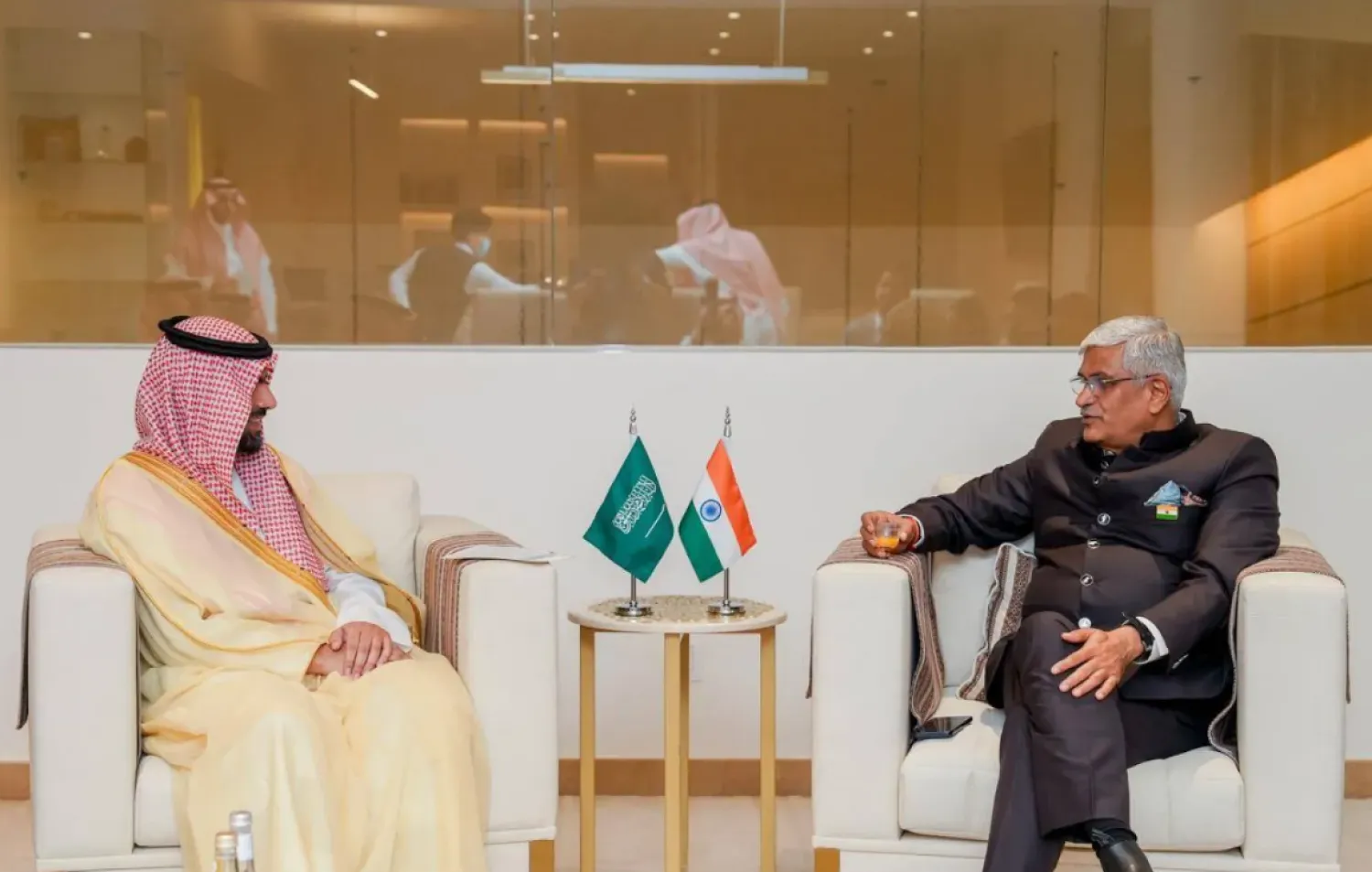
Saudi Minister of Culture Prince Badr bin Abdullah bin Farhan holding talks with India’s Minister of Tourism and Culture Gajendra Singh Shekhawat,X)
TT

Indian Minister to Asharq Al-Awsat: We Expect Steady Growth in Tourism Between New Delhi and Riyadh

Saudi Minister of Culture Prince Badr bin Abdullah bin Farhan holding talks with India’s Minister of Tourism and Culture Gajendra Singh Shekhawat,X)

India’s Minister of Tourism and Culture Gajendra Singh Shekhawat said he was optimistic about the future of tourism ties between his country and Saudi Arabia, saying that many young Saudis choose India as a favored tourist destination, while a good number of Indian tourists traveled to Saudi Arabia last year, expecting further steady growth in this movement over the coming years.

Building on this, he affirmed his country’s commitment to establishing broad practical cooperation with Riyadh, covering key sectors including economy, culture, and tourism. He also highlighted a set of challenges facing the global tourism sector, calling for joint governmental efforts to strengthen its resilience and adopt sustainability principles.

Speaking to Asharq Al-Awsat on the sidelines of the UN Tourism 26th General Assembly in Riyadh, the Indian minister said that global tourism is undergoing a major transformation that requires “stronger collaboration between governments and industry to enhance resilience, embrace sustainability, and ensure benefits are shared widely.” He looked forward to launching future joint production projects and initiatives with Saudi Arabia.

On this occasion, he congratulated Saudi Arabia for their successful hosting of the Assembly this year, noting that he had seized the opportunity to interact with his counterpart Ministers in Tourism and Culture during the visit, and to visit some prominent historical and cultural sites in the Kingdom.

Challenges Facing the Sector

The Indian minister acknowledged that the global tourism sector is going under a period of adjustment and facing multiple interconnected challenges, while international travel has rebounded post-pandemic, with many destinations still suffering from staff shortages, limited air connectivity, and uneven business recovery.

He added that climate change continues to pressure the sector to adopt sustainable practices, while geopolitical tensions and safety concerns affect traveler confidence. Tourists increasingly seek meaningful, tech-driven, and eco-conscious experiences, prompting destinations to rethink their travel offerings. Popular destinations face over-tourism, whereas emerging ones often lack the infrastructure for responsible growth. Persistent issues also include skills shortages, slow digital adoption among smaller operators, and the need for more inclusive and accessible tourism.

Tourism’s Economic Contribution

Regarding the size and economic contribution of tourism in India, and the steps taken by the Indian government to attract more foreign tourists, Shekhawat said that India is a prominent tourist destination and has shown consistent growth over the last few years.

He added that tourism contributes about 5% of the total GDP and supports close to 80 million direct and indirect jobs, serving as a principal source of foreign exchange earnings.

Shekhawat noted that his government has launched comprehensive reforms and focused investments to grow the tourism sector, including visa reforms, destination development, emphasis on healthcare and wellness tourism, and international partnerships.

He confirmed that India has opened the e-visa process where Saudi nationals can apply online and receive tourism visa within 72 hours.

India–Saudi Cooperation

Shekhawat emphasized that India and Saudi Arabia share deep-rooted cultural and historical ties based on centuries of exchange, trade, and people-to-people connections, stressing that cultural and tourism cooperation remain key pillars of our strategic partnership.

He said: “To further strengthen this bond, a Ministerial Committee on Tourism and Cultural Cooperation was established under the India–Saudi Arabia Strategic Partnership Council during the State Visit of Hon’ble Prime Minister of India to the Kingdom in April 2025.”

The Minister added: “During my current visit, I had a fruitful meeting with Saudi Minister of Culture, HH Prince Badr bin Abdullah bin Farhan Al-Saud and we also signed an MoU on Cultural Cooperation between our two countries. We discussed ways to enhance our cultural ties, promote exchanges between our cultural institutions, and intensify participation in each other’s cultural events and festival.”

Shekhawat concluded: “Many young Saudis choose India as a favored tourist destination, and a good number of Indian tourists traveled to Saudi Arabia last year. We expect these numbers to grow steadily over the coming years.”



Saudi Industry Ministry Signs MoUs to Advance Manufacturing Empowerment

The agreements were signed during the "Industrial Transformation Saudi Arabia 2025” Exhibition. SPA
TT

Saudi Industry Ministry Signs MoUs to Advance Manufacturing Empowerment

The agreements were signed during the "Industrial Transformation Saudi Arabia 2025” Exhibition. SPA

The Ministry of Industry and Mineral Resources has signed a number of memoranda of understanding (MoUs) with leading local and international companies to advance advanced manufacturing, support local content, and strengthen national supply chains, enhancing the regional and global competitiveness of Saudi industry.

The agreements were signed during the "Industrial Transformation Saudi Arabia 2025” Exhibition, organized by the ministry in partnership with Deutsche Messe and Riyadh Exhibitions Company Ltd.

The ministry signed two memoranda to provide innovative financing solutions for industrial establishments, strengthen national supply chains, and support local content.

Additionally, the ministry's National Center for Advanced Manufacturing and Production signed several memoranda of understanding with local and international industrial and advisory companies to support the path of advanced manufacturing, develop supply chains, enhance technological innovation, and boost the competitiveness of national factories, in line with the National Industrial Strategy and Saudi Vision 2030.

These strategic partnerships are part of the ministry's ongoing efforts to develop the Kingdom's industrial ecosystem, enable manufacturers to access the latest industrial solutions, support supply chain development, and stimulate innovation, contributing to the building of a sustainable industrial sector that competes regionally and globally.


China Says Working on Streamlining Rare Earth Export Licenses

FILE PHOTO: Workers transport soil containing rare earth elements for export at a port in Lianyungang, Jiangsu province, China October 31, 2010. REUTERS/Stringer/File Photo
TT

China Says Working on Streamlining Rare Earth Export Licenses

FILE PHOTO: Workers transport soil containing rare earth elements for export at a port in Lianyungang, Jiangsu province, China October 31, 2010. REUTERS/Stringer/File Photo

China said on Thursday it is working on streamlining rare earth export licenses - a key promised outcome after a meeting between US President Donald Trump and his counterpart Xi Jinping.

"The government is actively adapting," Commerce Ministry spokesman He Yadong told reporters at a weekly briefing, adding that authorities "were aligning themselves with general license mechanisms".

Reuters reported on Tuesday that at least three Chinese rare earth magnet makers had secured licenses enabling them to accelerate exports to some customers.

He did not say if new licenses had been issued.

China began designing the new rare earth licensing regime following a late October meeting between Trump and Xi that eased trade tensions between the two countries.


Saudi Aramco's Jafurah Gas Plant Begins Output with 450 Million Cubic Feet Per Day

The resources at Jafurah are now estimated at 229 trillion standard cu ft of gas and 75 billion barrels of condensates. (Saudi Aramco)
TT

Saudi Aramco's Jafurah Gas Plant Begins Output with 450 Million Cubic Feet Per Day

The resources at Jafurah are now estimated at 229 trillion standard cu ft of gas and 75 billion barrels of condensates. (Saudi Aramco)

The first phase of oil giant Aramco's Jafurah gas plant is complete and production has begun with a capacity of 450 million cubic feet per day, the Saudi finance ministry said on Tuesday.

The finance ministry, in its 2026 budget statement, listed the milestone as an achievement reached in 2025.

Jafurah's gas output will be used for domestic power generation, freeing up crude for export that is currently used for power in the kingdom.

Aramco has said its unconventional gas program at peak production is expected to generate electricity equivalent to displacing 500,000 barrels per day of oil.

The $100 billion Jafurah project, estimated to contain 229 trillion standard cubic feet of raw gas, is central to Aramco's ambitions to become a major global player in natural gas and boost its gas production capacity.

Aramco's gas production was 12.6 billion cubic feet per day at the end of September, up from 12 bcfd a year earlier.

Aramco last month said it was boosting its gas growth target to 80% above 2021 levels from a previous targeted growth of 60%.

In its 2021 annual report, Aramco said it reached a single-day record gas output at the time of 10.8 bcfd.

Aramco CEO Amin Nasser, who has called Jafurah a crown jewel in the company's portfolio, said during an earnings call last month the first phase was on track for completion by the end of this year.