Trump Reportedly Unsure Whether Impact of Economic Policies Will be Felt in Time for Midterms

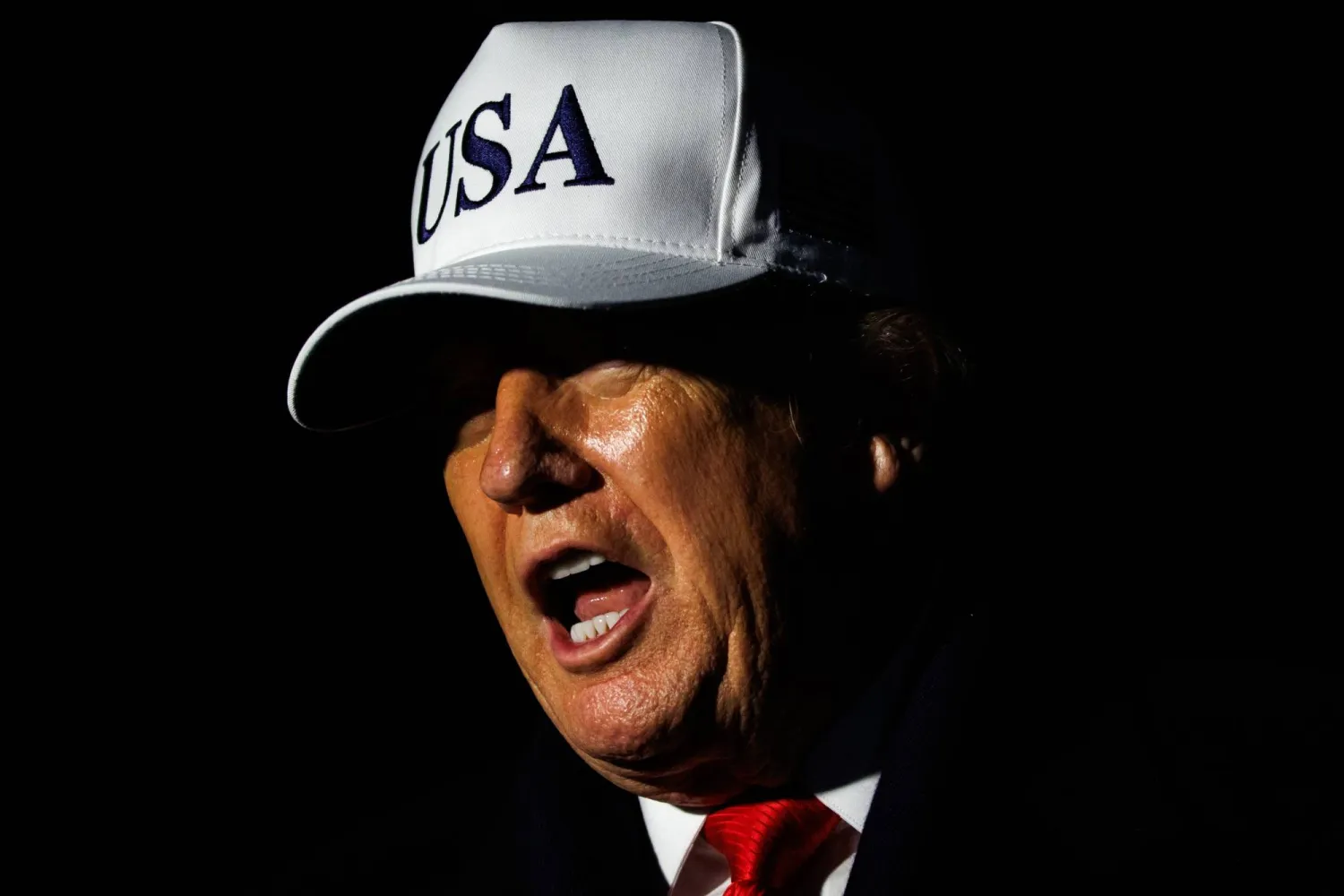
US President Donald Trump makes a statement to reporters as he heads into the White House after landing on the South Lawn in Marine One in Washington, DC, USA, 13 December 2025. EPA/Samuel Corum / POOL
TT

Trump Reportedly Unsure Whether Impact of Economic Policies Will be Felt in Time for Midterms

US President Donald Trump makes a statement to reporters as he heads into the White House after landing on the South Lawn in Marine One in Washington, DC, USA, 13 December 2025. EPA/Samuel Corum / POOL

US Donald President Trump expressed uncertainty about whether Republicans would keep control of the House of Representatives in next year's midterm elections because some of his economic policies have yet to take full effect, the Wall Street Journal reported on Saturday.

Trump, in an interview conducted on Friday, told the Journal, "I can’t tell you. I don’t know when all of this money is going to kick in," when asked about the whether Republicans would lose the House in November.

The White House did not immediately respond to Reuters' request for comment.

The president has argued that his economic policies, including his imposition of widespread tariffs on imports, are creating jobs, boosting the stock market and attracting increased investment into the United States.

After campaigning last year on promises to tame inflation, Trump has in recent weeks alternated between dismissing affordability problems as a hoax, blaming President Joe Biden for them, and promising his economic policies will benefit Americans next year.

"I think by the time we have to talk about the election, which is in another few months, I think our prices are in good shape," Trump said in the interview.

Last month the president rolled back tariffs on more than 200 food products in the face of growing angst among American consumers about the high cost of groceries.

The president did not say whether he would lower tariffs on additional goods, the Journal reported.

Trump's overall approval rating edged up to 41% in a new Reuters/Ipsos poll but the approval rating on his performance on the cost of living was just 31%.

Democrats have won a string of victories in state and local elections in Virginia, New Jersey and New York City, where growing voter concerns about affordability, including high food prices, were a key topic.

Officials have said Trump will hit the road in the new year to campaign for Republican candidates and emphasize his economic policy successes. Trump has said his tax cuts and tariffs on foreign goods will put more money in the pockets of American families.


France Lowers Growth Forecast, Will Miss Deficit Target

French Minister for Economy, Finance, and Industrial, Energy and Digital Sovereignty Roland Lescure gestures as he speaks during a press conference to update the governments growth and fiscal deficit forecasts for the 2027 budget, at the Bercy Economy and Finance Ministry in Paris, France, September 11, 2026. REUTERS/Stephanie Lecocq
TT

France Lowers Growth Forecast, Will Miss Deficit Target

French Minister for Economy, Finance, and Industrial, Energy and Digital Sovereignty Roland Lescure gestures as he speaks during a press conference to update the governments growth and fiscal deficit forecasts for the 2027 budget, at the Bercy Economy and Finance Ministry in Paris, France, September 11, 2026. REUTERS/Stephanie Lecocq

France's economy will grow less than expected this year and the government will miss its budget deficit target, Finance Minister Roland Lescure said on Friday.

The downgraded outlook complicates the government's task of getting its 2027 budget passed in the coming months in a deeply divided parliament, where parties have hardened their positions before an April-May two-round presidential election.

Lescure told journalists he was lowering the government's 2026 economic growth forecast to 0.5% from 0.7% previously, but stuck with a ⁠projection of 1.0% ⁠for next year.

"This year has been marked by extreme crises involving four different types of shocks," Lescure told reporters, according to Reuters.

Slower growth will make it more difficult for the government to trim its fiscal budget deficit as planned to 5.0% of economic output this year.

"The ⁠reality is that the budget was built on a 5% assumption. And the reality is that, today, 5% is no longer an option," Lescure said.

The minister did not give a new deficit target.

The economic fallout from the war in the Middle East and summer heatwaves and drought that hit agriculture output have dragged down growth and put the government's fiscal targets out of reach.

"I think it is reasonable to say that economic ⁠uncertainty has ⁠never been greater than it is today," Lescure said. "We are operating under tight budgetary constraints; there is no more fat to trim."

Further complicating the picture, French borrowing rates have surged in recent weeks as investors have identified France as one of the weaker links in a global bond selloff due to its weak public finances and serial slippage on its deficit-reduction plans.

Lescure stressed that France had no difficulties in issuing debt, but acknowledged that it now cost more.


ECB Policymakers Open Door to More Rate Hikes on Energy Risk

The logo of the European Central Bank (ECB) is pictured outside its headquarters in Frankfurt, Germany, April 26, 2018. REUTERS/Kai Pfaffenbach/File Photo
TT

ECB Policymakers Open Door to More Rate Hikes on Energy Risk

The logo of the European Central Bank (ECB) is pictured outside its headquarters in Frankfurt, Germany, April 26, 2018. REUTERS/Kai Pfaffenbach/File Photo

Two European Central Bank policymakers opened the door on Friday to further interest rate increases if a war-fueled rise in energy prices continues and pushes up other prices in the euro zone.

The ECB raised borrowing costs on Thursday for the second time this year and sources told Reuters policymakers expect further policy tightening in the months ahead, with a move possible as early ⁠as October.

The central ⁠bankers of Germany and Estonia acknowledged this prospect on Friday although they both stressed any move would depend on how oil and gas prices develop.

Bundesbank President Joachim Nagel said the ECB might need to raise rates to a level that mildly curbs the economy.

"I will not exclude that we have to ⁠go into the mild restrictive territory, but as I said, it's very much dependent on how the energy prices evolve, how the price picture is evolving over the course of maybe the next month," he told CNBC in an interview, according to Reuters.

The euro zone central bank increased its key rate from 2.25% to 2.50%, bringing it to the upper end of its estimated neutral range, which neither stimulates nor slows down the economy.

Money markets have started pricing in at least another three ECB rate hikes over the next ⁠year.

Ülo Kaasik, ⁠Estonia's central bank governor, said such expectations were "understandable" given the latest increase in fuel prices and the risk that food would also become more expensive.

"Recent developments in energy markets, for example, indicate the possibility that the price increase for gas and fuels will be much larger and last longer than expected in the forecast," he said in a blog post.

Slovenia's central bank governor Primož Dolenc also warned in a blog post about "rising energy and electricity costs in the autumn and winter months".

The ECB on Thursday slightly increased its projections for growth and inflation but these did not capture the latest energy price moves.


Dollar Holds Gains, Yen Slips as Middle East Energy Shock Deepens

14 January 2020, Iraq, Baghdad: US dollar banknotes are pictured at a currency exchange service provider. (dpa)
TT

Dollar Holds Gains, Yen Slips as Middle East Energy Shock Deepens

14 January 2020, Iraq, Baghdad: US dollar banknotes are pictured at a currency exchange service provider. (dpa)

The dollar held near its highest levels of the past week in Asian trading on Friday as renewed fears of energy supply disruptions in the Middle East pushed up bond yields and oil prices.

The US dollar index, which measures the greenback's strength against a basket of six currencies, was trading flat at 99.084, after strengthening to its highest level since September 7 during the previous session. The rise followed the release of data showing US producer prices increased 0.4% in August, meeting market expectations as energy prices rebounded during the month.

"The safe-haven US dollar gained on risk-aversion flows, helped by higher energy prices that have lifted the chance of a Fed hike next week to 70%," said ‌Tony Sycamore, market ‌analyst at IG in Sydney.

Energy prices snapped a five-day gaining streak, with Brent crude ‌futures ⁠down 0.6% at $106.99 ⁠a barrel in Asian trade.

But both major benchmarks remained above the $100 mark earlier this week, with WTI futures surging across the threshold on Thursday for the first time since May 21.

Against the yen, the US dollar was down 0.2% at 154.105 yen and on track for its second consecutive week of declines, while the euro slipped 0.2% to 178.99 yen after the European Central Bank hiked interest rates on Thursday for the second time this year.

The Japanese currency regained ⁠some strength after data released on Friday showed wholesale inflation rose 7.6% in August ‌from a year earlier, bolstering the case for a rate ‌hike this month.

The Bank of Japan is set to raise interest rates next week, most likely by 25 basis points, and ‌may signal faster future tightening if price pressures heighten risks of an inflation overshoot, four sources familiar with ‌its thinking told Reuters.

The kiwi dollar was up 0.5% at $0.5827, retracing a selloff on Thursday that has put the currency on track for its third week of declines. New Zealand's 10-year government bond yields rose by 15.5 basis points to 5.06% on Friday, extending the biggest two-day jump in borrowing costs since last year's "Liberation Day" selloff.

"New Zealand seems to have been hit harder ‌than most in the latest leg of the bond market sell-off," said Thomas Mathews, head of markets for Asia Pacific at Capital Economics in Wellington.

The Australian dollar ⁠was up 0.2% at $0.7167.

Both ⁠the euro and the British pound were level against the dollar at $1.1609 and $1.3503, respectively.

PRESSURE BUILDS ON FEDERAL RESERVE

Markets are awaiting the release of US CPI later on Friday, one of the last major economic data points released before the Federal Reserve meets next week.

Fed funds futures are pricing an implied 71.1% probability of a 25-basis-point hike at the US central bank's next two-day meeting ending on September 16, compared with a 61.2% chance in the previous trading session, according to the CME Group's FedWatch tool.

Fixed-income markets remained uneasy after the US Treasury Department tripled the size of its long-dated bond repurchase, with a gauge of bond volatility rising to its highest level in a month. The yield on US 10-year government bonds was up 1.5 basis points at 4.957%.

"10-year US Treasury yields are within striking distance of 5%, as the markets have reassessed the Fed's path higher while term premium is appropriately hovering near pre-GFC levels," Barclays analysts wrote. "We remain of the view that bonds are not cheap yet and catalysts for a rally do not appear imminent."

In cryptocurrencies, bitcoin was down 0.2% at $77,094.41 while ether was 0.1% lower at $2,457.96.