


India Overtakes Japan as World's 4th Largest Economy

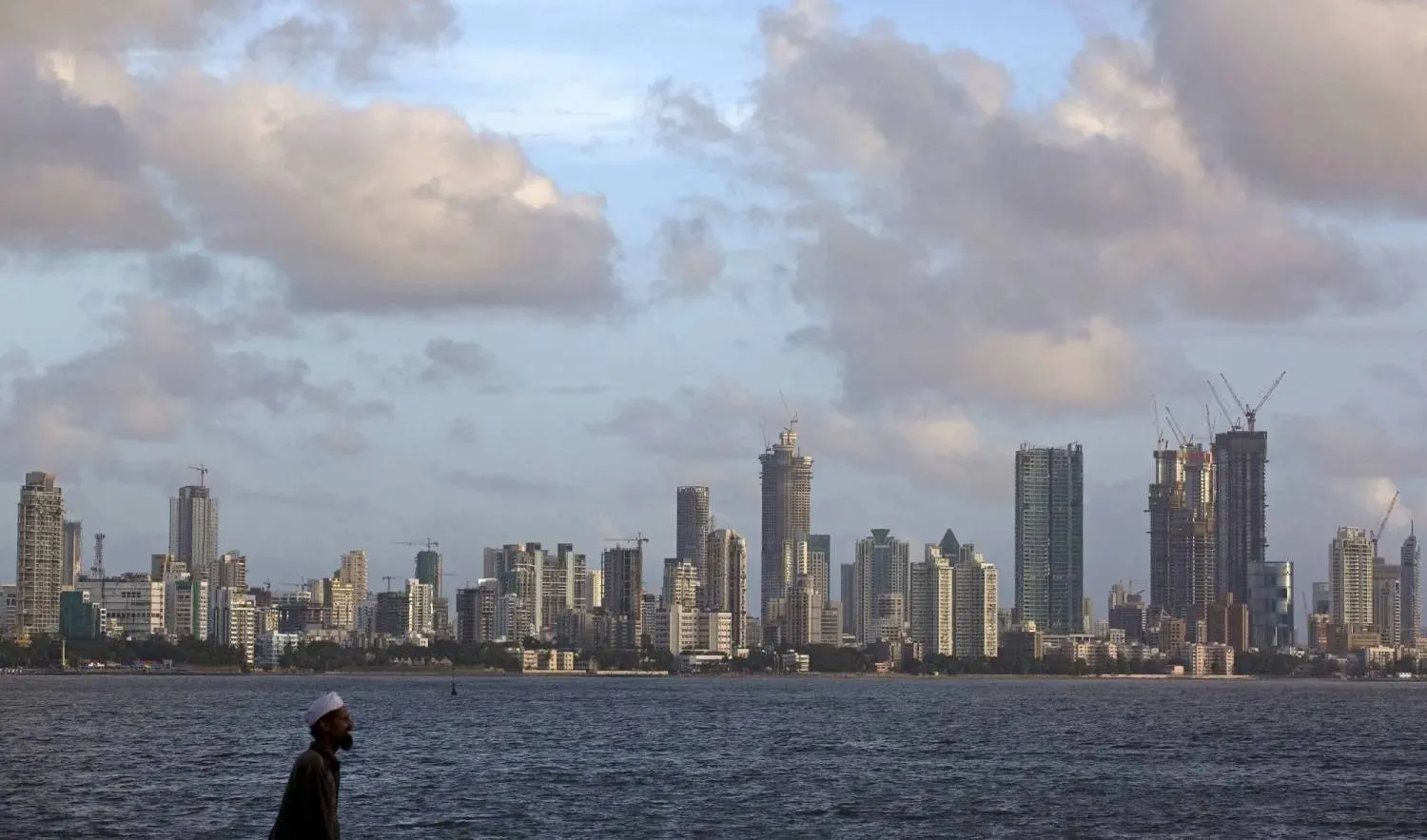
 A man walks at the seafront as scattered clouds are seen over Mumbai's skyline, India, June 10, 2015. (Reuters)
 A man walks at the seafront as scattered clouds are seen over Mumbai's skyline, India, June 10, 2015. (Reuters)
TT

India Overtakes Japan as World's 4th Largest Economy

 A man walks at the seafront as scattered clouds are seen over Mumbai's skyline, India, June 10, 2015. (Reuters)
 A man walks at the seafront as scattered clouds are seen over Mumbai's skyline, India, June 10, 2015. (Reuters)

India has overtaken Japan as the world’s fourth largest economy and officials hope to pass Germany within three years, the government’s end-of-year economic review revealed.

Official confirmation, however, depends on data due in 2026 when final annual gross domestic product figures are released, with the International Monetary Fund (IMF) suggesting India will cross over Japan next year, reported AFP.

“India is among the world’s fastest-growing major economies and is well-positioned to sustain this momentum,” read the government economic briefing note, which was released late on Monday.

“With GDP valued at $4.18 trillion, India has surpassed Japan to become the world’s fourth largest economy, and is poised to displace Germany from the third rank in the next two-and-a-half to three years, with projected GDP of $7.3 trillion by 2030.”

IMF projections for 2026 put India’s economy at $4.51 trillion, compared with Japan’s $4.46 trillion.

The upbeat assessment comes despite economic worries after Washington in August hit India with huge tariffs over its purchases of Russian oil.

New Delhi said continued growth reflects its “resilience amid persistent global trade uncertainties”. But other measurements offer a less rosy outlook.

In terms of population, India overtook neighboring China as the most populous nation in 2023.

India’s GDP per capita was $2,694 in 2024, according to the latest World Bank figures, 12 times smaller than Japan’s $32,487, and 20 times smaller than Germany’s $56,103.

Government figures show that more than a quarter of India's 1.4 billion people are aged between 10 and 26. Creating enough well-paid jobs for millions of young graduates is an upcoming hurdle, but the report offered a rosy outlook.

“As one of the world's youngest nations, India's growth story is being shaped by its ability to generate quality employment that productively absorbs its expanding workforce and delivers inclusive, sustainable growth,” a note in the review said.

India’s Prime Minister Narendra Modi this year unveiled sweeping consumption tax cuts and pushed through labor law reforms after growth slowed to a four-year low in the 12 months ending March 31.

Currency pressures have also mounted.

The rupee hit a record low against the dollar in early December, after falling about 5% in 2025.

That came amid concerns over the lack of a trade deal with Washington and the impact of higher levies on Indian goods.

India became the world's fifth largest economy in 2022, when its GDP overtook that of former colonial ruler Britain, according to IMF figures.



China’s Factory Activity Snaps Record Slump on Festive Stockpiling

People walk down steps near a residential building area with a view of China Zun, the tallest skyscraper in Beijing, Tuesday, Dec. 23, 2025. (AP)
TT

China’s Factory Activity Snaps Record Slump on Festive Stockpiling

People walk down steps near a residential building area with a view of China Zun, the tallest skyscraper in Beijing, Tuesday, Dec. 23, 2025. (AP)

China's factory activity unexpectedly grew in December, snapping a record eight straight months of decline, lifted by a rise in pre-holiday orders ​as officials seek to spur the $19 trillion economy's manufacturing sector without worsening deflation.

The official purchasing managers' index (PMI) rose to 50.1 in December from 49.2 in November, the National Bureau of Statistics' survey showed on Wednesday, topping the 50-point mark separating growth from contraction and beating a forecast of 49.2 in a Reuters poll.

"Assuming the improvement in the PMIs is borne out in the hard data, we think it will likely be a short-lived upturn in activity on the back of month-to-month swings in fiscal spending rather than the start of a more sustained pick-up," said Julian Evans-Pritchard, head of China economics at Capital Economics.

"The big picture is that the structural headwinds from the property ‌downturn and industrial ‌overcapacity are set to persist in 2026," he added.

Still, the data should ‌give ⁠policymakers ​cause for ‌optimism after choosing to see out 2025 without major additional stimulus to meet the full-year growth target of around 5%.

The production sub-index jumped to 51.7 from 50.0 in November, while new orders climbed to 50.8 from 49.2, marking their strongest performance since March. Supplier delivery times also improved, pushing the production and activity expectations component to 55.5, its highest reading since March 2024.

New export orders remained sluggish, however, edging up to 49.0 from November's 47.6, underscoring the need for officials to boost domestic demand and rely less on US demand, the world's top consumer market, in the face of President Donald Trump's ⁠tariffs.

Huo Lihui, an NBS statistician, said confidence appeared to be improving due to pre-holiday stockpiling, as the world's second-largest economy prepares to celebrate the Lunar ‌New Year in February, pointing to an uptick in the agricultural, food processing ‍and food and beverage sectors.

A separate private-sector PMI ‍published on Wednesday also showed marginal expansion in activity in December, driven by stronger production and domestic demand ‍in the absence of more foreign orders.

DEPRESSED DOMESTIC DEMAND

Ginning up domestic manufacturing without taking further steps to boost consumer demand risks worsening deflationary pressures, however.

In separate data released last week, Chinese industrial firms saw their profits fall 13.1% year-on-year in November, the steepest drop in over a year, suggesting households are not stepping in to pick up the shortfall as a slowing global economy weighs ​on exports.

At an agenda-setting gathering in early December, the ruling Communist Party leadership promised to boost income and stimulate consumption, although similar pledges in the past have struggled to deliver results.

Chinese consumers ⁠have so far been reluctant to spend, held back by an uncertain employment outlook and as a prolonged property crisis drains household wealth.

The official non-manufacturing PMI, which includes services and construction, was at 50.2, after shrinking in November for the first time in nearly three years.

Beijing's policymakers have come to recognize the need to rebalance the economy and transform its production-driven model as tensions with key export markets mount.

"The country's economic development still faces many old problems and new challenges; the impact of changes in the external environment is deepening, and the contradiction between strong supply and weak demand is prominent domestically," the readout of the Central Economic Work Conference said.

In an article published by the flagship party magazine Qiushi Journal in mid-December, President Xi Jinping said there was "overall capacity excess" and that "ultimately consumption is the sustainable driver of economic growth."

Beijing had previously rejected "overcapacity" as unfair criticism by Western governments towards China's industrial policies.

In a nod to those concerns, authorities ‌have this year vowed to crack down on price wars, prune production in some sectors and step up so-called "anti-involution" efforts.

The NBS composite PMI of manufacturing and non-manufacturing was 50.7 in December, compared with November's 49.7.


China Will Push More Proactive Macro Policies in 2026, Xi Says

Pedestrians walk along a street in the Central Business District of Beijing, China, 31 December, 2025. (EPA)
TT

China Will Push More Proactive Macro Policies in 2026, Xi Says

Pedestrians walk along a street in the Central Business District of Beijing, China, 31 December, 2025. (EPA)

China will implement more proactive ​macroeconomic policies next year, President Xi Jinping said on Wednesday, according ‌to state ‌media.

The ‌Chinese ⁠economy ​is ‌expected to achieve about 5% growth for 2025, to about 140 ⁠trillion yuan ($20 trillion), ‌Xi said.

The ‍country ‍will promote ‍effective qualitative improvement and reasonable quantitative growth in ​the economy, Xi said at ⁠a New Year's tea party of top Chinese Communist Party officials.


King Salman International Airport Kicks of Construction of 3rd Runway to Boost Operational Efficiency

 The airport will incorporate the King Khalid terminals - SPA
The airport will incorporate the King Khalid terminals - SPA
TT

King Salman International Airport Kicks of Construction of 3rd Runway to Boost Operational Efficiency

 The airport will incorporate the King Khalid terminals - SPA
The airport will incorporate the King Khalid terminals - SPA

King Salman International Airport (KSIA), a PIF company, has commenced construction works on the third runway, marking a strategic step that reflects continued progress in airfield development and enhances the airport’s operational readiness to support long-term growth in air traffic demand.

The third runway forms a key component of the KSIA Master Plan and represents a major milestone in the airport’s expansion journey.
According to a press release issued by the KSIA, the project is being delivered in collaboration with FCC Construcción SA and Al-Mabani General Contractors Company and has been designed in alignment with Riyadh’s prevailing wind patterns to ensure safe and efficient aircraft operations under all operating conditions, SPA reported.

The current operational capacity stands at 65 aircraft movements per hour. With the implementation of operational enhancements and the introduction of the third runway, capacity is expected to increase to 85 aircraft movements per hour, contributing to improved operational efficiency and supporting long-term growth.

The third runway incorporates multiple access taxiways to ensure smooth aircraft flow and will span 4,200 meters in length.

Acting CEO of KSIA Marco Mejia said: “Launching construction of the third runway marks a pivotal step in delivering the KSIA Master Plan and reflects our commitment to developing world-class infrastructure capable of supporting future growth, enhancing operational efficiency, and expanding long-haul connectivity without constraints.”

King Salman International Airport is a strategic and transformative national project that reflects the Kingdom’s ambition to position Riyadh as a global capital and a leading aviation hub. The project was announced by His Royal Highness Prince Mohammed bin Salman bin Abdulaziz, Crown Prince, Prime Minister, Chairman of the Council of Economic and Development Affairs and Chairman of the Board of Directors of King Salman International Airport, underscoring its national significance and its role in advancing the objectives of Saudi Vision 2030.

Located on the existing site of King Khalid International Airport in Riyadh, the airport will incorporate the King Khalid terminals, in addition to three new terminals, residential and leisure assets, six runways, and logistics facilities. Spanning 57 square kilometers, it is designed to accommodate 100 million passengers annually and handle over two million tons of cargo by 2030.

This phase of construction contributes to strengthening King Salman International Airport’s international flight network across multiple global destinations, reinforcing Riyadh’s position as an internationally connected aviation gateway and supporting national development objectives within the air transport sector.
