

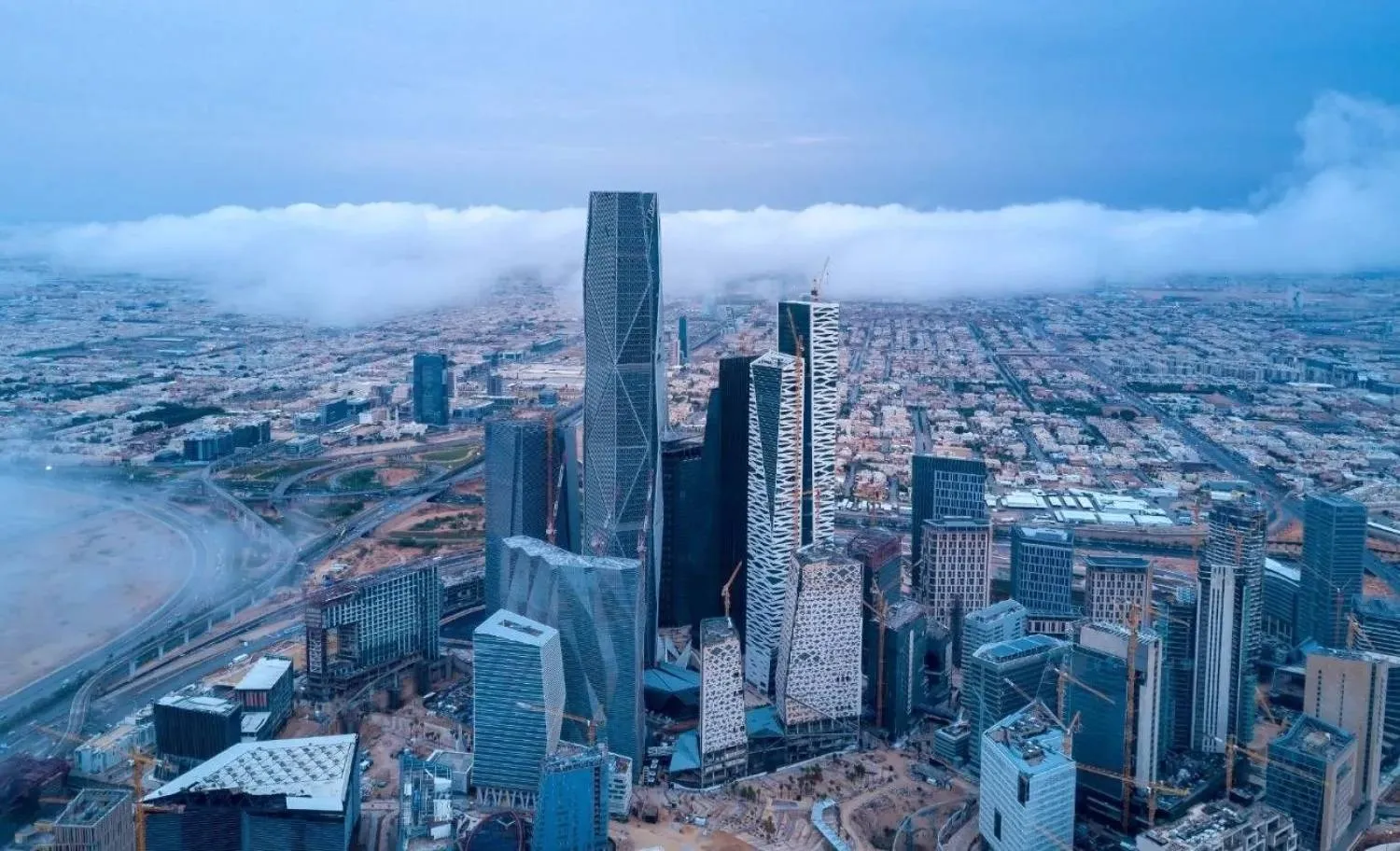

Saudi Arabia Raises $11.5 Bln to Open 2026 Amid Strong Investor Demand

A general view of Riyadh, Saudi Arabia. (SPA)
TT

Saudi Arabia Raises $11.5 Bln to Open 2026 Amid Strong Investor Demand

A general view of Riyadh, Saudi Arabia. (SPA)

Saudi Arabia has successfully completed its first foray into international debt markets for 2026, issuing $11.5 billion in US dollar-denominated sovereign bonds. This move not only met financing needs but also became a global financial vote of confidence in the strength of the Kingdom’s economy.

The issuance attracted orders exceeding $31 billion, underscoring Saudi Arabia’s appeal as a safe and highly attractive destination for global institutional investors, as well as its ability to secure competitive pricing despite volatility in global monetary markets.

The bonds were covered 2.7 times, highlighting strong confidence in the trajectory of Vision 2030. Proceeds were distributed across four maturities ranging from three to 30 years, reflecting the Kingdom’s ability to build a stable, long-term yield curve.

The National Debt Management Center said the strong international demand reflects investors’ positive outlook on Saudi Arabia’s fiscal strength and non-oil growth prospects.

The issuance forms part of an annual borrowing plan targeting approximately $57.8 billion to finance the budget deficit and repay maturing debt, while maintaining debt at safe levels not exceeding 33 percent of the gross domestic product.

Saudi Arabia follows a conservative approach by fixing interest rates on 87 percent of its debt, shielding the budget from fluctuations in global borrowing costs and supporting the sustainability of capital spending on major projects, independent of swings in energy revenues.

The bonds were issued in four tranches. The first was $2.5 billion of three-year notes maturing in 2029. The second was $2.75 billion of five-year notes maturing in 2031. The third was $2.75 billion of 10-year notes maturing in 2036. The fourth was $3.5 billion of 30-year bonds maturing in 2056.

Reuters reported that initial price guidance for the three-year tranche was set at about 95 basis points over US Treasuries, while the five-year tranche was guided at around 100 basis points.

International Financing Review said initial guidance for the longer-dated tranches was about 110 basis points over Treasuries for the 10-year bonds and around 140 basis points for the 30-year bonds.

Annual borrowing plan

The National Debt Management Center said the issuance was carried out under the recently announced annual borrowing plan, which aims to diversify the investor base and meet the Kingdom’s financing needs from global debt markets efficiently and effectively.

It said the scale of international investor demand reflects confidence in the resilience of the Saudi economy and its future investment opportunities.

Saudi Finance Minister Mohammed Al-Jadaan approved the 2026 borrowing plan last week at around $57.8 billion, to cover a budget deficit of nearly $44 billion and repay about $13.9 billion in maturing debt during the year.

The issuance follows an active year for Saudi Arabia in bond markets, as it ranked among the world’s largest issuers in 2025 amid a surge in Middle East and North Africa issuance driven by rising financing needs and strong demand, including from Asian investors.

Under its 2026 financing strategy, Saudi Arabia relies on three main channels, led by private markets, alongside the domestic debt market and international markets.

The National Debt Management Center aims for riyal denominated sukuk to account for 25 to 35 percent of total funding, with international markets contributing 20 to 30 percent, with a particular focus on US dollar issuances. Private markets, including syndicated loans and export credit agency facilities, could account for up to 50 percent of total financing.

Strong financial management

Mohammed Farraj, chief asset management officer at Arbah Capital, said the successful coverage of Saudi Arabia’s first international issuance for 2026 reflects a high level of sovereign financial management and an advanced ability to deploy debt instruments to achieve national objectives.

He said the 2.7 times coverage ratio confirms deep international investor confidence in Saudi Arabia’s fiscal position and shows the Kingdom’s ability to price its credit risk at competitive levels close to those of advanced economies.

Farraj said the narrowing of spreads versus global benchmark bonds signals a lower risk premium, helping to reduce the overall cost of capital directed toward development and strengthening the position of Saudi sovereign assets as a stable and attractive investment within global portfolios.

He added that the move aligns with a proactive borrowing strategy aimed at neutralizing risks from monetary market volatility by locking in financing costs and securing liquidity for major projects ahead of any potential market pressures.

He said the strategy boosts budget flexibility and supports the sustainability of capital spending for Vision 2030 projects, away from economic cycle volatility or fluctuations in energy revenues, noting that public debt in this context is being redefined as a strategic tool to maximize returns from non oil growth and expand the productive base, rather than merely a means of covering deficits.

On funding diversification, Farraj explained that distributing issuance between conventional debt and Islamic sukuk across varied maturities improves the balance sheet structure, reduces refinancing risks and broadens the investor base geographically, limiting concentration risks in any single market.

Building a clear benchmark yield curve also supports the private sector’s ability to price its financing and sends positive signals to credit rating agencies about Saudi Arabia’s fiscal discipline, he added.

In international comparison, Farraj said Saudi Arabia’s public debt to GDP ratio remains among the lowest globally and within a range that ensures fiscal sustainability, compared with elevated levels in major advanced economies.

This gap shows Saudi borrowing is directed toward investment and growth, giving public finances flexibility to manage resources even if energy markets come under pressure, and reinforcing the Kingdom’s position as one of the world’s most stable and resilient economies in the face of global shocks, he stressed.



Saudi Fund to Speed Syria Recovery with Up to $1.5 Bln Financing

Delegation from the Saudi Fund for Development meets Syrian Finance Minister Mohammed Yisr Barnieh (Syrian Finance Ministry)
TT

Saudi Fund to Speed Syria Recovery with Up to $1.5 Bln Financing

Delegation from the Saudi Fund for Development meets Syrian Finance Minister Mohammed Yisr Barnieh (Syrian Finance Ministry)

A delegation from the Saudi Fund for Development, headed by its chief executive Sultan bin Abdulrahman Al-Marshad, discussed proposed priority projects in Syria’s electricity and water sectors with Syrian Energy Minister Mohammed al-Bashir and other ministry officials.

Four projects worth $250 million were presented, part of a broader list of projects across various sectors to be financed by the fund in phases, with total funding potentially reaching $1.5 billion.

Al-Marshad told Asharq Al-Awsat that development agreements to finance priority projects in vital sectors would be signed with the Syrian government “soon.”

The talks are part of a three-day visit to Syria that began on Tuesday, during which the delegation is holding meetings with several ministers and heads of public bodies to discuss priority development projects and the fund’s contribution to economic and social development in Syria, as well as support for stability.

The delegation began its meetings on Wednesday with a visit to the headquarters of the Energy Ministry in Damascus. According to a ministry statement, discussions focused on priority projects proposed in the electricity and water sectors, as part of coordination to identify areas that could be supported in the next phase.

The delegation later held an expanded meeting with Energy Ministry aides, including Ibrahim al-Adhan, for planning and institutional excellence, and with Osama Abu Zeid for water resources, attended by officials from the electricity, water, and sanitation sectors.

During the meeting, a package of service and development projects was reviewed to determine the ministry’s priorities ahead of moving to subsequent coordination and implementation stages.

The proposed projects include maintenance of the Aleppo thermal power plant to restore it to full production capacity, the supply and installation of prepaid smart water meters for institutions across all provinces, a project to convey Euphrates water from Deir el-Zor in eastern Syria to the Tadmor and Hasiya areas in Homs province, and an irrigation project for the plains of al-Bab and Tadef in northern Aleppo countryside, aimed at improving water resources and supporting the agricultural sector.

The ministry stated that the visit is part of efforts to define its requirements, noting that a subsequent meeting will be held with the Ministry of Finance to finalize coordination and select the priority projects to be supported.

In a separate statement to Asharq Al-Awsat, Al-Marshad said the visit aims to explore opportunities for development cooperation between the Saudi Fund for Development and Syria across various sectors. He said discussions are focused on financing priority projects and supporting economic and social development in Syria.

Al-Marshad said development agreements with the Syrian government to finance priority projects in vital sectors would be signed in the near future.

For his part, Energy Ministry aide for water resources Osama Abu Zeid told Asharq Al-Awsat that the proposed projects are “important and urgent to achieve early recovery and improve services for the Syrian people.”

He stated that the rehabilitation of the al-Bab and Tadef irrigation project would irrigate more than 6,600 hectares, while rehabilitating the Aleppo thermal power plant would increase electricity generation capacity by up to 600 kilowatts.

He said the rehabilitation of water stations in villages and towns destroyed during the war includes restoring 157 stations, while the supply of prepaid smart water meters would help rationalize consumption and improve water services.

Abu Zeid stated that the total value of the projects amounts to $250 million, noting that there has been positive engagement from the Saudi Fund for Development, and that funding is expected to be approved soon after the administrative procedures are completed.

The Saudi Fund for Development delegation, led by Al-Marshad, also met Syrian Finance Minister Mohammed Yisr Barnieh on Tuesday to discuss the provision of concessional financing with a high grant component to support government projects in vital sectors.

In a post on LinkedIn, Barnieh expressed hope that an agreement would be reached by the end of the visit on a list of projects to be financed in phases, with a total value potentially reaching $1.5 billion.

According to Barnieh, the projects primarily focus on the health and education sectors through the rehabilitation and equipping of hospitals and schools, as well as projects in the energy and water sectors, including electricity substations and water treatment facilities, alongside housing, disaster management, and telecommunications projects.

The projects also include financing support for a large number of micro, small, and medium-sized enterprises, helping to create productive job opportunities in several development areas.

Barnieh said he presented an initial overview outlining needs and proposed projects, prepared in cooperation with several ministries, governorates, authorities, and institutions, within the framework of a workshop organized by the Finance Ministry earlier this week in support of the “Syria Without Camps” initiative.

The Saudi Fund for Development delegation also met with Health Minister Musaab al-Ali to discuss financing and support for vital health projects within the ministry’s 2026-2028 plan, as well as with Education Minister Mohammed Abdulrahman Turko to discuss enhancing cooperation in education and improving the educational process in Syria.

The fund stated on Tuesday that the visit highlights the importance of development cooperation between the two sides in supporting the sustainable development goals and development initiatives in Syria.

Since its establishment in 1974, the fund has contributed to development projects in over 100 developing countries, financing more than 800 projects and programs worth over $22 billion.

Saudi Arabia has continued to provide extensive support to Syria across multiple sectors following the ouster of former president Bashar al-Assad on Dec. 8, 2024.

Mohammed Hamza, head of the Syrian General Authority for Exhibitions and International Markets, said during his participation as guest of honor at the “Made in Saudi Arabia” exhibition held from Dec. 15 to 17 that Saudi investments in Syria exceeded $6.6 billion in 2025 across various sectors.


Saudi Minerals Program Accelerates Unlocking Trillions Beneath the Desert

Saudi Arabia maps mining exploration zones (Asharq Al-Awsat)
TT

Saudi Minerals Program Accelerates Unlocking Trillions Beneath the Desert

Saudi Arabia maps mining exploration zones (Asharq Al-Awsat)

Economic experts said the Saudi Cabinet’s approval of the draft rules and procedures governing the National Minerals Program marks a decisive step that will accelerate the development of the Kingdom’s vast mineral resources, estimated at around 9 trillion riyals, or $2.4 trillion.

They said the move firmly positions mining as the third pillar of national industry and a key engine of non-oil growth.

Khalid Al-Mudayfer, Deputy Minister of Industry and Mineral Resources for Mining Affairs, said the approval builds on sustained government support for the mining and minerals industries. He said the program will act as a primary enabler to ensure sufficient current and future mineral supplies and to address gaps across value chains.

The regulatory push comes as economic circles look ahead to the fifth edition of the International Mining Conference, set to take place in Riyadh from Jan. 13 to 15, 2026, under the patronage of Custodian of the Two Holy Mosques King Salman bin Abdulaziz.

The event is expected to generate exceptional momentum, with around 150 memorandums of understanding and strategic agreements anticipated, alongside participation from more than 200 exhibitors and sponsors.

From regulation to strategic planning

Mohammed Al-Duleim, chairman of the National Mining Committee at the Federation of Saudi Chambers, told Asharq Al-Awsat that the Cabinet’s approval reflects the government’s determination to build a strong, well-regulated and sustainable mining sector capable of matching the ambitions of the Saudi economy at this stage.

He said the decision represents a qualitative shift in a sector that has become part of strategic economic activities linked to industry and several other sectors, making a positive contribution to non-oil growth.

Al-Duleim said the timing of the program is critical, as global competition for minerals intensifies, echoing earlier competition for oil. He said the Kingdom has moved early from a focus on regulation and governance toward forward planning and long term sustainability.

He added that the program guarantees the timely availability of mineral supplies at stable prices, offering investors a high degree of clarity and helping to manage risks. He said Saudi Arabia has now emerged as a global minerals hub, driven by the outcomes of the International Mining Conference and a successful partnership between the public and private sectors.

Strong domestic demand underpins the new program, which centers on securing mineral needs on time and at stable prices, Al-Duleim said.

The Cabinet decision, he added, enhances transparency and confidence for investors and reinforces the state’s comprehensive approach to managing the sector, from planning to value maximization, in line with Vision 2030 targets.

He said the Kingdom’s status as a global minerals center has been reinforced by mega projects and by the government’s success in building public private partnerships, positioning Saudi Arabia as a major international destination through the annual International Mining Conference in Riyadh.

Unifying procedures

Economist Ahmed Al-Shahri told Asharq Al-Awsat that the new program represents a regulatory step aimed at strengthening governance of the sector and improving management mechanisms.

He said it supports exploration and development of mineral resources valued at more than 9 trillion riyals, or $2.4 trillion.

He said the National Minerals Program provides a government framework that organizes the sector and defines coordination mechanisms among relevant authorities, adding that Cabinet approval will lead to unified procedures and faster licensing.

Al-Shahri stated that the program aims to transform mining into a key economic pillar, aligning with government objectives, while also attracting both domestic and foreign investment. He said it also focuses on maximizing local value added from mineral resources.

He said the decision reflects a structured, long term approach to developing the minerals sector, strengthening exploration, environmental governance and sustainability.

In conclusion, the National Minerals Program stands as a key mechanism to enhance the efficiency of developing Saudi Arabia’s mineral wealth, combining strict governance with flexible planning.

Analysts said this approach will help channel the necessary investment to deliver significant gains in the sector’s contribution to the country's gross domestic product in the coming years.


Saudi Arabia Continues to Excel, Achieves Second-Highest Growth Rate in Tonnage in G20

A night view of Riyadh, Saudi Arabia. (Reuters file)
TT

Saudi Arabia Continues to Excel, Achieves Second-Highest Growth Rate in Tonnage in G20

A night view of Riyadh, Saudi Arabia. (Reuters file)

Saudi Arabia marked a significant milestone in the maritime transport sector in 2025, with its national fleet recording a 32% growth rate compared to 2024.

The achievement secures Saudi Arabia the second-highest growth rate globally among G20 nations.

The rapid growth reflects the continuous development of the Kingdom’s maritime sector, driven by strategic regulatory initiatives, increased investment, modernized legislative frameworks, and the enhanced efficiency of national fleets.

The performance marks a substantial leap from the 6.4% growth rate recorded at the beginning of 2024, highlighting the sector's accelerating year-on-year progress.

The Transport General Authority (TGA) stated that the achievement aligns with the National Transport and Logistics Strategy, which aims to position the Kingdom as a global logistics hub, and focuses on strengthening the maritime sector’s role in supporting supply chains, boosting the national economy, and boosting the efficiency of international trade flows through Saudi ports.

The progress underscores the Kingdom’s commitment to developing a maritime ecosystem consistent with global best practices, ensuring sustainability, and consolidating its strategic position among leading nations in the field, it added.