


Business-Friendly Climate Draws 123,000 New Commercial Registrations in Saudi Arabia

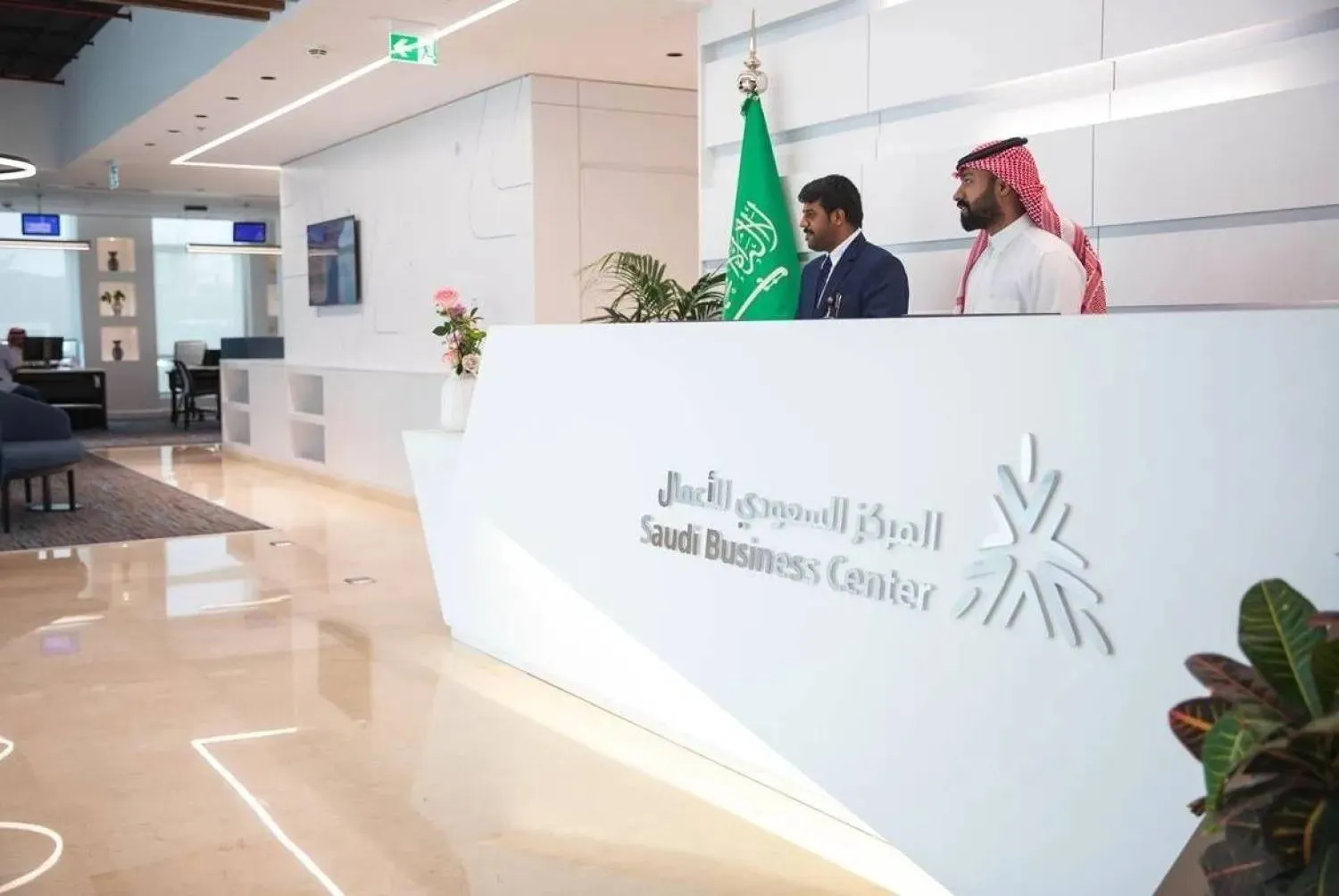
 Employees at the Saudi Business Center (SPA). 
 Employees at the Saudi Business Center (SPA). 
TT

Business-Friendly Climate Draws 123,000 New Commercial Registrations in Saudi Arabia

 Employees at the Saudi Business Center (SPA). 
 Employees at the Saudi Business Center (SPA). 

Saudi Arabia’s business environment attracted 123,000 new commercial registrations in the fourth quarter of 2025, pushing the total number of active registrations past 1.8 million by year-end. Foreign investment in the healthcare sector surged by nearly 560 percent over the past three years, highlighting strong international confidence in the Saudi market.

According to a recent report by the Ministry of Commerce, reviewed by Asharq Al-Awsat, the number of active sole proprietorship registrations reached 1.26 million by the end of 2025, reflecting 20 percent growth over the past five years.

Active limited liability companies (LLCs) totaled 571,000, with a sharp 183 percent increase over five years. Meanwhile, the number of joint-stock companies grew 50 percent over the same period to 4,733 active registrations.

Regional and Sectoral Performance

Riyadh led the Kingdom in new commercial registrations during the final quarter of 2025 with 45,600 records, followed by the Eastern Province with more than 20,000, and Makkah Region with 19,200.

The construction sector topped all industries, with more than 66,000 registrations issued during the quarter. It was followed by wholesale and retail trade with 24,900, and manufacturing industries with 23,700, while the remainder was spread across other activities.

The report also highlighted a strong rise in e-commerce sales conducted via Mada cards in October, which hit a record SAR 30.7 billion ($8.1 billion) - a 68 percent year-on-year increase, up SAR 12.4 billion ($3.3 billion) from October 2024, according to data from the Saudi Central Bank (SAMA).

Healthcare Sector Momentum

The Ministry of Commerce said Saudi Arabia continues to roll out development projects aimed at improving healthcare quality and capacity by strengthening national talent, adopting innovative digital solutions, and upgrading medical facilities.

The Kingdom ranks first regionally in healthcare investment, with agreements signed at the recent Global Health Exhibition in Riyadh valued at about SAR 133 billion ($35.4 billion). Foreign investment in the sector has expanded by more than 560 percent in three years, with healthcare contributing 5 percent of GDP.

Healthcare-related activities saw strong growth in the fourth quarter, including medical laboratories (+33%), pharmaceutical manufacturing (+31%), physiotherapy centers (+31%), and telemedicine and remote care services (+30%).

E-Commerce and High-Growth Sectors

Active e-commerce registrations rose 9 percent year-on-year to 43,800 by the end of the fourth quarter, up from 40,000 in the same period of 2024. Strengthening the e-commerce ecosystem is a key objective of the National Transformation Program, with Saudi Arabia ranked among the world’s top 10 fastest-growing e-commerce markets.

Promising sectors highlighted by the report include artificial intelligence, gaming, cybersecurity, health software, and electric vehicle charging stations. AI-related registrations grew 34 percent to more than 19,000, while gaming rose 27 percent to 841 registrations. UI/UX design activities climbed 28 percent to 18,900.

Cybersecurity registrations increased 27 percent to 9,700, while health and medical software surged 85 percent to 4,300. Power generation and distribution activities grew 27 percent, and EV charging station operations expanded 26 percent to 4,300 registrations.

Investment Deals and Forums

The report cited the success of the Biban Forum, recently held in Riyadh, which generated agreements and launches exceeding SAR 38 billion ($10.1 billion). Investment deals worth SAR 22.2 million ($5.9 million) benefited 55 startups, with participation from 1,021 companies across 66 countries.

It also highlighted the Northern Borders Forum, which offered more than 240 investment opportunities valued at SAR 40 billion ($10.6 billion) across sectors including livestock, food, mining and energy, tourism, environment, and logistics.



Air Freight Rates Soar as Middle East Conflict Blocks Trade Routes

Shipping containers are pictured at the UK's largest freight port, in Felixstowe on the East coast of England, on March 12, 2026. (AFP)
TT

Air Freight Rates Soar as Middle East Conflict Blocks Trade Routes

Shipping containers are pictured at the UK's largest freight port, in Felixstowe on the East coast of England, on March 12, 2026. (AFP)

Air freight rates have risen by as much as 70% on some routes since the start of the US-Israeli war on Iran, data shows, as the conflict limits flights, blocks some ocean shipments and pushes up jet fuel costs.

Rates on routes between South Asia and Europe have been the most affected by Middle Eastern airspace closures and security issues, industry experts said, after the conflict has stranded more than 100 container ships in the area around the critical Strait of Hormuz oil export corridor.

Products like inexpensive generic medicines from India destined for the European Union, Africa and some Arab countries like Saudi Arabia and the United Arab Emirates typically move on container ships through the strait, said pharmaceutical supply chain expert Prashant Yadav.

"The main shift I’ve heard about involves companies moving generic ‌medicines from ocean ‌freight to air cargo," said Yadav, a senior fellow at the Council on ‌Foreign ⁠Relations.

The shift to ⁠air cargo is significant because air freight handles about one-third of global trade by value, making rate spikes a potential inflationary pressure on goods ranging from fresh food to pharmaceuticals and electronics.

"Customers are shifting freight from ocean to air, however it is extremely expensive - typically 5x to 10x higher - and those costs are climbing as capacity tightens," said Steve Blough, chief supply chain strategist at logistics software firm Infios. "More often, shippers are moving a limited quantity by air to bridge a gap."

JET FUEL PRICE DOUBLES

The jet fuel price has doubled since the start of the conflict, and Danish container ⁠shipping giant Maersk said this week its own air cargo service is now applying ‌fuel surcharges and war risk levies.

The airspace closures have also cut ‌cargo capacity in freighters and passenger planes as airlines take longer routes to avoid the conflict zone, further pressuring rates.

Dubai and ‌Doha are normally among the world's busiest air cargo hubs, but operations at those airports have been ‌severely limited by the Middle Eastern conflict.

Niall van de Wouw, chief air freight officer at transportation pricing platform Xeneta, attributed higher air cargo rates to a "dramatic reduction" in capacity at key Middle East transshipment hubs more than higher fuel prices.

Ronald Lam, the CEO of Hong Kong's Cathay Pacific Airways, said many of its freighter flights to Europe normally stop in Dubai to refuel ‌and pick up more cargo.

"But because of the situation in Dubai, we're now skipping that stopover and we are flying direct from Hong Kong to ⁠Europe with some payload restriction, ⁠because we couldn't uplift fuel in between," he said on an earnings call on Wednesday.

According to an air freight index from freight booking and payments platform Freightos, off-contract spot rates from South Asia to Europe have soared 70% to $4.37 per kg from $2.57 per kg just before the war began.

South Asia-North America rates are up 58% to $6.41 per kg, and Europe-Middle East rates have risen 55% to $2.79 per kg.

A significant share of air cargo exports from South Asia usually travels through Gulf hubs and some has had to reroute through East Asia, said Judah Levine, Freightos' head of research.

"That being said, we have seen the price increases on many of these lanes slow, level off or even decline slightly in the last couple days," he said.

"These trends may reflect Asian and European carriers adding capacity to these long-haul lanes to make up for the missing Gulf capacity, and they may also reflect some of the Gulf carriers - most importantly Emirates - having restarted operations and increasing the number of flights that are now leaving and arriving at these important Gulf hubs."


TotalEnergies Output Down 15%; Operations at SATORP Refinery in Saudi Arabia Are Normal

FILE PHOTO: The logo of French oil and gas company TotalEnergies is seen on a gas station in Drancy, France March 17, 2025. REUTERS/Abdul Saboor/File Photo
TT

TotalEnergies Output Down 15%; Operations at SATORP Refinery in Saudi Arabia Are Normal

FILE PHOTO: The logo of French oil and gas company TotalEnergies is seen on a gas station in Drancy, France March 17, 2025. REUTERS/Abdul Saboor/File Photo

TotalEnergies has lost 15% of its oil and gas output as the US-Israeli war with Iran shuts fields across the Middle East, including in the UAE, Qatar and Iraq, the French oil major said on its investor website.

That output accounts for ⁠about 10% of ⁠Total's upstream cash flow, it added.

Total said its offshore production in the UAE is shut. The UAE produces around half its oil output from offshore fields.

The French firm said income from an $8 per barrel rise in oil prices that has occurred as a consequence of the ⁠war would ⁠more than offset the loss of output in the Middle East this year as it brings online additional production elsewhere.

Operations at its SATORP refinery in Saudi Arabia are normal, it added.

The impact of shutdowns in Qatar of liquefied natural gas production are limited to two million tons of LNG for Total.


Oil Unlikely to Hit $200 a Barrel, US Energy Chief Says

A foreign tanker carrying Iraqi fuel oil damaged after catching fire in Iraq's territorial waters, following unidentified attacks that targeted two foreign tankers, according to Iraqi port officials, near Basra, Iraq, March 12, 2026.  REUTERS/Mohammed Aty
A foreign tanker carrying Iraqi fuel oil damaged after catching fire in Iraq's territorial waters, following unidentified attacks that targeted two foreign tankers, according to Iraqi port officials, near Basra, Iraq, March 12, 2026. REUTERS/Mohammed Aty
TT

Oil Unlikely to Hit $200 a Barrel, US Energy Chief Says

A foreign tanker carrying Iraqi fuel oil damaged after catching fire in Iraq's territorial waters, following unidentified attacks that targeted two foreign tankers, according to Iraqi port officials, near Basra, Iraq, March 12, 2026.  REUTERS/Mohammed Aty
A foreign tanker carrying Iraqi fuel oil damaged after catching fire in Iraq's territorial waters, following unidentified attacks that targeted two foreign tankers, according to Iraqi port officials, near Basra, Iraq, March 12, 2026. REUTERS/Mohammed Aty

US Energy Secretary Chris Wright said on Thursday that oil prices are unlikely to reach $200 a barrel, with President Donald Trump touting US gains from higher prices as the war with Iran disrupted traffic through the Strait of Hormuz.

"I would say unlikely, but we are focused on the military operation and solving a problem," Wright told CNN when asked if prices would reach $200 a barrel - a level that an Iranian official said prices could hit if the war further escalates, Reuters reported.

Wright's use of the word "unlikely" was a veiled concession that a spike to $200 was possible, though he repeated that the price jump would be weeks not months.

Brent oil hit all-time highs in 2008 of around $147 per barrel, on tension between the West and Iran over its nuclear program, a weak US dollar, and inflation fears.

This time analysts say oil prices could remain high because of the strait's unprecedented shuttering.

"Get ready for the oil barrel to be at $200 because the oil price depends on the regional security which you have destabilized," Ebrahim Zolfaqari, the spokesperson for Tehran's Khatam al-Anbiya military command headquarters, said on Wednesday.

Wright told CNN: "We're in the midst of a significant disruption in the short term to fix the security of energy flow for the long term." The administration was focused on "pragmatic solutions ... to get through these few weeks of tight energy supply," he said.

Trump wrote in a social media post: "The United States is the largest Oil Producer in the World, by far, so when oil prices go up, we make a lot of money." He said he was more focused on stopping Iran from having nuclear weapons.

On Wednesday, Trump urged oil companies to travel through the strait despite the risks. "I think they should use the strait," Trump said. Asked if Iranian mines were in the strait, he added: "We don't think so."

Wright told CNBC on Thursday that the US Navy cannot escort ships through the Strait of Hormuz now but it was "quite likely" that could happen by the end of the month.

On Wednesday, more than 30 countries in the International Energy Agency agreed to the biggest-ever coordinated drawdown of global oil reserves of 400 million barrels, about 40% of which will come from the United States.

The war has forced Middle East Gulf countries to cut total oil production by at least 10 million barrels per day, about 10% of world demand. The IEA said on Thursday that is the biggest oil supply disruption in the history of the global market.

The US will release 172 million barrels of oil from the Strategic Petroleum Reserve, which Wright on Thursday said would be swapped with more than 200 million barrels that will be put back in the reserve within a year.

Wright told CNBC the energy shortages were less likely to affect the United States and other Western Hemisphere countries. "There's no shortage or even really tight oil market in the Western Hemisphere. The issue's in Asia."

US gasoline prices continue to spike 13 days into the war at an average of $3.60 per gallon, according to AAA. Rising oil prices are also likely to boost the costs of other goods, with the closed strait also stalling shipments of fertilizer ingredients and likely raising prices on household items that could hit consumers for months.

Trump had campaigned on lower gasoline and other prices, with Americans set to vote this November in midterm elections that will decide whether his fellow Republicans keep control of Congress.