


China Sees First Fiscal Revenue Drop Since 2020

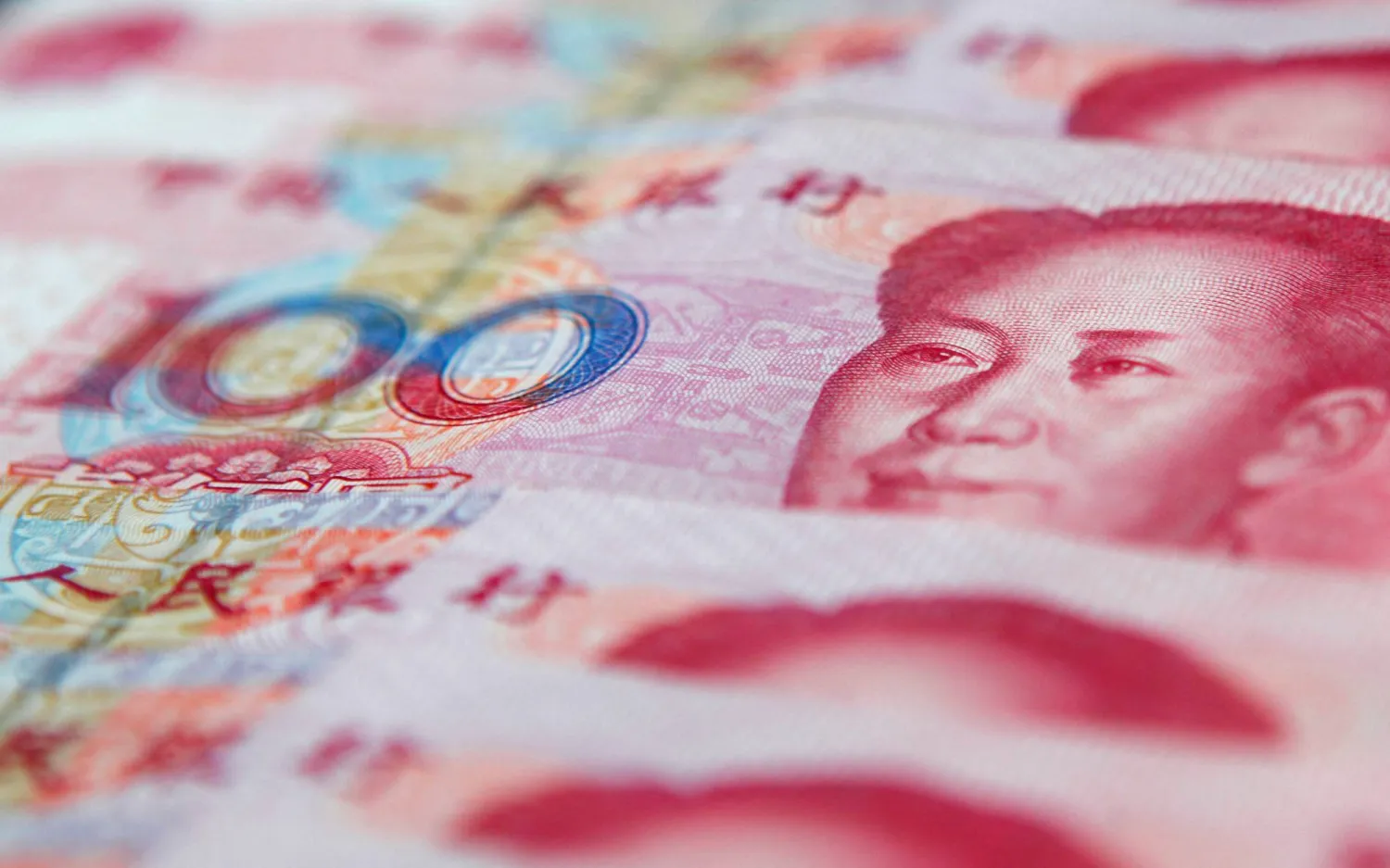
FILE PHOTO: Chinese 100 yuan banknotes are seen in this picture illustration created in Shanghai on January 17 , 2011. REUTERS/Carlos Barria/File Photo
TT

China Sees First Fiscal Revenue Drop Since 2020

FILE PHOTO: Chinese 100 yuan banknotes are seen in this picture illustration created in Shanghai on January 17 , 2011. REUTERS/Carlos Barria/File Photo

China's fiscal revenue fell 1.7% in 2025 from a year earlier, the finance ministry said on Friday, the first contraction since 2020 as a protracted property slump and weak domestic demand saddled the economy.

Fiscal revenues in 2025 totaled 21.6 trillion yuan ($3.11 trillion), a ministry official said at a press briefing.

Expenditures grew 1% to 28.7 trillion yuan, slowing from 3.6% growth in 2024.
Growth in China's fiscal revenue slowed to 1.3% in 2024. Revenue dropped 3.9% in 2020 when the initial outbreak of the COVID-19 pandemic disrupted economic activities.

Tax revenue rose 0.8% in 2025, while income from non-tax sources slumped 11.3%.

Revenue from stamp taxes on securities transactions surged 57.8%, buoyed by a stock market rally.

Revenue from land sales by China's local governments declined for a fourth straight year as the property downturn rolled on, although the 14.7% drop in 2025 narrowed from a 16% fall a year earlier. These revenues have in the past been a key driver for local economic growth measures and the sharp drop has strained local authorities' coffers and weighed on overall business activity.

China's economy grew 5.0% in 2025, meeting the government's target, as strong global demand for goods helped offset weak domestic consumption - a phenomenon that economists warn will be difficult to sustain.

Chinese leaders have pledged to continue to implement a more proactive fiscal policy this year and maintain the necessary fiscal deficit, overall debt levels and expenditure scale to support broader economic growth.

In a separate development, China is considering the sale of hundreds of billions of yuan in special government bonds to recapitalize some of its largest insurers, Bloomberg News reported on Friday citing people familiar with the matter, strengthening the biggest players in a sector facing consolidation pressures.

The potential bond sale would raise about 200 billion yuan ($28.8 billion) to help recapitalize the insurers, the report said, adding that the proceeds will be injected into state-controlled firms including China Life Insurance Group Co, the People's Insurance Co Group of China Ltd (PICC), and China Taiping Insurance Group Co.

The capital injection could be announced as early as this quarter, one of the people said, according to the report.

It would mark the first time China has used special bonds to support insurers, extending a financing tool previously reserved for state-owned banks.

The initiative could help bolster insurers that were directed to support the stock market during last year's volatility, while positioning them to help regulators manage smaller, higher-risk insurance companies.

In January last year, China unveiled plans to channel hundreds of billions of yuan in investment from state-owned insurers into shares to support the stock market.

Insurance companies' equity investments as a proportion of their total investment assets rose to 10.03% in the third quarter of 2025 from 7.51% in 2022, according to estimates from China Securities.

The potential recapitalization also comes as the insurance sector grapples with eroding profitability due to persistently low interest rates, with numerous small and mid-sized insurers reporting deteriorating solvency ratios in the third quarter last year.

Last year, China's finance ministry unveiled a recapitalization plan of around $72 billion to boost big state banks' core capital, a move aimed at helping lenders manage lower profit margins and asset-quality strains.



Number of Unemployed in Germany Reaches 12-year High

People walk past the Brandenburg Gate as winter weather covers the city, in Berlin, Germany, Friday, Jan. 30, 2026. (AP Photo/Ebrahim Noroozi)
TT

Number of Unemployed in Germany Reaches 12-year High

People walk past the Brandenburg Gate as winter weather covers the city, in Berlin, Germany, Friday, Jan. 30, 2026. (AP Photo/Ebrahim Noroozi)

The number of unemployed people in Germany has hit a 12-year high, surpassing the 3 million ⁠mark, while inflation moved back above the European Central Bank's 2% target, clouding the outlook for Europe's largest economy after a stronger-than-expected end to 2025.

German Chancellor Friedrich Merz said on Friday that boosting the economy would be his main focus this year and promised to revive Europe's largest economy after two years of mild contraction with a sharp increase in infrastructure and defense spending.

While the economy as a whole is now showing greater resilience, Merz's measures are taking longer than expected to translate into better conditions on the ground, according to Reuters.

Labor Office figures on Friday highlighted the lag in the jobs market from the economic stagnation of the last few years, with 177,000 more people out of work in January than in December, bringing the total to 3.08 million.

The unemployment rate jumped by 0.4 percentage points to 6.6% in seasonally unadjusted terms.

“There is currently little momentum in the ⁠labor market,” said Labor Office director Andrea Nahles. “At the start of the year, unemployment rose markedly for seasonal reasons.”

The picture improved slightly when accounting for seasonal trends. On that basis, the Labor Office said, the number of people out of work was unchanged from December at 2.976 million and the seasonally adjusted jobless rate was steady at 6.3%.

Analysts and economists in a Reuters poll had predicted a seasonally adjusted rise of 4,000 in the jobless number.

On a brighter note, German gross domestic product grew by 0.3% in the fourth quarter compared with the previous three months, beating the consensus forecast of 0.2%. On an annual basis, the Statistics Office confirmed its first estimate of 0.2% growth.

Economy Minister Katherina Reiche said Germany must pivot toward new “growth engines,” arguing that traditional export strengths “no longer carry our growth.”

Europe's biggest economy lowered its growth forecasts for this and next year on Wednesday.

Annual inflation rose in January in five German states, preliminary data showed on Friday, suggesting the nationwide rate — due out later in the day - has also risen this month.

Price growth of 2.0% to 2.3% was recorded in North Rhine-Westphalia, Baden-Wuerttemberg, Bavaria, Saxony and Lower Saxony, and economists polled by Reuters forecast a harmonized national rate of 2.0% for January, unchanged from last month's rate.

Eurozone annual inflation, due out next Wednesday, is expected at 1.7% for January, down from 1.9% in December, according to economists polled by Reuters.


Oil Edges Lower after Trump Signals Dialogue with Iran over Nuclear Program

A view shows a pressure gauge near oil pump jacks outside Almetyevsk, in the Republic of Tatarstan, Russia July 14, 2025. REUTERS/Stringer
TT

Oil Edges Lower after Trump Signals Dialogue with Iran over Nuclear Program

A view shows a pressure gauge near oil pump jacks outside Almetyevsk, in the Republic of Tatarstan, Russia July 14, 2025. REUTERS/Stringer

Oil prices slipped on Friday on signs that the US may engage in dialogue with Iran over its nuclear program, reducing concern over potential supply disruptions from a US attack.

Brent crude futures were down 21 cents, or 0.3%, at $70.50 a barrel by 1219 GMT. The March contract expires later on Friday. The more active April contract lost 45 cents, or 0.65%, to $69.14.

US West Texas Intermediate crude fell 38 cents, or 0.6%, to $65.04 a barrel, Reuters reported.

"President Trump’s willingness to give diplomacy a chance regarding Iran seemingly makes a US military intervention less likely than yesterday," said PVM Oil Associate analyst Tamas Varga.

Middle East tensions and oil prices had increased this week as the US strengthened its military presence in the region. US President Donald Trump urged Iran on Wednesday to make a deal on nuclear weapons or face an attack but on Thursday said he was planning to speak to the country's leaders.

Despite Friday's declines, benchmark prices remained on track for large monthly gains. Brent crude was set for its biggest monthly jump since January 2022 and WTI was poised for its largest monthly gain since July 2023.

Price pressure also came from a rise in the dollar after it hit a four-year low earlier in the week. Friday's dollar strength followed Trump's announcement that he would pick former Federal Reserve Governor Kevin Warsh to head the US central bank when Jerome Powell's leadership term ends in May.

A stronger dollar can limit demand from oil buyers paying in other currencies.

"Rising US crude oil output after shutdowns and Kazakhstan nearing the resumption of production at the Tengiz oilfield also contribute to the change in sentiment, and given the week’s bullish performance, it is reasonable to expect some profit-taking ahead of the weekend," Varga added.

Meanwhile, peak maintenance periods for Russian primary oil refining this year are expected this month and in September, based on Reuters calculations using estimates from industry sources.

A Reuters poll of 32 analysts found that most expect prices to hold near $60 a barrel this year as the prospect of oversupply offsets potential disruption from geopolitical tensions.


Syrians Decry Soaring Electricity Prices

Syria's electricity infrastructure was hammered by years of civil war © LOUAI BESHARA / AFP
TT

Syrians Decry Soaring Electricity Prices

Syria's electricity infrastructure was hammered by years of civil war © LOUAI BESHARA / AFP

When Hani Massalkhi went to pay his electricity bill in Damascus this week, he discovered that, under the new tariffs, the amount due was higher than his monthly income.

Massalkhi, a retired agricultural engineer who lives on a $70-a-month pension, left without paying.

"My bill used to vary between 15,000 and 20,000 pounds (less than $2). Now, it has surpassed 800,000 pounds", or $72, he told AFP.

In October, Syria's energy ministry hiked prices by up to 6,000 percent, sending shockwaves through a population already reeling from more than 13 years of war.

"Where are we supposed to get this money from?" Massalkhi wondered.

"People are emerging from a crisis, exhausted...they can't even put food on the table."

Authorities said the increase comes "within the framework of a project to reform the electricity sector, achieve sustainability, and improve service".

But, with most of Syria's population living below the poverty line and the minimum wage at around $75, many have found themselves unable to pay the new tariffs.

An official at the energy ministry did not respond to an AFP request for comment on the new prices.

- 'Electricity is a right' -

Since the ousting of longtime ruler Bashar al-Assad in 2024, the new Syrian authorities have repeatedly vowed to increase electricity production in a country where power cuts can last up to 20 hours a day.

Over the past year, they have signed contracts and memoranda of understanding to import gas from Turkey and Qatar to increase production.

They also hope to attract funding and investments to rehabilitate Syria's dilapidated infrastructure.

The World Bank estimates that post-war reconstruction will cost more than $216 billion.

However, citizens have yet to feel noticeable changes in their living conditions.

Damascus residents now receive up to six hours of state-provided electricity daily, but those outside the capital remain mostly in the dark.

Mohamad Ahmad, an economist and energy specialist at the Syria-focused consultancy Karam Shaar Advisory, told AFP that the price increase "primarily aims to prevent the financial collapse of the electricity sector".

"The core problem is not the tariff increase itself, but rather the erosion of wage purchasing power, particularly given that some employees earn less than $100 per month," he added.

On Thursday, a handful of people gathered outside the energy ministry in Damascus to protest the new tariffs, something unimaginable under the former government.

They held placards that read "we won't pay", condemning the widening gap between incomes and bills.

Protester Mohammed Daher, a retired public employee, told AFP that he now receives only two hours of electricity a day in the Tadamon suburb of Damascus.

He said that although he carefully rations his power use at home, he was "shocked to find out that my bill has surpassed 350,000 pounds ($31)," when it used to be less than $2.

"Where am I supposed to get that money from?" he added, saying his income was just $62 a month.

Feminist activist Sawsan Zakzak, 65, said she had been limiting her electricity consumption because she and her husband live on low pensions.

"We do not use air conditioning, and this year we did not use the boiler," she said as she held a placard that read "electricity service is a right".

"We also only watch television for a short period of time, fearing high tariffs."