


Gold, Silver Extend Free Fall as CME Margin Hike Fuels Selling Pressure

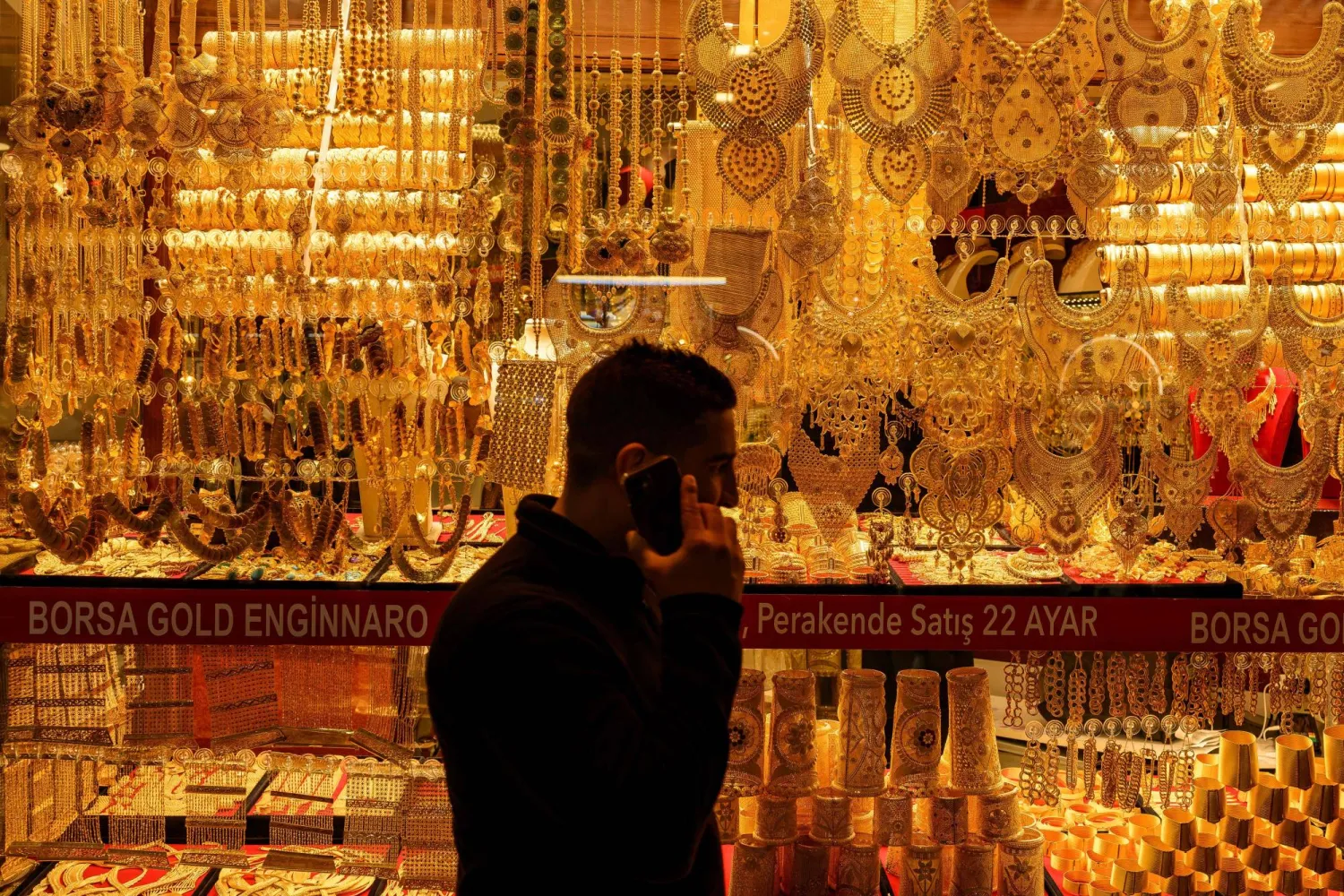
A man walks past a gold shop in the Grand Bazaar in Istanbul (AFP)
TT

Gold, Silver Extend Free Fall as CME Margin Hike Fuels Selling Pressure

A man walks past a gold shop in the Grand Bazaar in Istanbul (AFP)

A rout in gold and silver intensified on Monday after top commodity exchange CME Group raised margin requirements following a collapse in metals prices last week that was triggered by Kevin Warsh's nomination as the next Fed chair.

Spot gold fell 6.1% to $4,565.79 per ounce by 0726 GMT after shedding more than 9% on Friday in its sharpest one-day drop since 1983. The metal has lost more than $1,000 since hitting a record high at $5,594.82 on Thursday, erasing most of this year's gains.

US gold futures for April delivery were down 3.3% to $4,586.20 per ounce.

Spot silver tumbled 12% to $74.48 an ounce after plunging 27% on Friday ‌in its worst ‌day on record. It has shed about 40% since notching ‌an ⁠all-time peak ‌of $121.64 last week.

"The Warsh nomination, whilst likely being the initial trigger, did not justify the size of the downward move in precious metals, with forced liquidations and margin increases having a cascading effect," said KCM Chief Trade analyst Tim Waterer.

"Warsh's policy approach has been generally supportive of the dollar and by inference, negative for gold, due to his focus on inflation and dim views on quantitative easing and excessive Fed balance sheets."

Investors still expect at least two rate cuts in 2026. Non-yielding bullion ⁠tends to perform better in low-interest-rate environments.

CME Group announced hikes in margins on its precious metal futures on Saturday and ‌said the changes were set to take effect after market ‍close on Monday.

An increase in margin requirements ‍is generally negative for the affected contracts, as the higher capital outlay can dampen speculative ‍participation, reduce liquidity, and pressure traders to unwind positions.

A stunning coda to a record-breaking price rally, the crash is wiping out leveraged investors who, in turn, are selling other assets to cover margin calls on silver and gold.

Stock markets around Asia slid, while US equity futures also dropped.

Spot gold may retrace further into a range of $4,361-$4,476 per ounce after it failed to stabilize around a key support of $4,662, Reuters technical analyst Wang Tao said.

"This obviously ⁠is a very aggressive move today after a (similar one) on Friday because Asia and European markets are just now reacting to what happened on Friday in US hours," said Ilya Spivak, head of global macro at Tastylive.

"The larger narrative continues to be gold supportive, but clearly we hit some sort of a speculative speed bump here and there's a sort of rearranging of portfolios, especially shorter-term portfolios that are impacted by these margins."

Analysts at J.P. Morgan said despite the recent volatility, they expected the rally to remain intact in the longer term.

"We remain firmly bullishly convicted in gold over the medium-term on the back of a clean, structural, continued diversification trend that has further to run amid a still well-entrenched regime of real asset outperformance vs paper assets," ‌they said in a note.

Spot platinum lost 9.4% to $1,958.93 per ounce after hitting a record $2,918.80 on January 26, while palladium shed 5.1% to $1,611.86.



Saudi Arabia Launches Third Round of Mining Exploration Enablement Program

The headquarters of Saudi Arabia’s Ministry of Industry and Mineral Resources (SPA). 
TT

Saudi Arabia Launches Third Round of Mining Exploration Enablement Program

The headquarters of Saudi Arabia’s Ministry of Industry and Mineral Resources (SPA). 

Saudi Arabia’s Ministry of Industry and Mineral Resources, in cooperation with the Ministry of Investment, has announced the launch of the third round of the Mining Exploration Enablement Program, as part of efforts to accelerate mineral exploration in the Kingdom, reduce early-stage investment risks, and attract high-quality investments from local and international mining companies.

According to a ministry statement, the third round offers a comprehensive support package targeting exploration companies and holders of mining exploration licenses.

The package includes cash incentives covering up to 25% of eligible exploration expenditures — such as drilling activities, laboratory testing, and geological studies — along with wage support of up to 15% for technical staff and experts residing in Saudi Arabia.

The statement added that the program will also cover up to 70% of the salaries of Saudi technicians during the first two years, rising to 100% thereafter. This is intended to help develop national talent, build capabilities in mineral exploration, promote job localization, and facilitate the transfer of geological knowledge.

The ministry noted that applications will close on March 31, 2026. This will be followed by an evaluation phase and the signing of agreements from April 1 to May 31, with qualified projects to be announced between June 1 and July 31.

The Mining Exploration Enablement Program focuses on supporting strategic minerals of national priority and strengthening geological knowledge through up-to-date, internationally standardized data. This approach enables investors to make informed decisions while supporting the growth of national companies and local supply chains.


Saudi Stocks Open to Foreign Investors as Inflows of Global Capital Loom

A trader monitors stock movements on a screen at the Saudi stock exchange. (Reuters)
TT

Saudi Stocks Open to Foreign Investors as Inflows of Global Capital Loom

A trader monitors stock movements on a screen at the Saudi stock exchange. (Reuters)

Saudi Arabia’s equity market has been formally opened to all categories of foreign investors, a move widely expected to attract substantial international capital inflows in the coming period.

The decision follows the entry into force, on Sunday, of a new regulatory framework allowing non-resident foreign investors to invest directly in the Saudi stock market.

Market experts say the reform could draw global funds seeking exposure to the Kingdom’s largest listed companies and fast-growing economy.

By the end of the third quarter of 2025, foreign investors’ ownership in the Saudi capital market exceeded SAR 590 billion ($157.3 billion). Investments in the main market alone stood at around SAR 519 billion ($138.4 billion), up from SAR 498 billion ($132.8 billion) at the end of 2024, underscoring steady growth even before the latest reforms. Analysts expect the new rules to further boost foreign participation.

On Sunday, the Saudi Capital Market Authority announced that the market would be fully open to all foreign investor categories from February 1, following approval by its board of the new regulatory framework. With this step, all segments of the Saudi market are now accessible to investors worldwide through direct investment.

Market performance, however, was mixed. The benchmark index recorded its strongest monthly gain since 2022 in January, closing at 11,382.08 points.

On the first day of foreign investors being allowed to trade directly, the index fell 1.9 percent to 11,167.48 points, losing 214.6 points amid broad declines, particularly in energy, banking, and basic materials stocks.

Leading stocks

Hamad Al-Olayan, chief executive of Villa Capital, said the initial decline was “natural,” noting that several major stocks had posted strong gains in recent days following the announcement of the decision last month.

Speaking to Asharq Al-Awsat, he attributed the pullback largely to profit-taking in leading stocks such as Maaden.

Al-Olayan also pointed to pressure on banking shares, especially Al Rajhi Bank and Saudi National Bank, after recent rallies, as well as volatility in gold and silver prices.

Some investors may still be unclear about ownership limits and sector-specific restrictions, he added.

Outlook improves

The recent decline may also reflect psychological factors, profit-taking, and limited geopolitical pressures, he remarked. Sentiment would improve once procedures for foreign entry, account opening, execution, and ownership thresholds become clearer.

The reforms abolish the concept of the “qualified foreign investor” in the main market and cancel swap agreements previously used by non-resident investors to gain only economic exposure. Direct ownership of listed shares is now permitted.

In July 2025, the CMA had already eased account-opening procedures for certain foreign investors, a transitional step toward full liberalization.

The latest changes align with the authority’s gradual approach to opening the market and aim to position Saudi Arabia as a global investment destination while supporting the domestic economy.


IMF Chief Says Global Inflation to Fall, Trade Integration is Needed

International Monetary Fund (IMF) managing director Kristalina Georgieva gestures as she speaks during the final day of the World Economic Forum (WEF) annual meeting in Davos on January 23, 2026. (Photo by Fabrice COFFRINI / AFP)
TT

IMF Chief Says Global Inflation to Fall, Trade Integration is Needed

International Monetary Fund (IMF) managing director Kristalina Georgieva gestures as she speaks during the final day of the World Economic Forum (WEF) annual meeting in Davos on January 23, 2026. (Photo by Fabrice COFFRINI / AFP)

Global inflation is expected to fall to 3.8% this year and to 3.4% in 2027, helped by softer demand and lower energy prices, the IMF chief ‌said on ‌Monday.

Managing Director ‌Kristalina ⁠Georgieva said ‌in a speech in the Annual Arab Fiscal Forum in Dubai that global growth has held up 'remarkably well' amid profound shifts ⁠in geopolitics, trade policy, technology, ‌and demographics.

Georgieva also ‍called for ‍more trade integration as unilateral ‍trade agreements are seen on the increase, Reuters said.

"In the world of trade fragmentation, more trade integration is absolutely paramount."

"What we have ⁠seen this year is that trade did not go down the way we feared it would. In fact trade is growing slightly slower than global growth," she added.