


Oil Steady as Traders Brace for US–Iran Nuclear Talks

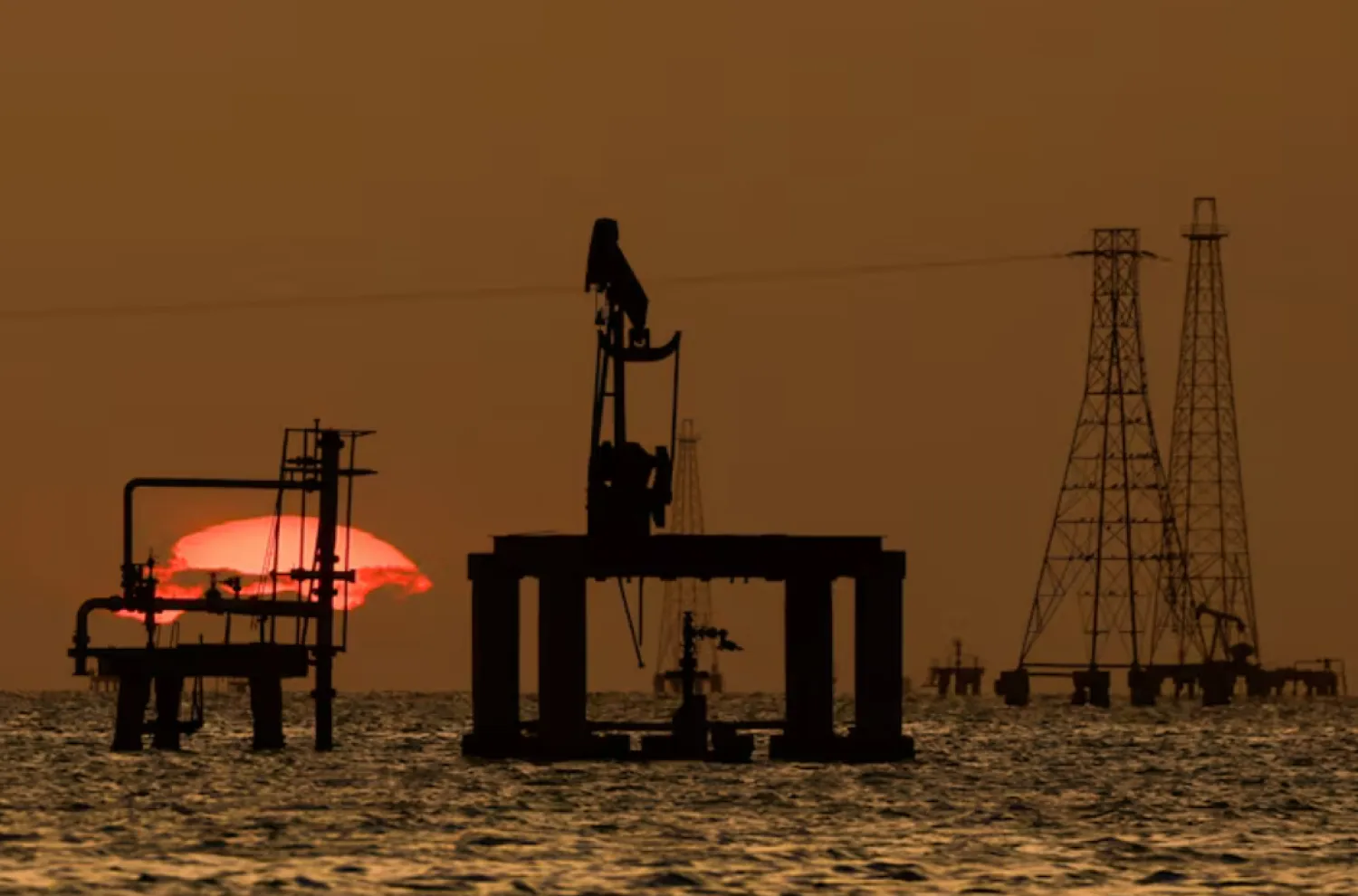
Oil platforms and pumpjacks at Lake Maracaibo, in Cabimas, Venezuela, January 26, 2026. REUTERS/Leonardo Fernandez Viloria/File Photo
TT

Oil Steady as Traders Brace for US–Iran Nuclear Talks

Oil platforms and pumpjacks at Lake Maracaibo, in Cabimas, Venezuela, January 26, 2026. REUTERS/Leonardo Fernandez Viloria/File Photo

Oil traded little changed on Monday, with investors weighing the market implications of upcoming US-Iran talks aimed at de-escalating tensions against a backdrop of expected OPEC+ supply increases.

Brent crude futures edged up 3 cents to $67.78 a barrel by 0358 GMT.

US West Texas Intermediate crude was at $62.91 a barrel, up 2 cents. There will be no WTI settlement on Monday due to a US holiday, said Reuters.

Last week, both benchmarks posted ‌weekly declines with ‌Brent settling down about 0.5% and WTI losing 1% ‌after ⁠comments from US President ⁠Donald Trump that Washington could make a deal with Tehran over the next month drove down prices on Thursday.

The two countries due to hold a second round of talks in Geneva on Tuesday after renewing negotiations earlier this month aimed at tackling their decades-long dispute over Tehran's nuclear program and averting a new military confrontation.

Iran is pursuing a nuclear agreement with the US that delivers economic benefits ⁠for both sides, with energy and mining investments and aircraft ‌purchases up for discussion, an Iranian diplomat ‌was reported as saying on Sunday.

"With both sides expected to hold firm on their ‌core red lines, expectations are low that a deal can be reached ‌and this is likely to be the calm before the storm," IG market analyst Tony Sycamore said.

The US has dispatched a second aircraft carrier to the region and is preparing for the possibility of a sustained military campaign if the talks do not succeed, ‌US officials have told Reuters. Iran's Revolutionary Guards have warned that in case of strikes on Iranian territory, they ⁠could retaliate against any ⁠US military base.

With US-Iran tensions pushing up oil prices, the Organization of the Petroleum Exporting Countries and allies - together called OPEC+ - are leaning toward resuming output increases from April following a three-month halt, to meet peak summer demand, Reuters reported.

Activity in global financial markets is expected to be muted on Monday with China, South Korea and Taiwan closed for Lunar New Year holidays, in addition to Presidents Day in the United States.

"With Chinese demand cues largely absent this week, liquidity remains thin and price action could stay erratic," said Sugandha Sachdeva, founder of SS WealthStreet, a New Delhi-based research firm.

In the near term, geopolitical developments and inventory data will remain the primary drivers of volatility, keeping crude vulnerable to sharp two-way swings, Sachdeva added.



Iraq Studies Alternative Options for Oil Exports

Floating oil export loading platforms at the Basra Oil Port, Iraq, March 12, 2026. REUTERS/Mohammed Aty
TT

Iraq Studies Alternative Options for Oil Exports

Floating oil export loading platforms at the Basra Oil Port, Iraq, March 12, 2026. REUTERS/Mohammed Aty

Iraq is studying alternative measures to export crude oil after disruptions to the process amid the US-Israeli war against Iran. At the same time, the country intends to continue producing crude oil at a level of 1.4 million barrels per day.

Iraqi Oil Minister Hayyan Abdul Ghani told the official television channel Al-Iraqiya News that oil exports account for 90 percent of Iraq’s revenues, and that the ministry has decided to continue producing crude oil at 1.4 million barrels per day.

He emphasized that the production and supply of petroleum products to meet domestic demand have not stopped.

He added that refineries are operating at full design capacity to cover local needs, and that sufficient quantities of liquefied gas are available to fully meet domestic needs.

Regarding exports, he explained that the export process has stopped in the south, prompting the government to search for possible alternatives to export crude oil. He revealed that an agreement is close to being signed to export oil through the Turkish Ceyhan pipeline.

Abdul Ghani added that the ministry has prepared a comprehensive plan to manage the current phase, particularly after the new circumstances in the Strait of Hormuz, noting that a plan has been activated to transport 200,000 barrels per day by tanker trucks through Türkiye, Syria, and Jordan.

In a separate context, the oil minister denied that tankers targeted in Iraqi waters belonged to Iraq, explaining that they were not Iraqi vessels and were carrying naphtha.

Iraq recently lost its entire oil export capacity of 3.35 million barrels per day after Iran closed the Strait of Hormuz following escalating conflict in the region.

Iraq relies on crude oil sales for about 95 percent of its revenues to meet the needs of the country’s annual federal budget. This means that the country would face a critical situation if the conflict in the Gulf region and the Strait of Hormuz continues.


Gold Set for Weekly Drop as Oil Price Surge Weighs on Rate-cut Hopes

FILE PHOTO: A goldsmith weighs gold jewelry inside a showroom in Ahmedabad, India, July 31, 2025. REUTERS/Amit Dave/File Photo
TT

Gold Set for Weekly Drop as Oil Price Surge Weighs on Rate-cut Hopes

FILE PHOTO: A goldsmith weighs gold jewelry inside a showroom in Ahmedabad, India, July 31, 2025. REUTERS/Amit Dave/File Photo

Gold prices were on track for a second consecutive weekly drop, despite edging up on Friday, as surging energy prices due to the Middle East war dimmed prospects for near-term US interest rate cuts.

Spot gold was up 0.3% at $5,095.55 per ounce, as of 0633 GMT on Friday. US gold futures for April delivery fell 0.1% to $5,100.20.

The US 10-year Treasury yields eased, increasing the appeal of the non-yielding bullion. Bullion, however, has ‌lost more ‌than 1% so far this week. Since the war ‌started ⁠on February 28, ⁠it has dropped over 3% so far.

Fears of inflation and questions about the Federal Reserve's ability to cut interest rates if high oil prices persist are somewhat counteracting gold's appeal, said Tim Waterer, KCM Trade chief market analyst.

"Given the ongoing uncertainty about the duration and scope of the conflict in the Middle East, I expect gold to remain on the ⁠radar for investors as a safety play." Heightening geopolitical ‌tensions, Iran's Supreme Leader Mojtaba Khamenei said ‌on Thursday that Tehran will keep the strategic Strait of Hormuz closed as ‌leverage against the US and Israel, which has stoked concerns about ‌global energy supply and risk assets.

Oil prices rose above $100 a barrel, as attacks on oil tankers in the Gulf and warnings from Iran shattered prospects of quick de-escalation in the Middle East conflict. As oil prices surged, US President Donald ‌Trump again demanded Fed Chair Jerome Powell cut interest rates.

Traders, however, expect the Fed to keep rates ⁠steady in the current ⁠3.5%-3.75% range at the end of its two-day meeting on March 18, according to CME Group's FedWatch tool. While recent inflation data suggest price growth is under control, the war and the resulting spike in crude prices have yet to filter through the data.

Investors are awaiting the release of the delayed January Personal Consumption Expenditures Index, expected on Friday. Gold discounts in India widened this week to their deepest point in nearly a decade as demand stayed subdued and some traders steered clear of paying import duties, while the escalating Middle East war boosted safe-haven demand in China.

Spot silver was down 1% at $82.91 per ounce. Spot platinum lost 1% to $2,111.45 and palladium fell 1% to $1,603.


Iran War and Rising Fuel Costs Could Boost Panama Canal Traffic, Administrator Says

A cargo ship sails under Las Americas bridge through the Panama Canal, in Panama City, Thursday, March 12, 2026. (AP)
TT

Iran War and Rising Fuel Costs Could Boost Panama Canal Traffic, Administrator Says

A cargo ship sails under Las Americas bridge through the Panama Canal, in Panama City, Thursday, March 12, 2026. (AP)

Panama Canal Administrator Ricaurte Vásquez said Thursday that the conflict in the Middle East and rising fuel costs could ultimately benefit the interoceanic waterway as global shippers adjust routes.

In an interview with The Associated Press, Vásquez said that higher energy, fuel and navigation costs could make the Panama Canal a more attractive option for commercial traffic.

“When costs increase, in general when the price of marine fuel rises, the Panama Canal becomes a more attractive route,” Vásquez said.

Oil prices have risen amid the war in the Middle East, which has led to the temporary closure of the Strait of Hormuz by Iran in response to US and Israeli attacks. About one-fifth of the world’s oil passes through the waterway at the mouth of the Gulf.

If higher energy costs persist, routing cargo through Panama can cut voyages by between three and 15 days, depending on the route, while reducing fuel consumption, he said.

Vásquez said higher fuel costs are expected to affect container ships, bulk carriers and tankers transporting liquefied natural gas. If Middle Eastern supplies are disrupted, shipments may be replaced by other sources, including the United States, which could redirect some LNG cargo from Europe to Asia via Panama.

Gerardo Bósquez, an executive with the Panama Maritime Chamber, said a prolonged conflict could reshape global trade routes, with gas transport among the segments likely to benefit.

Vásquez cautioned that any changes will not be immediate and will depend on how long cargo operators expect the conflict and instability in the Gulf last.