


Canada and India Strike Agreements on Rare Earth, Uranium

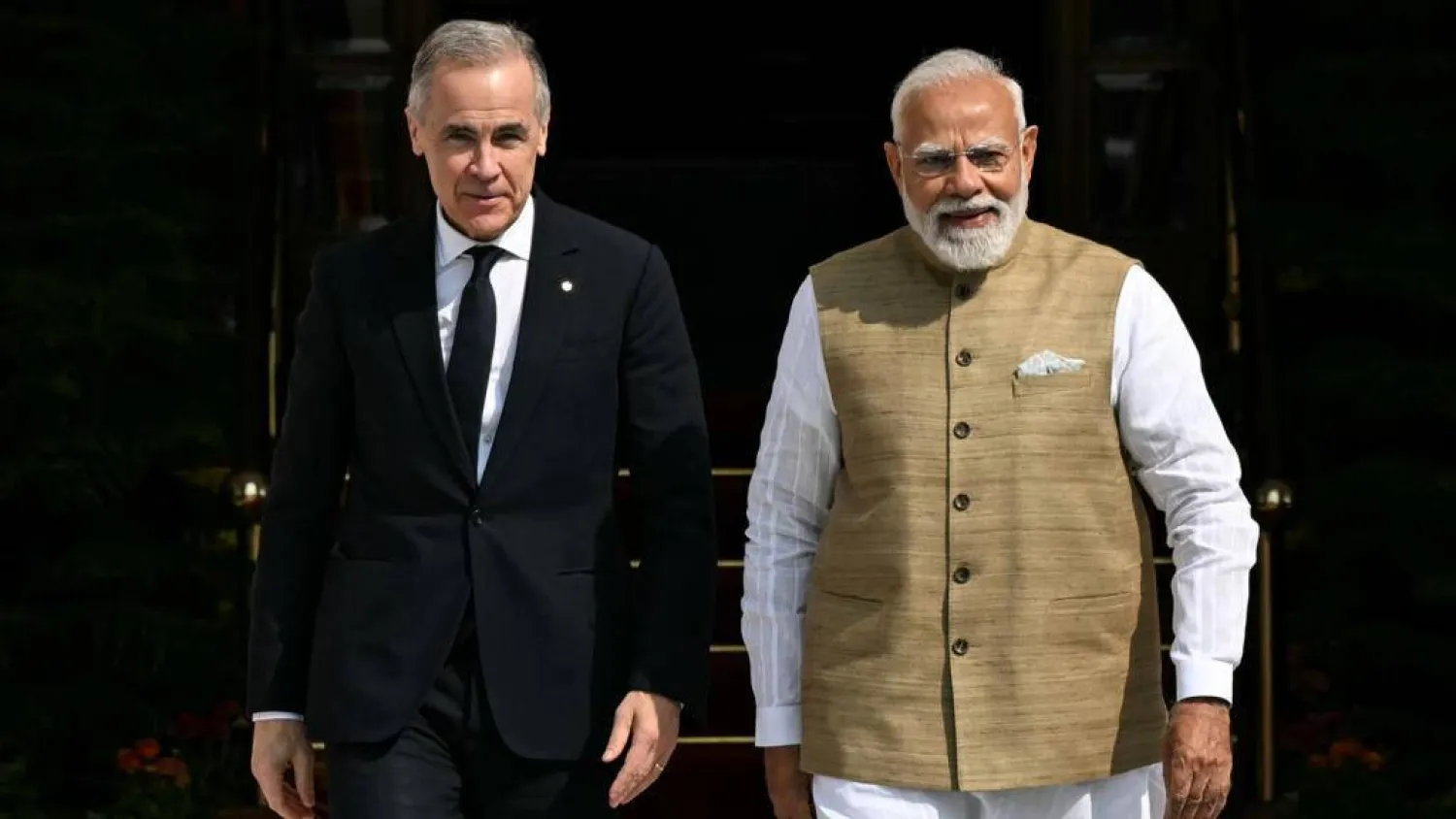
India's Prime Minister Narendra Modi (R) met with Canada's Prime Minister Mark Carney in New Delhi. Sajjad HUSSAIN / AFP
TT

Canada and India Strike Agreements on Rare Earth, Uranium

India's Prime Minister Narendra Modi (R) met with Canada's Prime Minister Mark Carney in New Delhi. Sajjad HUSSAIN / AFP

India and Canada on Monday reached a string of agreements, including on critical mineral cooperation and a "landmark" uranium supply deal for nuclear power, the countries' leaders said in New Delhi.

The pacts, which also covered technology and promoting the use of renewable energy, were announced after Prime Minister Narendra Modi and his Canadian counterpart Mark Carney hailed a fresh start in the relationship between their nations, said AFP.

"Our ties have seen a new energy, mutual trust, and positivity," Modi said.

Ties effectively collapsed in 2023 after Ottawa accused New Delhi of orchestrating a deadly campaign against Sikh activists in Canada, accusations India rejected.

Carney's visit -- his first to India since taking office last year -- is not only aimed to reset strained ties, but also to push efforts to diversify trade beyond the United States.

"There has been more engagement between the Canadian and Indian governments in the last year than there has been in more than two decades combined," Carney said in New Delhi, in a speech alongside Modi.

"This is not merely the renewal of a relationship. It is the expansion of a valued partnership with new ambition, focus, and foresight, a partnership between two confident countries charting our own course for the future."

- 'New opportunities' -

Energy-hungry India -- the world's most populous country with 1.4 billion people -- has ambitious plans to expand nuclear power capacity from its current eight to 100 gigawatts by 2047.

"In civil nuclear energy, we have struck a landmark deal for long-term uranium supply," Modi said, adding the countries would also work together on small modular reactors and advanced reactors.

Carney said they had agreed the launch of a "strategic energy partnership with significant potential" including CAN$2.6 billion ($1.9 billion) uranium supply agreement "supporting India's nuclear ambitions".

Carney added that Canada was "well positioned to contribute, as a reliable supplier" of liquefied natural gas (LNG), from its west coast.

"As India seeks access to critical minerals for its manufacturing, its clean-tech, and its nuclear plants, Canada's resource base and world-leading companies position it as a strategic partner," he said.

The two countries agreed last year to resume negotiations on a proposed free-trade deal, the Comprehensive Economic Partnership Agreement.

"Our target is to reach $50 billion in bilateral trade," Modi said. "This is why we have decided to finalize a comprehensive economic partnership soon," he added, saying it "will open new opportunities to invest and create jobs in both countries".

- Defense deal -

Carney said he wanted to reach a deal on the "ambitious agreement" by the end of the year to "reduce barriers and increase certainty", also said the nations were renewing security cooperation through a "new defense partnership".

Canadian pension and wealth funds have already invested $73 billion in India.

Before Carney took office last year, Ottawa accused Modi's government of direct involvement in the 2023 killing of Hardeep Singh Nijjar, a naturalized Canadian citizen who was part of a fringe group that advocated for an independent Sikh state called Khalistan.

Khalistan militants have been blamed for the assassination of an Indian prime minister and the bombing of a passenger jet.

India has repeatedly dismissed the Canadian allegations, which sent relations into freefall, with both nations expelling a string of top diplomats in 2024.

Ties improved after Carney took office in March 2025, and envoys have since been restored.

After India, Carney will travel to Australia and Japan -- part of a wider push to broaden Canada's economic partnerships.

Carney has made reducing Canada's heavy reliance on the US economy a centerpiece of his foreign economic policy.

In 2024, before US President Donald Trump returned to office and upended global trade with a flurry of tariffs, more than 75 percent of Canadian exports went to the United States. Two-way trade that year exceeded $900 billion.

So far Trump has broadly adhered to the North American free-trade agreement he signed during his first term, and about 85 percent of US-Canada trade remains tariff-free.

But at the same time, Trump has also imposed painful industry-specific tariffs, and there are fears that if he scraps the broader trade deal, the Canadian economy will be hit hard.



Energy Prices Soar, Stock Markets Slide on Iran War Fallout

Gas prices surged and stocks sank after US and Israeli forces began striking Iran at the weekend © - / US NAVY/US CENTRAL COMMAND/AFP
TT

Energy Prices Soar, Stock Markets Slide on Iran War Fallout

Gas prices surged and stocks sank after US and Israeli forces began striking Iran at the weekend © - / US NAVY/US CENTRAL COMMAND/AFP

Oil and gas prices soared, stock markets slid and the dollar firmed on Monday as the widening Iran war shook financial markets across the globe.

European natural gas prices rocketed more than 50 percent after Qatar's state-run energy firm said it had halted liquefied natural gas production following Iranian attacks on facilities at two of its main gas processing bases.

Meanwhile world crude futures surged nearly nine percent on fears of disruption to supplies.

Asian and European stock markets retreated as much as over two percent as investors exited trades in favour of the dollar and gold, seen as safer bets in times of economic unrest, according to AFP.

The greenback jumped nearly one percent against the British pound before paring gains, while the precious metal rose 3.1 percent to $5,410.70 an ounce.

There were sizeable gains to share prices of energy majors and defence companies, with BAE Systems jumping six percent in London.

"Investors are scuttling towards safe havens, seeking shelter as conflict widens in the Middle East," noted Susannah Streeter, chief investment strategist at Wealth Club.

After US and Israeli strikes on Iran over the weekend, Israel bombarded Lebanon on Monday following rocket fire from Hezbollah.

Several American warplanes crashed in Kuwait -- from friendly fire -- and Iran lashed out against the region with missiles as the war expanded.

The bombings have also seen the vital Strait of Hormuz -- through which around 20 percent of global seaborne oil passes -- effectively shut and several ships attacked.

Airline share prices took a battering as carriers were forced to cancel flights -- with Qantas and Singapore Airlines each losing around five percent.

British Airways owner IAG lost 5.8 percent Air France-KLM fell 8.3 percent.

However, energy firms rallied, with Australia's Woodside Energy jumping more than six percent, and PetroChina adding almost four percent.

Shell rose nearly three percent and TotalEnergies more than four percent.

"If higher oil prices persist, it raises the risk of stickier headline inflation," wrote Saxo Markets' Charu Chanana.

This could prove troublesome for US President Donald Trump, who has promised his electorate low prices, as the United States approaches mid-term elections in November.

Rising energy prices, increased shipping costs and loss of revenue for air transport could have "a harmful effect on growth", said economist Eric Dor from the IESEG School of Management in Paris.

"If it's a matter of three days, it's not serious. But if it's over a longer period, then it will have an additional recessionary effect," he told AFP.

In theory, oil-importing countries have reserves, with OECD members required to maintain 90 days' worth of stocks, but prices above $100 cannot be ruled out according to analysts.

If the disruption at Hormuz continues, "no matter how much spare capacity, (it) is not going to fill that gap. That gap is just too big," said Amena Bakr, head of Middle East and OPEC+ research at analysts Kpler.

Key members of the OPEC+ oil cartel on Sunday announced a greater-than-expected increase to production quotas.


Türkiye 2025 GDP Growth 3.6%, Just Below Forecast

A woman holding an umbrella on a rainy day during the holy fasting month of Ramadan outside the Hagia Sophia mosque in Istanbul, Türkiye, Friday, Feb. 27, 2026. (AP Photo/Khalil Hamra)
TT

Türkiye 2025 GDP Growth 3.6%, Just Below Forecast

A woman holding an umbrella on a rainy day during the holy fasting month of Ramadan outside the Hagia Sophia mosque in Istanbul, Türkiye, Friday, Feb. 27, 2026. (AP Photo/Khalil Hamra)

Türkiye's economy grew 3.4% year-on-year in the fourth quarter of last year, with full-year growth also just below forecast at 3.6%, official data showed on Monday.

Fourth-quarter gross ⁠domestic product (GDP) rose ⁠0.4% from the previous quarter on a seasonally and calendar-adjusted basis, Turkish Statistical Institute ⁠data showed.

Growth in the third quarter was revised to 3.8% from 3.7%, and second-quarter growth was revised to 4.7% from 4.9%, the data also showed.

In a ⁠Reuters ⁠poll, the economy was expected to have grown 3.5% in the fourth quarter and by 3.7% in 2025 overall.


Iran Conflict Disrupts Fuel Assessements from Reporting Agency Platts

A map showing the Strait of Hormuz and Iran is seen behind a 3D printed oil pipeline (Reuters)
TT

Iran Conflict Disrupts Fuel Assessements from Reporting Agency Platts

A map showing the Strait of Hormuz and Iran is seen behind a 3D printed oil pipeline (Reuters)

Oil price reporting agency S&P Global Platts is suspending bids and offers for price assessments of Middle East refined products that transit the Strait of Hormuz because of shipping disruptions from the US-Iran conflict, the company said in a note to subscribers sent out on Monday and reviewed by Reuters.

S&P Global Platts, one of the larger providers of price and transaction information on the oil and fuel markets for the industry, is also reviewing its Middle East ‌crude pricing mechanism, the ‌company said.

From March 2 until further ‌notice, ⁠Platts has suspended ⁠the publication of bids and offers in the Middle East refined products Market on Close assessment process where they reflect loading at ports within the Arabian Gulf that require transit through the Strait of Hormuz, the company said in the note to subscribers.

Platts declined to comment on the suspension of the ⁠bids and offers for some of its Middle ‌Eastern oil product assessments.

The ‌Strait of Hormuz is a narrow waterway between Iran and Oman that ‌connects the Gulf to the Arabian Sea. On ‌a typical day, ships carrying oil equal to about one-fifth of global demand from Saudi Arabia, the UAE, Iraq, Iran, and Kuwait sail through the waterway along with tankers hauling diesel and jet fuel ‌and gasoline and other products from their refineries.

Platts also said in a note sent ⁠to subscribers ⁠that it is reviewing the deliverability of Middle East crude from ports within the Gulf and will announce its decision at 2 p.m. (0600 GMT).

"This review has been initiated because market participants have notified Platts that major shipping companies have halted transit through the Strait of Hormuz amid heightened safety concerns after Israel and the US launched air strikes on Iran," Platts said.

Platts' daily Dubai crude oil price assessment is a physical benchmark used by traders and oil companies to set the prices of millions of barrels of transactions of Middle Eastern crude and their derivatives.