


ECB's Chief Economist Warns Euro Zone Inflation Could Surge on Lengthy Iran War

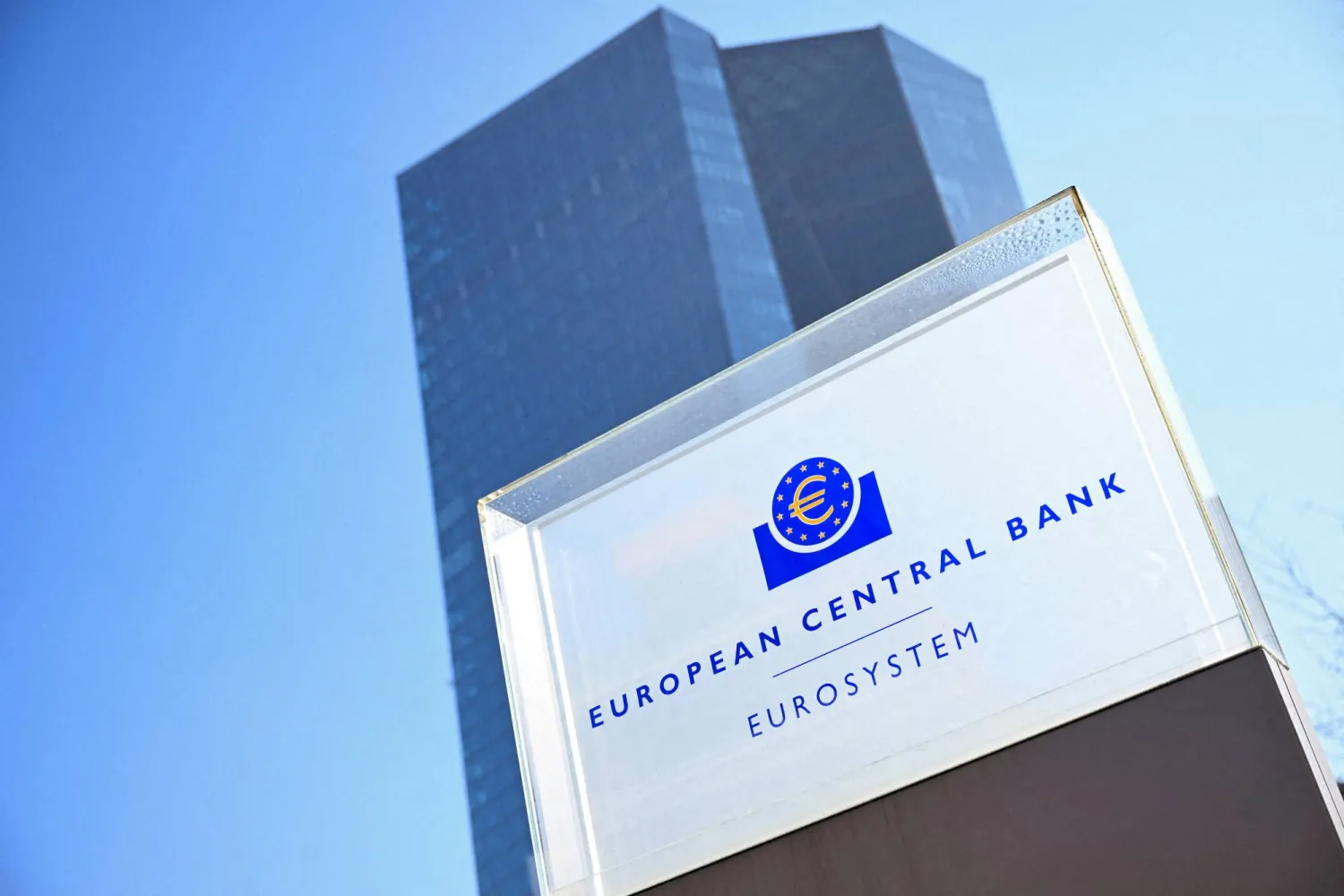
FILE PHOTO: A view of the European Central Bank (ECB) headquarters in Frankfurt, Germany, March 6, 2025. REUTERS/Jana Rodenbusch/File Photo
TT

ECB's Chief Economist Warns Euro Zone Inflation Could Surge on Lengthy Iran War

FILE PHOTO: A view of the European Central Bank (ECB) headquarters in Frankfurt, Germany, March 6, 2025. REUTERS/Jana Rodenbusch/File Photo

A prolonged war in the Middle East could cause a substantial spike in euro zone inflation and reduce economic growth, European Central Bank Chief Economist Philip Lane told the Financial Times in an interview published on Tuesday.

A US and Israeli war against Iran widened on Monday, with no end in sight as Israel attacked Lebanon and Iran kept up its attacks on Gulf states, pushing up oil prices by over 10%.

"Directionally, a jump in energy prices puts upward pressure on inflation, especially in the ⁠near-term, and such ⁠a conflict would be negative for economic activity," Lane said.

"The scale of the impact and the implications for medium-term inflation depend on the breadth and duration of the conflict," he said, adding that the ECB would monitor the situation.

Previous sensitivity analyses done by the ECB showed ⁠that such a war would lead to a 'substantial spike' in energy-driven inflation and a 'sharp drop' in output, if there was a persistent drop in energy supplies out of the region, Lane said.

A separate analysis by the ECB from December meanwhile suggests that a permanent oil price spike of this magnitude could lift inflation by 0.5 percentage point and lower growth by 0.1 percentage point.

Euro zone inflation now stands at 1.7%, below the bank's 2% target, ⁠suggesting that ⁠a small jump in price growth is unlikely to trigger policy action, especially since monetary policy acts with long lags and is considered powerless against near-term swings in prices.

The ECB also tends to look past energy-induced volatility in prices as long as fluctuations do not impact longer-term expectations and do not seep into underlying inflation via second-round effects.

For now, market-based longer-term inflation expectations are little changed and markets continue to expect no change in the ECB's 2% deposit rate all year.



World Bank Raises Egypt's Package by $300 Million to Counter Iran War Impact

Construction work on buildings in downtown Cairo (Photo: Abdelfattah Farag)
TT

World Bank Raises Egypt's Package by $300 Million to Counter Iran War Impact

Construction work on buildings in downtown Cairo (Photo: Abdelfattah Farag)

Egypt will receive an extra $300 million as part of a World Bank development financing package to help it confront fallout from the Iran war, Stephane Guimbert, the World Bank's division director for Egypt, Yemen, and Djibouti, told reporters on Saturday.

The package, consisting of $800 million from the World Bank and a $200 million British guarantee, is to support private sector–led job creation, macroeconomic stability, and the green transition. The bank's board approved it on Friday.

The bank's share was increased from $500 million due ⁠to "the uncertainty in ⁠the region and the shock facing Egypt, like other countries, because of the war in Iran," Reuters quoted him as saying.

The financing is on terms unavailable in commercial markets — at around 6% interest, with a maturity of 30 years and a grace period before repayments ⁠begin, Guimbert said.

The operation is the second in a three-part program. The first was approved in June 2024; a third is planned for next year.

Other lenders, including the Asian Infrastructure Investment Bank, are expected to provide complementary parallel financing.

Private investment in Egypt has risen to around 6% of GDP from roughly 4%, Guimbert said, but noted this remained far below peer economies where private investment often exceeds 20% of GDP. ⁠The ⁠bank is also advising Egypt on how to boost foreign direct investment.

Egypt has the potential to achieve 6% annual medium-term growth if macroeconomic stability and structural reforms are maintained, he added. At that pace, Egypt could generate roughly 2 million jobs annually compared with around 600,000 currently.

On social protection, Guimbert said Egypt's Takaful and Karama cash transfers offered more targeted support to poor families than its large-scale bread subsidy program. "In times of crisis, you want to lean heavily on Takaful and Karama," he said.


Putin Says Russia Will Meet Slovakia's Energy Demand

Russian President Vladimir Putin and Slovak Prime Minister Robert Fico attend a meeting at the Kremlin in Moscow on May 9, 2026 (EPA)
TT

Putin Says Russia Will Meet Slovakia's Energy Demand

Russian President Vladimir Putin and Slovak Prime Minister Robert Fico attend a meeting at the Kremlin in Moscow on May 9, 2026 (EPA)

President Vladimir Putin told Slovakian Prime Minister Robert Fico at a meeting in the Kremlin on Saturday that Russia will do everything to meet Slovakia's energy demand.

Slovakia is among only a few countries in Europe that are still buying Russia's oil and gas. ⁠Slovakia gets Russian ⁠oil via the Soviet-built Druzhba pipeline, while natural gas from Russia flows there through the TurkStream pipeline.

Fico arrived in Moscow for the festivities to ⁠mark the Soviet Union's victory over Nazi Germany in World War Two.

"We will do everything to satisfy Slovakia's needs in energy resources," Putin told Fico, who chose not to attend the Victory Parade on Moscow's Red Square, in comments broadcast on national TV.

According to Reuters, Russian state media ⁠had ⁠previously reported that Fico was due to attend the parade.

Slovakia, an EU member, has sought to maintain political ties with Russia and has argued that it would be too costly to wean itself off Russian supplies after building its infrastructure around it.


China Energy Imports Drop in April Amid Iran War as Fuel Exports Hit Decade Low

Oil and gas tanks are seen at an oil warehouse at a port in Zhuhai, China October 22, 2018. REUTERS/Aly Song
TT

China Energy Imports Drop in April Amid Iran War as Fuel Exports Hit Decade Low

Oil and gas tanks are seen at an oil warehouse at a port in Zhuhai, China October 22, 2018. REUTERS/Aly Song

China's oil imports fell to the lowest level in almost four years in April as the closure of the Strait of Hormuz choked off supplies to the world's largest oil importer.

Crude oil imports fell 20% in April to 38.5 million metric tons compared to a year earlier, hitting their lowest level since July 2022, according to customs data released on Saturday.

China imports roughly half of its crude oil from the Middle East, where the closure of the strait has slashed the number of tankers ⁠carrying oil and ⁠refined products to the world.

Saturday's data from China does not distinguish between oil arriving by sea and oil coming in via pipeline. Data from ship-tracking firm Kpler, however, puts seaborne crude imports at 8.03 million barrels per day, also the lowest since July 2022, Reuters reported.

Despite the decline in imports, ⁠ship tracker Vortexa estimates crude inventories rose by 17 million barrels in April, although it said those would fall in May.

The disruption in the Middle East has led China to tightly manage exports of refined products such as gasoline or jet fuel to protect its domestic market.

That policy drove refined oil product exports for April down to their lowest in roughly a decade at 3.1 million tons, down by about a third since March.

This may still overestimate ⁠how ⁠much is going to customers in Asia and elsewhere because the data includes shipments to Hong Kong, typically a major destination for China's refined products and excluded from the export controls.

Natural gas imports also fell by 13% to 8.42 million tons, although the data does not separate seaborne liquefied natural gas (LNG) from gas piped overland. China imports significant quantities of LNG from the Middle East Gulf.

China's crude oil imports for the first four months of the year are still tracking 1.3% above last year's level at 185.3 million tons.
