Iran Crisis Could Disrupt Supply of Key Chipmaking Materials, South Korea Warnshttps://english.aawsat.com/business/5247814-iran-crisis-could-disrupt-supply-key-chipmaking-materials-south-korea-warns
Iran Crisis Could Disrupt Supply of Key Chipmaking Materials, South Korea Warns
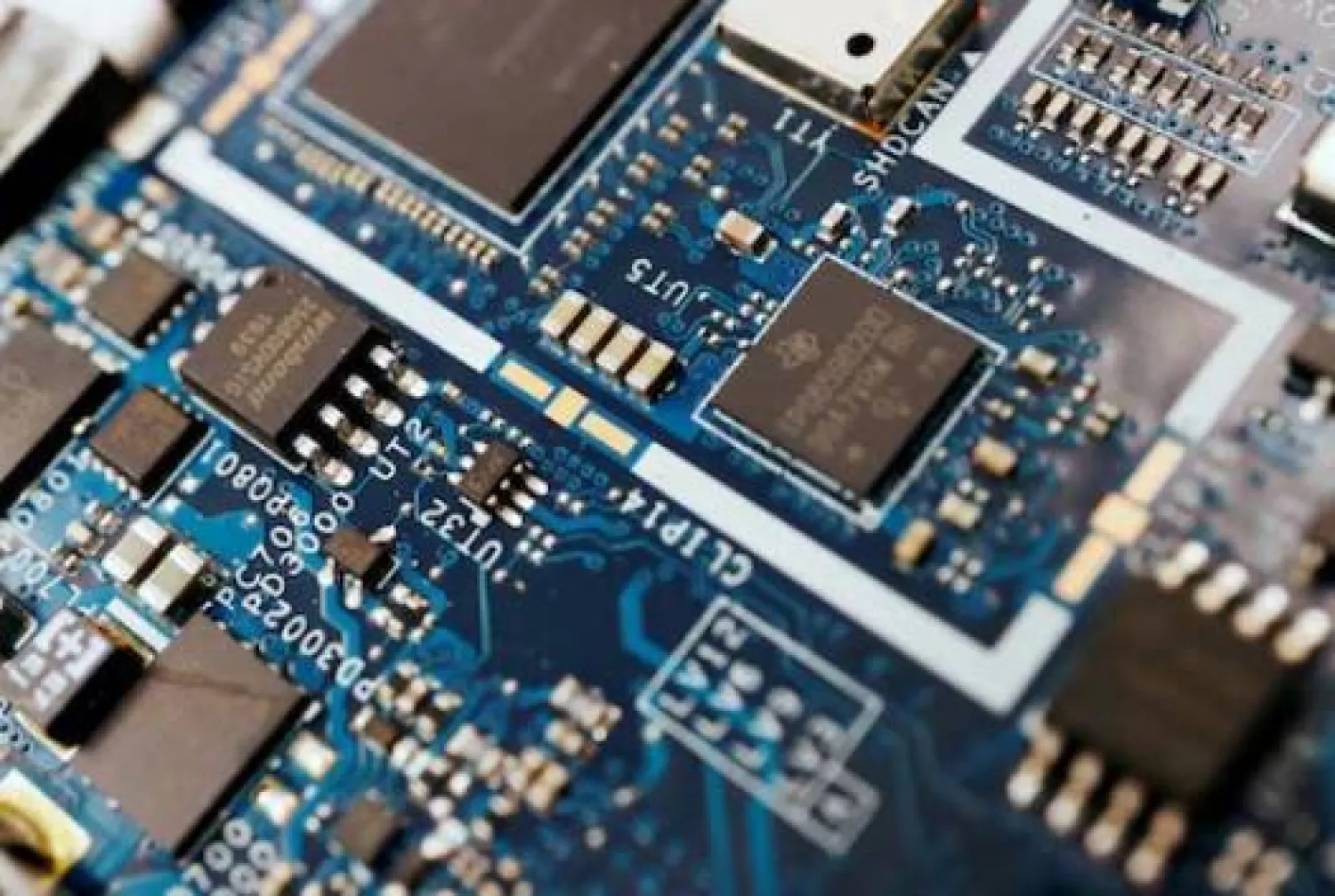
Semiconductor chips on a computer circuit board in an illustrative image (Reuters)
The US-Israel war with Iran could disrupt supplies of key semiconductor manufacturing materials, a South Korean ruling party lawmaker said on Thursday, as the conflict in the Middle East entered its sixth day.
South Korea's chip industry, which supplies around two-thirds of global memory chips, is also concerned that a prolonged conflict in Iran will lead to higher energy costs and prices, Kim Young-bae said after meeting with executives from companies such as Samsung Electronics and trade groups.
"Officials raised a possibility that semiconductor production could be disrupted if some of these key materials cannot be sourced from the Middle East," he said at a briefing with reporters, giving helium as one example.
Helium is essential for heat management during semiconductor production and it has no viable alternatives currently. It is only produced in a handful of countries, with Qatar among the leading players in the industry.
The warnings come as chipmakers grapple with severe supply bottlenecks due to surging chip demand from AI data center operators that has tightened supplies to many other industries, including smartphones, laptops and automobiles.
South Korean chipmaker SK Hynix said in a statement it has "long secured diverse supply chains and sufficient inventory" of helium, "therefore there is almost no chance that the company will be affected."
Samsung declined to comment.
Taiwan's TSMC said in a statement that it did not anticipate any significant impact currently, and will continue monitoring the situation closely.
Contract chipmaker GlobalFoundries said it is "in direct contact with suppliers, customers and partners in the region", and "mitigation plans" are in place.
South Korea's industry ministry said the country relies heavily on the Middle East for 14 other items in chip supply chains, including bromine and chip inspection equipment, but that many of them can be sourced domestically or from other markets.
IMPACT ON DATA CENTRES
South Korea's chip industry also warned the crisis could deal a setback to plans by big tech firms to build AI data centers in the Middle East in the longer term, thus weighing on chip demand, said Kim, the ruling party lawmaker. Amazon said on Monday some of its data centers in the United Arab Emirates and Bahrain were damaged by drone strikes, sparking questions around Big Tech's pace of expansion in the region.
US tech giants like Microsoft and Nvidia have been positioning the UAE as a regional hub for artificial intelligence computing needed to power services such as ChatGPT. Iran launched a wave of missiles at Israel early on Thursday in retaliation for US and Israeli strikes that killed Supreme Leader Ali Khamenei on Saturday.
Saudi Banks Maintain Resilience, Credit Growth Offsets Interest Rate Pressures
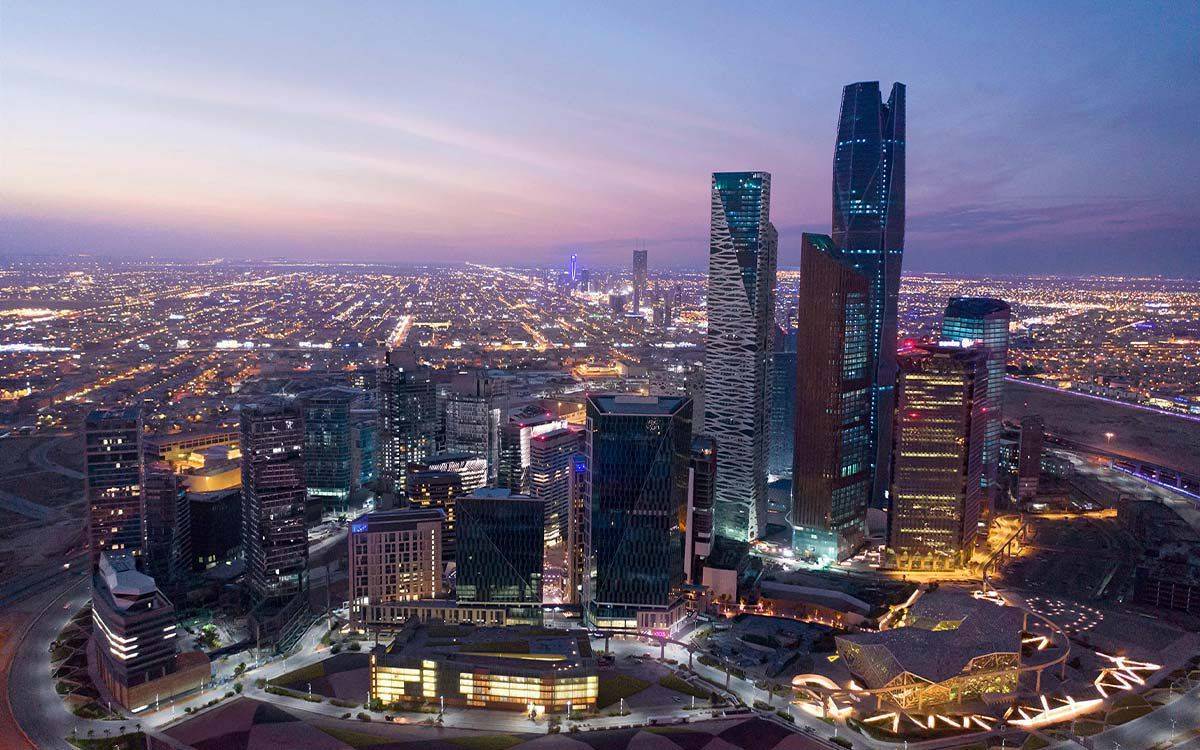
A view of the King Abdullah Financial District in Riyadh. (Public Investment Fund)
The Saudi banking sector has once again demonstrated its robust financial fundamentals and high capacity to adapt to geopolitical challenges and global fluctuations, supported by strong momentum in financing and lending, alongside the continuation of Vision 2030 projects.
Conversely, banks have begun facing a new phase characterized by declining interest rates, intensifying competition for deposits, and rising operating costs - all of which exert growing pressure on margins and profitability.
However, experts believe that strong asset quality, improved liquidity, sustained credit growth, and the diversification of income streams will provide banks with a broader buffer to maintain their performance in the coming period.
The "Saudi Banks Pulse" report by Alvarez & Marsal showed a shift in financing and liquidity trends during the first quarter of 2026; customer deposits grew by 3.9 percent, surpassing the net financing growth of 1.6 percent, after several quarters where the pace of lending exceeded deposit growth.
This shift contributed to reducing the loan-to-deposit ratio to 104.1 percent, compared to 106.5 percent in the previous quarter, indicating an improvement in liquidity levels and a decrease in the financial pressures faced by banks as credit growth accelerated in recent periods.
In remarks to Asharq Al-Awsat, Hazim Almegren, Managing Director of Alvarez & Marsal in the Middle East, attributed the robustness of the institutional lending to "structural and investment-driven rather than cyclical" motivations.
He explained that the continued implementation of the Vision 2030 projects, along with the strength of the banking sector's fundamentals, have been two key factors in maintaining the momentum of financing demand.
He added that the slowdown in loan growth, which coincided with the escalation of geopolitical tensions at the end of the first quarter, is expected to be temporary, likely with state-backed investment continuing to play a pivotal role in stabilizing the demand for financing.
He expected the effects of these pressures to gradually recede during the third quarter unless the region witnesses new escalations.
Competition for low-cost deposits
Despite the improvement in liquidity levels, the report said that the strong growth in deposits was largely driven by an increase in term deposits, amid intensified competition among banks to attract funding sources.
Almegren expected that the next phase will see a greater focus on maintaining current account and savings account (CASA) deposits, as they are the most stable and least costly source of financing.
The ability of banks to protect these deposits will be one of the most prominent determinants of profitability over the next 12 to 24 months, along with maintaining asset quality and enhancing fee and commission income, thereby limiting the impact of declining interest margins, he told Asharq Al-Awsat.
Profitability formula and interest margin
In terms of consolidated gross profitability, the Alvarez & Marsal report showed that the sector's net profits grew by 1.2 percent on a quarterly basis, compared to growth of only 0.2 percent in the last quarter of last year.
This stability in profitability coincided with banks maintaining a strong rate of return on assets, which stabilized at 2.0 percent, while the rate of return on risk-weighted assets remained stable at 2.7 percent. This reflects the banks' efficiency in managing the risks of their financing portfolios despite the surrounding challenges.
Almegren said the Saudi banking sector has entered a new phase with the return of benchmark interest rates to normal levels, which has begun to gradually put pressure on the profit margins of a number of banks.
According to the report, six of the ten largest listed banks recorded a decline in net interest margins, but the sector as a whole maintained a stable net interest margin (NIM) of 2.84 percent, supported by a decrease in the cost of funding to 3.2 percent, which partially offset the decline in the return on credit to 7.8 percent.
Almegren predicted that credit growth supported by Vision 2030 projects will be the most prominent and influential driver of gross profits for the current year compared to margin expansion.
In order to protect investment returns in the second half of the year after the return on shareholders' equity declined slightly to 14.7 percent, the current banking strategy is moving towards improving the asset mix and focusing on sectors with attractive risk-adjusted returns, instead of chasing after maximizing the volume of abstract lending, in parallel with diversifying sources of profits and increasing non-interest income, he added.
A view of the King Abdullah Financial District. (Public Investment Fund)
High liquidity does not imply cash hoarding
While the sector's liquidity coverage ratio reached approximately 172 percent, and rose to 312 percent at the Saudi National Bank (SNB), Almegren ruled out that this indicates liquidity hoarding driven by caution over geopolitical developments.
He explained that these levels reflect a mix of strategic considerations related to balance sheet management, alongside bank-specific market conditions, rather than a general defensive stance within the sector.
Credit quality and the decline in the cost of risk
One of the most prominent highlights reflecting the sector's financial resilience in the first-quarter report is the qualitative leap in banking asset quality. The non-performing loan (NPL) ratio stabilized at a record low of 0.9 percent, reflecting the sustained quality of credit portfolios and a reduced need for new provisioning.
Perhaps the primary driver supporting net profits during this quarter was the sharp and record decline in the cost of risk, which dropped to just 0.15 percent from 0.40 percent in the previous quarter, driven by credit portfolio recoveries.
Despite this drop in direct credit costs, Saudi banks maintained their strict precautionary policies, boosting the non-performing loan coverage ratio to 162.6 percent. This provides solid and sustainable supplementary buffers to protect balance sheets against any unexpected fluctuations.
In a feature reflecting the financial markets' positive outlook toward the sector, the report revealed that Saudi banks' valuations remained attractive and compelling for investors at the end of the first quarter of 2026. The sector's shares traded at a price-to-earnings (P/E) ratio of 10.8 times.
This indicator reflects low investment risk and rapid returns by measuring the relationship between a stock's market price and the bank's annual earnings, meaning that an investor can recover the value of their investment in just about 11 years based on current profitability levels.
This attractiveness was further reinforced by shares trading at a price-to-tangible book value (P/TBV) ratio of 1.6 times. This metric compares the bank's market value to its real, physical assets on the ground after excluding intangible assets like goodwill. This close ratio shows that markets value the banks at a safe pricing level that grants investors a high "margin of safety." At the same time, it confirms the soundness of the financial positions and the robust capital value of Saudi banks in the face of fluctuations.
Emerging challenges and investments securing tomorrow’s profitability
Despite precautionary buffers and positive indicators, the Alvarez & Marsal report identified signs of operational challenges beginning to cast a shadow over performance. The combined operating income of the banks declined by 2.3 percent to reach 40.4 billion riyals, impacted by a sharp 13.2 percent drop in non-interest income. This pressured revenues and overshadowed the modest growth in net interest income.
The most prominent current pressures include escalating operating expenses, which pushed the cost-to-income ratio up to 30.1 percent. This coincided with intensifying competition among banks to attract liquidity through high-cost time deposits, as well as loan repricing challenges following the initial decline in benchmark interest rates - all of which was reflected in a decrease in the yield on credit to 7.8 percent.
Almegren placed these operational figures within their strategic framework. He explained that the notable rise in expenses is primarily driven by continuous and heavy capital expenditure by banks on technological infrastructure, digital transformation, and artificial intelligence applications.
This increase represents "long-term investments" rather than transient operational pressures, he explained. These investments are strongly expected to boost productivity, enhance operational efficiency, and sharpen the competitive edge of Saudi banks over the medium and long term, transforming today’s expenditures into key drivers for bank profitability in the coming years.
Indicators suggest that Saudi banks are entering a new phase where the impact of interest rates as a primary driver of earnings is receding. In its place, the roles of asset quality, operational efficiency, technology investments, and the diversification of income streams are growing increasingly vital in supporting profitability and sustainable growth.
Gold Slips as Stronger Dollar Weighs; Focus on Fed Minutes and Gulf Tensionshttps://english.aawsat.com/business/5293167-gold-slips-stronger-dollar-weighs-focus-fed-minutes-and-gulf-tensions
Gold Slips as Stronger Dollar Weighs; Focus on Fed Minutes and Gulf Tensions
FILE PHOTO: Gold bangles are displayed inside a jewelry store in the old quarters of Delhi, India, May 11, 2026. REUTERS/Bhawika Chhabra//File Photo
Gold slipped for a second consecutive session on Tuesday as a stronger US dollar weighed, while investors awaited Federal Reserve meeting minutes and monitored tensions in the Gulf.
Spot gold fell 0.8% to $4,129.36 per ounce at 0918 GMT. Prices rose more than 2% last week, ending a four-week losing streak following a weak US jobs report.
US gold futures for August delivery eased 0.6% to $4,140.90, Reuters said.
The dollar rose 0.1% against a basket of currencies, making dollar-denominated gold costlier for overseas buyers.
"Today's price action appears to be more of a consolidation than a significant reversal of last week's positive sentiment, with traders waiting for the release of the latest FOMC minutes on Wednesday before making more decisive moves," said ActivTrades analyst Ricardo Evangelista.
Traders will focus on the Fed's views regarding inflation, labor market conditions and any potential divergence of opinion from within the body, added Evangelista.
Investors now see about a 58% chance of a US rate increase in September, according to the CME FedWatch tool.
Geopolitical tensions remained in focus as Trump renewed threats of military action against Iran, while Iran's foreign minister said negotiations on a final peace deal will not continue unless Washington abandons its threats.
Crude prices edged higher on traders' nervousness about a lack of progress on peace talks.
Higher energy prices fueled inflation concerns, bolstering expectations of higher-for-longer US interest rates and weighing on non-yielding gold.
Meanwhile, China's central bank maintained gold purchases for a 20th straight month, with its reserves hitting 75.44 million fine troy ounces at the end of June, up from 74.96 million a month earlier.
Hong Kong launched a central clearing system for gold on Tuesday and also revived dollar gold futures trading.
Spot silver slipped 1.9% to $60.93 per ounce, platinum eased 0.1% to $1,630.23, and palladium rose 0.2% to $1,270.63.
Shell Raises Gas Output Guidance for Q2, Flags Stronger Gas Trading Resultshttps://english.aawsat.com/business/5293108-shell-raises-gas-output-guidance-q2-flags-stronger-gas-trading-results
The logo of British multinational oil and gas company Shell is displayed during the LNG 2023 energy trade show in Vancouver, British Columbia, Canada, July 12, 2023. (Reuters)
TT
TT
Shell Raises Gas Output Guidance for Q2, Flags Stronger Gas Trading Results
The logo of British multinational oil and gas company Shell is displayed during the LNG 2023 energy trade show in Vancouver, British Columbia, Canada, July 12, 2023. (Reuters)
Shell slightly increased its guidance on Tuesday for its second-quarter integrated gas production, although output would be down sharply from the first three months of the year due to the impact of the Middle East conflict.
The British oil major also expects trading and optimization at its integrated gas segment to be "significantly higher" in April-June than in the first quarter, the group said in a quarterly trading update.
Trading results at its chemicals and products unit, which includes the group's big oil trading desk, are expected to be in line with the previous quarter's strong performance.
Oil majors including Shell and its European peers BP and TotalEnergies reported strong oil trading in the first quarter, benefiting from price volatility due to the US-Israeli war with Iran.
Shell guided for its integrated gas output in the April-to-June period to be about 610,000 to 650,000 barrels of oil equivalent per day, down around 30% from the 909,000 boed it produced in the first quarter.
It previously expected a range of 580,000 to 640,000 boed.
Production at Shell's Pearl gas-to-liquids plant in Qatar was halted in March after an attack on Ras Laffan Industrial City damaged one of the facility's two trains. Shell has said repairs could take about a year.
About 20%, or 550,000 boed, of Shell's oil and gas production comes from the Middle East, with around 10% of that Qatar-related.
Shell also forecast a $1 billion to $6 billion working-capital inflow in the second quarter, compared with an $11.2 billion outflow in the first quarter, reflecting the impact of volatility in commodity prices. Working capital is a liquidity measure of current assets minus liabilities.
Shell guided for higher indicative refining margins of about $20 per barrel and chemicals margins of about $240 per ton in the second quarter, although it said the realized margins were lower than those levels due to market dislocations.
لم تشترك بعد
انشئ حساباً خاصاً بك لتحصل على أخبار مخصصة لك ولتتمتع بخاصية حفظ المقالات وتتلقى نشراتنا البريدية المتنوعة