


Oil and Gas Prices Rapidly Rise as Iran War Shows No Signs of Letting Up

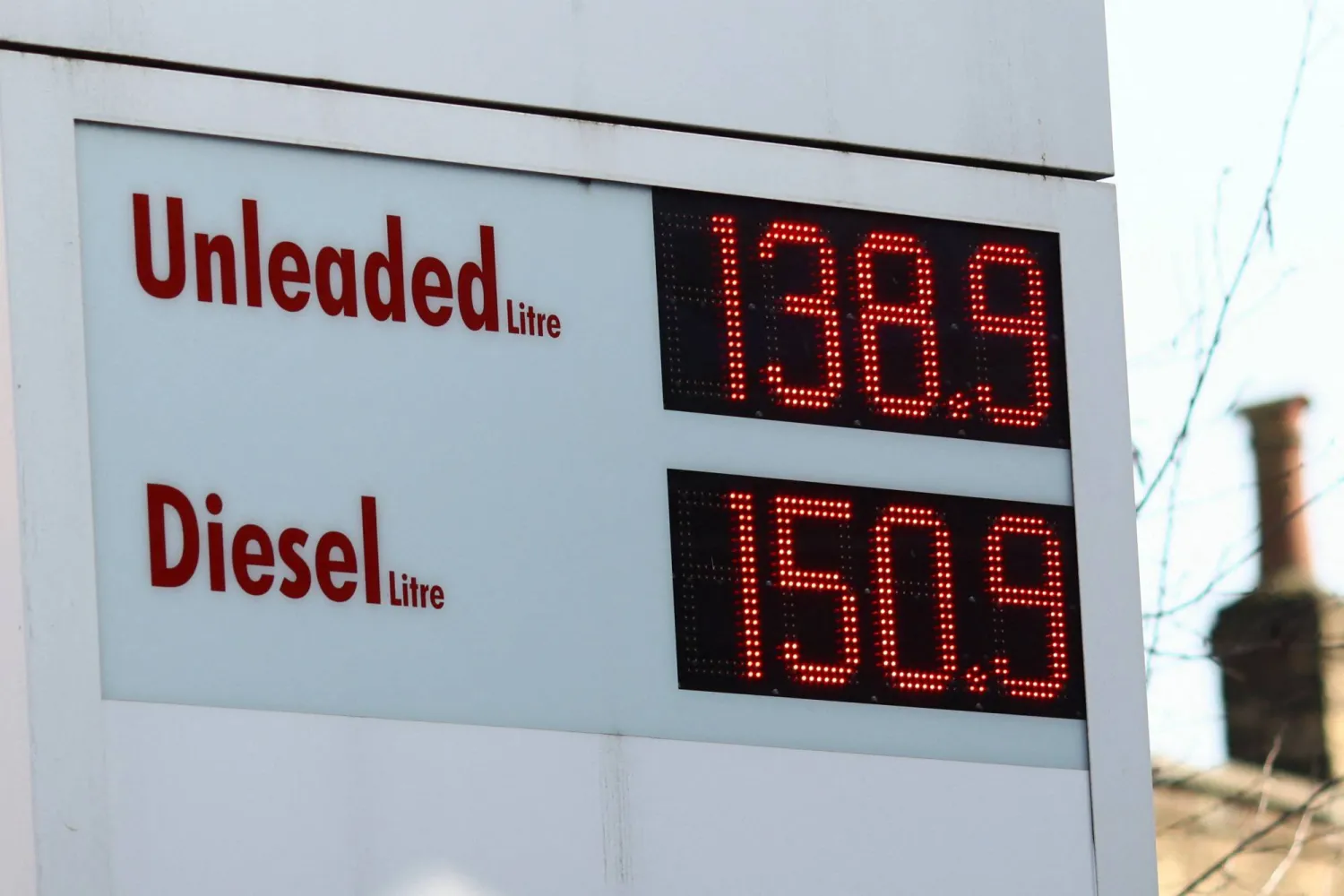
Petrol prices are displayed at a filling station, as the price of oil and gas has surged amid the conflict in the Middle East, in London, Britain, March 5, 2026 REUTERS/Jack Taylor
TT

Oil and Gas Prices Rapidly Rise as Iran War Shows No Signs of Letting Up

Petrol prices are displayed at a filling station, as the price of oil and gas has surged amid the conflict in the Middle East, in London, Britain, March 5, 2026 REUTERS/Jack Taylor

The price of oil surged higher and showed no signs of halting its rapid climb a week after the US and Israel launched major attacks on Iran that escalated into a war in the Middle East.

The conflict, in which nearly every country in the Middle East has sustained damage from missiles or drone strikes, has left ships that carry roughly 20 million barrels of oil a day stranded in the Arabian Gulf, unable to safely pass through the Strait of Hormuz, the narrow mouth of the Gulf that is bordered on its north side by Iran.

The disruption and damage to key oil and gas facilities in the Middle East has led to an interruption in the supply of oil and gas.

Oil prices surpassed $90 a barrel Friday, with American crude settling at $90.90, up 36% from a week ago, and Brent, the international standard, climbing 27% over the course of the week to land at $92.69.

The fallout is ratcheting up what consumers and business will pay for gasoline, diesel and jet fuel, with some drivers already feeling it at the pump.

“It’s crazy. It’s not needed, especially at a time when people are already struggling, but not unexpected from all this turmoil that’s going on,” said Mark Doran, who was pumping gas in Middlebury, Vermont Friday.

“I don’t think there’s been an end in sight to any Middle East conflict that’s been started by us, so the fact that they say that there’s going to be an end that quickly is not believable, and the Middle East is, you know, a place that the US is not going to solve.”

On Monday, President Donald Trump said that the US expected its military operations against Iran to last four to five weeks but has “the capability to go far longer.” And on Friday, Trump appeared to rule out talks with Iran absent its “unconditional surrender.”

“The more news we get, the more it seems like this is going to last a really long time,” said Al Salazar, head of macro oil and gas research at Enverus.

In the US, a gallon of regular gasoline rose to $3.32 on Friday, up 11% from a week ago, according to AAA motor club. Diesel was selling for $4.33 a gallon Friday, up 15% from a week ago.

The price shocks were felt even more heavily in Europe and Asia, markets that rely more heavily on energy supplies from the Middle East. Diesel prices doubled in Europe, and jet fuel prices rose by close to 200% in Asia, according to Claudio Galimberti, chief economist at Rystad Energy.

Energy prices climbed throughout the week as Iran launched a series of retaliatory attacks, including a drone strike on the US Embassy in Saudi Arabia, and the conflict widened. Iran also hit a major refinery in Saudi Arabia and a liquefied natural gas (LNG) facility in Qatar, halting flows of refined products and taking about 20% of the world’s LNG supply offline.

“We keep seeing news of vessels being hit or refineries or pipelines, so the list is very long,” Galimberti said. As a result, roughly 9 million barrels of oil per day are off the market because of facilities being hit or producers taking precautionary measures, he said. “Right now, with all of this shut in, we are in a situation of extreme deficit.”

The US is a net exporter of oil, but that does not mean it is immune to increases in the price of oil or gasoline, or that its producers can just make up the difference.

Oil is traded on global markets, so even the oil produced in the US has risen in price based on what's happening in the Middle East. And for many American oil producers, "if you put more wells in the ground, there’s about a six-month lag before you get that production uplift," Salazar said.

In addition, the US can't simply turn all of its crude oil into gasoline. That's because most of the oil produced in the US is light, sweet crude, and refineries on the East and West coasts are primarily designed to process heavier, sour crude. As a result, the US exports some of its crude oil and imports some refined products such as gasoline.

Jerry Dalpiaz of Covington, Louisiana, said he started filling up his cars and gas cans on “the day that they announced that the United States has started military operations against Iran" because he assumed gas prices would climb.

“I can weather the storm because I’m in good financial position, but I feel sorry for my fellow citizens who are living paycheck to paycheck because they have to drive to get to work and they have to change their oil and all those things,” Dalpiaz said.

"And they need some relief and it doesn’t seem to be coming anytime soon.”

Trump issued a plan Friday to insure losses up to approximately $20 billion in the Gulf region, aiming to restore confidence in maritime trade, help stabilize international commerce and support American and allied businesses operating in the Middle East.

But some energy experts said extra insurance won't solve the problem.

“The problem is that in the oil trading, oil shipping world, people are worried about counterterrorism,” said Amy Jaffe, director of the Energy, Climate Justice and Sustainability Lab at New York University, adding that they're worried about automated drone speedboats, weapon-carrying, flying drones and mines or other devices. "In order for the United States to create the atmosphere that undoes the current bottleneck at the Strait of Hormuz, there has to be some credible demonstration of solutions to the counter-terrorism problem.”

Salazar wondered what the “new normal” would look like if the Strait of Hormuz was effectively re-opened, and what effective security would look like.

“All it takes is one individual with a RPG (rocket-propelled grenade) to stand on the shore and take out a tanker, right?” Salazar said. “And this is forever, do you know what I mean?”



Saudi Economy Accelerates as Diversification and Legal Reforms Drive Growth

Quality of life represents a strategic national priority in Saudi Arabia (SPA). 
TT

Saudi Economy Accelerates as Diversification and Legal Reforms Drive Growth

Quality of life represents a strategic national priority in Saudi Arabia (SPA). 

Saudi Arabia’s economy has undergone nearly a decade of transformation under Crown Prince Mohammed bin Salman, as sweeping reforms and diversification efforts reshape the country’s economic landscape.

Since the launch of Saudi Vision 2030 in April 2016, the Kingdom has embarked on its most significant economic shift in decades. The transformation has extended far beyond fiscal adjustments or limited diversification programs, evolving instead into a broad structural reform aimed at reducing reliance on oil and building a more diverse and dynamic economy.

Economic indicators suggest the strategy is gaining traction. Saudi Arabia’s gross domestic product (GDP) rose from about SAR 2.6 trillion in 2016 to nearly SAR 4.7 trillion in recent years, roughly $1.3 trillion, according to the latest official figures. That represents an average cumulative annual growth rate of about 8 percent, placing the Kingdom among the fastest-growing major economies globally during this period.

The shift reflects Vision 2030’s broader strategy to expand non-oil industries and widen the country’s production base beyond hydrocarbons.


Faisal Al-Fadhel, a legal expert in economic legislation and a member of the board of trustees of the Riyadh Economic Forum, said the reforms launched under Crown Prince Mohammed bin Salman have introduced a more diversified and sustainable economic model.

“Saudi Arabia has moved toward reducing its dependence on oil while expanding promising sectors such as tourism, technology, logistics and advanced industries,” Al-Fadhel told Asharq Al-Awsat. “This approach enhances the resilience of the national economy and increases the attractiveness of the Saudi market for both domestic and foreign investors.”

Recent economic indicators support that assessment. Non-oil activities have recorded strong growth, the private sector’s contribution to GDP has expanded, and foreign direct investment inflows have increased. At the same time, Saudi Arabia has improved its standing in global competitiveness indicators, reinforcing its ambitions to become a regional hub for business and investment.

Al-Fadhel noted that the transformation has also been supported by a broad legislative reform agenda designed to modernize the regulatory environment. Key economic and commercial laws — including the Companies Law, Investment Law, and Bankruptcy Law — have been updated, alongside regulations related to corporate governance, investor protection and competition. The reforms aim to improve transparency, regulatory certainty and the efficiency of the investment environment.

Non-Oil Sectors Lead Growth

One of the most visible outcomes of the economic shift is the rising contribution of non-oil sectors, which now account for 56 percent of GDP. Data show that non-oil activities were the primary driver of real economic growth in 2025.

Saudi Arabia ended 2025 with its strongest growth in two years, with GDP expanding 4.5 percent, according to estimates by the General Authority for Statistics (GASTAT). The economy grew 5 percent in the fourth quarter, with all major sectors contributing to the expansion compared with 2024.

Labor Market Changes

The Saudi labor market has also seen notable shifts. Unemployment among Saudi nationals has declined, while female participation in the workforce has reached record levels following a series of labor and regulatory reforms.

More than 2.48 million Saudis have joined the private sector in recent years, reflecting the impact of job localization policies. Economic transformation programs have also generated roughly 800,000 new jobs, with strong growth in engineering professions.

Employment opportunities have expanded particularly in tourism, supported by major entertainment and tourism projects, as well as in the pharmaceutical and medical manufacturing industries, where job numbers have doubled.

Investment at the Center

Investment has become a central pillar of the Kingdom’s economic strategy. Crown Prince Mohammed bin Salman has positioned both domestic and foreign investment as key drivers of growth and diversification.

The government established the Ministry of Investment and launched the National Investment Strategy as a comprehensive framework to boost capital formation. Total investment — measured by fixed capital formation — has risen from about SAR 672 billion in 2017 to roughly SAR 1.44 trillion by the end of 2024, more than doubling in less than a decade.

Al-Fadhel emphasized that the private sector is a critical partner in achieving Vision 2030 goals through expanded investment, technological adoption, innovation, and entrepreneurship.

Public Investment Fund Expands Role

The Public Investment Fund (PIF) has emerged as a central instrument of the transformation. With assets estimated at SAR 3.47 trillion, it has become one of the world’s largest sovereign wealth funds.

PIF is leading major investments in tourism, renewable energy, industry, technology and entertainment while launching large-scale development projects designed to create new industries and strengthen Saudi Arabia’s position as a global economic hub.


US Fed Expected to Hold Rates Steady as Iran War Roils Outlook

The US-Israel war on Iran has seen energy infrastructure damaged across the Middle East, sending shockwaves through global markets. AFP
TT

US Fed Expected to Hold Rates Steady as Iran War Roils Outlook

The US-Israel war on Iran has seen energy infrastructure damaged across the Middle East, sending shockwaves through global markets. AFP

US Federal Reserve policymakers are expected to leave interest rates unchanged at their meeting next week, as the US-Israel war on Iran sends shock waves through markets and recent economic data has begun to show weakness.

The Fed will start its two-day meeting on Tuesday, with an announcement of the benchmark lending rate in the world's largest economy a day later.

The central bank cut rates three consecutive times last year before holding them steady at its January meeting, said AFP.

It has a dual mandate of holding inflation near a long-term target of two percent while ensuring maximum employment.

With war in the Middle East causing global oil prices to spike, potentially increasing overall inflation and curbing growth, analysts say policymakers are unlikely to make any moves now.

"This is certainly a bind for the Fed, because supply shocks are extremely hard to deal with in that they lift inflation and they curb output," EY-Parthenon chief economist Gregory Daco told AFP.

Affordability is a key political issue for President Donald Trump, who has claimed that prices are cooling even as consumers complain of the high costs of basic goods.

Trump has repeatedly insulted Fed Chair Jerome Powell as he demands lower rates, and the Justice Department threatened Powell with a criminal indictment as part of an investigation into cost overruns for a Fed renovation project.

While consumer inflation has dropped from a peak of 9.1 percent during the Covid pandemic, it remains well above the Fed's two- percent target.

"Unlike other countries, which have already achieved some level of price stability, we're five years in without price stability," said Diane Swonk, chief economist at KPMG.

She warned that, depending on how long the Iran war lasts, inflation could again soar past four percent.

"I think the main story here is that we are seeing inflation moving away from the Fed's two-percent target, and that will lead many Fed policymakers to adopt an even more hawkish stance," said Daco.

- Duelling mandates -

Raising rates to cool the economy, however, could bring the Fed into tension with its other mandate: managing unemployment.

The United States unexpectedly lost 92,000 jobs in February, government data showed, while the unemployment rate rose to 4.4 percent.

Analysts say a relatively steady unemployment rate has been masking churn beneath the surface.

Labor demand has been dropping, but unemployment has not spiked because that has been accompanied by a drop in supply due to Trump's immigration crackdown.

Daco said labor demand gauges were showing signs of concern, including a weak hiring rate "at a decade low," slowing wage growth and business leaders talking about labor replacement due to AI.

Swonk noted that spiking uncertainty due to war in Iran and its knock-on effects would further curb labor demand.

"Uncertainty acts as its own tax on the economy, and one of the first lines of defense that firms do is they freeze hiring," she said.

And recent data ahead of the Fed meeting is not encouraging, with US GDP growth revised sharply lower in the final months of 2025.

- 'Rock and a hard place' -

Some Fed policymakers, however, have been cautious in describing the possible inflationary shocks of the war.

Fed Governor Christopher Waller expressed sympathy on Bloomberg TV last week for consumers facing spiking gasoline prices.

"But for us thinking about policy going forward, this is unlikely to cause sustained inflation," he said.

Swonk warned however that any economic slowdown from the war could be tough to recover from in the immediate term.

"I think people are discounting the risk of the lingering effects," she said, noting that supply disruptions affect more than oil prices.

"There's no question they're between a rock and a hard spot, and it just got harder," Swonk said of policymakers having to balance inflation and unemployment.

To Daco, however, uncertainty means the Fed is more likely to hold rates steady "for a long period of time."

Traders have begun to reduce their outlook for rate cuts, and Swonk said that hikes could even be on the menu.

"This is not a one-way street. We're at a busy intersection, and the stoplight's broken," she said.


Fitch Affirms ‘AA’ Credit Rating for Qatar

As LNG production increases, Fitch projects the general government budget surplus will rise ⁠to ⁠4.1% of GDP in 2027 (Reuters)
TT

Fitch Affirms ‘AA’ Credit Rating for Qatar

As LNG production increases, Fitch projects the general government budget surplus will rise ⁠to ⁠4.1% of GDP in 2027 (Reuters)

Fitch Ratings affirmed Qatar's long-term foreign-currency rating at "AA" and a "stable" outlook on Friday, saying its strong balance sheet and plans to sharply increase LNG output should help cushion the impact of the escalating Middle East conflict.

The US-Israel war with Iran has disrupted shipments from the world's most important oil artery, the Strait of Hormuz, which is responsible for 20% of global oil and liquefied natural gas supply.

The impact on LNG exports is likely ⁠to widen Qatar's ⁠fiscal deficit in 2026, contingent on how long the conflict lasts, but the country should be able to more easily tap debt markets or draw on its sovereign wealth fund, the Qatar Investment Authority (QIA), which has built up ⁠assets over decades of investing at home and globally.

Fitch said it assumes the conflict would last less than a month and the strait would remain closed during that period, with no major damage to regional hydrocarbon infrastructure. Under its baseline scenario, the agency expects Brent crude to average $70 a barrel in 2026.

As LNG production increases, Fitch projects the general government budget surplus will rise ⁠to ⁠4.1% of GDP in 2027 and exceed 7% by 2030. Excluding investment income, the budget is expected to return to surplus from 2027, with most excess revenue likely to be transferred to QIA for overseas investment.

The agency expects Qatar to meet its 2026 funding needs through a combination of central bank overdrafts, domestic and international market borrowing, and drawdowns on the finance ministry's deposits in the banking sector.