


A Year After Crown Prince’s Decisions, Riyadh Real Estate Exits Speculation, Transaction Values Down 64%

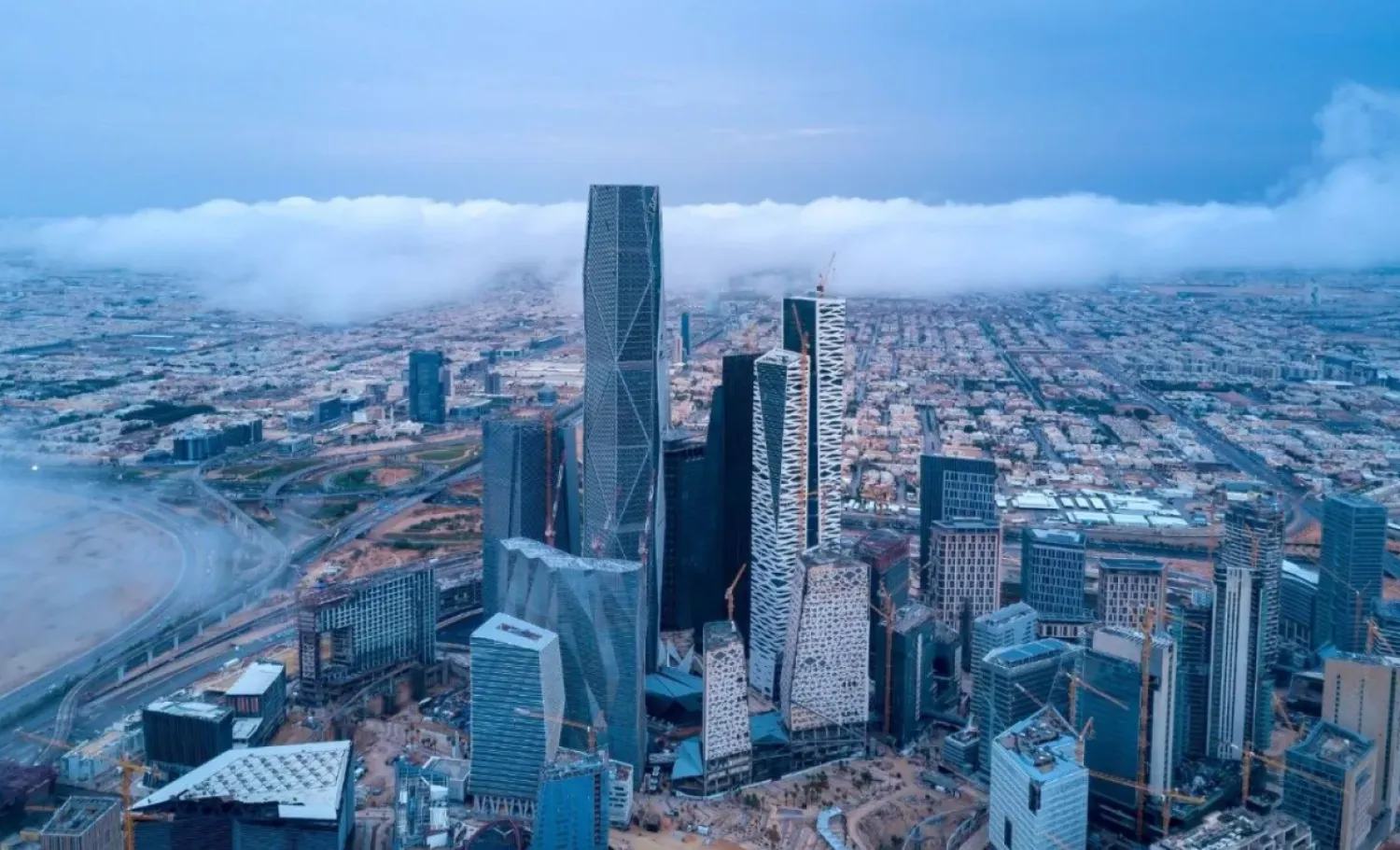
File photo of Saudi Arabia's capital Riyadh - SPA
TT

A Year After Crown Prince’s Decisions, Riyadh Real Estate Exits Speculation, Transaction Values Down 64%

File photo of Saudi Arabia's capital Riyadh - SPA

One year after a package of landmark decisions issued by Crown Prince Mohammed bin Salman on March 29, 2025 to rebalance Riyadh’s real estate market, a new trajectory is taking hold across the capital, particularly in its northern districts.

Data from the Real Estate Exchange showed a clear retreat in speculative activity that had strained the market for years, with transaction values recording a sharp 64% decline, marking the start of a “major correction” toward a more a sustainable real estate model that places the needs of citizens and genuine developers at the center of the market.

The Crown Prince’s directives outlined a new path for the market through a set of key executive measures, including lifting restrictions on millions of square meters in northern Riyadh, activating fees on vacant land to boost housing supply, freezing rent increases, and regulating contractual relations between landlords and tenants. These steps have contributed directly to stabilizing housing costs and curbing unjustified price surges seen in recent years.

The impact of these structural reforms was reflected in data from the Real Estate Exchange affiliated with the Ministry of Justice, which showed a 64% drop in transaction values. Transactions stood at around 53,000 deals worth more than $17.3 billion (65 billion riyals), compared with approximately $48.3 billion (181 billion riyals) in the year preceding the decisions. Total traded land area also declined to 153,000 square meters from 228,000 square meters, which experts attribute to a shift in liquidity from large-scale land speculation to organized residential development projects.

Reshaping the real estate market

Real estate specialists told Asharq Al-Awsat that these measures have reshaped Riyadh’s property market toward a more sustainable model driven by real development and genuine housing demand, guiding it toward greater balance, maturity, price stability, and closer alignment between real estate products and actual market needs. They added that this transformation represents a significant step toward building a more sustainable market capable of keeping pace with the Kingdom’s economic changes.

Real estate expert and marketer Saqr Al-Zahrani told Asharq Al-Awsat that the impact of these decisions has led to a clear structural shift in the market. He said the decline in transaction values does not reflect weak activity as much as it reflects a retreat in speculative practices that had pushed prices beyond levels linked to real housing demand.

He added that the balancing measures helped establish a new pricing benchmark for residential land, particularly with the offering of supported land at around 1,500 riyals per square meter, which has reset price expectations in several districts and curbed unjustified increases seen in recent years.

He noted that undeveloped land in northern Riyadh has experienced what he described as a “free fall” in prices, according to market reports, with some locations seeing significant declines after years of rapid increases fueled by speculation and growth expectations. He said this decline is viewed as part of a natural correction process that re-prices land based on more realistic criteria tied to development value and actual housing demand.

From speculation to development

Al-Zahrani said that over the past year, several key trends have emerged, most notably a shift in liquidity from speculation toward real estate development, with greater focus on structured development projects instead of trading undeveloped land. He added that the genuine homebuyer has re-emerged as the main driver of the market following a decline in short-term investors.

He also said early off-plan sales projects have begun to emerge, both in housing units and developed land, a model expected to expand in the coming period as it helps increase housing supply and reduce ownership costs. The market is also awaiting new regulations, particularly fees on vacant properties, which are expected to bring idle assets into use and improve the efficiency of real estate stock within cities.

Al-Zahrani said the Riyadh real estate market is likely to move toward a more mature and sustainable phase, with expected growth in off-plan projects and increased supply driven by continued regulatory reforms, which could lead to price stability and a better balance between supply and demand.

He added that current market conditions do not reflect a slowdown as much as a restructuring phase toward a more sustainable model based on real development and genuine housing demand, supporting urban development goals and enhancing quality of life in the capital.

Market behavior

For his part, real estate expert and marketer Abdullah Al-Mousa told Asharq Al-Awsat that Riyadh’s real estate market has entered a pivotal stage in its economic cycle. He said the changes seen over the past year cannot be explained solely by transaction volumes or values, but must be understood within a broader context of reshaping market behavior and recalibrating the relationship between supply and demand.

He added that in the years preceding these decisions, the market saw rapid price increases driven by several factors, including rising demand, accelerated urban growth, and the entry of various investment segments. Over time, rebalancing became necessary to ensure market sustainability and limit unjustified price increases.

Al-Mousa said the decline in transactions over the past year can be seen as a natural reflection of a recalibration phase, during which buyers tend to pause and reassess investment decisions, while developers and owners review pricing and marketing strategies in line with new conditions.

He noted that one of the most prominent features of this period has been increased awareness among market participants, with purchasing decisions becoming more closely tied to value and economic feasibility rather than short-term price expectations. Some real estate companies have also begun restructuring their sales and marketing models, including offering longer payment plans and redesigning products to better match market needs.

The expert said this phase has contributed to reducing speculative activity that previously influenced price movements in some areas, encouraging a stronger shift toward actual land development rather than holding land as idle assets awaiting price increases.

He added that what is happening in Riyadh’s real estate market today does not represent a downturn but a transitional phase reshaping market rules- from one driven by price speculation to a more mature and stable market based on real asset value and long-term development efficiency. This, he said, marks an important step toward building a more sustainable market aligned with the Kingdom’s economic transformation.

Al-Mousa concluded that the Riyadh real estate market is expected to continue on a more balanced and mature path in the coming period, with competition increasingly tied to product quality, development efficiency, and alignment with actual market needs, alongside ongoing major projects that will keep the sector a key driver of economic growth.



Worries About Global Economic Pain Deepen as the War in Iran Drags on

A worker refills the tank of a car at a gasoline station in Macau on March 27, 2026. (AFP)
TT

Worries About Global Economic Pain Deepen as the War in Iran Drags on

A worker refills the tank of a car at a gasoline station in Macau on March 27, 2026. (AFP)

US and Israeli attacks on Iran have driven up prices, darkened the outlook for the world economy, sent global stock markets reeling and forced developing countries to ration fuel and subsidize energy costs to protect their poorest.

Ongoing strikes and counterstrikes on Persian Gulf refineries, pipelines, gas fields and tanker terminals threaten to the prolong the global economic pain for months, even years.

“A week ago or certainly two weeks ago, I would have said: If the war stopped that day, the long-term implications would be pretty small,” said Christopher Knittel, an energy economist at the Massachusetts Institute of Technology. “But what we’re seeing is infrastructure actually being destroyed, which means the ramifications of this war are going to be long-lived.”

Iran has hit Qatar’s Ras Laffan natural gas terminal, which produces 20% of the world’s liquefied natural gas. The March 18 strike wiped out 17% of Qatar’s LNG export capacity and repairs will take up to five years, state-owned QatarEnergy said.

The war caused an oil shock from the get-go. Iran responded to US and Israeli attacks Feb. 28 by effectively closing off the Strait of Hormuz, a transit point for a fifth of the world’s oil, by threatening tankers trying to pass through.

Gulf oil exporters like Kuwait and Iraq cut production because there was nowhere for their oil to go without access to the strait. The loss of 20 million barrels of oil a day delivered what the International Energy Agency calls the “largest supply disruption in the history of the global oil market.”

The price for a barrel of Brent crude oil climbed 3.4% on Friday to settle at $105.32. That was up from roughly $70 just before the war began. Benchmark US crude rose 5.5% to settle at $99.64 per barrel.

“Historically, oil price shocks like this have led to global recessions,” Knittel said.

The war also has dredged up a bad economic memory from the oil shocks of the 1970s: stagflation.

“You’re raising the risk of higher inflation and lower growth,” said the Harvard Kennedy School's Carmen Reinhart, a former World Bank chief economist.

Gita Gopinath, former chief economist at the International Monetary Fund, recently wrote that global economic growth, expected before the war to register 3.3% this year, would be 0.3 to 0.4 percentage points lower if oil prices averaged $85 a barrel in 2026.

Fertilizer shortages and price hikes hurt farmers

The Gulf accounts for a big share of exports of two key fertilizers, a third of urea and a quarter of ammonia. Producers in the region enjoy an advantage: easy access to low-cost natural gas, the primary feedstock for nitrogen fertilizers.

Up to 40% of world exports of nitrogen fertilizer pass through the Strait of Hormuz.

Now that the passage is blocked, urea prices are up 50% since the war and ammonia 20%. Big agricultural producer Brazil is especially vulnerable because it gets 85% of its fertilizer from imports, Alpine Macro commodity strategist Kelly Xu wrote in a commentary. Egypt, a big fertilizer producer itself, needs natural gas to make the stuff and production falters when it can’t get enough.

Eventually, higher fertilizer prices are likely to make food more expensive and less abundant as farmers skimp on it and get lower yields. The squeeze on food supplies will land hardest on families in poorer countries.

The war also has disrupted world supplies of helium, a byproduct of natural gas and a key input in chipmaking, rockets and medical imaging. Qatar makes helium at the Ros Laffan facility and supplies a third of the world’s helium.

Rationing gas and limiting the air conditioning

“No country will be immune to the effects of this crisis if it continues to go in this direction,” International Energy Agency head Fatih Birol said on March 23.

Poorer countries will be hit hardest and face the biggest energy shortages “because they will be outbid when competing for the remaining oil and natural gas,” said Lutz Kilian, director of the Center for Energy and the Economy at the Federal Reserve Bank of Dallas.

Asia is especially exposed: More than 80% of the oil and LNG that passes through the Strait of Hormuz is headed there.

In the Philippines, government offices are now open just four days a week and bureaucrats must limit the use of air conditioning to nothing cooler than 75°F (24°C). In Thailand, public workers have been told to take the stairs instead of elevators.

India is the world’s second-biggest importer of liquefied petroleum gas, which is used in cooking. The Indian government is giving households priority over businesses as it allocates its limited supply and absorbing most of the price increases to keep costs low for poor families.

But LPG shortages have forced some eateries to shorten hours, close temporarily or drop dishes like curries and deep-fried snacks requiring a lot of energy.

South Korea, dependent on energy imports, is restricting the use of cars by public employees and has reinstated fuel price caps that had been dropped in the 1990s.

Crisis hits a vulnerable US economy

The United States, the world’s largest economy, is somewhat insulated.

America is an oil exporter, so its energy companies stand to benefit from higher prices. And LNG prices are lower in the US than elsewhere because its export liquefaction facilities already are running at 100% capacity. The US can’t export any more LNG than it already is, so gas stays home, keeping domestic supplies abundant and prices stable.

Still, higher gasoline prices are weighing on American consumers already frustrated by the high cost of living. According to AAA, the average price of a gallon of gasoline has risen to nearly $4 a gallon from $2.98 a month ago.

“Nothing weighs more heavily on consumers’ collective psyche than having to pay more at the pump,” Mark Zandi, chief economist at Moody’s Analytics, and his colleagues wrote in a commentary.

The US economy already was showing signs of weakness, expanding an annual pace of just 0.7% from October through December, down from a rollicking 4.4% from July through September. Employers unexpectedly cut 92,000 jobs in February and added just 9,700 a month in 2025, the weakest hiring outside a recession since 2002.

Gregory Daco, chief economist at EY-Parthenon, has raised the odds of a US recession over the next year to 40%. The risk when times are "normal'' is just 15%.

Recovery will take time

The world economy has proven resilient in the face of repeated shocks: a pandemic, Russia’s invasion of Ukraine, resurgent inflation and the high interest rates needed to bring it under control.

So there was optimism it also could shrug off the damage from the Iran war. But those hopes are fading as the threats to the Gulf's energy infrastructure continue.

“There is no economic upside to the conflict with Iran,” Zandi and his colleagues wrote. "At this point, the questions are how much longer the hostilities will continue and how much economic damage they will cause.”


Two India-bound LPG Tankers Crossing Strait of Hormuz Out of Gulf

An oil tanker crossing the Strait of Hormuz (Reuters)
TT

Two India-bound LPG Tankers Crossing Strait of Hormuz Out of Gulf

An oil tanker crossing the Strait of Hormuz (Reuters)

Two liquefied petroleum gas tankers, BW Elm and BW Tyr, are crossing the Strait of Hormuz bound for India, according to ship tracking data from LSEG and Kpler.

The US-Israeli war against Iran has all but halted shipping through the strait, but Iran said this week that "non-hostile vessels" may transit the waterway if they coordinate with Iranian authorities.

The two India-flagged vessels have ⁠crossed the Gulf ⁠area and are in the eastern Strait of Hormuz, the data showed, according to Reuters.

India is gradually moving its stranded LPG cargoes out from the strait, with four LPG tankers moved so far - Shivalik, Nanda Devi, ⁠Pine Gas, and Jag Vasant.

As of Friday, 20 Indian-flagged ships including five LPG carriers were stranded in the Gulf, Rajesh Kumar Sinha, special secretary in the federal shipping ministry, said.

LPG carriers Jag Vikram, Green Asha and Green Sanvi are still in the western Strait of Hormuz, LSEG data show.

India, the world's second-largest LPG importer, is ⁠battling its ⁠worst gas crisis in decades, with the government cutting supplies for industries to shield households from any shortage of cooking gas.

The country consumed 33.15 million metric tons of LPG, or cooking gas, last year, with imports accounting for about 60% of demand. About 90% of those imports came from the Middle East.

India is also loading LPG onto its empty vessels stranded in the Gulf.


Saudi East-West Pipeline is Pumping Oil at its Full Capacity

King Fahd Industrial Port in Yanbu (SPA)
TT

Saudi East-West Pipeline is Pumping Oil at its Full Capacity

King Fahd Industrial Port in Yanbu (SPA)

Saudi Arabia’s crucial East-West pipeline that circumvents the Strait of Hormuz is pumping oil at its full capacity of 7 million barrels a day, a person familiar with the matter told Bloomberg.

The technical milestone is the culmination of the Kingdom’s longstanding contingency plan for keeping its oil flowing after the effective closure of their main export route. Flotillas of tankers have been redirected to the Red Sea port of Yanbu to collect the oil, providing an important lifeline for global supply.

Crude exports via Yanbu have now reached about 5 million barrels a day and the kingdom is also exporting 700,000 to 900,000 barrels a day of refined products, according to the person familiar with the Saudi oil industry. Of the 7 million barrels a day that go through the pipeline, 2 million are destined for Saudi refineries, Bloomberg said.

Running the breadth of the Arabian Peninsula from the massive oil fields in the east of the country to the industrial port city of Yanbu, the pipeline is more than 1,000 kilometers (620 miles) long.

Oil prices rose on ​Friday and notched weekly gains, reflecting scepticism about prospects for a ceasefire in the month-old Iran war.

Brent crude futures rose by $4.56, or 4.2%, to $112.57 a barrel. US West Texas Intermediate futures rose $5.16, or 5.5%, to settle at $99.64.

The Brent benchmark has jumped 53% since February 27, the day before the US and Israel launched strikes against Iran, while WTI has gained 45% since then. On a weekly basis, Brent gained about ‌0.3%, while WTI ‌gained over 1%.