
Saudi Arabia’s stock market closed March on a strong note, advancing while most Gulf markets declined, underscoring its resilience in the face of heightened geopolitical tensions.
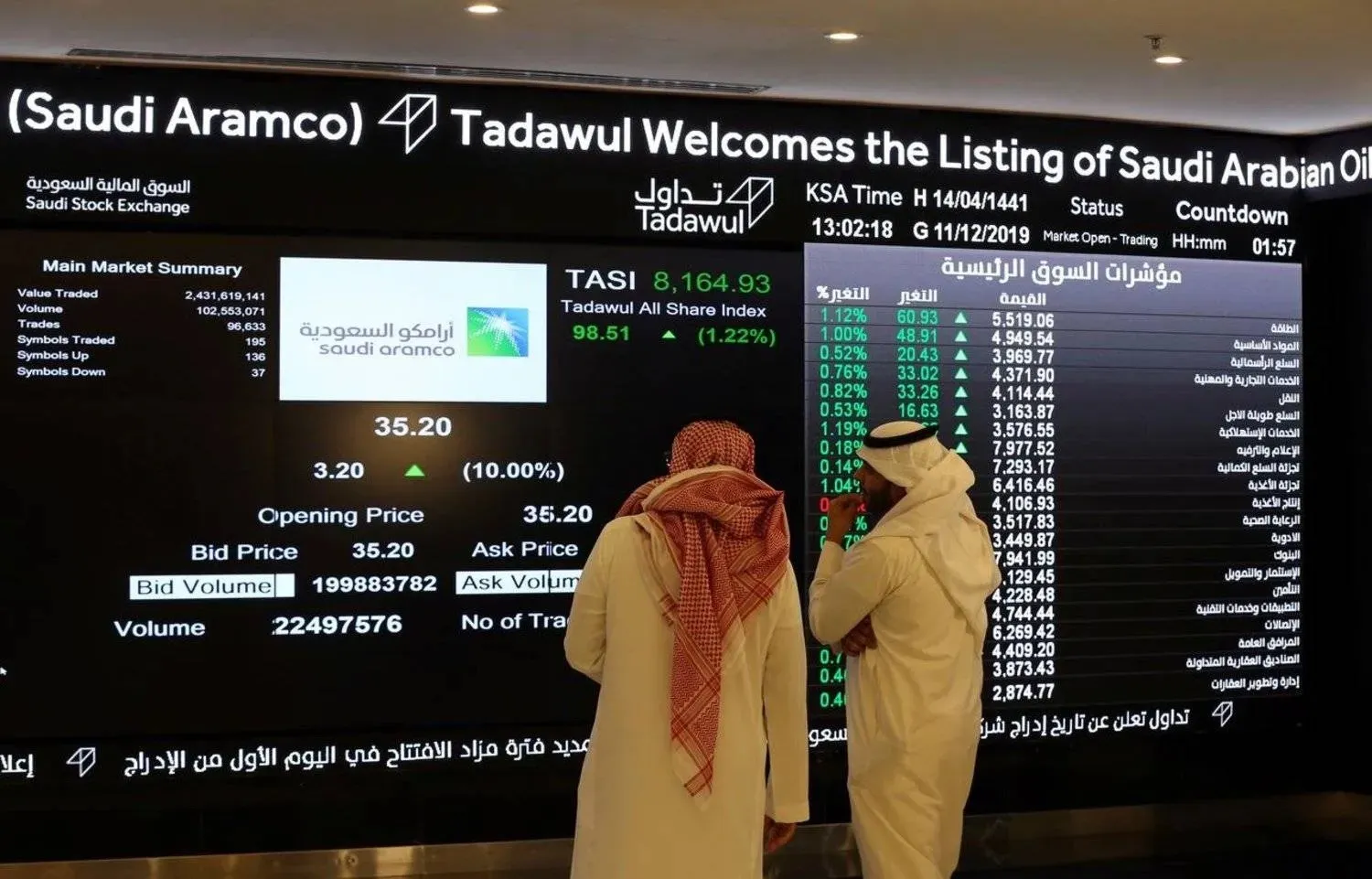
The benchmark Tadawul All Share Index (TASI) ended the final session of the month at a two-month high, trading above 11,200 points, supported by gains in Saudi Aramco and Al Rajhi Bank.
The index rose about 4.5 percent in March, recovering part of its 5.9 percent loss in February. On a quarterly basis, it gained roughly 6.7 percent, putting it on track for its strongest performance since the fourth quarter of 2023.
Economic adviser Hussein Al-Attas told Asharq Al-Awsat that the market’s strong performance reflects the broader resilience of the Saudi economy and its ability to absorb regional shocks.
He said the gains were driven in part by Saudi Aramco maintaining crude flows to global markets despite disruptions in the Strait of Hormuz.
Aramco shares rose 9.6 percent in March, climbing from 25 riyals to 27.44 riyals by Tuesday’s close.
The company has resumed exports through Saudi Arabia’s East-West pipeline, which bypasses the Strait of Hormuz. The pipeline is operating at full capacity of 7 million barrels per day via the Red Sea port of Yanbu, according to a source cited by Bloomberg.
Al-Attas added that petrochemical stocks have rallied since the start of the war, supported by their connection to Aramco and stronger global demand driven by supply disruptions linked to the conflict with Iran.
All 12 petrochemical firms listed on TASI have gained since the outbreak of the war, led by Yanbu National Petrochemical Company (Yansab), whose shares have surged 46 percent.
Gulf markets under pressure
The war involving Iran weighed on most Gulf markets in March, with heightened uncertainty driving sharp volatility and broad-based declines.
Dubai index recorded the steepest losses, falling 16.44 percent, followed by Abu Dhabi, down 8.93 percent. Bahraini and Qatari index each declined 7.84 percent, while Kuwait slipped 1.82 percent.
In contrast, Muscat bucked the regional trend, posting gains of about 10.5 percent. The Saudi market also outperformed its regional peers, rising 5.05 percent.