


IEA Hails Saudi Arabia’s ‘Rapid Response’ to Strait of Hormuz Crisis

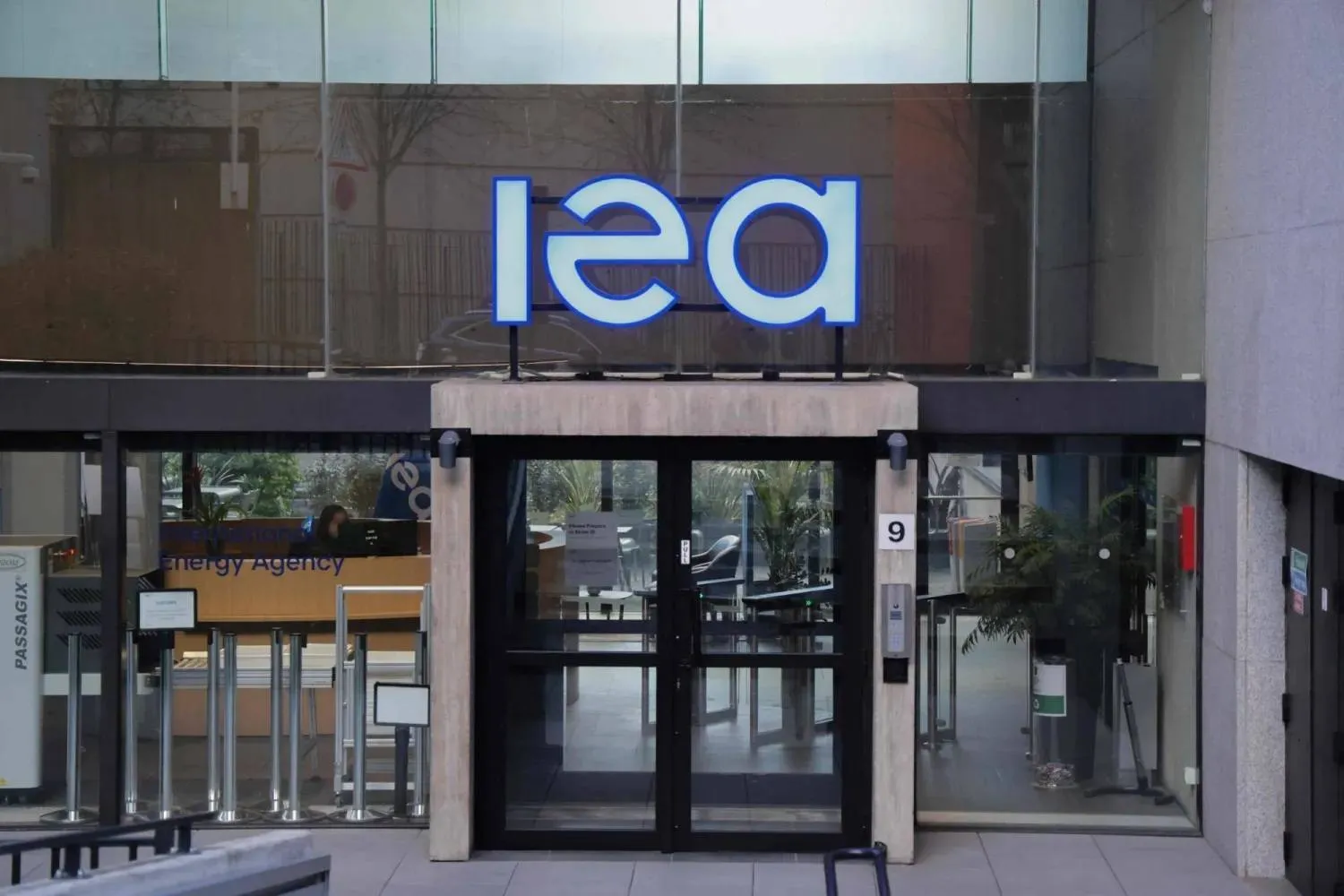
This photograph shows the entrance to the International Energy Agency (IEA) headquarters in Paris on March 11, 2026. (AFP)
TT

IEA Hails Saudi Arabia’s ‘Rapid Response’ to Strait of Hormuz Crisis

This photograph shows the entrance to the International Energy Agency (IEA) headquarters in Paris on March 11, 2026. (AFP)

Countries must resist the urge to hoard oil and fuel during the energy crisis triggered by the US-Israeli war on Iran, head of the International Energy Agency Fatih Birol warned on Sunday, with supplies expected to dwindle further if the Strait of Hormuz remains closed.

Birol praised Saudi Arabia for its rapid response to the crisis, after it rerouted over two-thirds of its oil exports through a pipeline to the Red Sea, bypassing the strait.

“I urge all countries not to impose bans or restrictions on exports,” Birol told the Financial Times. “It is the worst time when you look at the global oil markets. Their trade partners, their allies and their neighbors will suffer as a result.”

While he was careful not to name China directly, Birol’s comments appear to be aimed at Beijing.

China is the only major country to have banned the export of petrol, diesel and jet fuel in response to the five-week-old war, although India has imposed extra duties on exports.

Birol said “major countries in Asia who hold major refineries” should rethink any ban.

“If those countries continue to restrict or totally ban exports, the impact on the Asian markets will be dramatic.”

His plea for countries to avoid bans may also be pointed at the US, where rumors of a potential ban on refined fuel exports are circulating as gasoline prices pass $4 a gallon and California faces the threat of jet fuel shortages.

While the US supported a G7 call for no export bans, its energy secretary Chris Wright has so far only ruled out a ban on crude oil exports.

Birol said some countries are already hoarding energy, undermining the impact of the IEA’s move to release 400 million barrels of crude and fuel from emergency reserves in an effort to stabilize markets during the current conflict.

“Unfortunately, we see that some countries are adding to their existing stocks during our coordinated oil stock release,” he said. “They are stocking up. This is not helpful. In my view this is a time for all countries to prove they are a responsible member of the international community.”

Saudi response

Birol praised Saudi Arabia for its rapid response to the crisis, after it rerouted over two-thirds of its oil exports through a pipeline to the Red Sea, bypassing the strait.

He said he had been reassured by the “highest authorities in Saudi Arabia” that this key pipeline is “well protected.”

Birol, who as head of the IEA has been at the heart of discussions over how to respond to the crisis, warned that “in April, we will lose twice the amount of crude oil and [refined] products we lost in March” if the Hormuz Strait does not reopen to shipping.

In normal times, one-fifth of the world’s oil and liquefied natural gas flows through the waterway, which has been all but closed by Iranian threats to fire upon shipping.

“We are following all the key energy assets in the region on a daily or hourly basis,” he said, referring to oil and gas fields, pipelines, refineries and LNG terminals. “Currently there are 72 energy assets damaged and one-third are severely or very severely damaged,” he added.

Birol also said the current crisis would redraw the world’s energy system, as did previous crises in the 1970s and the one triggered by Russia’s full-scale invasion of Ukraine in 2022.

He predicted that the current crisis would trigger another nuclear revival, a boom in electric vehicles and a push for more renewables, as well as prompting some countries to burn more coal. But he said the gas industry, which had presented itself as a reliable supplier, would have to “work hard to regain its reputation” after two energy shocks in four years.



South Korea's Lee Says Country Must Balance Risk as Hormuz Disruptions Threaten Oil Supplies

A man fills up his car at a gas station in Seoul, South Korea, March 9, 2026. REUTERS/Kim Hong-Ji
TT

South Korea's Lee Says Country Must Balance Risk as Hormuz Disruptions Threaten Oil Supplies

A man fills up his car at a gas station in Seoul, South Korea, March 9, 2026. REUTERS/Kim Hong-Ji

South Korea must accept a degree of risk in importing crude oil from the Middle East amid blockages of the Strait of Hormuz, President Lee Jae Myung said on Monday.

"There are not many alternative routes, and if shipments are cut off altogether because of heightened risk, it could have a serious impact on South Korea's crude supply and pose a major risk to the public, so ‌we need ‌to strike a balance and accept a certain degree of ‌risk," ⁠Lee said in ⁠a cabinet meeting.

South Korean authorities have been consulting with other oil-producing countries to secure alternative routes, including Saudi Arabia, Oman and Algeria, ruling Democratic Party lawmaker Ahn Do-geol said on Monday.

Ahn told reporters that diplomatic efforts led by the foreign ministry included the potential dispatch of special envoys to support the process, said Reuters.

The Industry Ministry is pushing a plan to deploy five South Korean-flagged vessels on ⁠the Red Sea route and officials had discussed supplying government-held ‌oil reserves to private refiners first, with swaps ‌to be made once replacement cargoes secured overseas arrive in the country, he ‌said.

Finance Minister Koo Yun-cheol on Friday met envoys from Gulf Cooperation Council ‌member states to ensure a steady supply of oil, liquefied natural gas, naphtha, urea and other critical resources, the ministry said in a statement on Sunday.

Like many other Asian economies, South Korea relies heavily on energy imports, including through the Strait of ‌Hormuz, which was a conduit for 20% of the world's oil before the US and Israel launched air strikes ⁠on Iran on ⁠February 28. Iran has since effectively shut down the waterway, driving up energy prices and stoking fears of a global recession.

The Energy Ministry said the government planned to meet a goal of supplying 100 gigawatts of renewable energy by 2030 as soon as possible and expand the share of power generation from renewables to more than 20%.

Inter-Korean border areas would be included as a solar power deployment zone, while residents living near high-voltage transmission line construction sites would be allowed to directly invest in projects and earn income from them, it said.

South Korea has also set a target for hydrogen reduction steelmaking, which uses hydrogen instead of coal or gas, with a 300,000-ton pilot facility to be completed by 2028, with full commercialization targeted for after 2037.


Pessimism Grows over Iraq’s Prospects for Resuming Oil Exports

An Iraqi petroleum products tanker (Iraqi News Agency) 
TT

Pessimism Grows over Iraq’s Prospects for Resuming Oil Exports

An Iraqi petroleum products tanker (Iraqi News Agency) 

A growing number of Iraqi oil and economic experts are voicing pessimism about the country’s ability to resume crude exports via the Gulf and the Strait of Hormuz, despite Iran’s announcement of an “exception” allowing Iraqi shipments to pass as those of a “friendly country”.

Iraq has suffered a sharp blow to its oil sector following the US-Israeli conflict with Iran and the closure of the Strait of Hormuz, losing roughly three-quarters of its exports. The country had been producing about 3.5 million barrels per day, but current export volumes have dropped to around one million barrels per day, most of which is diverted to domestic consumption.

More than 300,000 barrels per day are still exported via the Kurdistan Region through Türkiye’s Ceyhan port, while smaller quantities are transported overland by tanker trucks to Jordan and Syria.

As a result of the collapse in exports, Iraq is expected to face a monthly fiscal deficit of between $5 billion and $6 billion, placing the government under severe financial strain, economists say.

While Iran’s decision has been welcomed by its allies and sympathizers as a positive step for Iraq, sceptics argue that resuming exports is far more complex than a political declaration. They point to complex web of technical, security and logistical challenges involving maritime risk, insurance costs, shipping company behavior and contractual arrangements.

Security concerns remain acute. Despite the Iranian exemption, four oil facilities in the southern province of Basra were targeted by drone attacks over the past two days, reportedly carried out by Iran-backed armed factions seeking to pressure foreign companies to leave Iraq. The incidents raise questions about the consistency between Tehran’s declared position and the actions of allied groups on the ground.

Former oil ministry spokesman Assem Jihad said Iraq’s export capacity is governed by “fundamental realities” that make a swift return to normal operations unlikely.

In comments posted on Facebook, he noted that Iraq does not rely on its own fleet of supertankers to export crude. Instead, the State Organization for Marketing of Oil (SOMO) sells oil under contracts whereby buyers arrange shipping and lift cargoes from Iraqi ports.

The key issue, he explained, is not a lack of contracts but the reluctance of global shipping companies and tanker owners to enter what is now considered a high-risk zone. Even if buyers are willing, securing vessels prepared to dock at southern Iraqi ports or operate near conflict areas remains a major obstacle.

Insurance costs have also surged. Companies face steep premiums for vessels transiting conflict zones, discouraging participation. “Even with statements allowing passage, that does not necessarily translate into a safe and secure shipping environment,” Jihad said, adding that insurers and shipping firms base decisions on actual risk assessments rather than political assurances.

He argued that exports would only resume once confidence returns to maritime markets, risks decline and insurance costs fall.

Economic researcher Ziad al-Hashimi outlined additional barriers preventing Iraq from benefiting from the Iranian decision.

Writing on X, he said Iraq’s oil production, service companies and southern export terminals are currently operating under “force majeure”, a status declared on March 20 across fields run by foreign firms. Lifting this clause could take time, as companies would require assurances that operations will not be targeted again.

“Its removal is not a quick process,” he noted, warning of “real risk” if exports resume without improved security guarantees.

Al-Hashimi also pointed to ongoing attacks on oil fields, saying that many service companies have evacuated staff and suspended operations. “Work will not return to normal as long as the war continues,” he underlined.

He further questioned the practicality of Iran’s exemption, which applies to loaded Iraqi tankers exiting Hormuz. “How will empty vessels enter the strait to reach Iraq, and who will guarantee their safety?” he asked.

The government and oil ministry have meanwhile faced criticism for failing to take precautionary measures to safeguard production, Iraq’s main source of national income. Critics say Baghdad should have diversified export routes or maintained floating storage capacity, as many oil-producing countries do.

According to Basra-based economist Nabil al-Marsoumi, Iraq’s state tanker company, established in 1972, currently owns just six vessels for refined products with a combined capacity of 117,000 tons. Four of these ships are over 15 years old, requiring more frequent maintenance.

The company no longer owns any crude oil tankers, he added, compared with 25 vessels totaling 1.485 million tons in 1983.

On the diplomatic front, Foreign Minister Fuad Hussein on Sunday thanked Iran for allowing Iraqi oil tankers to transit Hormuz during a meeting with Iranian ambassador Mohammad Kazem Al Sadeq.

A foreign ministry statement said the two sides discussed mechanisms to ensure implementation of the arrangement and broader regional developments. Hussein reiterated Iraq’s opposition to war and stressed the need for dialogue and peaceful conflict resolution.

Separately, data from the London Stock Exchange Group and analytics firm Kpler indicated that a tanker carrying Iraqi crude had passed through the Strait of Hormuz near Iran’s coast. The vessel, Ocean Thunder, loaded about one million barrels of Basra Heavy crude on March 2 and is expected to discharge in Malaysia in mid-April.


Iraq’s SOMO Urges Customers to Send Oil Loading Plans after Hormuz Exemption

A worker collects engine oil as he works at a degassing station in Zubair oil field, near Basra, Iraq, Saturday, March 28, 2026. (AP Photo/Leo Correa)
TT

Iraq’s SOMO Urges Customers to Send Oil Loading Plans after Hormuz Exemption

A worker collects engine oil as he works at a degassing station in Zubair oil field, near Basra, Iraq, Saturday, March 28, 2026. (AP Photo/Leo Correa)

Iraq's state oil marketer SOMO has asked its customers to submit crude oil lifting schedules within 24 hours, a document reviewed by Reuters showed, following media reports that Iran has exempted Iraq from any restrictions on transit through the Strait of Hormuz.

"In light of the above, and to ensure the continuity and stability of crude oil export operations, ⁠we urge your ⁠esteemed company to submit its lifting schedules within 24 hours to enable the timely processing of your lifting programs, including vessel nominations and the contractual volumes, in full alignment with the agreed ⁠terms and conditions," SOMO said in the document issued on April 5.

"We hereby reaffirm that all loading terminals, including the Basrah Oil Terminal (BOT) and associated facilities, remain fully operational, and SOMO is in a state of full readiness to execute all contractual lifting programs without any limitation," the document said.

SOMO could not be immediately reached ⁠for ⁠comment outside of office hours.

A resumption of oil exports will help the OPEC member lift production as its output collapsed to about 800,000 barrels per day last month.

However, some market participants said it remains to be seen if any shipowners will allow their tankers to enter the Gulf to lift oil given that the US-Israeli war with Iran is ongoing.