


IMF: Wars Impose Deep and Prolonged Economic Costs on Countries

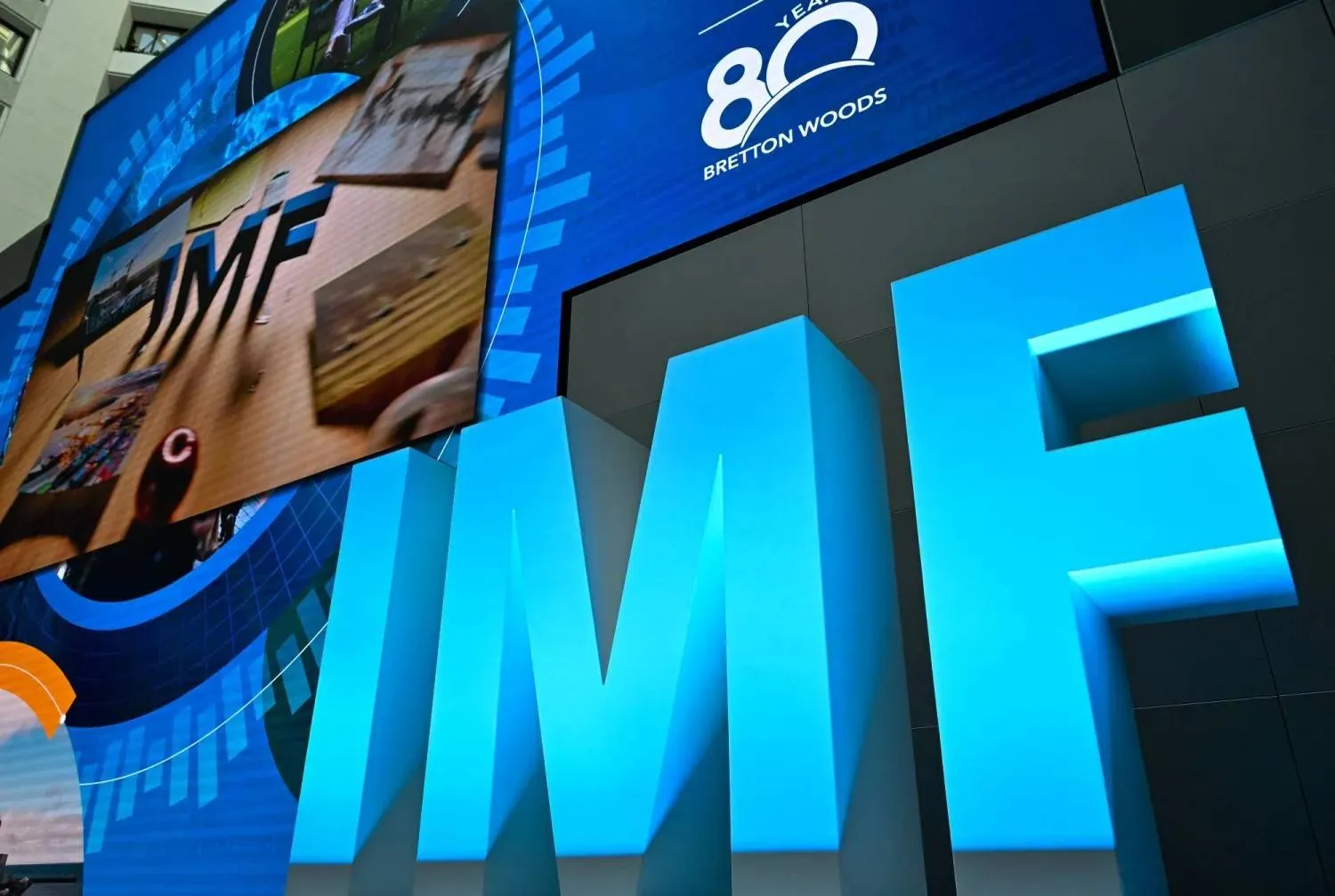
The letters IMF (for International Monetary Fund) stand next to a stage for events in the conference building of the International Monetary Fund (IMF). Soeren Stache/dpa 
TT

IMF: Wars Impose Deep and Prolonged Economic Costs on Countries

The letters IMF (for International Monetary Fund) stand next to a stage for events in the conference building of the International Monetary Fund (IMF). Soeren Stache/dpa 

Wars cause large and persistent economic losses in countries where fighting takes place, with output declining by roughly 7% over five years on average, and economic scars lasting for more than a decade, the International Monetary Fund (IMF) said in research released on Wednesday.

The IMF examined ‌the cost of active conflicts - now at the highest levels since the end of World War Two - and the macroeconomic consequences of sharp increases in military spending in two chapters of its forthcoming World Economic Outlook. The full report will be released next Tuesday.

The chapters do not address the Middle East war or the two-week ceasefire announced by US President Donald Trump late on Tuesday but offer a comprehensive look at wartime economies back to 1946, and weapons spending data from 164 countries.

In 2024, the latest year for which data is available, more than 35 countries experienced conflict in their territory and about 45% of the world's population lived in countries affected by ⁠conflict.

“Beyond their devastating human toll, wars impose large and lasting economic costs, and pose difficult macroeconomic trade-offs, especially for those countries where the fighting is taking place,” the IMF said in a blog released at the same time.

Countries engaged in foreign conflicts can avert physical destruction on their own soil and avoid large economic losses, but neighboring countries or key trading partners will feel the shock, the IMF said.

“Output losses from conflicts persist even after a decade and typically exceed those associated with financial crises or severe natural disasters,” the IMF chapter said.

It said conflicts contributed to sustained exchange rate depreciation, reserve losses and rising inflation, as widening external imbalances amplified macroeconomic stress, according to Reuters.

Military Spending Surges Globally

Rising geopolitical tensions and more frequent conflicts have sparked big jumps in military ‌spending, with ⁠about half of the world's countries increasing their military budgets over the past five years, and more increases coming as NATO countries boost weapons spending to 5% of GDP by 2035.

Arms sales by the world's largest weapons makers - many of whom are based in the US - have doubled in real terms over two decades, the IMF found.

The IMF authors found that large defense spending booms had become more frequent, especially in emerging-market and developing economies, with typical booms lasting 2-1/2 years and military spending surging by about 2.7% of GDP.

About two-thirds of these military buildups were financed by higher deficits, ⁠which could boost economic activity in the medium term, but also increased inflation and created medium-term challenges, the IMF said. That meant buildups needed to be closely coordinated with monetary policy, the IMF said.

Military Buildups Strain Budgets

On average, fiscal deficits worsened by about 2.6 percentage points of GDP and public debt increased by about 7 percentage points within three years of the start of a buildup.

About one-quarter ⁠of those buildups were financed by reprioritizing spending, often leading to a sharp decline in government spending on social programs, said Andresa Lagerborg, an IMF economist, in a taped discussion about the chapter.

Output gains were also smaller when the arms were purchased from foreign suppliers, the IMF said. Focusing on public investment in equipment and infrastructure would expand market size, ⁠support economies of scale and strengthen industrial capacity while limiting the loss of orders to overseas suppliers, it said.

IMF economist Hippolyte Balima, one of the key authors of the chapters, said the data also showed that peace was fragile, with about 40% of countries relapsing into conflict within five years.


European Development Bank Unveils 5 Bn Euros for War-hit Economies

A Lebanese man walks past destruction at the site of an Israeli airstrike the day before that targeted a building in Beirut on April 9, 2026. (Photo by Ibrahim AMRO / AFP)
TT

European Development Bank Unveils 5 Bn Euros for War-hit Economies

A Lebanese man walks past destruction at the site of an Israeli airstrike the day before that targeted a building in Beirut on April 9, 2026. (Photo by Ibrahim AMRO / AFP)

The European development bank said Thursday it was unlocking five billion euros ($5.9 bn) to help shore up economies hit by the Middle East war.

The European Bank for Reconstruction and Development (EBRD) said it will "deploy EUR5 billion in 2026 in economies impacted by Middle East conflict".

The funds would be focused on Iraq, Jordan, Lebanon, the West Bank and Gaza "and affected neighboring economies" including Egypt, Türkiye, Armenia and Azerbaijan, the bank said in a statement.

"The economic and social impact of the conflict is already being felt across many of the bank's economies in the form of disrupted trade routes, energy and commodity shocks, weakened investor confidence and broader costs to the population," it added.

Established in 1991 to help former Soviet bloc nations embrace free-market economies, the bank later extended its reach to the Middle East and Africa.

"In a time of rising uncertainty, we are stepping up where others may pull back," said EBRD president Odile Renaud Basso.

"We are here to support economies, clients and people in our countries of operation in tough times," she added.

The bank said "the volume of conflict response investment will be demand driven due to the fast-changing nature of the situation".

The funds will provide immediate relief "by supporting economic activity" and "fostering financial sector stabilization".

EBRD will aim to strengthen energy security and aid state-owned enterprises to "ensure the uninterrupted provision of essential goods and services".

On Thursday it had approved "a project to support Lebanon's retail chain," it said, adding it also aimed to safeguard access to jobs, finance and essential services.

Since starting operations in the southern and eastern Mediterranean in 2012, the EBRD has invested more than EUR26.5 billion in 489 projects in the region.

In Türkiye alone, the lender has committed more than 23 billion euros since 2009.


Saudia to Partially Resume Flights To, From Dubai, Abu Dhabi, and Amman on Saturday

One of Saudia’s aircraft (company website)
TT

Saudia to Partially Resume Flights To, From Dubai, Abu Dhabi, and Amman on Saturday

One of Saudia’s aircraft (company website)

Saudia announced on Thursday the partial resumption of its operations to and from Dubai, Abu Dhabi, and Amman starting Saturday, April 11.

In a post on its official account on the social media platform X, the airline said the resumption will be carried out through the operation of exceptional daily flights to and from those destinations.

Saudia advised passengers to check the status of their flights before heading to the airport, noting that further updates will be published through its official channels.


IMF Expects to Provide Vulnerable Economies Hit by Iran War Up to $50 bn

FILED - 24 October 2024, US, Washington: The logo of the International Monetary Fund (IMF) is pictured on the facade of the conference building on Pennsylvania Street. Photo: Soeren Stache/dpa
TT

IMF Expects to Provide Vulnerable Economies Hit by Iran War Up to $50 bn

FILED - 24 October 2024, US, Washington: The logo of the International Monetary Fund (IMF) is pictured on the facade of the conference building on Pennsylvania Street. Photo: Soeren Stache/dpa

The International Monetary Fund expects to have to provide up to $50 billion in immediate financial assistance to countries affected by the Middle East war, its managing director said on Thursday, with the crisis likely to have lasting economic effects.

"Given the spillovers of the Middle East war, we expect near-term demand for IMF balance-of-payments support to rise to somewhere between $20 billion and $50 billion, with the lower bound prevailing if the ceasefire holds," Kristalina Georgieva said, according to prepared remarks shared with AFP.

She added that food insecurity due to transport and supply chain disruptions caused by the war was expected to affect at least 45 million people.

"Even in a best case, there will be no neat and clean return to the status quo ante," she said, as a fragile ceasefire appeared to hold on Thursday.

The IMF will pare its global growth forecast for 2026 based on the impact of the crisis, with spiraling energy costs hitting some vulnerable economies harder than others.

Georgieva said that even in the Fund's "most hopeful scenario," infrastructure damage, supply disruptions and a loss of market confidence among other "scarring effects" meant growth would be less than expected.

She highlighted the "asymmetric" effects of the crisis, hitting low-income energy importers with limited fiscal space much harder than others.

"Spare a thought for the Pacific Island nations at the end of a long supply chain, wondering if fuel will still reach them in the wake of such a severe disruption," she said.
