



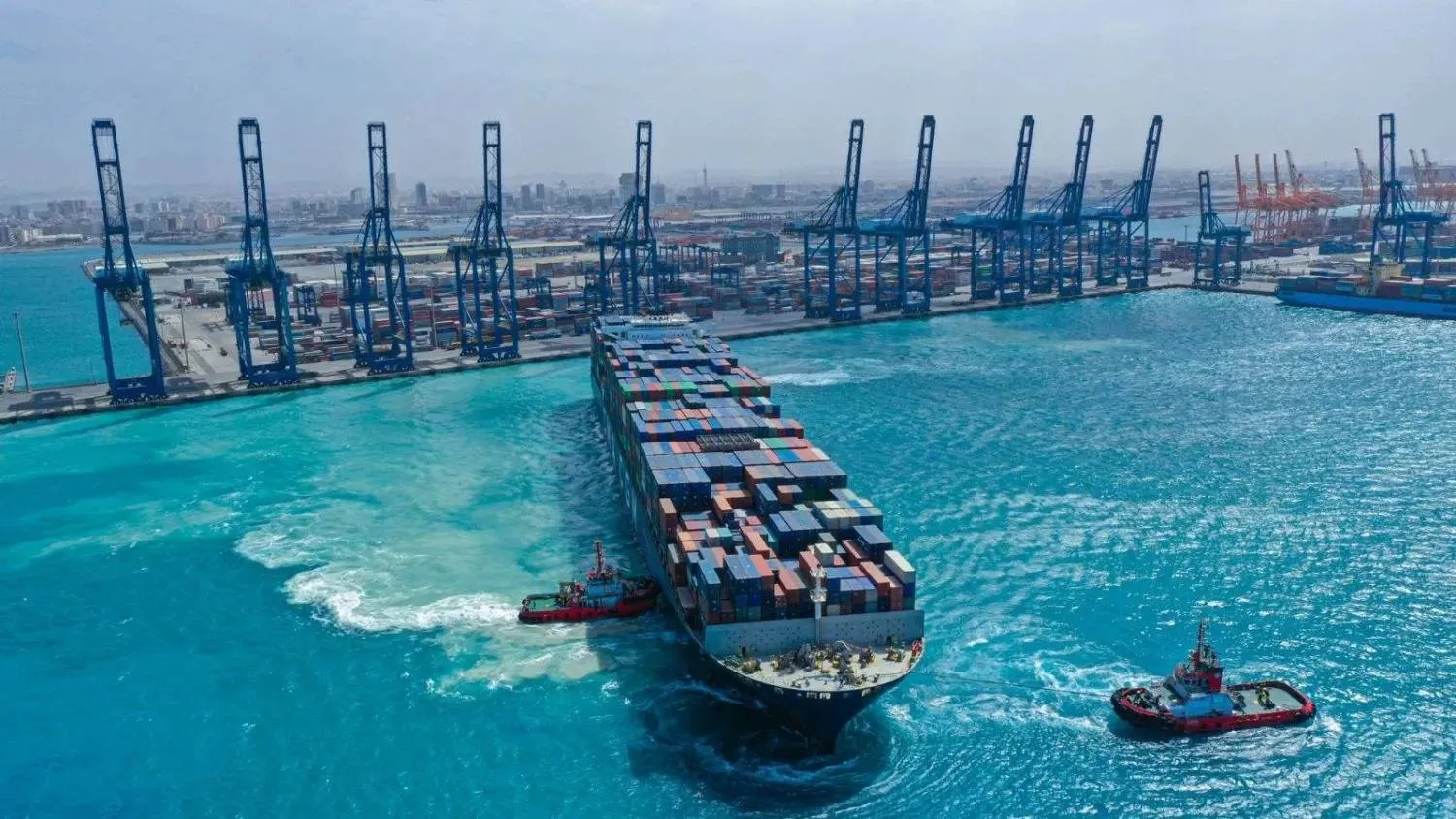

In a global landscape rocked by supply chain disruptions, Saudi Arabia has emerged as an indispensable pillar of stability on the international logistics map. Over the past decade, the Kingdom has demonstrated an exceptional ability to overcome global shocks with greater strength, relying on the Vision 2030 approach based on resilience and proactivity.
This systematic investment in "strengths" was not merely a response to local development requirements but also the construction of a cross-border economic defensive shield, transforming current challenges into a launching pad for global leadership.
In light of the Vision, the Kingdom's geostrategic location has transformed from a static comparative advantage into a dynamic tool that has shaped a new economic reality. This was achieved through the high-quality connectivity between vital waterways from the Arabian Gulf in the east to the Red Sea in the west.
This interconnectedness, supported by advanced air and rail transport platforms, has not only enhanced the Kingdom's position as a link between three continents but also made it a vital artery ensuring the sustainability of international trade. It has proven the national system's ability to transform geopolitical challenges into pioneering opportunities that guarantee global prosperity.
Institutional Harmony
The journey of comprehensive development began with the reorganization of the logistics system, aiming to enhance performance efficiency and achieve the highest degree of integration among its various sectors.
This was embodied in the transformation of the Ministry of Transport into the Ministry of Transport and Logistics Services, leading institutional harmony that brings together the Authority General Transport, ports, and civil aviation under its umbrella.
This reform did not stop at the organizational aspect but extended to enhancing the operational role of national entities. This included empowering the Saudi Railway Company (SAR) and establishing new strategic entities such as Riyadh Air, the Saudi Air Navigation Services Company, the General Authority for Roads, and the National Transport Safety Center.
The system also witnessed a qualitative transformation in the postal services sector through the development of the SPL institution and the expansion of its services to meet modern logistics requirements.
Roadmap Towards Strategic Certainty
National strategies for transport, logistics services, and aviation have contributed to creating a state of "strategic certainty" regarding the sector's future, supported by colossal infrastructure projects that ensure sustainable growth through:
- Air Expansion: Working on establishing leading international airports, such as King Salman International Airport, and the new Abha and Jazan airports, in parallel with launching the "Air Connectivity Program" to enhance global access.
- Smart Logistics Centers: Launching the master plan for logistics centers, which includes establishing 59 centers (24 of which were activated by the end of 2025), and developing ports to become "smart ports" that rely on digitalization as a fundamental pillar.
- Rail Connectivity: Expanding the railway network and connecting the northern lines with the eastern ones (Jubail-Dammam), which has provided low-cost, highly reliable logistics solutions.
How the Kingdom Digitalized the Future of Investment?
The logistics environment has undergone fundamental development, enabling it to assume a prominent position as an attractive destination for global investment, thanks to the adoption of a comprehensive digitalization strategy for services and integrated connectivity through unified digital platforms. This transformation has led to enhanced ease of doing business by simplifying regulatory procedures and automating license issuance, making it more flexible and faster in responding to market demands.
This digital path has also contributed to raising the efficiency of real-time coordination among various regulatory bodies, which in turn has shortened the "investor's journey" and solidified reliability levels in national logistics operations.
In terms of direct economic impact, these digital enablers have played a pivotal role in stimulating growth and diversification rates. They have contributed to revitalizing re-export sectors and providing effective logistical support for non-oil exports. Technical integration has also facilitated the access of local products to international markets according to competitive standards in terms of efficiency and cost, making the logistics system a key driver for supporting cross-border trade and expanding the Saudi economy's global influence.
The Language of Numbers
These strategic efforts culminated in tangible progress for the Kingdom in the most important international forums, reflecting the efficiency of sustainable infrastructure investment and continuous improvement in logistics performance.
This was embodied by the Kingdom reaching the top ten countries globally in the Logistics Performance Index (LPI) issued by the World Bank, in addition to ranking second globally in growth rates among G20 countries, with a growth of 32 percent compared to 2024.
The Kingdom also maintained its strong presence among the top four centers in the Agility Emerging Markets Logistics Index for 2025, which confirms the competitiveness and stability of the Saudi investment environment.
To facilitate global trade movement, the Kingdom achieved qualitative leaps in the efficiency of border operations; it successfully reduced customs clearance times from 9 hours in 2021 to less than two hours by 2025. This achievement coincided with a strategic expansion in logistics facilities, represented by an increase in the number of licensed deposit areas to 21, which enhanced the Kingdom's ability to accommodate global goods flows and support supply chain fluidity with efficiency and capability.
The Story of 24 Million Containers
The geography of the Arabian Gulf and the Red Sea are among the most vital and influential waterways in international trade movement, which gives Saudi ports, extending along the eastern and western coasts, immense strategic importance as fundamental pillars of global navigation.
By serving as logistics convergence points connecting three continents, these ports have succeeded in solidifying their pivotal role in ensuring the sustainability of global supply chains and the flow of goods, transforming the Kingdom's geographical advantages into an active economic force that supports the stability of cross-border trade.
In pursuit of maximizing these gains, the Kingdom launched a series of qualitative development projects to modernize port infrastructure and expand shipping services. These efforts resulted in a major leap in handling capacity, which increased by 50 percent to reach 24.3 million standard containers, in parallel with a tangible increase in the number of added maritime shipping services, totaling 101 services.
This expansion has not only contributed to increasing the Kingdom's interconnectedness with global markets but also enabled it to establish new shipping routes that enhance flexible access to key international ports.
This development vision has extended beyond ports to include the establishment of integrated logistics zones and centers designed to be attractive incubators for major investments. These zones allow investors to maximize the benefits of integrated logistics services for their business growth, in addition to activating re-export activities, which represent added value to the national economy.
Through this integrated system, the Kingdom reaffirms its commitment to its role as a global leader in the maritime sector, providing an advanced logistics environment that ensures efficient operational processes and supports the sustainability of global economic growth.
The Vision Train: A Railway Artery Connecting Cities to Ports
The Kingdom invested early in building a robust aviation sector, recognizing the importance of connecting with the world, facilitating the arrival of pilgrims, and finding innovative solutions for cargo shipping.
The sector underwent pivotal regulatory stages, starting with the establishment of the Civil Aviation Department and Saudi Arabian Airlines, leading to structural independence with the establishment of the General Authority of Civil Aviation, which laid the foundations for institutional work that paved the way for major transformations aligning with growing international requirements.
With the emergence of Vision 2030, the Kingdom foresaw exceptional opportunities to develop the aviation sector and effectively contribute to economic growth, leveraging its strategic location connecting the world's three continents.
This vision was translated through the reorganization of the General Authority of Civil Aviation and the establishment of new strategic entities, such as Riyadh Air and the Saudi Air Navigation Services Company, in parallel with the launch of the National Aviation Strategy and the Air Connectivity Program, which aimed to expand international reach through new air routes connecting Saudi cities with global capitals.
In the context of infrastructure modernization, the pace of establishing major international airports accelerated, with development work continuing across all regions of the Kingdom, alongside accelerating private sector involvement in airport management to enhance operational efficiency.
Thanks to these efforts, Saudi airports today have transformed into pivotal connectivity hubs linking global and regional destinations, which has contributed to achieving qualitative leaps in passenger numbers and air cargo activity.
The Kingdom is steadily moving towards its ambitious targets of connecting to 250 global destinations via 29 airports, serving 330 million passengers, and transporting 4.5 million tons of cargo annually by 2030.
Railway Network
The story of railways in the Kingdom began as a strategic necessity to connect the capital, Riyadh, with Dammam Port, leading to the establishment of the Saudi Railways Organization to enhance import and export movement and freight transport.
With the expansion of development projects, especially in the mining sector, the Saudi Arabia Railways (SAR) was established to extend the network, reaching the farthest north of the Kingdom, thereby creating a solid infrastructure for transporting passengers, minerals, and commercial goods with high efficiency.
With the launch of Vision 2030, the railway sector entered an ambitious phase aiming for complete integration with all other logistics sectors.
This phase witnessed an unprecedented expansion in train operations, making Saudi cities more interconnected; the north of the Kingdom was linked to its center and east, providing reliable and sustainable transport solutions. Work on the Haramain High-Speed Railway also accelerated, representing a qualitative leap in serving pilgrims, connecting Makkah, Madinah, Jeddah, and King Abdullah Economic City in Rabigh with the highest standards of speed and safety.
Today, the Kingdom is moving towards a more interconnected future through ambitious projects that support tourism activity and enhance regional connectivity between Saudi cities and the Gulf Cooperation Council (GCC) countries.
This advanced network is no longer just a means of transport; it has become a fundamental pillar for enhancing the quality of life and supporting economic diversification by reducing logistics costs and improving service reliability, thereby solidifying the Kingdom's position as a global logistics hub connecting industrial centers, ports, and urban communities.
It is clear that the radical transformation witnessed by the Saudi logistics sector is not just a race towards numbers and indicators, but a complete reshaping of the "Kingdom's economic identity" to become the vital and reliable link for global trade.


