Shell to Acquire Canada's ARC In Output-Boosting $16.4 Billion Dealhttps://english.aawsat.com/business/5267217-shell-acquire-canadas-arc-output-boosting-164-billion-deal
Shell to Acquire Canada's ARC In Output-Boosting $16.4 Billion Deal
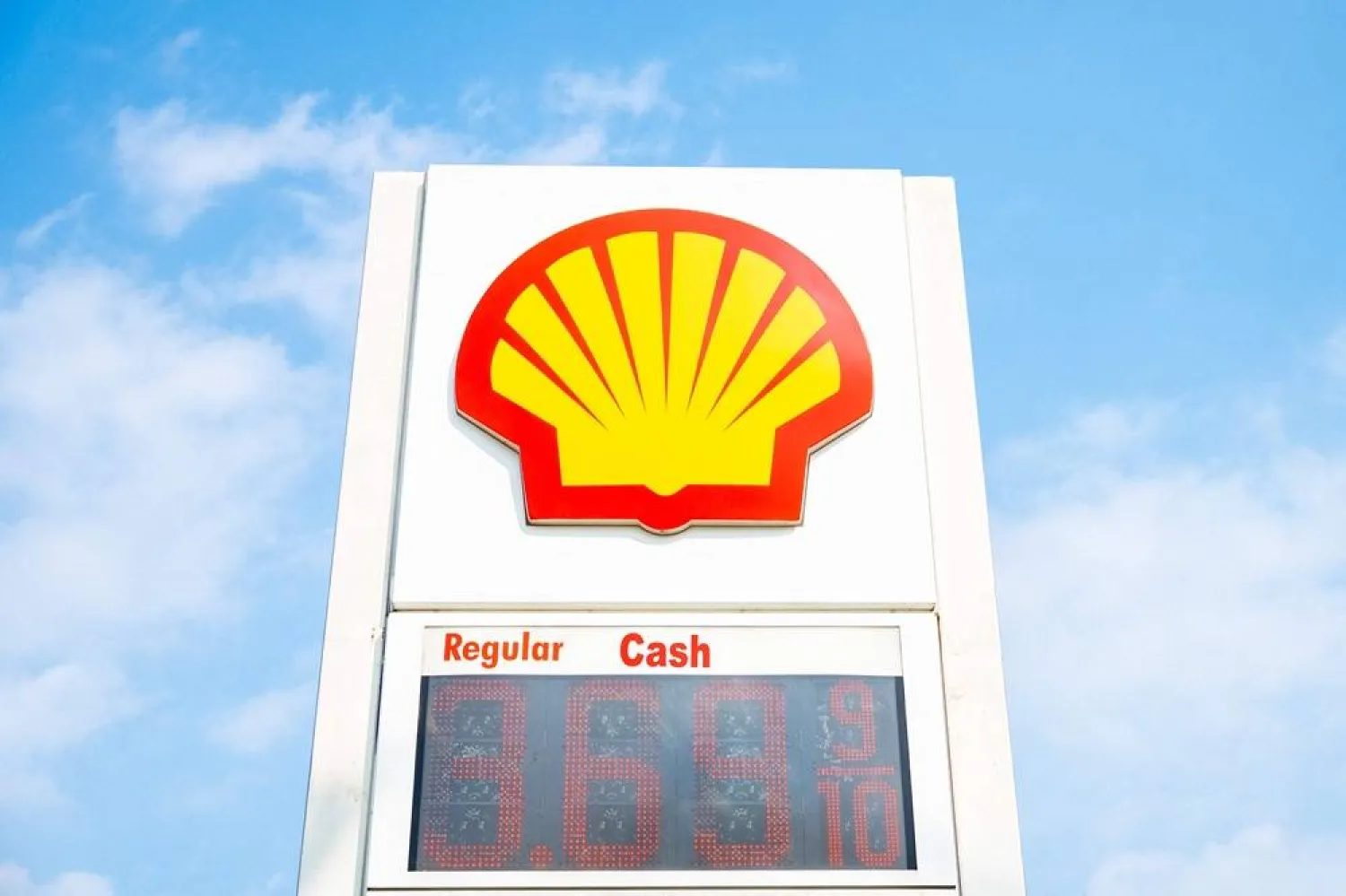
The Shell gas logo is displayed at a gas station on April 27, 2026 in Austin, Texas. (Getty Images/AFP)
Shell has agreed to buy Calgary-based Canadian energy company ARC Resources in a deal valued at $16.4 billion, including debt, which the British oil and gas major said on Monday would boost its output by 370,000 barrels of oil equivalent per day.
Analysts and the company had forecast Shell needed an acquisition or exploration breakthrough to make up for an expected production shortage of 350,000 to 800,000 boed (barrels of oil equivalent per day) roughly by the middle of the next decade due to maturing fields unable to meet its output targets, Reuters previously reported.
London-listed Shell said in a statement it will pay ARC shareholders 8.20 Canadian dollar in cash and 0.40247 shares of Shell for each ARC share, or around 25% cash and 75% shares at a 20% premium to ARC’s average share price over the last 30 days.
“Shell will take on approximately $2.8 billion in net debt and leases resulting in an enterprise value of approximately $16.4 billion.
The equity value of $13.6 billion will be funded via $3.4 billion in cash and $10.2 billion in Shell shares,” Shell said.
The deal will give Shell 2 billion barrels of reserves and would generate double-digit returns and boost free cash flow per share from 2027 without affecting its investment budget of $20 billion to $22 billion through to 2028, it added.
Shell’s “reserve life”, or how long its proven reserves can sustain current output levels, was equivalent to less than eight years of production as of 2025 — the company’s lowest level since 2021.
The deal allows Shell to raise its compound annual production growth target for the decade from 1% to 4% compared to 2025.
ARC’s senior leadership team will be hosting a conference call to discuss the Company’s first quarter 2026 results on Wednesday.
Shell shares were down slightly in early trading on Monday.
Oil Prices Rise 1% as No End to Iran War Stand-off Seems in Sighthttps://english.aawsat.com/business/5267242-oil-prices-rise-1-no-end-iran-war-stand-seems-sight
An offshore drilling platform operated by Sable Offshore Corp. is seen from Refugio State Beach near Goleta, Calif., Sunday, April 26, 2026. (AP)
TT
TT
Oil Prices Rise 1% as No End to Iran War Stand-off Seems in Sight
An offshore drilling platform operated by Sable Offshore Corp. is seen from Refugio State Beach near Goleta, Calif., Sunday, April 26, 2026. (AP)
Oil prices rose 1% on Tuesday, extending gains from the previous session, as efforts to end the US-Iran war appear stalled, with the crucial Strait of Hormuz waterway still mainly shut, keeping energy supplies from the key Middle East producing region out of the reach of global buyers.
US President Donald Trump is unhappy with the latest Iranian proposal aimed at ending the war, a US official said on Monday. Iranian sources disclosed on Monday that Tehran's proposal avoided addressing its nuclear program until hostilities cease and Gulf shipping disputes are resolved.
Trump's displeasure with the Iranian offer leaves the conflict deadlocked, with Iran shutting shipping flows through the Strait of Hormuz, which typically carries supply equal to about 20% of global oil and gas consumption, and the US keeping in place its blockade of Iranian ports.
Brent crude futures for June climbed $1.41, or 1.3%, to $109.64 a barrel as of 0400 GMT, after gaining 2.8% in the previous session to its highest close since April 7. The contract is up for a seventh day.
US West Texas Intermediate (WTI) crude for June rose $1.27, or 1.3%, to $97.64 a barrel, after gaining 2.1% in the previous session.
An earlier round of negotiations between the US and Iran collapsed last week following failed face-to-face talks.
"Talks around ‘peace’ still look largely superficial and lack concrete evidence of de-escalation. Despite the rhetoric, vessel movement through the Strait of Hormuz remains curtailed, and that prolonged disruption is what's keeping oil risk premiums elevated," said Phillip Nova's senior market analyst Priyanka Sachdeva.
"In the near term, oil markets are less about macro demand and more about diplomatic gridlock. Until diplomacy translates into actual barrel flows, not just statements, oil markets will remain volatile with an upward bias through May," she added.
Ship-tracking data revealed significant disruptions in the region, with six Iranian oil tankers forced to turn back due to the US blockade.
Prior to the US-Israeli war on Iran, which began on February 28, between 125 and 140 vessels transited the strait daily.
The market is also looking ahead to private and government US inventory data for later this week.
Analysts polled by Reuters are expecting US crude inventories to have risen by 300,000 barrels in the last week, with official data from the US Energy Information Administration set for release on Wednesday.
Iran’s Economy Has Been Battered. Its Leaders Still Think Trump Will Blink Firsthttps://english.aawsat.com/business/5267233-iran%E2%80%99s-economy-has-been-battered-its-leaders-still-think-trump-will-blink-first
People conduct their businesses around the traditional grand bazaar of Tehran, Iran, March 29, 2026. (AP)
TT
TT
Iran’s Economy Has Been Battered. Its Leaders Still Think Trump Will Blink First
People conduct their businesses around the traditional grand bazaar of Tehran, Iran, March 29, 2026. (AP)
In the heartland of Iran’s famed carpet-making industry, manufacturing has ground to a near halt. Dairies struggle to find packages for milk and butter. Giant steel mills that once drove Iran’s economy have gone silent. Hundreds of thousands have lost jobs, and millions more are at risk.
Over more than five weeks of bombardment, US and Israeli strikes hit thousands of factories. The damage is reverberating across Iran’s economy, threatening increasing waves of layoffs, even as Iranians face skyrocketing prices. The cost of chicken is up 75% the past month, and beef and lamb jumped 68%. Many dairy products have increased by half.
It could get worse as the United States blockades Iranian ports, choking off many imports and oil exports that bring in billions of dollars. Economic woes sparked the mass protests that were crushed before the war and could again push Iranians into the streets.
Still, Iran has its own weapon pointed at the global economy, with its grip on the Strait of Hormuz. Iran’s leaders say they will only reopen the key waterway for global energy if the blockade is lifted and the war ends. They are betting that an economy built to be self-reliant under decades of international sanctions can endure the pain longer than US President Donald Trump.
Iran has lost at least 1 million jobs directly because of the war, Deputy Labor Minister Gholamhossein Mohammadi said, according to state media.
But the ripple effects put some 10 million to 12 million jobs at risk — half of Iran’s labor force — warns Hadi Kahalzadeh, an Iranian economist.
A pro-government demonstrator waves an Iranian flag during a gathering in Tehran, Iran, Monday, April 27, 2026. (AP)
Steel and petrochemical production crippled
Israel claimed to have struck the industrial base of Iran's paramilitary Revolutionary Guard. But the strikes went well beyond, hitting facilities not owned by the force.
Airstrikes damaged 20,000 factories, some 20% of the country’s production units, according to Kahalzadeh, a research fellow at Brandeis University. The stricken facilities included Tofigh Daru, Iran’s largest pharmaceutical holding, producing anticancer drugs among other things. Optics and chemical developers, and aluminum and cement factories, were also hit.
Perhaps most damaging, Israel hit Iran’s biggest steelmaking and petrochemical factories, most of them in a wave of strikes just before the April 8 ceasefire. The two biggest steel producers, Mobarakeh Steel and Khuzestan Steel, as well as smaller mills, halted production. More than 50 petrochemical complexes have been shut down, according to Iran’s semiofficial Jamaran news agency.
That has crippled Iran’s two biggest non-oil exports, and higher prices have affected everything from plastics to pipes, to fabrics and packaging for groceries like milk, butter and cheese.
Strikes are not the only cause of economic woes. The internet has largely been shut down since the protests, gutting small and medium-sized businesses reliant on online sales. Even before the US blockade, Iranian strikes on the United Arab Emirates, on which it relied for around a third of its imports, led that country to cut off trade.
Ripple effects
Around 80% of rug and carpet manufacturers have stopped operations in the industrial zone of the city of Kashan, the center of Iran’s rugmaking industry, said the son of a rugmaker. His family factory, which employs 20 to 30 people and used to machine-make hundreds of rugs a month, is among those that shut down, though his father still goes to the facility every day.
“Never have I heard my father so upset,” said the son, who lives in the United States and spoke on condition of anonymity for his family’s security.
Kashan, home to hundreds of carpet manufacturers, “relies on the rug industry and unfortunately it’s been crippled,” he said. Exports plummeted since the war began, and domestic sales are almost zero. Prices for synthetic fibers have leaped 30%- 50% — partly a downstream effect of hits on petrochemical facilities, he said.
Mehdi Bostanchi owns a ventilation and air conditioning factory, and a second producing household fans, with a total of more than 1,130 employees. Both still operate. But the HVAC factory heavily depends on the construction industry, and “construction is facing a massive shock,” he said.
Most new building is on hold, while the price of iron sheeting has more than doubled.
Bostanchi, a member of a council representing Iranian industrialists, said “all the country’s industries in some way rely on our petrochemical industry.” Even companies that don't directly need steel or petrochemical products have contracts with those that do.
Iranians go shopping at a home appliance market in Tehran, Iran, 27 April 2026. (EPA)
A chemical engineer working at one of Iran’s biggest private construction contractors said it laid off half of its 180 headquarters staffers and had to shut down a project with Mobarakeh Steel, costing 1,000 jobs.
A Tehran resident quit his job as a consulting engineer just before the war, and the new job he had lined up is now uncertain.
“I am at the top 1% (of society), and I am without a job. I am super worried about my future,” he said, adding that people’s savings will start to run out in the coming weeks.
Both he and the chemical engineer spoke on condition of anonymity out of security concerns.
Projecting resilience
Millions took to the streets in January's protests that were triggered by worsening inflation but turned into calls for the end of the regime, bringing a bloody crackdown.
Officials are trying to reassure the public that Iran can withstand the economic pain. The government has promised to increase unemployment insurance. But the burden on Iran's social security system is rising even as its funding is gouged, since it depends heavily on its stakes in petrochemical companies and other key industries, Kahalzadeh said.
The US blockade threatens to cut off export revenues: Iran sold some $98 billion in exports in 2025, just under half of it from oil.
But a complete blockade is difficult; around half of Iran’s non-oil trade goes overland or through Caspian Sea ports, according to Esfandyar Batmanghelidj, an economic expert.
Iran has also built up significant resilience and “readiness for worst-case scenarios,” Batmanghelidj wrote for the Bourse and Bazaar Foundation, a research group he heads on economic development in West and Central Asia.
Iran maintains large reserves of vital supplies. At the end of 2025, Iran had stored up enough electrical machinery for nearly eight months, cement to last nearly six months and enough steel and iron for four months, he wrote, adding that supplies could be further stretched by rationing.
Bostanchi, the factories owner, said he believes Iran's economy could bounce back once the war ends. But how much depends on whether Iran can win an end to international sanctions.
“If we cannot lift the sanctions in any agreements, then no, the optimistic forecast ... will not happen,” he said.
Budget Airlines First to Cut Flights as Jet Fuel Prices Soarhttps://english.aawsat.com/business/5267226-budget-airlines-first-cut-flights-jet-fuel-prices-soar
An aircraft of low-cost Irish airline Ryanair taxis before take off the Berlin-Brandenburg airport in Schoenefeld near Berlin, on April 4, 2024. (AFP)
TT
TT
Budget Airlines First to Cut Flights as Jet Fuel Prices Soar
An aircraft of low-cost Irish airline Ryanair taxis before take off the Berlin-Brandenburg airport in Schoenefeld near Berlin, on April 4, 2024. (AFP)
Ryanair, Transavia, Volotea and other low-cost airlines are feeling the financial pain from high jet fuel prices as a result of the Middle East war and are cutting flights.
The closure of the Strait of Hormuz has taken a huge chunk of oil supplies off the market, sending the price of jet fuel soaring and triggering fears of shortages that could force airlines to cancel flights.
Airlines aren't waiting for a lack of supplies to react.
"Travel alert: airlines are cutting thousands of flights right now," Travel Therapy TV host Karen Schaler said in an Instagram reel this past weekend. "Book early."
That advice would win the approval of Ryanair boss Michael O'Leary, who expressed concern earlier this month that fears of fuel shortages were making people put off booking flights.
Low-cost carriers -- which control a little more than a third of the global market, according to various estimates -- are feeling the pinch first due to the nature of their business model.
With cheaper tickets, they have less capacity to absorb the rise in fuel costs.
Some of the cancellations may be the normal adjustments airlines tend to make when demand doesn't meet expectations on certain routes.
"It is not unusual for carriers to adjust their schedules at this time of the year," financial analyst Dudley Shanley at investment bank Goodbody told AFP.
But "if jet fuel prices remain at this level, there will have to be a little bit more trimming for low-cost airlines", he added.
If before the war airlines were able to maintain marginally profitable routes or even unprofitable routes, the surge in jet fuel prices will force them to make difficult choices.
That will start with many during the peak summer travel season.
"Unfortunately, it's very likely that many people's holidays will be affected, either by flight cancellations or very, very expensive tickets," the EU's energy commissioner Dan Jorgensen told Sky News last week.
- 'Faster than the bear' -
The speed with which airlines are reacting depends in part upon the extent to which they secured fuel supplies in advance at fixed prices.
European airlines tend to do this to a greater extent than their rivals in other parts of the world.
Air Transat, a low-cost Canadian airline, has cut six percent of its May-October flight schedule.
Southeast Asia's largest low-cost carrier, AirAsia X, announced on Friday announced it was cutting more flights and even some connections, without providing an overall figure.
Earlier this month the Malaysia-based no-frills airline said it was raising fares by up to 40 percent and about 10 percent of its overall flights had been cut so far.
Hungary's low-cost airline Wizz Air has so far resisted cutting flights.
"We are not taking capacity out, because I think the other guys will take capacity out," its chief executive Jozsef Varadi was quoted as saying recently by trade magazine Aviation Week.
"You don't have to run faster than the bear, but faster than the guy next to you," he added.
He may have been thinking of the most spectacular cuts made in the industry by German group Lufthansa, which had just announced it was chopping 20,000 flights from its schedule through October, along with halting its regional feeder airline CityLine.
Its European rival Air France-KLM has trimmed two percent of flights in May and June at its low-cost Transavia subsidiary.
KLM has kept cancellations down to one percent of its European flights.
Ryanair didn't cite fuel prices but high costs and taxes when announcing last week it would reduce flights to and from Berlin starting in October.
It is also cutting 10 percent of flights from Dublin, criticizing limited capacity at the airport.
Since the beginning of the month, Spain's Volotea has trimmed nearly one percent of flights from its summer schedule.
لم تشترك بعد
انشئ حساباً خاصاً بك لتحصل على أخبار مخصصة لك ولتتمتع بخاصية حفظ المقالات وتتلقى نشراتنا البريدية المتنوعة