Egypt Aims for Self-Sufficiency in Wheat for Subsidized Bread in 2028, Minister Says

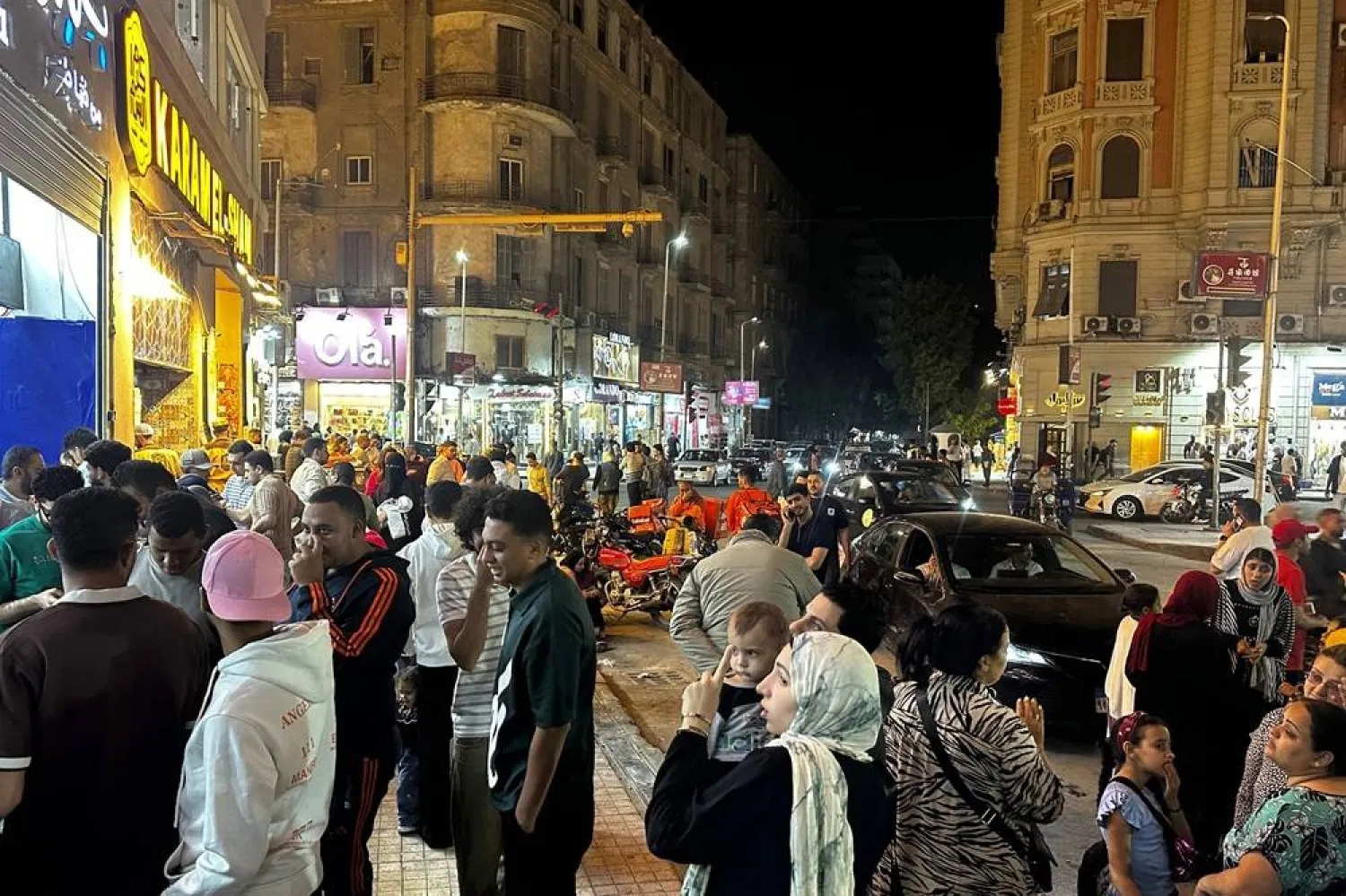
People are seen out at night in downtown Cairo on April 28, 2026. (AFP)
TT

Egypt Aims for Self-Sufficiency in Wheat for Subsidized Bread in 2028, Minister Says

People are seen out at night in downtown Cairo on April 28, 2026. (AFP)

Egypt, often the world's biggest wheat importer, aims to achieve self-sufficiency in wheat for its heavily subsidized bread in 2028, Agriculture Minister Alaa Farouk told Reuters on Tuesday.

Egypt needs 8.6 ‌million metric ‌tons of wheat for ‌its subsidized ⁠bread scheme, according ⁠to the draft budget for the full year of 2026/27, but the minister declined to give an estimate for how much wheat the government needs to achieve its self-sufficiency target.

The date Farouk gave is ⁠one year later than originally intended, ‌as the country ‌had hoped it would achieve the target by ‌2027, the head of Future of ‌Egypt Agency for Sustainable Development, the government's exclusive grain importer, had said during a conference in May 2025.

The Egyptian government offers competitive prices ‌to local farmers to cultivate wheat.

This season, which began mid-April, the government ⁠intends to ⁠buy 5 million tons of local wheat, Farouk said.

Procurement has so far exceeded that of last year but is lagging behind the 2024 harvest.

As of Tuesday, the government had bought 1.39 million tons, up by 17% from 1.19 million tons in the same period last year, but down by 13% from 1.6 million tons in 2024, according to official data seen by Reuters.


Foreign Investors Consolidate their Bets on Saudi Arabia as Economic Reforms Gather Pace

The King Abdullah Financial District in Riyadh. (SPA)
TT

Foreign Investors Consolidate their Bets on Saudi Arabia as Economic Reforms Gather Pace

The King Abdullah Financial District in Riyadh. (SPA)

Saudi Arabia is no longer just an oil-price bet for global investors. It is becoming a core emerging-market play. That is the view of Emmanuel Laurina, head of Middle East, Africa, and official institutions at State Street, one of the world’s major financial services and asset management firms.

Speaking to Asharq Al-Awsat, Laurina said a structural shift is reshaping how global institutions view the Kingdom, and why State Street is placing a major bet on its market.

Laurina explained that Saudi Arabia has moved from an oil-linked allocation to a central component of emerging-market portfolios.

The shift is being driven by a broader range of investable sectors, particularly finance, energy, and raw materials, giving investors real diversification in a world where many emerging markets are dominated by technology, he stressed.

Saudi Arabia’s inclusion in major global equity and bond indexes has helped anchor foreign inflows and strengthen the market’s role in international allocations, he said. Vision 2030 reforms have also widened opportunities beyond oil.

What is drawing investors now?

Laurina said market liberalization and the opening of share trading to foreign investors through the development of the Saudi Exchange, Tadawul, have helped attract liquidity and deepen international participation.

He also pointed to Saudi Arabia’s push into artificial intelligence and digital infrastructure as the Kingdom seeks strategic partnerships with major global technology companies.

In fixed income, Laurina said Saudi government bonds carry a strong A+ credit rating and offer a positive yield spread over US Treasuries, making them attractive for investors seeking dollar-denominated diversification.

Access has also improved sharply, he said. The abolition of the qualified foreign investor regime and the shift toward direct ownership of listed securities mark a major step forward.

Still, some structural limits remain. These include foreign ownership caps at individual and aggregate levels, and the need to trade through local brokers. Laurina said the listing of foreign exchange-traded funds in the Kingdom remains only partly developed because Saudi Arabia’s domestic market-making ecosystem is still limited.

New fund targets Saudi equities

Laurina said State Street recently launched an exchange-traded fund in partnership with the Saudi Public Investment Fund, giving international investors access to Saudi equities through a systematic active strategy that seeks to beat the benchmark across full market cycles.

The launch reflects rising client demand and a clear shift in the Saudi market’s composition, away from oil stocks and toward sectors such as healthcare, utilities and technology, he went to say.

ETFs, he said, are only one part of a wider ecosystem that includes institutional mandates, strategic partnerships, index-driven flows and growing activity in private markets, especially in Vision 2030 priority sectors.

Laurina said the Middle East and Africa are central to State Street’s future growth strategy.

The strategy rests on three pillars: building institutional asset classes in the Middle East and North Africa, internationalizing Sharia-compliant portfolios, and meeting growing demand for regionally focused investment solutions.

Riyadh became State Street’s 11th global investment center in 2024, he said, as the company continues to expand its local investment and research team.

Laurina said Saudi Arabia is now a pivotal market and a key growth engine in State Street’s Middle East and Africa strategy.


Standard Chartered CEO Seeks to Reassure Staff over AI-linked Job Cuts

FILED - 11 January 2012, China, Hong Kong: FILE PHOTO - A general view of the facade of Standard Chartered Bank branch in Hong Kong. Photo: Jens Kalaene/dpa-Zentralbild/dpa
TT

Standard Chartered CEO Seeks to Reassure Staff over AI-linked Job Cuts

FILED - 11 January 2012, China, Hong Kong: FILE PHOTO - A general view of the facade of Standard Chartered Bank branch in Hong Kong. Photo: Jens Kalaene/dpa-Zentralbild/dpa

Standard Chartered CEO Bill Winters sought to assuage staff concerns on Wednesday, a day after saying that the bank will cut thousands of jobs over the next four years as it moves to replace "lower-value human capital" with technology.

"Many of you will have seen media coverage following the Investor Event in Hong Kong, particularly the reporting around automation, AI, and workforce changes," Winters said in a memo to the bank's ⁠staff reviewed by ⁠Reuters.

"I know this may be unsettling when reduced to simple headlines or a quote out of context," he said.

A spokesperson for the bank confirmed the memo's content.

StanChart said on Tuesday it would cut 15% of ⁠its corporate function roles by 2030, which, according to a Reuters calculation, would result in nearly 8,000 redundancies out of its more than 52,000 staff in such roles.

The bank cited AI as a driver to slim its operations in its quest to increase profitability and tackle competition.

"It's not cost-cutting. It's replacing in some cases lower-value human capital with the financial capital ⁠and ⁠the investment capital we're putting in," Winters said on Tuesday.

In his memo to staff on Wednesday, Winters said the bank had been open that its workforce will evolve.

"Some roles will reduce in number, some will change, and new opportunities will emerge. We will continue to prioritize investment in reskilling and redeployment wherever we can," he said.

"Where changes do happen, we will handle them with thought and care," he added.


Ukraine Ally Britain Eases Sanctions on Russian Oil as Fuel Prices Surge Over Iran Conflict

A seized suspected Russian oil taker by the French navy is photographed in the Mediterranean Sea in Fos-sur-Mer, southern France, on Jan. 26, 2026. (AP)
TT

Ukraine Ally Britain Eases Sanctions on Russian Oil as Fuel Prices Surge Over Iran Conflict

A seized suspected Russian oil taker by the French navy is photographed in the Mediterranean Sea in Fos-sur-Mer, southern France, on Jan. 26, 2026. (AP)

The UK government has quietly watered down sanctions on Russian oil in an effort to shelter Britons from the cost-of-living squeeze triggered by the closure of the Strait of Hormuz.

A trade license that came into effect Wednesday permits the import of Russian oil that has been refined into jet fuel and diesel in third countries, such as India and Türkiye.

The US-Israeli war on Iran and Iran's closure of the strait, through which about a fifth of the world's oil usually passes, has sent fuel prices soaring around the world and sparked concerns about a shortage of jet fuel.

UK Treasury minister Dan Tomlinson said the changes are “for a time limited period and on a very specific issue.”

Britain has been one of Ukraine's strongest allies since Russia's full-scale invasion in 2022, and the government insist its sanctions against Russia remain among the toughest in the world.

But lawmaker Emily Thornberry, who chairs Parliament’s Foreign Affairs Committee, said Ukrainians would “feel very let down” by the move. She said Ukraine’s allies should keep squeezing Russia’s oil industry, because it “is absolutely crippling their economy.”

The US has also eased Russian sanctions. Earlier this week, Treasury Secretary Scott Bessent extended a 30-day sanctions waiver allowing the purchase of Russian oil shipments already at sea.

On Tuesday, finance ministers from the US, Britain and the other Group of Seven wealthy nations issued a joint statement reaffirming “our unwavering commitment to continue to impose severe costs on Russia in response to its continued aggression against Ukraine.”