


Asia Braces for a Second Wave of Energy Shocks from the Iran War

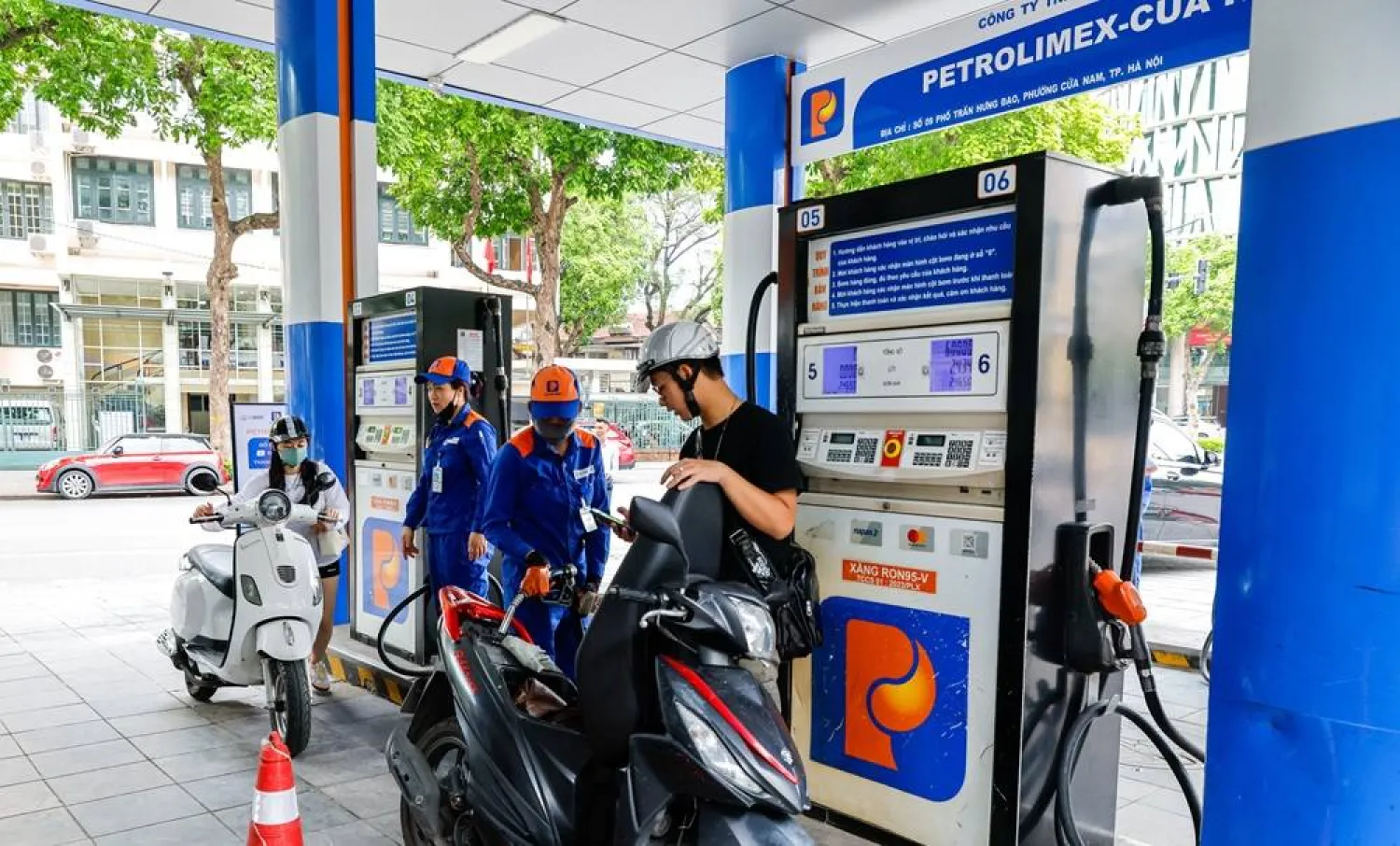
An employee pumps gasoline into a customer’s motorbike at a gas station in Hanoi, Vietnam, 04 May 2026. (EPA)
TT

Asia Braces for a Second Wave of Energy Shocks from the Iran War

An employee pumps gasoline into a customer’s motorbike at a gas station in Hanoi, Vietnam, 04 May 2026. (EPA)

Asia’s first defenses against energy shocks from the Iran war are running short and a more consequential second wave of impacts is beginning to hit.

When the war started, governments scrambled to adapt to the closure of the Strait of Hormuz, a critical artery for energy flowing to Asia. They made difficult trade-offs: saving power at the risk of slowing businesses, prioritizing gas for households at the risk of fertilizer production and dipping into energy stockpiles for temporary relief.

But these measures were based on the war lasting only a short time, allowing a quick resumption of energy flows. That has not happened.

With no clear end in sight, the fuel crisis is now rippling across economies. Airfare costs, shipping rates and utility bills are climbing, jeopardizing economic growth. About 8.8 million people are in danger of being pushed into poverty and the conflict may cause $299 billion in economic losses to the Asia-Pacific region, according to the United Nations Development Program.

“The countries with the least resources to respond, or the consumers who can least afford to pay, are the ones who feel everything first,” said Samantha Gross of the US-based think tank Brookings Institution.

Asian governments planned their budgets assuming the price of oil would average around $70 a barrel. Subsidies helped to keep fuel prices stable. But the war pushed the price of Brent crude to as high as about $120 a barrel.

Governments now face a stark choice between maintaining those costly subsidies, straining public finances, or cutting them to pass higher costs on to consumers, risking a public backlash, said Ahmad Rafdi Endut, a Kuala Lumpur-based independent energy analyst.

Asia braces for a second wave of impacts

In India, early steps to redirect fuel supplies toward cooking gas for roughly 330 million households cut into supplies for fertilizer plants. The surging of fertilizer prices and meteorologists warning of weak rainfall in an El Niño year is a concern for the world’s largest rice exporter.

India has relied on subsidies to shield its 1.4 billion people until now, but on Sunday, Prime Minister Narendra Modi urged citizens to buy locally and cut down on travel abroad to save dollars. He also encouraged people to work from home and use public transport to reduce fuel consumption, and asked farmers to halve fertilizer use.

The Philippines quickly shifted to a four-day work week to save fuel. It also rolled out targeted subsidies for poorer households. However, Fitch Ratings noted that most consumers are still paying higher energy costs, causing business activity to slow in major cities like Manila.

Thailand abandoned its diesel price cap less than a month after the conflict began, as its fuel subsidies ran out. It's now cutting other spending to manage higher oil prices while trying to keep its budget under control.

Vietnam extended a suspension of fuel taxes to ease pressure on domestic prices. Jet fuel shortages have led to flight cuts. Tourism makes up nearly 8% of Vietnam's gross domestic product — the nation's total output of goods and services — so that affects the entire economy.

“Business is not good right now," said Hanoi-based tour guide Nguyen Manh Thang. “There are already fewer tourists.”

Fuel shortages have pushed cash-strapped countries like Pakistan and Bangladesh to buy oil and gas at current market prices, which are often higher and more volatile than long-term contracts. This raises import costs and adds to pressure on their already limited foreign exchange reserves.

Governments can keep costly fuel subsidies by cutting spending from other priorities like welfare, or borrow more and risk higher inflation, said Endut in Kuala Lumpur. Alternatively, they can reduce subsidies and pass higher costs on to consumers, risking angering voters.

Once subsidies are exhausted and inflation starts to rise, countries could face what he called a “fiscal time bomb.”

Vulnerable Asia will not see immediate relief

The war's eventual end won't bring quick respite to Asia.

The global oil and gas trade will not bounce back right away, and it will take time to restart production, said Gross with the Brookings Institution. Repairing damaged infrastructure, restarting facilities and allowing for transport time from the Middle East to final markets will take weeks or even months.

Europe will feel a similar impact to Asia, but with about a four-week lag, experts say.

Americans are also feeling the pinch as gas prices spike across the US But Southeast Asia is currently the “biggest pain point," said Henning Gloystein of the Eurasia Group consultancy firm.

“This fuel shortage situation is going to get worse,” he said.

In Africa, higher energy and import costs are similarly straining budgets, widening deficits and driving up inflation. The war is also taking a toll on Latin America and the Caribbean, where growth is projected to slow slightly.

The complex disruptions across global supply chains will continue to have broader impacts, warned Ted Krantz, CEO of supply chain risk firm Interos.ai.

The crisis also highlights the fragility of Asia’s growing middle class, said Maria Monica Wihardja of the Singapore-based ISEAS-Yusof Ishak Institute, with many people at risk of slipping back into poverty.

The energy shock will reshape Southeast Asia’s economies over time, she said, including shifts in job markets and how countries plan for future energy crises.

Countries are already debating and implementing longer-term solutions, like diversifying fossil fuel suppliers, developing nuclear energy and renewables like solar.

The war is making geopolitical risk central to the economic outlook of Southeast Asia and directly slowing regional growth, said Albert Park of the Asian Development Bank.

"The longer it lasts, the larger those negative effects would be,” he said.


Indian PM Urges Reduced Fuel Use amid Middle East War Disruption

FILE PHOTO: Workers assemble Ather 450X electric scooter inside Ather Energy's manufacturing facility in Hosur in southern state of Tamil Nadu, India, March 23, 2025. REUTERS/Nandan Mandayam/File Photo
TT

Indian PM Urges Reduced Fuel Use amid Middle East War Disruption

FILE PHOTO: Workers assemble Ather 450X electric scooter inside Ather Energy's manufacturing facility in Hosur in southern state of Tamil Nadu, India, March 23, 2025. REUTERS/Nandan Mandayam/File Photo

Prime Minister Narendra Modi on Sunday urged the people of India to cut down on petrol and diesel consumption amid supply disruptions due to the Middle East war.

India is one of few countries in the region that has not increased prices of petrol and diesel for domestic consumers or rationed supplies, according to AFP.

But it has increased prices of liquefied petroleum gas (LPG) -- a primary cooking fuel in the country -- after disruptions following the US-Israeli strikes on Iran, which led to Iran's near-total blockade of the strategic Strait of Hormuz.

"We have to reduce our use of petrol and diesel. In cities with metro lines, we should try to travel by metro...If we must use a car, then we should try to car pool," Modi said Sunday, addressing a gathering in southern Telangana state.

He added that restrictions on use were also necessary to save foreign currency spent on fuel imports.

"We must also place a strong emphasis on saving foreign exchange, as petrol and diesel have become so expensive globally."

Modi also urged people to resume energy-saving schemes that were in place during the Covid pandemic.

"We should prioritize work from home, online conferences, and virtual meetings again," he said.

Hardeep Singh Puri, India's minister for petroleum and natural gas, said oil marketing companies (OMCs) had taken a hit on their revenues while ensuring "uninterrupted energy imports and supply."

"OMCs are buying crude, gas and LPG at higher cost, but in order to protect consumers, they are selling final products at lower cost leading to massive mounting losses of up to 1,000 crore rupees (approximately $120 million) per day," Puri said Sunday on X.

He added that losses for the government, after reducing taxes on diesel and petrol for domestic consumption, "saw revenue losses of 14,000 crore rupees (approximately $1.6 billion) in a month."

He urged citizens to turn Modi's "empathetic appeal" into a mass movement "to save and conserve energy."


China Consumer Prices Rise on Iran War Oil Squeeze

 Buildings including China Zun, the tallest building in Beijing, are seen in the central business district in Beijing at dusk on May 7, 2026. (AFP)
Buildings including China Zun, the tallest building in Beijing, are seen in the central business district in Beijing at dusk on May 7, 2026. (AFP)
TT

China Consumer Prices Rise on Iran War Oil Squeeze

 Buildings including China Zun, the tallest building in Beijing, are seen in the central business district in Beijing at dusk on May 7, 2026. (AFP)
Buildings including China Zun, the tallest building in Beijing, are seen in the central business district in Beijing at dusk on May 7, 2026. (AFP)

China's consumer prices ticked up in April as the cost of crude oil rose globally due to the Iran war, official data showed on Monday.

Helped by the surging oil costs, factory gate prices also continued to show signs of recovery, rising for a second straight month after being stuck in negative territory since October 2022.

However, analysts warn deflation is still a threat for the world's second-largest economy as prices in other sectors continue to fall and overcapacity remains a headache.

China's consumer price index (CPI), a key measure of inflation, last month rose 1.2 percent year-on-year, data from the National Bureau of Statistics showed.

The jump was due to "changes in international crude oil prices and increased demand for holiday travel", according to Dong Lijuan, chief NBS statistician.

Domestic gas prices rose 19.3 percent on-year, Dong said, impacted by international commodity price fluctuations.

A five-day holiday at the beginning of May also typically sees more travel and spending in the weeks preceding it.

However, last month's CPI was still well below the government's two percent target for the year.

The April producer price index (PPI), which measures wholesale inflation, increased by 2.8 percent on-year -- up from 0.5 percent in March.

It beat a Bloomberg forecast of 1.8 percent and marked the quickest pace since July 2022, when the PPI rose by 4.2 percent on-year.

The gauge slipped into negative territory that October and did not reverse until March.

"The rise in international crude oil prices drove up prices in domestic petroleum-related sectors," the NBS' Dong said in a statement, listing fuel processing and manufacturing of raw materials.

But analysts warn shocks caused by oil blockages in the Middle East are temporary.

"The fallout from the Iran War pushed up inflation again in April but price pressures remain narrow in scope and aren't likely to build into a wider reflationary impulse," Capital Economics said in a note.

"(With) overcapacity in most sectors unresolved and domestic demand growth still sluggish, the ingredients for a sustained reflationary impulse still appear to be missing."


Deals and New Partnerships on the Menu at Africa-France Summit

French President Emmanuel Macron and Kenya's President William Ruto attend "Africa Forward Summit 2026" at the Taifa Hall of the University of Nairobi, in Nairobi, Kenya, May 11, 2026. REUTERS/Thomas Mukoya Purchase Licensing Rights
TT

Deals and New Partnerships on the Menu at Africa-France Summit

French President Emmanuel Macron and Kenya's President William Ruto attend "Africa Forward Summit 2026" at the Taifa Hall of the University of Nairobi, in Nairobi, Kenya, May 11, 2026. REUTERS/Thomas Mukoya Purchase Licensing Rights

French President Emmanuel Macron and more than 30 African leaders kicked off a summit in Kenya on Monday aimed at diversifying Paris' partnerships on the continent and clinching new investment deals.

The Africa Forward Summit is the first France has organized in an English-speaking nation since it began holding such events in the 1970s and follows a series of setbacks in former colonies in West Africa that have moved to reduce French influence.

The convention opened with a meeting of business executives attended by Macron and Kenyan President William Ruto ‌at the University ‌of Nairobi.

In addition to more than 30 African presidents, ‌deputy presidents ⁠and prime ministers, ⁠attendees included executives from leading French firms such as TotalEnergies and Orange and Africa's richest man, the Nigerian industrialist Aliko Dangote.

During a state visit on Sunday, Macron announced that French shipping group CMA CGM planned to invest 700 million euros ($823 million) to modernize a terminal at the Kenyan port of Mombasa.

KENYA WANTS SUMMIT OUTCOMES DISCUSSED AT G7

Kenya hopes to use the summit to attract French ⁠investors looking to take advantage of the pan-African free trade ‌area (AfCFTA), which is being rolled out across ‌the continent.

Ruto also wants to advance talks on making the global financial system fairer ‌to heavily indebted African countries, a campaign France has pledged to support.

The ‌Kenyan president will attend the G7 summit next month in Evian-les-Bains at the invitation of France, which holds the group's rotating presidency.

"We believe it's a good thing if critical outcomes of this meeting ... can also be mainstreamed as critical agenda items by the G7," ‌Kenyan Foreign Minister Musalia Mudavadi told Reuters.

France has traditionally had its closest African ties in its former colonies ⁠in the west ⁠and center of the continent but is confronting rising anti-French sentiment.

Coups since 2020 in Mali, Burkina Faso and Niger brought to power military officers who expelled French troops and invited in Russian mercenaries. France also handed over control of its last major military facility in Senegal last July after Senegalese President Bassirou Diomaye Faye said French bases were incompatible with the country's sovereignty.

At a news conference with Ruto on Sunday, Macron downplayed the absence of some leaders at the summit. He noted that several West African heads of state, including Faye, would be there and said France was still seeking connections with people from those countries.

"We can disagree with some of these governments...but we never disagree with people," he said.
