


OPEC Cuts 2026 Global Oil Demand Growth Forecast

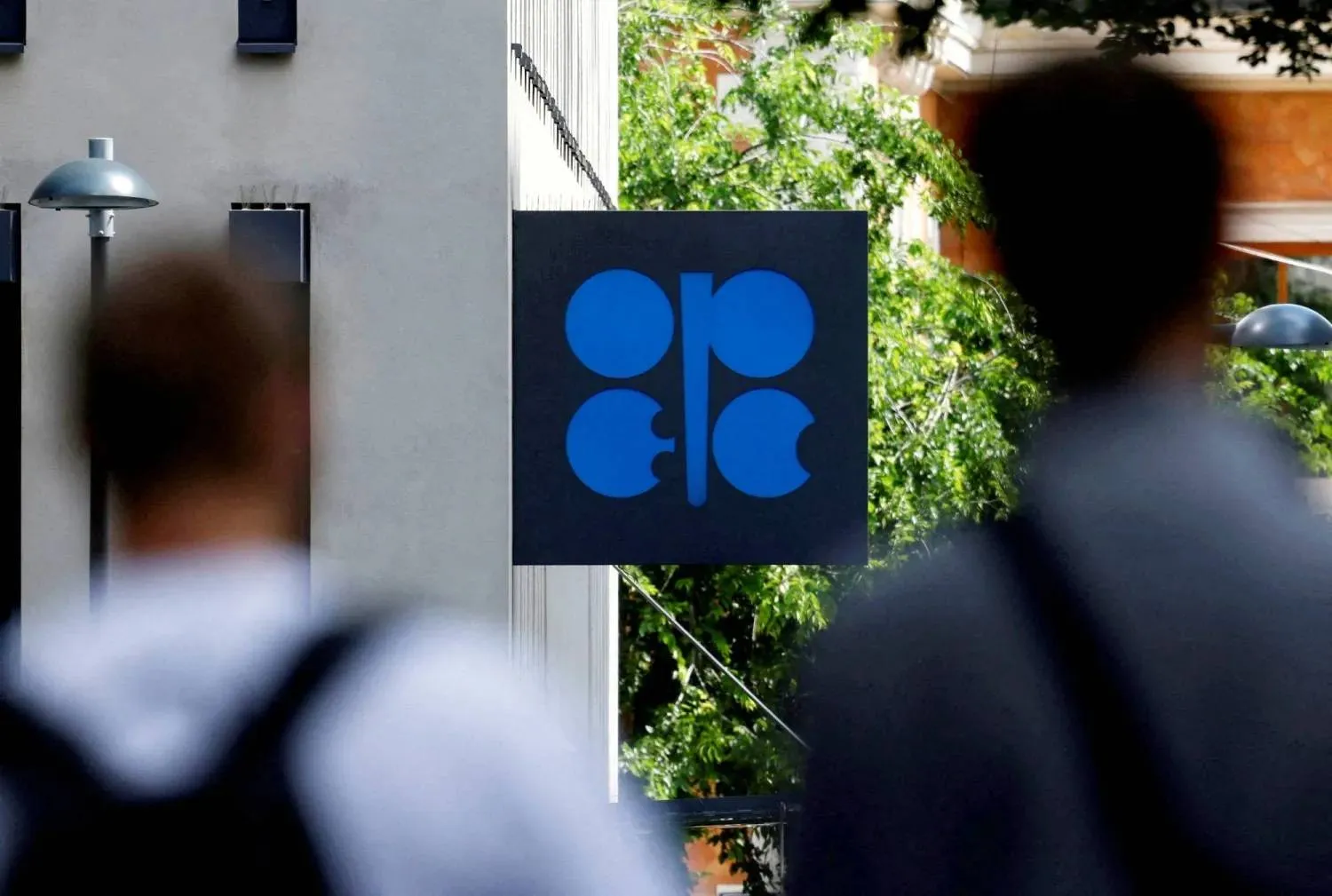
A view shows the logo of the Organization of the Petroleum Exporting Countries (OPEC) outside its headquarters in Vienna, Austria, May 28, 2024. REUTERS/Leonhard Foeger/File Photo 
TT

OPEC Cuts 2026 Global Oil Demand Growth Forecast

A view shows the logo of the Organization of the Petroleum Exporting Countries (OPEC) outside its headquarters in Vienna, Austria, May 28, 2024. REUTERS/Leonhard Foeger/File Photo 

OPEC on Wednesday lowered its forecast for global oil demand growth in 2026, joining other forecasters in cutting expectations due to the Iran war.

But OPEC said consumption would rebound later and raised its demand growth forecast for 2027.

The war has effectively closed the Strait of Hormuz, a key global oil route, curbing millions of barrels of Middle East output and sending fuel prices soaring. The surge is hitting consumers and businesses, and prompting government steps to conserve supplies.

World oil demand will rise by 1.17 million barrels per day (bpd) in 2026, OPEC said, down from 1.38 million bpd expected previously. For 2027, OPEC expects oil demand to rise by 1.54 million bpd, up 200,000 bpd ‌from the ⁠previous forecast.

Global oil demand is expected to average 104.57 million bpd in the second quarter, down from the 105.07 million bpd forecast last month, OPEC said. ⁠The previous report had already cut the second-quarter estimate by 500,000 bpd.

OPEC+, which groups the Organization of the Petroleum Exporting Countries and allies such as Russia, had agreed to resume output increases from April, ⁠but the closure of Hormuz has made it impossible to deliver on the deal. The report said output fell further in April.

OPEC+ crude output averaged 33.19 million bpd in April, ⁠down 1.74 million bpd from March, the report said, citing secondary sources OPEC uses to monitor its production.

Russia’s Crude Oil Production

Meanwhile, Russia’s crude oil production went down by 107,000 bpd in April 2026 month-on-month to 9.057 million bpd, OPEC said in its report.

OPEC said Kazakhstan's oil production rose by 115,000 bpd, to 1.799 million bpd last month.

The increase was driven mainly by higher output at Tengiz, the country's largest oilfield.

Kazakhstan remained among the highest producers last month.

IAE

For its part, the International Energy Agency, which issued its report hours ahead of the OPEC report, said on Wednesday global oil supply is projected to decline by 3.9 million bpd on average in 2026.

It said with Hormuz tanker traffic still restricted, cumulative supply losses from Gulf producers already exceed 1 billion barrels.

Overall global oil supply will fall by around 3.9 million barrels per day ⁠across 2026 due to ⁠the war, the agency said, slashing its previous forecast, which had projected a 1.5 million bpd drop.

The IEA now sees demand falling by 420,000 bpd this year, compared to a previous forecast of an 80,000 bpd drop.

Consumption is also under pressure due to the war as price spikes lead to demand destruction and slower economic growth, it said.

“More than ten weeks after the war in the Middle East began, mounting supply losses from the Strait of Hormuz are depleting global oil inventories at a record pace,” the report said.

With Hormuz tanker traffic still restricted, cumulative supply losses from Gulf producers already exceed 1 billion barrels with more than 14 million bpd of oil now shut in, an unprecedented supply shock, it said.

The Agency assumed that demand may swing back to growth towards the end of the year if a deal to end the war is agreed that allows flows through the Strait of Hormuz to gradually resume from the third quarter of this year.



Convoys of Desert Trucks Become Escape Valve for the Global Economy

A worker from the Transport General Authority checking trucks (TGA)
TT

Convoys of Desert Trucks Become Escape Valve for the Global Economy

A worker from the Transport General Authority checking trucks (TGA)

Convoys of heavy-duty trucks barreling across the Arabian desert have become an escape valve for the global economy, according to a Wall Street Journal report published on Wednesday.

In a mechanized revival of the caravans of goods-laden camels that once sustained Arabian commerce, highways, railroads and ports in Saudi Arabia, the United Arab Emirates and Oman have been transformed into an emergency logistics lifeline, circumventing the Strait of Hormuz waterway, WSJ said.

It said after the US and Israel attacked Iran, Bob Wilt, CEO of Saudi Arabian state-controlled mining company Maaden, dispatched executives to Red Sea ports and, within two weeks, lined up rail and truck operators to move fertilizer from the Gulf to Red Sea ports.

The key ingredient: Lots of trucks, mostly running around the clock, with two drivers each.
“Six hundred became 1,600, became 2,000; now we’ve got 3,500 trucks running from the Gulf to the Red Sea,” Wilt told WSJ.

Maryland-born Wilt said Maaden will have caught up on its export backlog by the end of May.

“Whether I truly believed we could do it or not, I don’t know,” he said. The drive is making a meaningful dent in a fertilizer shortage that is threatening the global food supply.

The trucking routes are part of a broader redrawing of the regional logistics map, reorienting trade away from the Arabian Gulf and providing governments and companies with critical contingencies.

Shipping companies including MSC and Maersk are trucking goods across the Arabian Peninsula.

Also, supermarket chain Spinneys sent trucks loaded with British foods—including potato chips, porridge oats and children’s snacks—on a 16-day journey from Kent in the UK through Western Europe and then Egypt and Saudi Arabia to Dubai.

The trucking convoys are the latest example of ways the global economy has shown surprising resilience in the face of war-related shocks.

While the region’s most important exports—oil and natural gas—have fallen sharply, a substantial amount continues to ship to global markets through backup routes.

Saudi Aramco has leaned heavily on its East-West pipeline to the Red Sea port of Yanbu, while the UAE has pushed more crude through Fujairah.

Both countries are exploring ways to expand the capacity of these oil links. Other proposals include building new rail lines and expanding port infrastructure around the region, according to the WSJ report.

Meanwhile, the smaller port of Khor Fakkan has become an unexpected lifeline for the Emirates.

Now it has become a gateway port, with incoming containers leaving the port by truck, passing through gates and customs and reaching warehouses, factories or shops.

Weekly container traffic at the port exploded from 2,000 to 50,000 since the start of the conflict.

For Maaden’s Wilt, the crisis has been a test of whether the company can deliver on a global stage.

Saudi Arabia has directed Maaden to expand production of phosphates, gold and aluminum, with plans to invest $110 billion over the next decade.

It also plays a large role in making Saudi Arabia the world’s third-largest exporter of phosphate, which is mined, processed into granules and shipped—in normal times—through the strait.

“We’ve demonstrated our capabilities,” Wilt said. “Let’s harden this and always have a route to the Red Sea.”


Tunisian Tourism Slows in Fallout of Middle East War

 Tourists ride while taking part in kitesurfing in Tunisia's southern island of Djerba on May 5, 2026. (AFP)
Tourists ride while taking part in kitesurfing in Tunisia's southern island of Djerba on May 5, 2026. (AFP)
TT

Tunisian Tourism Slows in Fallout of Middle East War

 Tourists ride while taking part in kitesurfing in Tunisia's southern island of Djerba on May 5, 2026. (AFP)
Tourists ride while taking part in kitesurfing in Tunisia's southern island of Djerba on May 5, 2026. (AFP)

In Tunisia, May usually heralds the start of the summer tourism boom, but as the Middle East war wreaks havoc on the region, the season is opening on uneasy footing.

Industry officials blame the fallout from the conflict, which has sent oil prices and travel costs skyrocketing, even thousands of miles away in Tunisia's idyllic island of Djerba.

Anane Kamoun, director of the Royal Garden Palace hotel on the island, said reservations have fallen by about half this year at his establishment.

"When oil prices rise, airfares rise, and that's when tourists start reconsidering the cost," said Kamoun.

"When airfares increase by 70 or 80 euros, it's a significant amount, and tourists begin looking for alternatives."

The price of kerosene has doubled since the beginning of the year, forcing companies to raise flight prices, with some even cancelling flights with little profit.

The tourism industry, which accounts for 10 percent of Tunisia's GDP, is also bracing for a blow to the job market, where it normally employs about 400,000 Tunisians.

- Signs of resilience -

Last year, a record 1.2 million tourists visited Djerba, a five-percent rise compared to the previous year and slightly above the previous high set in 2019 before the pandemic, said Hichem Mahouachi, the regional representative of Tunisia's national tourism office.

Officials had hoped for growth of up to eight percent this year, Mahouachi added, but the latest regional developments have clouded hopes for another record year.

Even so, Mahouachi pointed to signs of resilience.

Airlines have scheduled 5,600 flights to Djerba between April and September -- a 3.3 percent increase from a year earlier, with connections from 16 mostly European countries, he said.

Some destinations will likely be more impacted by disruptions than others -- especially long-haul routes that are more vulnerable to higher fuel costs, Mahouachi added.

However, Tunisia holds a major advantage: the Mediterranean country is just a two-hour flight from most European capitals.

"The increase in kerosene prices will not be felt in the same way as for long-haul travel," Mahouachi said. "Tunisia may even benefit from that."

"Tunisia is considered one of the safest destinations in the Mediterranean basin," the official added.


Gold Extends Decline as Inflation Woes Weigh on Rate Cut Bets

Gold supports some stablecoins (Reuters)
TT

Gold Extends Decline as Inflation Woes Weigh on Rate Cut Bets

Gold supports some stablecoins (Reuters)

Gold prices slipped for a second consecutive session on Wednesday as war-led inflation concerns weighed on expectations for interest rate cuts, with markets also watching the upcoming Trump-Xi meeting.

Spot gold was down 0.6% to $4,686.99 per ounce at 09:05 a.m. EDT (1305 GMT). US gold futures gained 0.2% to $4,694.70.

US producer prices increased more than expected in April, posting their biggest gain since early 2022, the latest indication that inflation was accelerating amid the Iran war.

"Inflation remains sticky and so, the expectations for higher rates for longer was reinforced, and that's been pressuring gold the last two days," said Peter Grant, vice president and senior metals strategist at Zaner Metals.

Gold is often viewed as a hedge against inflation, but higher interest rates tend to pressure the non-yielding metal. Data on Wednesday showed that US consumer inflation increased further in April, with the annual rate posting its largest gain in three years, Reuters reported.

The US central bank last month left its benchmark overnight interest rate in the 3.50% to 3.75% range. Traders have largely priced out a US rate cut this year, according to CME Group's FedWatch. Donald Trump embarks on the first visit by a US president to China in nearly a decade eager to snag some deals, maintain a fragile trade truce with the world's second-largest economy, and prop up public approval ratings bruised by his war with Iran. Meanwhile, India raised import tariffs on gold and silver to 15% from 6%, as part of efforts to curb overseas purchases of the metals and ease pressure on the country's foreign exchange reserves. India is the world's second-largest consumer of precious metals.

The news about higher import duties in India has created some demand concerns and could pose a long-term headwind, Grant said.

Spot silver fell 0.2% to $86.70 per ounce, after hitting a two-month high earlier in the session.

Platinum lost 0.3% to $2,120.20, after hitting its highest level since March 17. Palladium was down 0.4% at $1,484.10.
