


Saudi Arabia Builds its Own Digital Sovereignty Model

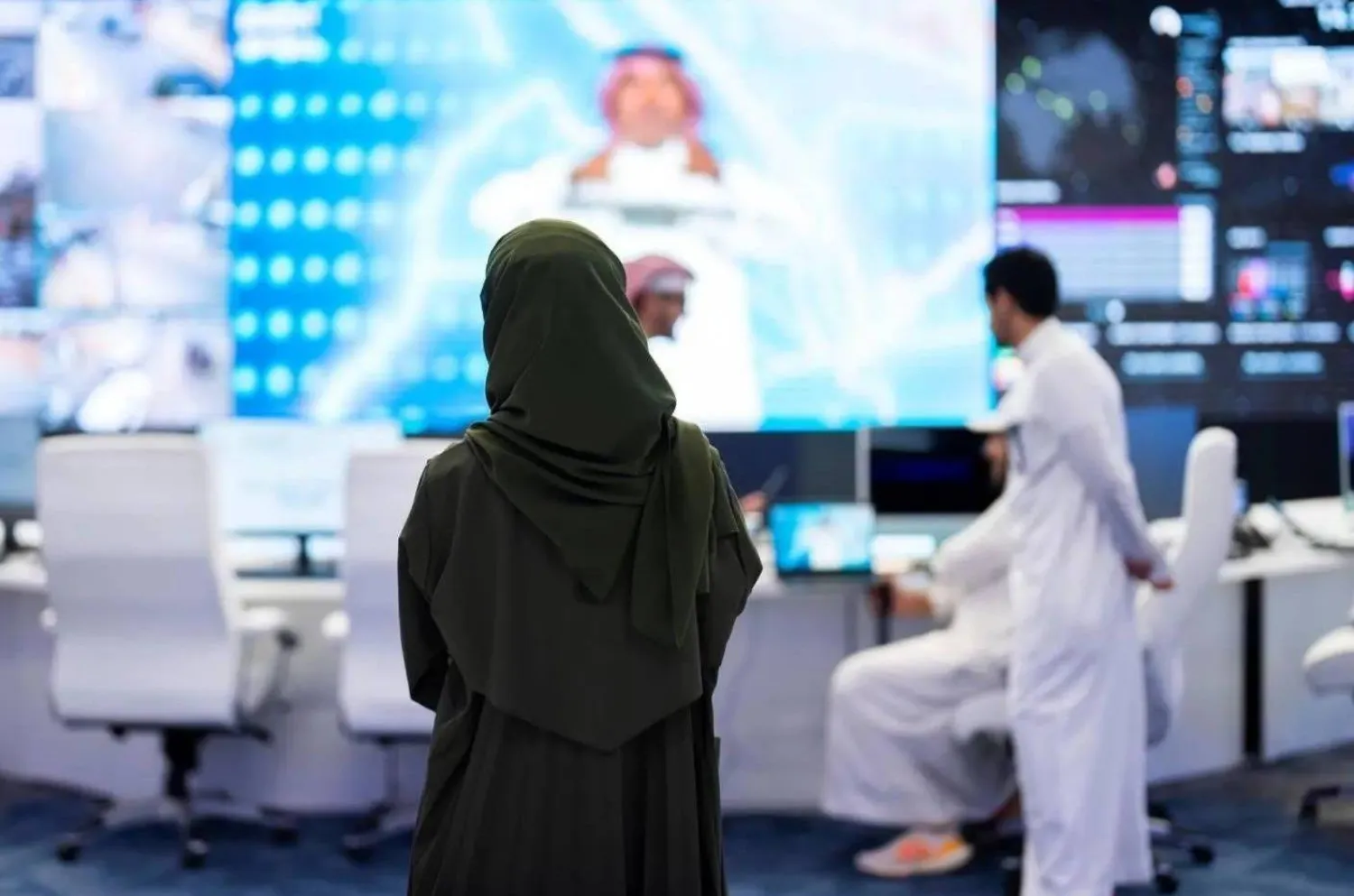
A woman stands in front of an information screen at the LEAP tech exhibition in Saudi Arabia (SPA)
TT

Saudi Arabia Builds its Own Digital Sovereignty Model

A woman stands in front of an information screen at the LEAP tech exhibition in Saudi Arabia (SPA)

In a world where digital borders are blurring and countries are racing to control data and build technological power, Saudi Arabia has chosen to carve out its own digital path.

Through an ambitious strategic vision, the Kingdom has launched a network of policies, investments, and high-value partnerships that have turned it into a global model for digital transformation. It ranked first in the International Telecommunication Union’s 2025 Digital Readiness Framework, scoring 94 out of 100.

But the score tells only part of the story. More important is what it signals, a deep shift in how Saudi Arabia views digital sovereignty. It is no longer just a shield for protecting data. It has become a driver of growth and a tool for shaping the future.

To understand that shift, the concept itself must be redefined.

Ayman AlRashed, IBM’s regional vice president in Saudi Arabia, says digital sovereignty is often wrongly reduced to a technical question of where data is stored.

“It is important to look at digital sovereignty as an integrated operational capability,” AlRashed told Asharq Al-Awsat.

He said it covers an organization’s ability to control and govern its data, operate its digital systems, and manage outcomes with confidence and continuity over the long term.

That broader definition gives digital sovereignty a far deeper meaning. It is not a wall built to stop data from leaving. It is a full governance system that ensures accountability, access controls, oversight and auditability, while preserving the reliability of digital systems and their ability to scale securely and in compliance with regulations.

Mohamed Talaat, vice president for Saudi Arabia, Egypt, North Africa and the Levant at Dell Technologies, said the Kingdom has translated that approach into practical policy through clear regulatory frameworks, led by the Personal Data Protection Law.

He told Asharq Al-Awsat that the law helped create an environment that supports global expansion while maintaining strict control over data.

Saudi Arabia has also made itself more attractive to international technology companies through economic zones, tax incentives, and partnerships with cloud service providers.

How fintech flourished

The fintech sector offers one of the clearest examples of how digital sovereignty is reshaping the Saudi economy.

The sector has expanded sharply in recent years. AlRashed says digital sovereignty was one of the main factors behind that growth.

The reason is straightforward. Once sensitive financial data could be processed and stored inside the Kingdom under local regulatory frameworks, investors, banks, insurers and end users became more confident in fintech solutions.

Digital sovereignty removed one of the biggest barriers to growth, concern over where sensitive data sits and who controls it.

Crucially, that did not come at the expense of innovation. IBM provided sovereign and hybrid cloud solutions that allow financial institutions to keep sensitive data locally while still using advanced cloud capabilities.

That model gave fintech firms a practical way to balance fast innovation with strict regulatory compliance, without sacrificing either.

From compliance to expansion

Digital sovereignty has not only helped large institutions. It has also changed the equation for Saudi startups.

AlRashed says that storing and processing data within the Kingdom under clear regulatory frameworks has enabled startups to launch and grow while remaining compliant from day one.

But the economic impact goes beyond easier compliance. Digital sovereignty has strengthened trust among customers and partners in local solutions. That has helped speed up the adoption of digital products, expand customer bases, improve access to investment, build partnerships with major institutions, and increase the likelihood of early revenue.

AlRashed says the deeper impact lies in preparing startups for regional expansion.

By building digital solutions on strong, sovereign standards within the Kingdom, Saudi companies have gained a clear competitive edge, especially as regulatory policies across several regional markets converge. What they built locally has become easier to export and scale.

A delicate balance

One of the toughest questions is how Saudi Arabia managed to attract major global technology firms to invest locally without giving up control over national data.

Talaat says the Kingdom struck a careful balance. It offered international companies a clean regulatory environment and attractive incentives, while imposing strict guarantees to keep sensitive data under national control.

He said this approach has taken practical form in a secure local infrastructure that supports national artificial intelligence agendas.

One example is Dell Technologies’ opening in 2024 of a new merger and distribution center in Dammam, part of a multimillion-dollar investment to strengthen local operations and supply chain resilience.

The move reflects a model in which global companies become partners in building sovereignty, not threats to it.

A regional digital hub

What will this ecosystem look like by 2030?

Talaat sketches an ambitious picture, a sovereign digital economy expected to be the largest in the Middle East, with artificial intelligence alone forecast to contribute $135 billion to the economy and local data center capacity exceeding 1.5 gigawatts.

Saudi Arabia is working to cement its position as a global hub for cloud computing, artificial intelligence innovation and sustainable technology manufacturing, supported by integrated smart cities and secure sovereign data systems.

AlRashed says the Kingdom has a real chance to move beyond the domestic arena and help shape global models for digital sovereignty through a growing network of local, regional and international partnerships.

That marks a shift from importing technology to exporting models and standards.

Still, both men acknowledge that the vision faces a central challenge, closing human skills gaps.

Advanced infrastructure is essential, but it is not enough. Saudi Arabia also needs deep, parallel investment in developing national talent capable of managing and leading its digital future.

In the end, Saudi Arabia’s experience shows that digital sovereignty is not a defensive strategy designed to cut data off from the world. It is a way for countries and companies to engage with global innovation from a position of strength, not dependence.



Saudi Stock Market Edges Lower in First Session of the Week

An investor monitors a stock screen at the Saudi financial market in Riyadh (AFP)
TT

Saudi Stock Market Edges Lower in First Session of the Week

An investor monitors a stock screen at the Saudi financial market in Riyadh (AFP)

Saudi Arabia’s stock market index ended trading slightly lower, falling 0.25 percent to close at 10,968 points, amid trading turnover of around SAR2.9 billion, the lowest level since January 2026.

Mining giant Maaden fell 2 percent to close at SAR62.7, while SABIC declined by the same percentage to SAR59.4. Arabian Drilling slipped 1 percent to SAR86.6.

In the banking sector, Saudi National Bank shares fell 0.26 percent to SAR38.5.

Meanwhile, Saudi Aramco, the index’s heaviest-weighted stock, rose 0.3 percent to close at SAR27.78.

ACWA Power also gained 2 percent to SAR181.10.

Kingdom Holding rose 6 percent to SAR11.01, while Solutions climbed 4 percent to close at SAR229.6.


Oman Inflation Rises 3.2% in April

Shoppers at a food and beverage store in Oman. (Reuters)
TT

Oman Inflation Rises 3.2% in April

Shoppers at a food and beverage store in Oman. (Reuters)

Oman’s consumer price index (CPI) rose 3.2 percent in April compared with the same month in 2025, based on 2018 as the reference year.

The National Center for Statistics and Information said in data carried by the Oman News Agency on Sunday that average inflation during the period from January through April increased by 2.6 percent.

The data showed that the miscellaneous personal goods and services group recorded the highest increase at 9.2 percent, followed by food and non-alcoholic beverages at 6.2 percent, and transport at 6 percent.

The food and non-alcoholic beverages group recorded increases across most categories in April compared with the same month last year, led by vegetables at 25 percent, followed by fruits at 11.6 percent, and fish and seafood at 6.1 percent.

The data also showed varying inflation rates across Oman’s governorates at the end of April compared with the corresponding period last year. Al Dhahirah Governorate recorded the highest increase at 4.4 percent, followed by Al Dakhiliyah and Muscat governorates at 3.7 percent, and Al Buraimi Governorate at 3.5 percent.


Gulf, International Initiative to Assess War’s Impact on Private Sector

A previous meeting of the Federation of GCC Chambers in Riyadh. (SPA)
TT

Gulf, International Initiative to Assess War’s Impact on Private Sector

A previous meeting of the Federation of GCC Chambers in Riyadh. (SPA)

Asharq Al-Awsat has learned of a joint initiative by the Federation of GCC Chambers and the International Labor Organization to conduct a rapid assessment of the impact of the war on the private sector and labor markets across Gulf Cooperation Council countries.

The initiative is expected to contribute directly to the formulation of actionable recommendations aimed at preserving labor market stability and supporting business continuity.

The initiative seeks to assess the impact of the current crisis and conflict on private sector institutions, with particular focus on small and medium-sized enterprises, as well as on labor markets across GCC states.

According to the information obtained, the Federation of GCC Chambers has asked private sector companies and institutions across member states to document the impact of the war, whether they market their products domestically or in regional and international markets.

The federation is also seeking to determine the effects of the current regional crisis on supply chains and private sector operations, including delays in receiving imported inputs, shortages of critical materials affecting operations, higher transportation and logistics costs, and disruptions in the distribution of goods and services to markets and customers.

It is also examining the direct impact of disruptions to maritime trade routes, including the Strait of Hormuz, on businesses, particularly in terms of rerouting shipments through alternative routes or transport methods, difficulties shipping or receiving goods by sea, increased shipping and insurance costs, declining import and export volumes, and shipment or order delays and cancellations.

The federation has further requested information on the extent to which the crisis has affected overall operating expenses, whether significantly, moderately or not at all, as well as its impact on companies’ investment plans, including whether firms intend to cancel, reduce or indefinitely postpone investments, or instead increase spending to adapt, restructure or respond to new conditions.

Among the challenges the federation is seeking to assess are companies’ ability to cover operating and fixed costs, revenue conditions, and the immediate measures taken regarding their workforce in response to the crisis, including reducing working hours, shifting employees to part-time arrangements, freezing recruitment and hiring, cutting wages and benefits, or reallocating staff to different roles and functions.

Secretary-General of the Gulf Cooperation Council Jasem Albudaiwi recently said that a series of Gulf economic and financial achievements had strengthened regional integration and reinforced financial stability in the face of evolving challenges.

Speaking during the 125th meeting of the GCC Financial and Economic Cooperation Committee in mid-May, Albudaiwi said the current war crisis requires Gulf states to move beyond traditional coordination toward a higher level of practical integration and effective response.

He said the accelerating crises and growing economic challenges facing the region underscore the urgent need for a conscious response and measures capable of mitigating their impact on GCC economies, which have long been characterized by openness and deep engagement with the global economy.

Albudaiwi also stressed the need to expedite the completion of key joint Gulf projects, including transportation and logistics initiatives, while accelerating implementation of the GCC railway project and strengthening the regional electricity interconnection network.

He further called for studying the establishment of oil and gas pipeline networks, a GCC water interconnection project, strategic Gulf stockpile zones, and measures to ensure adequate liquidity reserves at central banks.