


China Says It Will Buy 200 Boeing Jets, Seek Extension of US Trade Truce

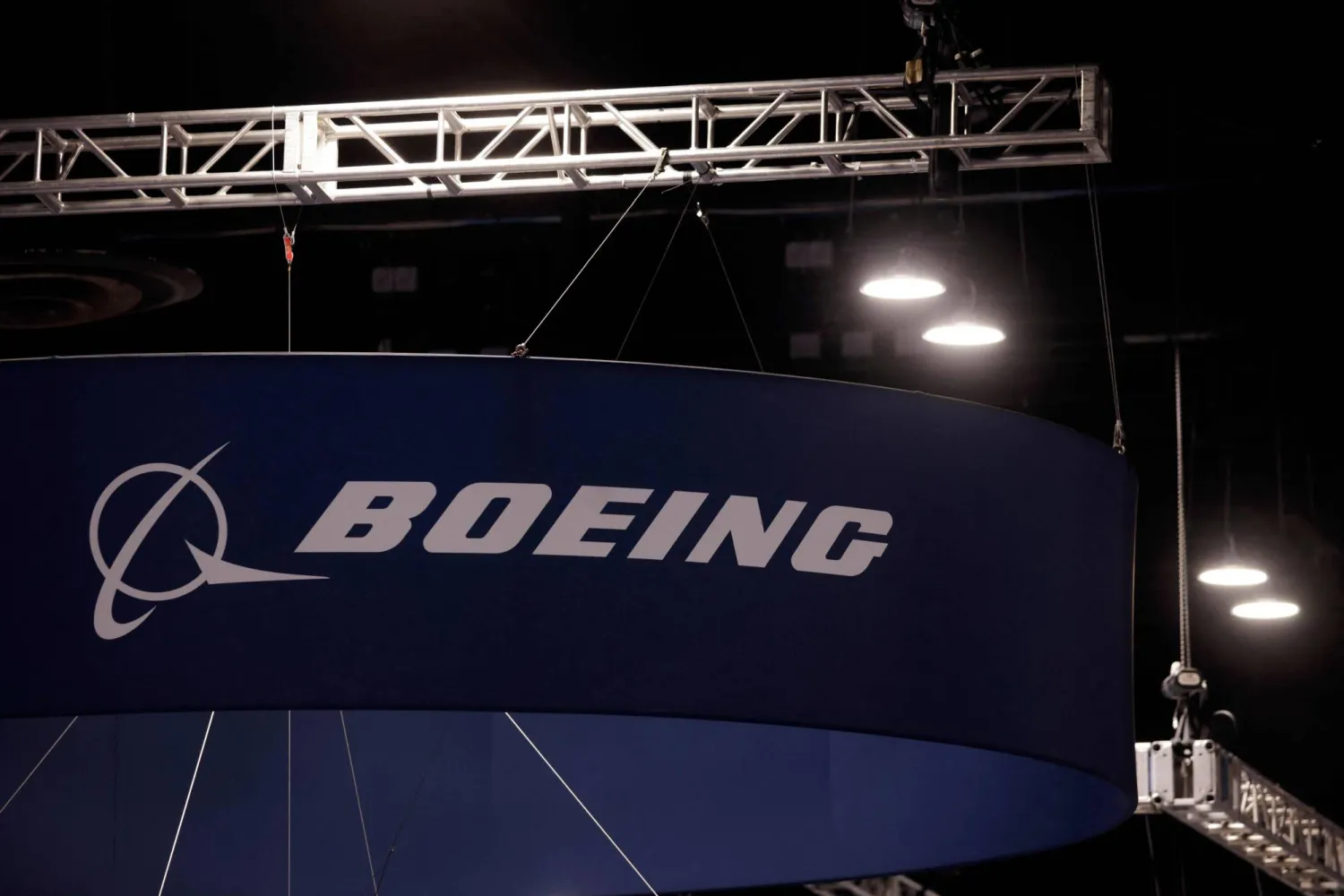
Signage is displayed above The Boeing Company booth at Special Operations Forces (SOF) Week at the Tampa Convention Center on May 19, 2026 in Tampa, Florida. (Getty Images/AFP)
TT

China Says It Will Buy 200 Boeing Jets, Seek Extension of US Trade Truce

Signage is displayed above The Boeing Company booth at Special Operations Forces (SOF) Week at the Tampa Convention Center on May 19, 2026 in Tampa, Florida. (Getty Images/AFP)

China on Wednesday said it will buy 200 Boeing jets and seek an extension of a trade truce struck with the US that is set to expire this November.

The statement marked Beijing's first confirmation of the Boeing order, though it did not elaborate on the types of planes China would buy.

If finalized, the orders would mark Boeing's first major Chinese deal in nearly a decade, after the US planemaker was largely shut out of the world's second-largest aviation market amid trade tensions between Beijing and Washington.

US President Donald Trump visited China last week ‌for a summit ‌with President Xi Jinping, in a trip that produced ‌a series ⁠of trade pledges ⁠including the Boeing purchase and agricultural market access.

Trump said after the Beijing summit that the Boeing purchases could rise to as many as 750 planes, adding that they would be fitted with GE Aerospace engines.

The US will provide China with supply guarantees for aircraft engine parts and components under the Boeing deal, the Chinese ministry said.

TRADE TRUCE

The two sides will seek reciprocal tariff cuts on $30 billion or more worth of goods each, the ⁠ministry said, adding that US tariffs on China must not ‌exceed the level set under an arrangement reached ‌last year.

China and the US reached an agreement in Kuala Lumpur before a Trump-Xi meeting in ‌South Korea in October that extended their tariff truce for a year.

The deal ‌included US tariff reductions on Chinese products and a pause in Beijing's new restrictions on rare earth minerals and magnets, which are vital for technologies like consumer electronics, electric vehicles and defense.

The statement came after US Treasury Secretary Scott Bessent told Reuters that the Trump administration ‌was "not in a rush" to extend the tariff and critical minerals trade truce with China, signaling more trade talks with Beijing ⁠in the coming months ⁠to renew it.

Both sides will work together to address each other's concerns on export controls, the ministry said, adding that Beijing reviews export license applications for critical minerals including rare earths that are intended for civilian uses.

The White House said in a fact sheet released on Sunday that China would purchase at least $17 billion of US agricultural products from 2026 to 2028, excluding the existing soybean commitment.

The Chinese commerce ministry statement did not confirm the number, but said the two sides achieved "positive results" in the agricultural sector and reached agreements on mutual market access.

Beijing will restore registration of eligible US beef exporters and resume imports of some US poultry products, the ministry said.

The US has pledged to remove or make progress on several non-tariff barriers affecting Chinese agricultural exports, with steps that would facilitate exports of Chinese dairy products, it added.


Standard Chartered CEO Seeks to Reassure Staff over AI-linked Job Cuts

FILED - 11 January 2012, China, Hong Kong: FILE PHOTO - A general view of the facade of Standard Chartered Bank branch in Hong Kong. Photo: Jens Kalaene/dpa-Zentralbild/dpa
TT

Standard Chartered CEO Seeks to Reassure Staff over AI-linked Job Cuts

FILED - 11 January 2012, China, Hong Kong: FILE PHOTO - A general view of the facade of Standard Chartered Bank branch in Hong Kong. Photo: Jens Kalaene/dpa-Zentralbild/dpa

Standard Chartered CEO Bill Winters sought to assuage staff concerns on Wednesday, a day after saying that the bank will cut thousands of jobs over the next four years as it moves to replace "lower-value human capital" with technology.

"Many of you will have seen media coverage following the Investor Event in Hong Kong, particularly the reporting around automation, AI, and workforce changes," Winters said in a memo to the bank's ⁠staff reviewed by ⁠Reuters.

"I know this may be unsettling when reduced to simple headlines or a quote out of context," he said.

A spokesperson for the bank confirmed the memo's content.

StanChart said on Tuesday it would cut 15% of ⁠its corporate function roles by 2030, which, according to a Reuters calculation, would result in nearly 8,000 redundancies out of its more than 52,000 staff in such roles.

The bank cited AI as a driver to slim its operations in its quest to increase profitability and tackle competition.

"It's not cost-cutting. It's replacing in some cases lower-value human capital with the financial capital ⁠and ⁠the investment capital we're putting in," Winters said on Tuesday.

In his memo to staff on Wednesday, Winters said the bank had been open that its workforce will evolve.

"Some roles will reduce in number, some will change, and new opportunities will emerge. We will continue to prioritize investment in reskilling and redeployment wherever we can," he said.

"Where changes do happen, we will handle them with thought and care," he added.


Ukraine Ally Britain Eases Sanctions on Russian Oil as Fuel Prices Surge Over Iran Conflict

A seized suspected Russian oil taker by the French navy is photographed in the Mediterranean Sea in Fos-sur-Mer, southern France, on Jan. 26, 2026. (AP)
TT

Ukraine Ally Britain Eases Sanctions on Russian Oil as Fuel Prices Surge Over Iran Conflict

A seized suspected Russian oil taker by the French navy is photographed in the Mediterranean Sea in Fos-sur-Mer, southern France, on Jan. 26, 2026. (AP)

The UK government has quietly watered down sanctions on Russian oil in an effort to shelter Britons from the cost-of-living squeeze triggered by the closure of the Strait of Hormuz.

A trade license that came into effect Wednesday permits the import of Russian oil that has been refined into jet fuel and diesel in third countries, such as India and Türkiye.

The US-Israeli war on Iran and Iran's closure of the strait, through which about a fifth of the world's oil usually passes, has sent fuel prices soaring around the world and sparked concerns about a shortage of jet fuel.

UK Treasury minister Dan Tomlinson said the changes are “for a time limited period and on a very specific issue.”

Britain has been one of Ukraine's strongest allies since Russia's full-scale invasion in 2022, and the government insist its sanctions against Russia remain among the toughest in the world.

But lawmaker Emily Thornberry, who chairs Parliament’s Foreign Affairs Committee, said Ukrainians would “feel very let down” by the move. She said Ukraine’s allies should keep squeezing Russia’s oil industry, because it “is absolutely crippling their economy.”

The US has also eased Russian sanctions. Earlier this week, Treasury Secretary Scott Bessent extended a 30-day sanctions waiver allowing the purchase of Russian oil shipments already at sea.

On Tuesday, finance ministers from the US, Britain and the other Group of Seven wealthy nations issued a joint statement reaffirming “our unwavering commitment to continue to impose severe costs on Russia in response to its continued aggression against Ukraine.”


QatarEnergy Buys Stakes in Uruguay Offshore Blocks from Shell Subsidiary

3D-printed oil pump jacks and the QatarEnergy logo appear in this illustration taken March 2, 2026. REUTERS/Dado Ruvic/Illustration
TT

QatarEnergy Buys Stakes in Uruguay Offshore Blocks from Shell Subsidiary

3D-printed oil pump jacks and the QatarEnergy logo appear in this illustration taken March 2, 2026. REUTERS/Dado Ruvic/Illustration

QatarEnergy has acquired interests in three offshore exploration blocks in Uruguay from a subsidiary of Shell, marking its first entry into the South American country's upstream energy sector, the state-owned company said on Wednesday without disclosing financial details.

The Qatari energy giant's South American exploration expansion also strengthens its strategic alliance with Shell, one of its key partners in energy projects within Qatar and elsewhere.

The company, the world's largest single LNG producer before the US-Israeli war on ⁠Iran forced production ⁠halts and resulted in damage to some facilities, has been building up an upstream portfolio over several years, including interests in Brazil, Cyprus, Egypt and elsewhere.

Under the agreements, QatarEnergy took 30% stakes in block OFF-2 and block OFF-7, where Shell ⁠is the operator and holds 70% and 40% respectively. QatarEnergy also acquired an 18% interest in block OFF-4.

APA Corporation operates block OFF-4, in which it holds a 50% stake and Shell holds 32%. In block OFF-7, Chevron holds the remaining 30% interest, QatarEnergy said.

"We are pleased to strengthen our relations with our strategic partner Shell through these agreements, which mark our first entry into Uruguay’s ⁠upstream sector," ⁠Reuters quoted QatarEnergy CEO Saad Sherida Al-Kaabi as saying in the statement.

The three blocks are located off Uruguay’s Atlantic coast in water depths ranging from 40 to 4,000 meters. They cover areas of between 11,155 and 18,227 sq km, the company said.

No commercial oil and gas discoveries have yet been struck in Uruguay, but companies hope to replicate the massive recent discoveries made in Namibia, on the direct opposite side of the Atlantic, because of their shared geological history.
