


SpaceX Reveals Plans for What Could be Biggest-ever Initial Public Offering

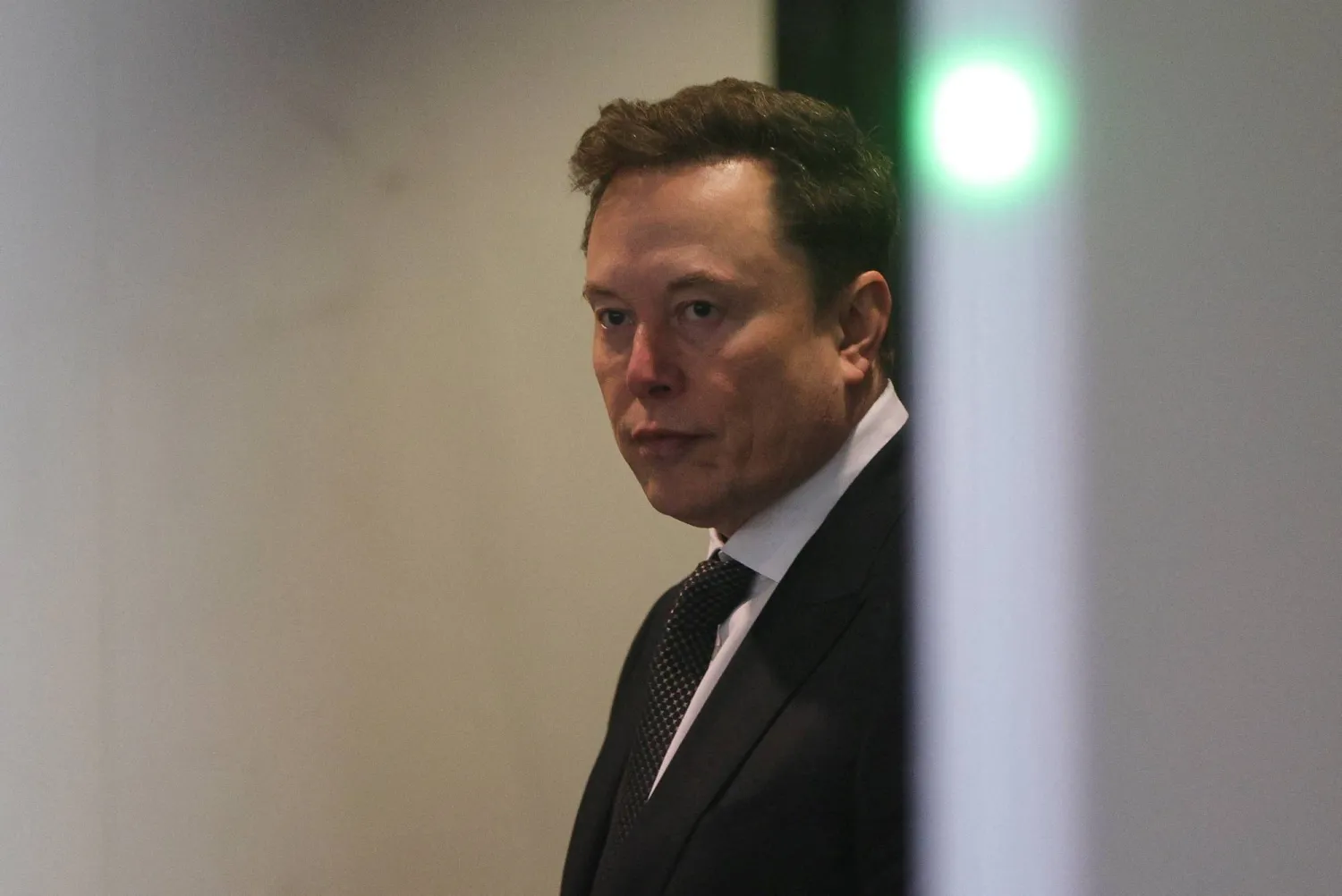
FILE PHOTO: Elon Musk walks to attend the trial in his lawsuit over OpenAI for-profit conversion at a federal courthouse, in Oakland, California, US, April 29, 2026. REUTERS/Manuel Orbegozo/File Photo
TT

SpaceX Reveals Plans for What Could be Biggest-ever Initial Public Offering

FILE PHOTO: Elon Musk walks to attend the trial in his lawsuit over OpenAI for-profit conversion at a federal courthouse, in Oakland, California, US, April 29, 2026. REUTERS/Manuel Orbegozo/File Photo

Elon Musk announced plans Wednesday for one of the biggest stock sales ever by taking public a space company that is currently losing billions of dollars a year.

A filing shows that his SpaceX lost $2.6 billion from operations last year on $18.7 billion in revenue, and the losses kept piling up at the start of this year, too.

The prospectus did not put a dollar figure on the amount Musk hopes to raise, but various reports have put it at $75 billion or so.

SpaceX, formally known as Space Exploration Technologies Corp., has said the money will help finance projects to put people on the moon and Mars in its quest to make humans an intergalactic species as they face existential threats that could wipe out civilization.

“We do not want humans to have the same fate as dinosaurs,” the filing states.

The prospectus reads in part like a Hollywood fantasy version of the future, detailing in one section how part of Musk’s compensation will be granted only if he maintains “a permanent human colony on Mars with at least one million inhabitants.”

Short of that, the stock sale alone could make Musk, a major owner who founded SpaceX in 2002, the world’s first trillionaire. Forbes currently puts his net worth at $839 billion.

In addition to making reusable rockets to hurl astronauts into orbit, SpaceX has other businesses, some successful, some struggling — and with plenty of questions marks.

The document shows that Starlink, the world’s largest satellite communications company, is a big source of cash for the company, generating $4.4 billion in operating income last year. The business uses 10,000 satellites in low orbit to provide internet service to 10 million people in 150 countries and territories.

Among the struggling businesses are two Musk units that were recently acquired by SpaceX — his social media platform X, formerly Twitter, and his artificial intelligence business, xAI.

Those purchases were blasted by some SpaceX investors as bailouts because they are big money losers.

The prospectus said its AI business lost $6.4 billion in operations last year.

The original SpaceX business, making rockets and staging launches, has been helped by massive government contracts, which raises questions that could come back to haunt the company. Given Musk’s close relation to the Trump administration, government ethics lawyers and watchdogs have asked if he has gotten special treatment to win taxpayer money and whether that good luck will run out once President Donald Trump is out office.

SpaceX has won contracts worth $6 billion from NASA and the Defense Department and other government agencies in the past five years, according to USAspending.gov. The company noted in its filing that a fifth of its revenue last year was from the federal government, The Associated Press reported.

Musk was the biggest donor to Trump’s presidential campaign and is still a big backer despite their sometimes rocky relationship after his stewardship of the government cost-cutting effort called DOGE early last year.

Like many corporate CEOs, Musk’s compensation will go far beyond his annual salary, which was $54,080 in 2025 and has remained unchanged since 2019, according to the filing.

The prospectus says stock grants for him would be sliced into 15 nearly equal amounts — 67 million shares each — and would vest only as the company achieves preset market cap goals. In addition to the Martian colony, SpaceX’s stock market value would have to reach $7.5 trillion for him to receive the full award.

He would get even more stock awards if SpaceX manages to get giant data centers the size of football fields in space.

The document shows Musk will be able to exert big control over the business.

It says he and certain other shareholders will receive shares in a special class of stock that gives them 10 votes for each share they hold. Those shareholders will be able, among other things, to elect a majority of the company’s board of directors.

“This will limit or preclude your ability to influence corporate matters and the election of our directors,” SpaceX said in a warning to prospective investors.

SpaceX will be able to pitch the offering to investors — in what’s known in Wall Street parlance as a “road show” — 15 days after making its prospectus public. In this case, that works out to June 4.



Google to Pay Musk $920 Million a Month for AI Computing Capacity

The headquarters of Space Exploration Technologies Corp. (SpaceX) in California. (AFP)
TT

Google to Pay Musk $920 Million a Month for AI Computing Capacity

The headquarters of Space Exploration Technologies Corp. (SpaceX) in California. (AFP)

SpaceX on Friday signed a blockbuster cloud computing agreement under which Google will pay the Elon Musk-founded rocket company $920 million per month for access to a massive cluster of AI chips, according to a disclosure in its initial public offering filing.

The deal, which will bolster SpaceX's finances ahead of its IPO on June 12, covers a computing infrastructure of approximately 110,000 Nvidia GPUs -- the crucial hardware needed to power Google's Gemini AI models.

The filing says Google will begin paying the full monthly rate in October 2026, with a reduced fee applying during a ramp-up period until then, AFP reported.

The agreement runs through June 2029, implying total payments of roughly $30 billion over the life of the contract.

The deal resembles one struck with AI giant Anthropic, in which SpaceX leased compute capacity at its Colossus data centers in Memphis, Tennessee for $1.25 billion a month.

The facilities were originally built to power Musk's rival AI venture, xAI.

SpaceX's IPO filing revealed that xAI last year posted an operating loss of $6.4 billion on total revenue of $3.2 billion.

"This is a short-term, timely agreement to ensure we have bridge capacity to meet surging customer demand for our agent platform, Gemini Enterprise, which has been even higher than we expected," a Google Cloud spokesperson said in an email to AFP.

The filing adds that after December 31, "the agreement may be terminated by either party upon 90 days' notice."

The deals with Google and Anthropic come just days ahead of SpaceX's IPO, which will be the biggest in history, valuing the company at $1.8 trillion.

That valuation is largely based on faith that Musk can deliver on his ambitions to vastly expand his Starlink satellite business, put data centers into space using SpaceX rockets, as well as begin colonizing Mars.


Rosneft: US Companies Benefit from Strait of Hormuz Closure

Igor Sechin, Chief Executive Officer of Rosneft, during the St. Petersburg International Economic Forum, June 5, 2026 (Reuters).
TT

Rosneft: US Companies Benefit from Strait of Hormuz Closure

Igor Sechin, Chief Executive Officer of Rosneft, during the St. Petersburg International Economic Forum, June 5, 2026 (Reuters).

Rosneft Chief Executive Igor Sechin said on Saturday that US energy companies were the main beneficiaries of the closure of the Strait of Hormuz but warned that continued tensions in the artery for one fifth of the world's crude would undermine long-term demand for oil.

Iran blockaded the Strait, the main route for about a fifth of world oil supplies and other vital goods including fertilisers, after the United States and Israel attacked Iran and killed Supreme Leader Ali Khamenei in February. The US has blockaded Iranian ports.

Sechin, a close ally of President Vladimir Putin and one of the most influential men in Russia's energy sector, cast the US actions as an attempt to change the fundamental contours of the global energy markets to suit US interests, but added that the strategic risks had not been fully assessed.

"The closure of the Strait of Hormuz is an attempt to reshape global energy market regulations to benefit the United States. The measures taken to block the strait were aimed at Iran, but backfired on the entire world. The strategic risks were underestimated," Sechin said at the St. Petersburg International Economic Forum.

"The main beneficiaries, of course, were American companies, which gained non-competitive advantages and the ability to secure high-cost supplies," he said.

"Continued tension in the Strait of Hormuz for a long time undermines the long-term demand for oil. It may also trigger another surge of interest in alternative energy."

If the Strait opens in the near future, then the oil price will be at $95 to $96 per barrel by the end of the year, and in a year it will drop to $80 to $85, and by the second half of 2027 there will be a return to market fundamentals, he said.


First Two of Riyadh Air’s Custom-Built 787-9 Dreamliners Arrive in Saudi Arabia

The arrival of Riyadh Air's two aircraft marks a historic milestone in the company's journey towards launching its flights (SPA)
TT

First Two of Riyadh Air’s Custom-Built 787-9 Dreamliners Arrive in Saudi Arabia

The arrival of Riyadh Air's two aircraft marks a historic milestone in the company's journey towards launching its flights (SPA)

Riyadh Air, Saudi Arabia’s new national carrier and a company wholly owned by the Public Investment Fund (PIF), has announced the arrival of its first two custom-built Boeing 787-9 Dreamliners at King Khalid International Airport in Riyadh.

The aircraft arrived in tandem on Friday at approximately 10 a.m. local time, receiving a water cannon salute upon touchdown.

The aircraft – using the call signs Riyadh 1 and Riyadh 2 and registered as HZ-RXAA and HZ-RXAB – are the first of Riyadh Air’s 72 state-of-the-art Dreamliners.

Their arrival marks the commencement of the carrier's broader strategy to expand its fleet to more than 180 narrow-body and wide-body aircraft.

Leveraging Saudi Arabia’s strategic location at the crossroads of Asia, Africa, and Europe, Riyadh Air aims to connect the capital to over 100 global destinations by 2030, with plans to fly to nearly 20 destinations by the end of this year.

Commenting on the arrival, Riyadh Air CEO Tony Douglas said: “To see our very first custom-built Dreamliners touch down in Riyadh is a truly historic moment for us, and a momentous day for Saudi aviation as part of Vision 2030. I could not be more excited or more confident about the future and the legacy we are creating.”

“Not only are we building an airline, we are opening a new gateway to the world from the heart of the Kingdom. We are absolutely ready and excited to welcome the world to Riyadh,” he added.