


A Bachelor’s in Rare Earths? In China, There Are Schools for That

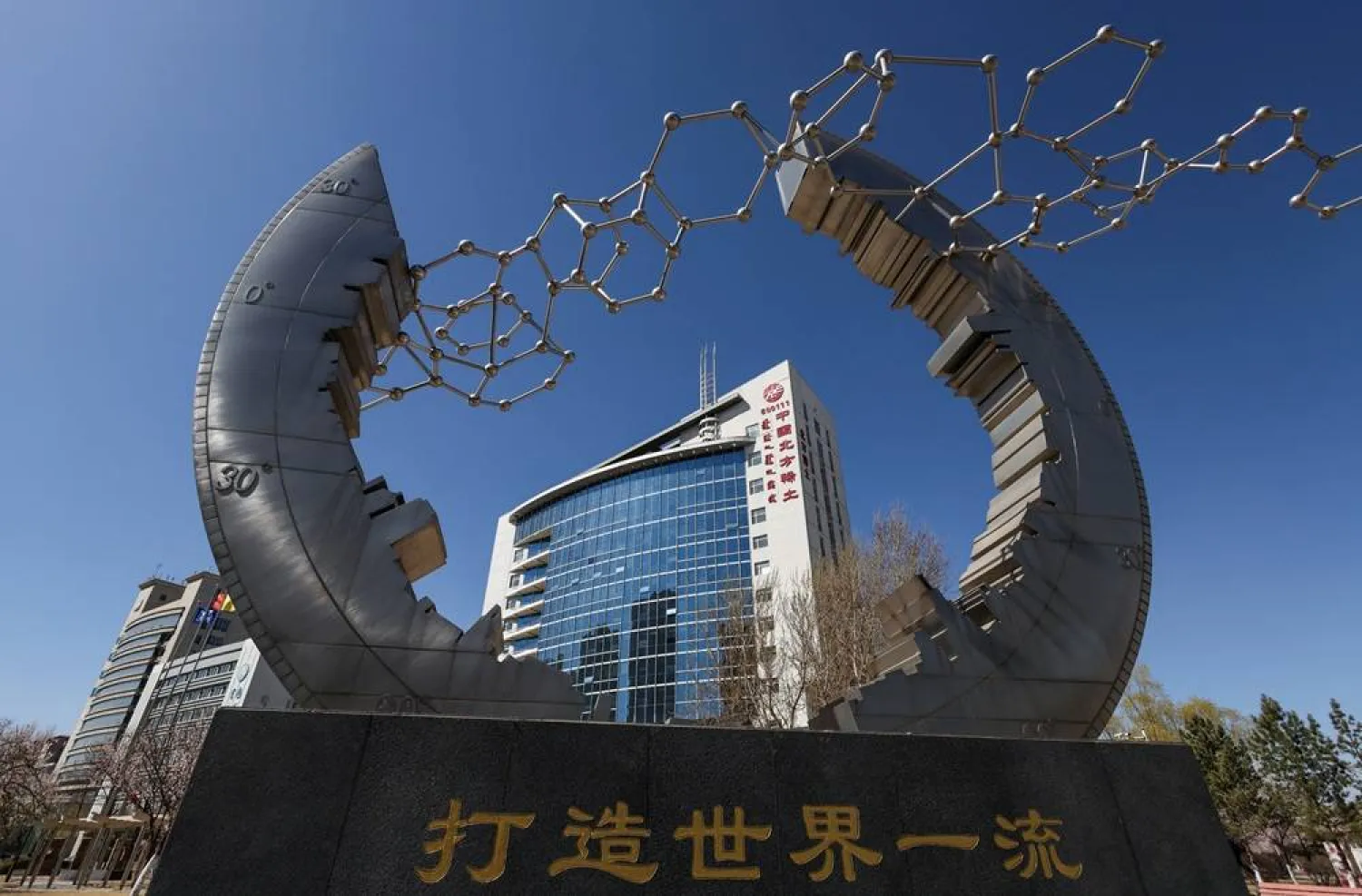
 A monument featuring a stylized molecular structure stands outside the office building of China Northern Rare Earth Group, with the Chinese characters “Build a world-class” inscribed on its base, in the country’s industry hub city Baotou, China, April 6, 2026. (Reuters)
A monument featuring a stylized molecular structure stands outside the office building of China Northern Rare Earth Group, with the Chinese characters “Build a world-class” inscribed on its base, in the country’s industry hub city Baotou, China, April 6, 2026. (Reuters)
TT

A Bachelor’s in Rare Earths? In China, There Are Schools for That

 A monument featuring a stylized molecular structure stands outside the office building of China Northern Rare Earth Group, with the Chinese characters “Build a world-class” inscribed on its base, in the country’s industry hub city Baotou, China, April 6, 2026. (Reuters)
A monument featuring a stylized molecular structure stands outside the office building of China Northern Rare Earth Group, with the Chinese characters “Build a world-class” inscribed on its base, in the country’s industry hub city Baotou, China, April 6, 2026. (Reuters)

Every year, several hundred young adults head to the steppes of northern China to learn about rare earths at schools like the Inner Mongolia University of Science and Technology.

After completing undergraduate study, they may venture a few kilometers up the six-lane Rare Earths Street in Baotou, where they can work for state-owned refiners that convert the critical minerals into magnets that power jet engines, electric vehicles and wind turbines. Or, the graduates may pursue further studies at the nearby Baotou Rare Earth Research Institute – roughly 150 km (93 miles) from the world’s largest rare earths mine.

US President Donald Trump and other Western leaders have pledged billions of dollars in investments to break China's chokehold on rare earths refining – a powerful lever Beijing has wielded in its trade war with Washington. But China still holds a significant advantage in the pipeline of talent that it has developed over decades in places like Baotou.

China has created an ecosystem of more than 40 specialist rare-earth laboratories that produce cutting-edge research, supplemented by at least 11 universities and technical colleges that collectively enroll more than 500 students annually in rare earths degree programs, a Reuters examination has found. That accumulated expertise sustains Beijing's grip on global supplies of refined rare earths.

Several US institutions have begun incorporating more of a focus on rare earths in their curriculum, though Reuters could not identify a school outside China that offers a specific undergraduate degree. The Ames National Laboratory in Iowa, whose remit goes beyond the mineral sciences, is also well regarded for its rare earths research.

The mining industry, however, has historically held little appeal for US students, many of whom see it as dirty and dated, executives and professors have said.

US institutions awarded just over 200 generalist undergraduate mining and metallurgical engineering degrees in 2023, the latest year with nationwide figures available, according to data compiled by the Colorado-based Society for Mining, Metallurgy ‌and Exploration.

Reuters for the ‌first time has tallied the scale of China's rare earths research and education system, drawing on research papers, course materials, and interviews with 11 Western mining executives and researchers ‌who have ⁠spent extensive time ⁠in China. The examination reveals a close relationship between academia and industry that helps Chinese companies produce rare earths quickly and at low cost.

"In China, I used to hire kids right out of university and they’re immediately productive," said Constantine Karayannopoulos, former chief executive of rare earths companies Neo Performance Materials and Molycorp. "Anywhere else I need to train them for three years."

Beijing is now tightly guarding this expertise: It has over the years increased restrictions on exports of rare earths technology and equipment.

China has also limited contact between industry professionals and foreigners, with some technicians having been ordered to surrender their passports, according to three people familiar with the matter.

They did not identify the government entity that confiscated the travel documents but said the crackdown intensified after Trump's "Liberation Day" tariffs in April 2025.

The National Development and Reform Commission, which is responsible for macroeconomic planning, and China's industry ministry did not respond to questions about the crackdown and how the country fosters rare earth experts. None of the Chinese research institutes cited in this story responded to comment requests.

US Department of Energy spokesperson Olivia Tinari said in response to questions about Washington's rare earths rivalry with Beijing that the agency was "investing in American workers, scaling innovation, and expanding domestic production of critical materials."

Billions of federal dollars have flowed into US mining schools, research programs and other related areas since 2024 ⁠as the country seeks to rebuild mining expertise. The US Congress is also considering legislation that would fund international cooperation with allies for mining education.
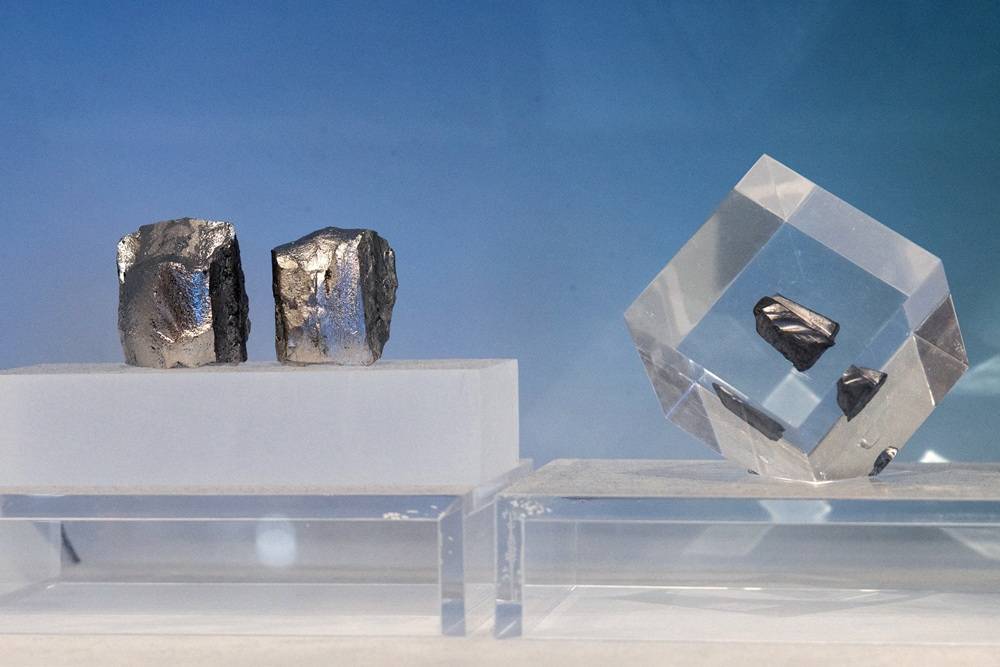
Hydrogen‑storage alloy ingots sit on displayed in the rare earth elements production section of the exhibition on China’s manufacturing achievements at the National Museum in Beijing, China, March 24, 2026. (Reuters)

SCHOOLS OF ROCK

Rare earths can be ‌difficult and costly to process. Refineries must contend with the 17 different rare earths that possess nearly identical chemical properties, a complexity which makes them difficult to isolate ‌from each other.

Extracting neodymium and praseodymium to use in electric vehicles, for example, requires first removing the less-desirable lanthanum and cerium that are more abundant in the Earth's crust. That separation process involves an intricate cocktail of acids, bases and other chemicals.

The West dominated rare ‌earths refining until the late 20th century. The process can, however, be environmentally damaging, leaving byproducts that can poison soil and water unless properly stored.

Excessive exposure to some types of rare earths can also harm the respiratory and nervous ‌systems.

Chinese researchers have documented the contamination of groundwater around a major storage site in Baotou, which is located near one of China’s major rivers. The government has also acknowledged that refining had caused “severe damage” to the environment.

China’s rare earth industry benefited in the 1980s and 1990s from generous tax incentives and an abundant supply of cheap labor. The government and affiliated entities continue to fund research institutes, and state lenders have offered financing on preferential terms to firms that mine critical minerals.

By the 1990s, the processing industry was "wiped out" in the West, said Ed Richardson, chief executive of US magnet producer Thomas & Skinner. "Therefore, the schools have not been educating mining students for this task."

In contrast, researchers, universities and industry continue to collaborate closely in China. Scientists at the National Engineering Research Center for Rare Earths in Beijing developed a new technology, which ‌state-owned Gansu Rare Earth New Materials adopted in 2023 at a refining facility that can churn out 50,000 metric tons of highly processed rare earths annually.

That is five times what Australia's Lynas Rare Earths, the largest rare earths company outside China, produced in the 2025 fiscal year.

China produces over 90% of the world's processed rare earths and rare ⁠earth magnets.

Gansu Rare Earth New Materials did not return a ⁠request for comment.

A spokesperson for Lynas, which has previously used Chinese consultants, said that China has “excellent facilities and research capability.” The company has since developed its own technical expertise, the spokesperson said.

Course materials published by some of the universities and reviewed by Reuters also show a heavy focus on meeting the needs of industry.

Students majoring in rare earths engineering at the Inner Mongolia University receive more than 100 hours of teaching in courses, such as rare earths chemistry and material science. One of the foundational courses is done in partnership with rare-earths labs and companies, and students have the option of attending lectures at corporate facilities.
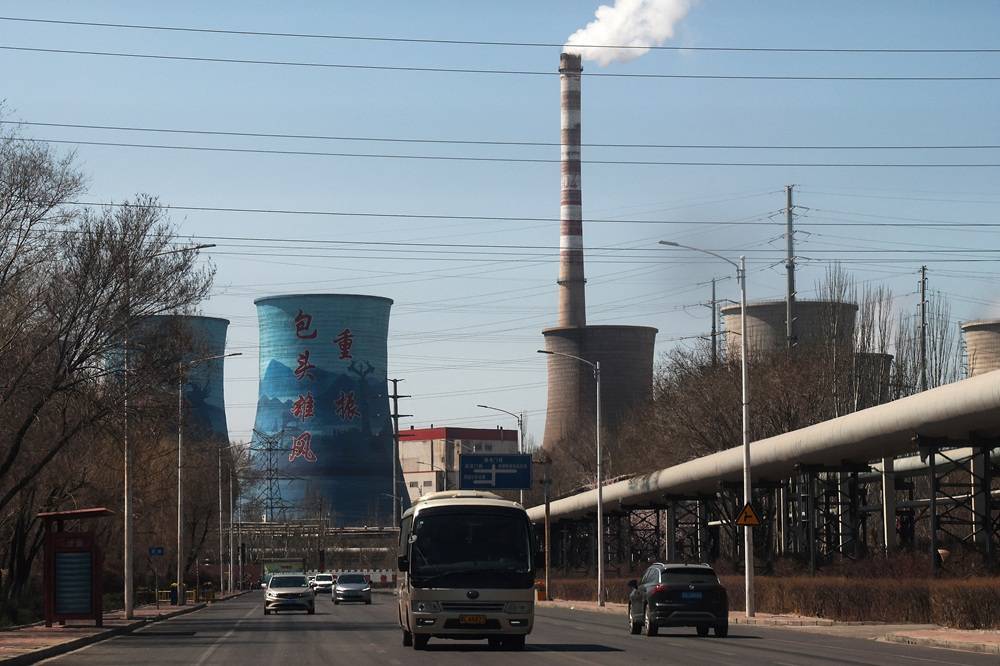
Vehicles drive along a road with facilities of Inner Mongolia Baotou Steel Union, also known as Baogang Group, forming the background, in China’s rare earth industry hub city Baotou, Inner Mongolia, China, April 6, 2026. (Reuters)

The 70 students that the Jiangxi University of Science and Technology (JXUST) told state media are set to enroll in its newly created rare earths degree will study the supply chain from processing and metallurgy to magnets. Before graduating, students will also work on research projects with companies.

David Parker, a rare earths expert at Britain's Durham University who reviewed the Chinese institute's course outline for Reuters, described it as "highly specialized" and reflective of the "pre-eminent position of China in rare earth science and engineering."

The education provided at the school “ensures a supply of knowledgeable and informed young people, who are well placed to find employment," he said.

Chinese rare earths engineering postgraduates are often more narrowly focused in their fields of research than would be the case elsewhere, said Portuguese physicist Luís Carlos, who has visited research institutes in the country for nearly 20 years.

"But if you think about people as small parts of a big machine, then this is good for the machine," he said.

PIPELINE PROBLEM?

Some Chinese universities have explicitly acknowledged that they are training geopolitical assets.

Rare earths are "core bargaining chips" in global politics, Li Chaozhong, dean of JXUST's rare earths program, told state broadcaster CCTV in April.

The university's new program is designed not only for science, he said. It is "also to ensure that China continues to maintain its global leading position in the development of rare earth resources."

There are some examples of groundbreaking work in the West.

Valor Metals, for instance, is using processes developed by the University of Illinois at Urbana-Champaign that the company says are potentially 10 times cheaper and faster than those deployed in China. The technology, however, has not been tested at scale.

The Colorado School of Mines, widely regarded as one of the world's top mining schools, is developing two new critical minerals research facilities with the Energy Department to complement existing programs. It expects the first to open in 2027.

The school's mining-related undergraduate programs have in recent years gained more attention and enrollment.

"The US minerals industry needs to be clear that we need the talent and that this is a great career path," said Kunal Sinha, Valor's CEO.



Ministry of Tourism Highlights Investment Opportunities at FHS Saudi Arabia 2026

The Ministry highlighted Saudi Arabia’s growing appeal as a tourism investment destination and showcased the wide range of opportunities emerging across the Kingdom’s rapidly developing tourism sector. (SPA)
TT

Ministry of Tourism Highlights Investment Opportunities at FHS Saudi Arabia 2026

The Ministry highlighted Saudi Arabia’s growing appeal as a tourism investment destination and showcased the wide range of opportunities emerging across the Kingdom’s rapidly developing tourism sector. (SPA)

Saudi Arabia’s Ministry of Tourism participated in the Future Hospitality Summit (FHS) Saudi Arabia 2026, held in Riyadh from June 22 to 24, bringing together investors, developers, operators, and leading global brands from across the hospitality and tourism sectors.

Through its participation as the Strategic Enabler of the Kingdom's premier hospitality investment forum, the Ministry highlighted Saudi Arabia’s growing appeal as a tourism investment destination and showcased the wide range of opportunities emerging across the Kingdom’s rapidly developing tourism sector, reported the Saudi Press Agency on Wednesday.

In his opening address, Deputy Minister for Tourism Destinations Enablement Eng. Mahmoud Abdulhadi said: “Saudi Arabia is not asking investors to invest in a promise. It is inviting them into a market already moving at scale.”

Highlighting the breadth of this opportunity, he added: “Saudi tourism is not built on one project, one city, or one market segment. It is a national portfolio of destinations shaped for diverse demand.”

Abdulhadi also participated in a fireside chat titled “From Opportunity to Bankability: Saudi Tourism’s Next Investment Chapter,” where he stressed that Saudi Arabia’s tourism sector has entered a new phase focused on elevating the quality of the visitor experience.

“My advice to investors is simple: come, explore, and engage with the ecosystem. The opportunity is not only in building assets, but in creating high-quality experiences for the traveler,” he said.

Throughout the three-day event, the Ministry of Tourism presented Saudi Arabia’s evolving tourism landscape, highlighting its efforts to foster an investment-enabling environment and unlock new opportunities across the Kingdom’s destinations in support of Saudi Vision 2030 and the sector’s long-term growth.

The Ministry also introduced local and international investors to its targeted incentive programs and initiatives designed to support their investment journey, most notably the Tourism Investment Enablers Program (TIEP) and the Hospitality Investment Enablers (HIE) initiative.

During FHS, the Ministry launched the Global Investment in Saudi Tourism report, which highlights key growth indicators in the sector, the expansion of leading global hospitality brands in the Saudi market, and ongoing efforts to strengthen the Kingdom’s position as a premier global destination for tourism investment.

The Ministry of Tourism’s participation in FHS Saudi Arabia 2026 forms part of its ongoing efforts to engage local and international investors and partners, unlock high-quality investment opportunities, and support private sector participation in the development of the tourism industry, advancing the objectives of the National Tourism Strategy and Saudi Vision 2030.


Gold Drops Below Key $4,000 Level as Dollar Firms, Rate Hike Bets Rise

FILED - 16 March 2023, Bavaria, Munich: FILE PHOTO - Gold bars and coins lie on the table at the Precious metal dealership Pro Aurum. Photo: Sven Hoppe/dpa
TT

Gold Drops Below Key $4,000 Level as Dollar Firms, Rate Hike Bets Rise

FILED - 16 March 2023, Bavaria, Munich: FILE PHOTO - Gold bars and coins lie on the table at the Precious metal dealership Pro Aurum. Photo: Sven Hoppe/dpa

Gold prices fell more than 3% and traded below a key psychological level of $4,000 per ounce, under pressure from a firmer US dollar and growing expectations of interest rate hikes.

Spot gold fell 3.4% to $3,968.41 an ounce as of 1312 GMT, after hitting its lowest level since November 2025.

US gold futures declined nearly 4% to $3,984.40.

The US dollar firmed, making dollar-priced bullion more expensive for holders of other currencies.

Traders have ramped up bets on US interest rate hikes this year after the US central bank struck a hawkish tone at its latest policy meeting and as fears of inflationary pressures stemming from the Iran war persist.

"The market pricing a rate hike as soon as September due to a hawkish Fed, a surging dollar at 13-month highs combined with lower inflation expectations are putting heavy pressure on precious metals," Tai Wong, an independent metals trader, said.

"For gold, there is support just under $3,900 and central bank purchases continue, so a collapse is unlikely, but expect a potentially long period of consolidation as the gold trade is now out of favor," he added.

Gold becomes less attractive to investors when interest rates rise because it offers no yield.

Spot gold, which scaled a record peak of $5,594.82 in late January, has since shed over $1,600 an ounce.

ING analysts cut their gold forecasts, now expecting prices to average $4,300 an ounce in the third quarter of 2026 and $4,600 in the fourth, compared with their previous projections of $4,850 and $5,000, respectively, according to Reuters.

Investors are also awaiting US Personal Consumption Expenditures data, the Fed's preferred inflation measure, due on Thursday for further signals on the monetary policy outlook.

More hawkish signals from Fed officials or economic data that supports the argument for higher rates may translate to further downside risk for gold, said Lukman Otunuga, senior research analyst at FXTM.

Among other metals, spot silver fell 6% to $58.28 per ounce after hitting its lowest level since December 2025.

Platinum lost 4.3% to $1,580.76, and palladium dropped 4.9% to $1,177.50.


Oil Extends Slide to More than 1% on Expectations of Smoother Crude Flows via Hormuz

Storage tanks for crude oil, gasoline, diesel, and other refined petroleum products in Carson, California (Reuters)
TT

Oil Extends Slide to More than 1% on Expectations of Smoother Crude Flows via Hormuz

Storage tanks for crude oil, gasoline, diesel, and other refined petroleum products in Carson, California (Reuters)

Oil prices fell more than 1% on Wednesday, extending this week's losses to hit fresh four-month lows on signs that more oil tankers are set to move out of the Strait of Hormuz.

Brent crude futures were down $1.37, or 1.8%, at $75.71 a barrel by 0805 GMT. US West Texas Intermediate slipped by $1.08, or 1.5%, to $72.13.

Brent touched a low of $75.60, its weakest level since February 27, the day before the initial US-Israeli strikes on Iran. WTI fell as low as $72.03, the weakest since March 3.

"While there are early encouraging signs of increased tanker activity, the market is pricing in the broader scenario of Iranian oil re-entering the global market and the Strait of Hormuz normalising," said Tim Waterer, chief market analyst at KCM Trade.

"If sanctions are eased, Iranian production and exports could ramp up relatively quickly given the substantial amount stored on tankers — we are likely talking weeks rather than months," Waterer added, Reuters reported.

Prices have also come under pressure this week from the 60-day sanctions waiver Washington granted Tehran after initial peace talks, allowing Iran to sell oil, and from an easing of hostilities in Lebanon, with prices approaching pre-war levels.

Ship-tracking data showed that three stranded supertankers passed through the strait on Tuesday. The UN shipping agency said an evacuation plan is under way to enable hundreds of stranded ships to sail through the strait after the US-Iran ceasefire deal.

On Tuesday, Oman and Iran agreed to press on with discussions about managing navigation in the strait. US Secretary of State Marco Rubio said that any attempt by Iran to levy transit fees would violate international law.

Uncertainty remains over the durability of the accord, however. US President Donald Trump said on Tuesday that Iran had agreed to nuclear inspections into "infinity", though Tehran said it had made no such concession.

"Markets are currently assigning too much confidence to a favorable outcome without fully discounting the risks associated with unresolved nuclear issues and inspection disputes," said Mark Malek, CIO at Siebert Financial.

Investors are also watching how quickly Middle Eastern producers can restore exports and whether more ships will enter the region.

Meanwhile, US crude stocks fell by 765,000 barrels in the week to June 19, market sources said, citing data from the American Petroleum Institute.

Nine analysts polled by Reuters estimated, on average, that crude inventories fell by about 4.5 million barrels in the past week.