



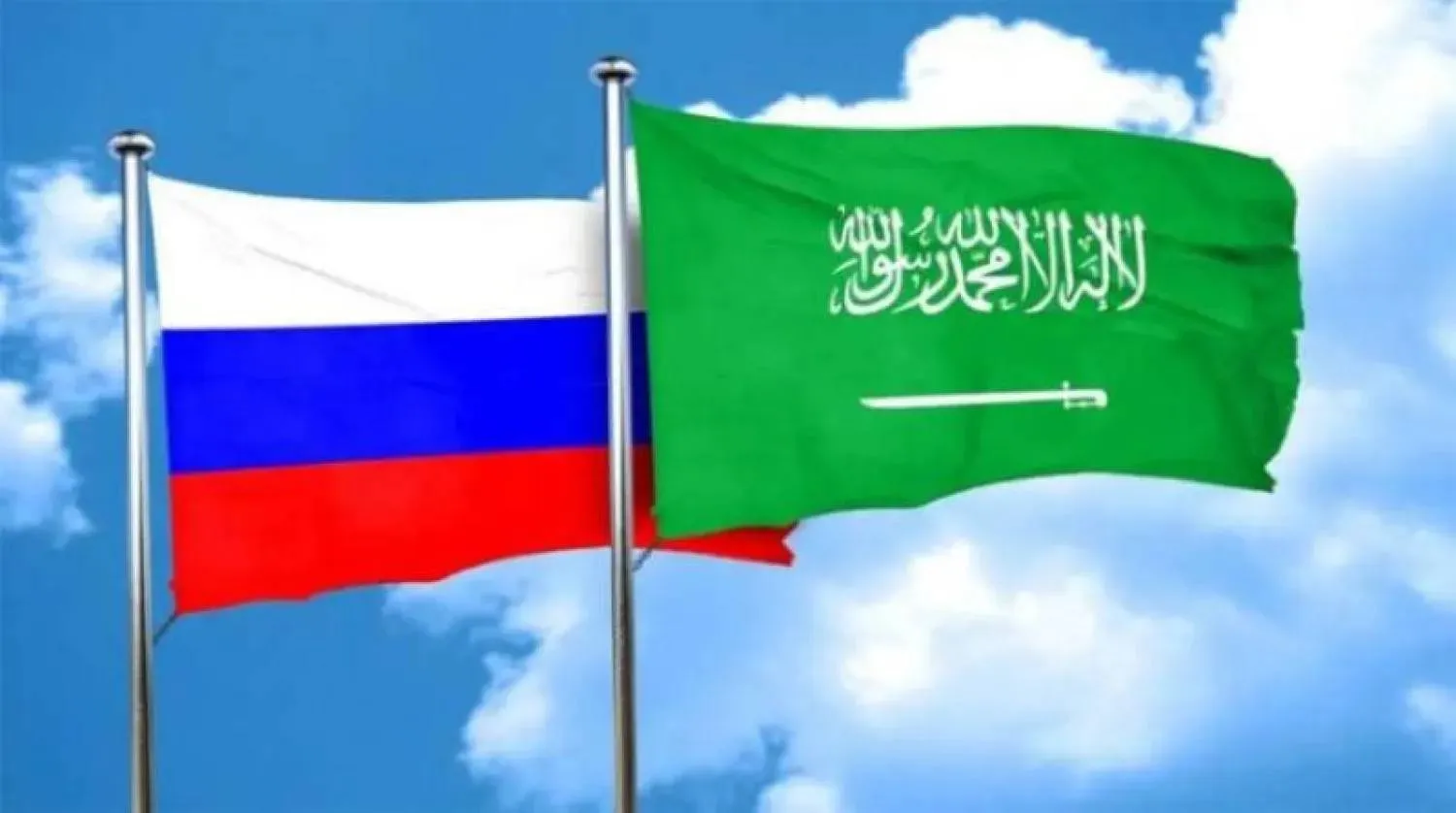

Economic relations between Saudi Arabia and Russia have entered an advanced stage of strategic transformation, moving beyond traditional cooperation in energy markets toward a multidimensional partnership encompassing investment, technology, industry, and space. This development comes amid growing coordination between the two countries, strengthening their influence within the global economic landscape and providing greater stability to energy markets in an increasingly volatile geopolitical environment.
This momentum in bilateral relations coincides with Saudi Arabia’s prominent role as a principal guest of honor at the St. Petersburg International Economic Forum, reflecting the Kingdom’s growing presence at major international economic gatherings and underscoring the level of mutual trust between Riyadh and Moscow. The forum also served as an important platform for signing several agreements and memoranda of understanding that have expanded cooperation in investment, technology, and industry, advancing the partnership toward deeper strategic integration.
According to economists and specialists, the Saudi-Russian partnership has evolved beyond a conventional bilateral relationship into an influential balancing force within the international economic system, particularly through its contribution to energy market stability and support for economic diversification efforts aligned with the goals of Vision 2030, including increasing the contribution of non-oil sectors and localizing knowledge and expertise.
In this context, Saudi Shura Council member Fadl bin Saad Al-Buainain told Asharq Al-Awsat that the Kingdom has reshaped its economic relations in recent years around principles of balance and openness toward major global economic powers. He noted that Russia represents an important partner given its weight in global energy markets, making enhanced cooperation with Moscow a strategic choice that serves the interests of both countries while supporting the stability of international markets.
He added that coordination between Riyadh and Moscow—whether bilaterally or through the OPEC+ alliance—has helped achieve notable balance in oil markets and mitigate sharp fluctuations driven by geopolitical tensions. According to Al-Buainain, this model of cooperation has proven effective not only in the energy sector but also across broader economic and development fields.
He pointed out that the most significant areas of cooperation recently agreed upon during the St. Petersburg Economic Forum include the economy, energy, and food security, in addition to defense industries and technology, as well as important agreements facilitating travel and mobility between the two countries.
Al-Buainain emphasized that mining, technology, and space represent key pillars of bilateral cooperation due to their strategic importance to both sides. He explained that mining is among the Kingdom’s most promising sectors and a priority within its economic diversification plans, making it a natural area for cooperation with Russia. He also highlighted technology cooperation—particularly in artificial intelligence, digital transformation, and space technologies—as a priority under Vision 2030 because of its long-term strategic value.
He stressed the importance of moving from agreements to implementation, noting that serious efforts to activate these understandings would generate tangible economic benefits and provide greater momentum for the partnership in the coming years, thereby strengthening the strategic relationship between the two countries.
High-Quality Bilateral Cooperation
For his part, Dr. Abdulrahman Baashen, head of the Al-Shorouq Center for Economic Studies in Jazan, southern Saudi Arabia, said there is a growing Saudi-Russian drive to elevate bilateral cooperation to its highest possible level. He noted that this would lay the groundwork for a distinctive form of economic and industrial integration and establish a joint framework for addressing geopolitical challenges in the region and Europe, helping preserve economic stability at both the regional and international levels.
Baashen told Asharq Al-Awsat that relations between Riyadh and Moscow have accelerated across multiple sectors as the culmination of agreements signed over previous years, alongside ongoing coordination within OPEC+. He noted that this cooperation has supported global energy market stability amid geopolitical tensions, including the repercussions of the US-Iran conflict, while also expanding into technology, industry, space, and satellite-related fields.
He believes that several Vision 2030 initiatives have found significant opportunities for integration with Russian partnerships. In his view, bilateral cooperation has become a long-term strategic path carrying both political and economic dimensions, helping shape a new reality amid rapidly changing geopolitical conditions while providing greater opportunities for economic diversification and political stability.
Baashen also noted that the Saudi-Russian Joint Governmental Committee has helped launch more than 70 joint projects valued at over $70 billion. He added that the signing of 13 agreements and memoranda of understanding on the sidelines of the St. Petersburg Forum reflects a clear commitment to high-quality bilateral cooperation aimed at diversifying the economy, increasing joint investments, localizing advanced technologies, strengthening both countries’ regional and global presence, and fostering more balanced international relations that support economic and political stability worldwide.
Riyadh and Moscow as Drivers of Economic Stability
Former Chairman of the Federation of Saudi Chambers, Engineer Abdullah Al-Mubty, told Asharq Al-Awsat that Saudi Arabia and Russia maintain “full and continuous coordination to manage market imbalances through joint decisions to increase or reduce production, ensuring fair prices that serve both producers and consumers.” He explained that the importance of this cooperation stems from the fact that the two countries rank among the world’s largest oil producers and exporters. He added that Vision 2030’s objectives of economic diversification, attracting investment, and localizing technology make Russia a vital partner in Saudi Arabia’s pursuit of balanced international relations.
Al-Mubty argued that this Saudi-Russian alignment has created a safety net that prevents oil prices from either collapsing or soaring uncontrollably. The presence of both countries, he said, helps maintain global economic balance, ensures secure energy supplies, and supports the uninterrupted flow of oil to meet international demand. Beyond energy coordination, he noted, the two countries have also moved toward broader economic agreements aimed at promoting global stability.
Mining, Technology, and Space
Al-Mubty said that mining, technology, and space have become the principal pillars shaping the future of Saudi-Russian cooperation. Both countries are actively working to implement joint investment agreements that support economic diversification while advancing knowledge-transfer initiatives and enhancing the resilience of supply chains between them.
Regarding the mining sector, he highlighted the significant opportunities available to Saudi Arabia through Russian expertise, particularly in exploration activities. Russia’s long-standing leadership in geological surveying, he explained, can contribute substantially to assessing the Kingdom’s mineral resources and expanding joint investment opportunities in rare minerals. He also noted that Saudi Arabia’s major investment opportunities have become a strong attraction for leading Russian mining companies.
In the technology sector, recent developments have opened promising avenues for cooperation focused primarily on integrating artificial intelligence and digital transformation applications to improve operational efficiency and competitiveness in Saudi industry and mining. In this regard, Al-Mubty stressed the strategic importance of the partnership between the Public Investment Fund and the Russian Direct Investment Fund, manifested through dedicated investment vehicles aimed at financing and localizing advanced technologies.
He also highlighted the longstanding cooperation in the space sector, noting that agreements related to space exploration have paved the way for a new phase of joint work. This cooperation now extends to ongoing coordination with the Russian space agency Roscosmos in training Saudi personnel for space missions and collaborating on satellite navigation systems.
Investment and Trade
Al-Mubty stated that current trade exchange between Riyadh and Moscow stands at approximately $4 billion. He also expects Saudi Arabia to attract around $1.5 billion in direct Russian investment over the coming years. According to him, both countries are clearly committed to expanding these figures through new joint ventures, while the Saudi-Russian Business Council has set a strategic target of increasing bilateral trade to $12 billion in the years ahead.
He concluded that close cooperation between Riyadh and Moscow has become an indispensable pillar of global economic and energy-market stability by helping maintain a delicate balance between supply and demand. Expanding this partnership, he added, directly contributes to strengthening food security and diversifying investments in key sectors such as technology and agriculture, reducing the impact of geopolitical volatility on economic growth in both countries. He emphasized that the partnership’s greatest significance lies in three core areas: stabilizing energy markets, strengthening food security, and expanding non-oil investments.
A Deeply Rooted Partnership
Saudi economist Dr. Ibrahim Al-Omar, supervisor of the consultancy firm Sharah Studies, told Asharq Al-Awsat: “The partnership between Riyadh and Moscow extends beyond oil toward global economic stability. Saudi-Russian relations are no longer tied solely to the oil barrel, even though oil remains their backbone.”
Al-Omar elaborated on the operational dimensions of the partnership, saying: “As the two pillars of OPEC+, Saudi Arabia and Russia have led the coalition’s decisions to raise production ceilings by roughly three million barrels per day during 2025—equivalent to nearly 3 percent of global demand—through carefully phased increases that can be paused or reversed whenever market stability requires.”
Discussing recent crises, he added: “When the US-Iran conflict intensified and disruptions affected supplies through the Strait of Hormuz last May, most of the agreed production increase came from Saudi Arabia and Russia. This was the clearest demonstration that coordination between the two major producers acts as a safety valve that restrains volatility, eases inflationary pressures, and protects energy-dependent economies from geopolitical shocks.”
According to Al-Omar, the center of gravity in the relationship is increasingly shifting from traditional trade toward manufacturing and knowledge transfer. While energy in all its forms—conventional, renewable, and nuclear—remains at the forefront, greater emphasis is now being placed on industry, mining, the digital economy, artificial intelligence, and space sciences.
He said: “I saw this clearly during the Saudi Minister of Industry and Mineral Resources’ visit to Russia, where mining exploration opportunities covering 50,000 square kilometers across the Nuqrah, Suhaibrah, and Al-Duwaihi belts were presented. Discussions also included launching a joint technology platform worth $1 billion and expanding space cooperation that leverages Russia’s extensive experience in the field.”
Reviewing the broader indicators, Al-Omar said: “These developments are the product of a well-established institutional framework managed efficiently by the Joint Governmental Committee, which held its ninth session in Riyadh last December. The figures speak for themselves: more than 70 joint projects worth over $70 billion, alongside non-oil trade that surged from SAR 1.84 billion ($490.6 million) in 2016 to SAR 12.5 billion (around $3.3 billion) in 2024. In addition, 13 new agreements and memoranda of understanding were signed during the latest St. Petersburg Forum, where Saudi Arabia participated as the guest of honor.”
Al-Omar concluded that strengthening strategic cooperation between Riyadh and Moscow is no longer merely a bilateral matter. Instead, it has become a genuine and decisive balancing factor within an increasingly turbulent international system. It supports the goals of Vision 2030 by diversifying sources of income, localizing knowledge, and increasing the contribution of the non-oil sector, thereby fostering economic stability that extends beyond the two countries to the wider region and the global economy.


