


Lebanese Products Return to Saudi Market with Aims to Exceed Pre-2021 Figures

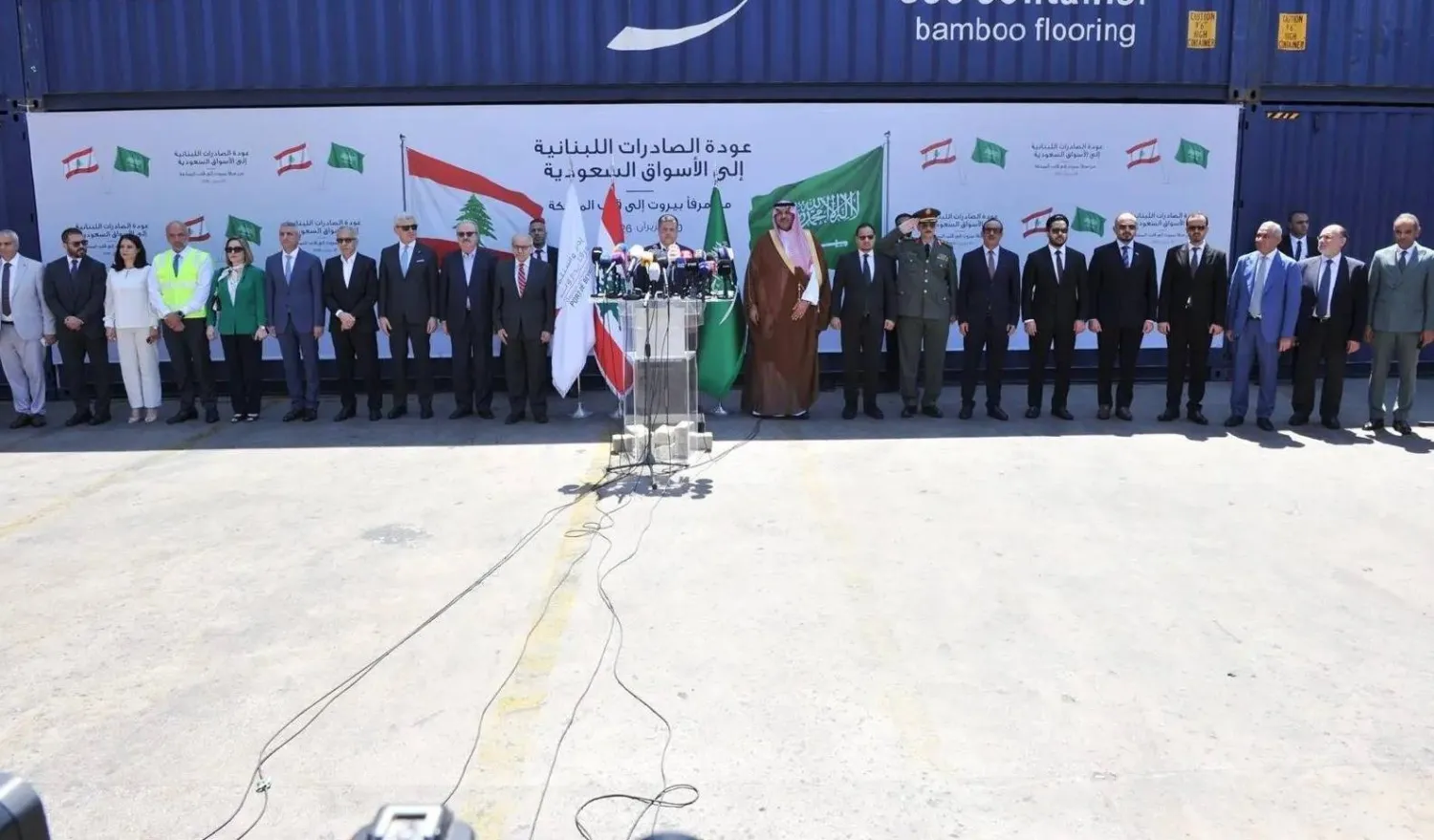
Saudi Ambassador to Beirut Fahd Al-Dosari and officials from both countries at Beirut port at the launch of Lebanese exports to Saudi Arabia. (SPA)
TT

Lebanese Products Return to Saudi Market with Aims to Exceed Pre-2021 Figures

Saudi Ambassador to Beirut Fahd Al-Dosari and officials from both countries at Beirut port at the launch of Lebanese exports to Saudi Arabia. (SPA)

Lebanese products are once again entering the Saudi market, carrying with them more than just goods and commodities; they carry a message of confidence that has been rebuilt after years of pause, and an economic opportunity that Lebanon has been eagerly awaiting.

The return of the Saudi market - which alone represents about 85 percent of the size of the Gulf market - is not only a restoration of what was lost when exports reached about $378 million before the 2021 ban, but also opens the door to greater ambitions to expand the Lebanese presence in this vast market.

This strategic shift is supported by advanced digital inspection mechanisms that meet current requirements, confirming that the transition to the greater Gulf market is no longer based on intentions, but on compliance with strict standards that ensure the stability and preservation of this historic partnership.

On Saturday, the "whistle" sounded from Beirut for the return of Lebanese exports to the Kingdom, after a long ban of five years, which was imposed following widespread smuggling of contraband to the Kingdom.

Rabih el-Amine, Chairman of the Lebanese Executives Council, an economic and social gathering that includes a group of elite Lebanese professionals residing in the Kingdom and Gulf countries, told Asharq Al-Awsat that the return of Lebanese exports to the Kingdom is a step that goes beyond its direct commercial dimension.

"In essence, it is a restoration of trust, which represents the real capital in any sustainable economic relationship," he stressed.

"With this decision, Beirut is regaining its gateway to the most important export markets of all, bringing life back to its productive sectors in agriculture and industry, and hope to thousands of farmers in the Bekaa, the south, and the north, as well as to the factories that have survived in the most difficult conditions," he added.

He said the ban was lifted "at a time when the country's economy needs everything that drives it forward and secures job opportunities and the flow of hard currency."

Trade exchange

As for the Kingdom, el-Amine said that the decision, which came in implementation of the directives of Prince Mohammed bin Salman, Crown Prince and Prime Minister, and in response to the request of Lebanese President Joseph Aoun and Prime Minister Nawaf Salam, "embodies a firm Saudi position in support of Lebanon's stability and sovereignty over all its territory."

"It confirms that Beirut is regaining its role as a reliable partner whose territory is not used as a launching pad to harm its brothers," he stated.

"More importantly, this return was not based on intentions, but on concrete measures, from modern scanning devices in the ports of Beirut and Tripoli to the joint control mechanism that allows the port of Jeddah to view the results of the inspection as soon as the goods pass through," he explained.
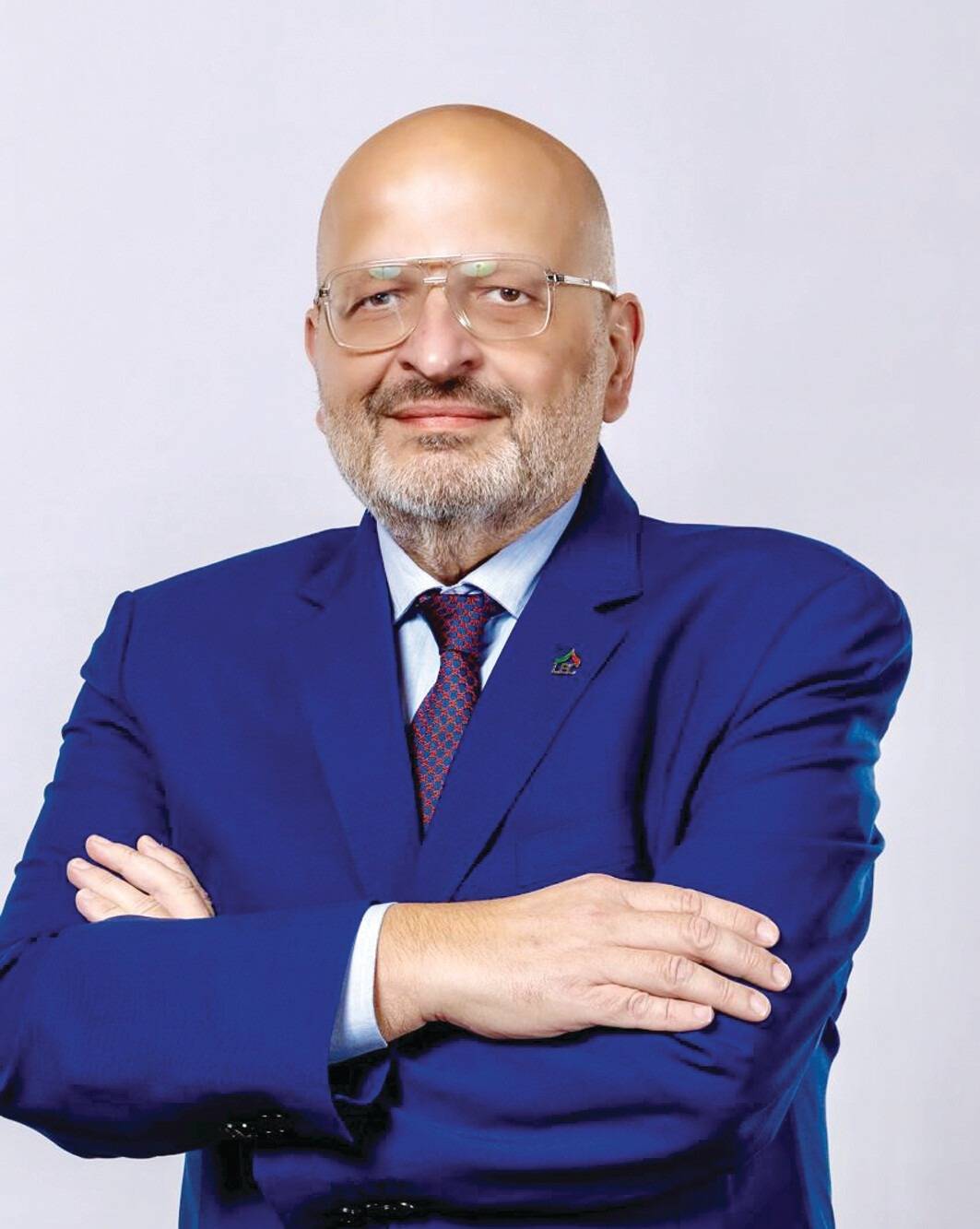
Rabih el-Amine, Chairman of the Lebanese Executives Council.

He revealed that the Kingdom topped the Lebanese export markets before the ban. "In 2014 and 2015, it ranked first with about 12 percent of our total exports, with a value of about 378 million dollars in 2014, according to data from the Lebanese Customs and the Chamber of Commerce, while bilateral trade was estimated at hundreds of millions of dollars annually."

"The 2021 decision reduced this presence to almost zero. Our share in the Saudi market fell to about 3 percent in 2021, while the Kingdom's exports to Beirut continued and reached about $870 million in 2024, which reveals the size of the imbalance that we are seeking to correct today," el-Amine remarked.

The ambition, as expressed by PM Salam, is "not only to restore the figure to what it was before the ban, but to surpass it," he continued.

"The Saudi market alone represents about 85 percent of the size of the Gulf market, and if we offer a high-quality, competitively priced product, we can double our share, not just regain it," he noted.

Export products

Agricultural and food products top Lebanon's exports to Saudi Arabia, such fruits and vegetables including apples, grapes, citrus fruits, cherries, and potatoes, as well as food industries and canned products.

These are commodities linked to production, processing, and marketing chains that employ thousands of families. In addition, there are high-value Lebanese categories that the Kingdom has consistently imported, from jewelry and precious metals to cosmetics, essential oils, and some industrial and pharmaceutical products.

Plastics and their products lead Saudi exports to Lebanon, followed by petroleum products, fuel, and mineral oils, then pharmaceutical and processed foodstuffs.

Demands of the Saudi market

El-Amine said that the Lebanese Executives Council provides exporters with an accurate reading of the Saudi market and its requirements, in terms of specifications, standards, compliance and logistics services.

"We connect Lebanese companies with their potential partners through bilateral meetings, delegations and forums, and we accompany entrepreneurs in preparing their products to the level of quality that this market deserves," he added.

He called for protecting and preserving this step in the long term through two tracks. "The first is to tighten security measures at crossings and borders in a way that prevents any recurrence of what led to the ban; and the second is to harmonize tax and financial procedures between the two countries," he suggested.

"It is the responsibility of the Lebanese exporters themselves to align their products with the specifications and standards adopted in the Kingdom, as the quality of the product and its compliance with the standards are its permanent pass to this market," he stressed.



Riyadh to Host Inaugural Water Regulation Forum in November

A night view of the Saudi capital Riyadh. (SPA)
TT

Riyadh to Host Inaugural Water Regulation Forum in November

A night view of the Saudi capital Riyadh. (SPA)

The Saudi Water Authority (SWA) will launch the inaugural edition of the Water Regulation Forum in Riyadh on November 1. Established as an annual global platform for advancing regulatory excellence and international cooperation across the water sector, the forum is being organized in strategic partnership with the International Desalination and Reuse Association (IDRA).

A statement from SWA on Sunday said the forum will bring together water regulators, policymakers, experts, and sector leaders from around the world, with the participation of 28 speakers from 24 countries, four international organizations, and 25 government entities that are counterparts to the authority.

The diverse participation reflects the range of regulatory experiences and models represented and provides an opportunity to showcase regulatory practices and exchange expertise on developing regulatory frameworks and governance across the water sector.

The forum comes amid rapid developments across the global water sector that require regulatory frameworks capable of keeping pace with changes in resources, services, technologies, and investment models. Approaches to these developments vary from one country to another according to the nature of their water resources and their institutional and regulatory frameworks.

The forum will address key issues shaping water-sector regulation worldwide, including governance, scarcity management, compliance, utility performance, private-sector partnerships and financing, water reuse, and regulatory integration, drawing on a diverse range of international experiences.

The forum will be held alongside the IDRA World Congress 2026, hosted by the Kingdom in Riyadh from November 1-5, under the patronage of Minister of Environment, Water and Agriculture Abdulrahman Alfadley.

The forum is expected to announce the launch of its first edition in 2027, serving as a platform for knowledge and expertise exchange and for strengthening cooperation among regulatory authorities worldwide.


Saudi Maritime and Logistics Congress Kicks off in Jeddah in October

The Jeddah Superdome will host the 2026 edition of the congress. (Saudi Maritime and Logistics Congress)
TT

Saudi Maritime and Logistics Congress Kicks off in Jeddah in October

The Jeddah Superdome will host the 2026 edition of the congress. (Saudi Maritime and Logistics Congress)

The Saudi Maritime and Logistics Congress will kick off in Jeddah on October 21 and 22, with the participation of more than 15,000 specialists from over 90 countries, coinciding with the Kingdom's efforts to boost its position as a global logistics hub.

The Jeddah Superdome will host the 2026 edition of the congress, which brings together government officials, representatives from port authorities, shipping companies, logistics operators, investors, and major buyers in the sector.

The event comes at a time when the Kingdom is focusing on developing its maritime transport infrastructure and logistics services under the National Transport and Logistics Strategy. This strategy aims to increase port capacity to 40 million twenty-foot equivalent units (TEUs) annually by 2030.

The congress will explore opportunities to develop port capacity, logistics zones, shipping corridors, maritime transport services, and digital infrastructure, alongside shifts in the energy sector, infrastructure and technology investments, and supply chain resilience.

The congress program will focus on five key themes, including trade corridors and connectivity; ports, logistics, and industrial competitiveness; the energy transition; infrastructure investment and economic development; and technology and resilience.

The Saudi Ports Authority (Mawani) and the Transport General Authority (TGA) are participating as main partners in the 2026 edition, while the event is being organized in cooperation with Bahri and Seatrade Maritime Saudi, a subsidiary of Informa.


Saudi Ministry of Industry Participates in 63rd Damascus International Fair

26 August 2026, Syria, Damascus: People walk at the Damascus Fair Grounds during the opening ceremony of the 63rd Damascus International Fair. (dpa)
TT

Saudi Ministry of Industry Participates in 63rd Damascus International Fair

26 August 2026, Syria, Damascus: People walk at the Damascus Fair Grounds during the opening ceremony of the 63rd Damascus International Fair. (dpa)

The Saudi Ministry of Industry and Mineral Resources is participating in the 63rd Damascus International Fair, taking place from August 26 to September 4.

The participation aims to strengthen economic and industrial integration between the two countries, showcase the growth and development of Saudi industries, and expand access for Saudi goods and services to regional markets.

Saudi non-oil exports to Syria reached SAR1.23 billion in 2025, representing growth of more than 123% compared to 2024.

The fair serves as a key platform for fostering international investment partnerships across a wide range of economic sectors, particularly energy, industry, and technology.

The 63rd edition brings together around 1,000 entities from 60 countries, as well as Syrian ministries, institutions, and artisans, highlighting the fair’s significant economic and developmental impact.