

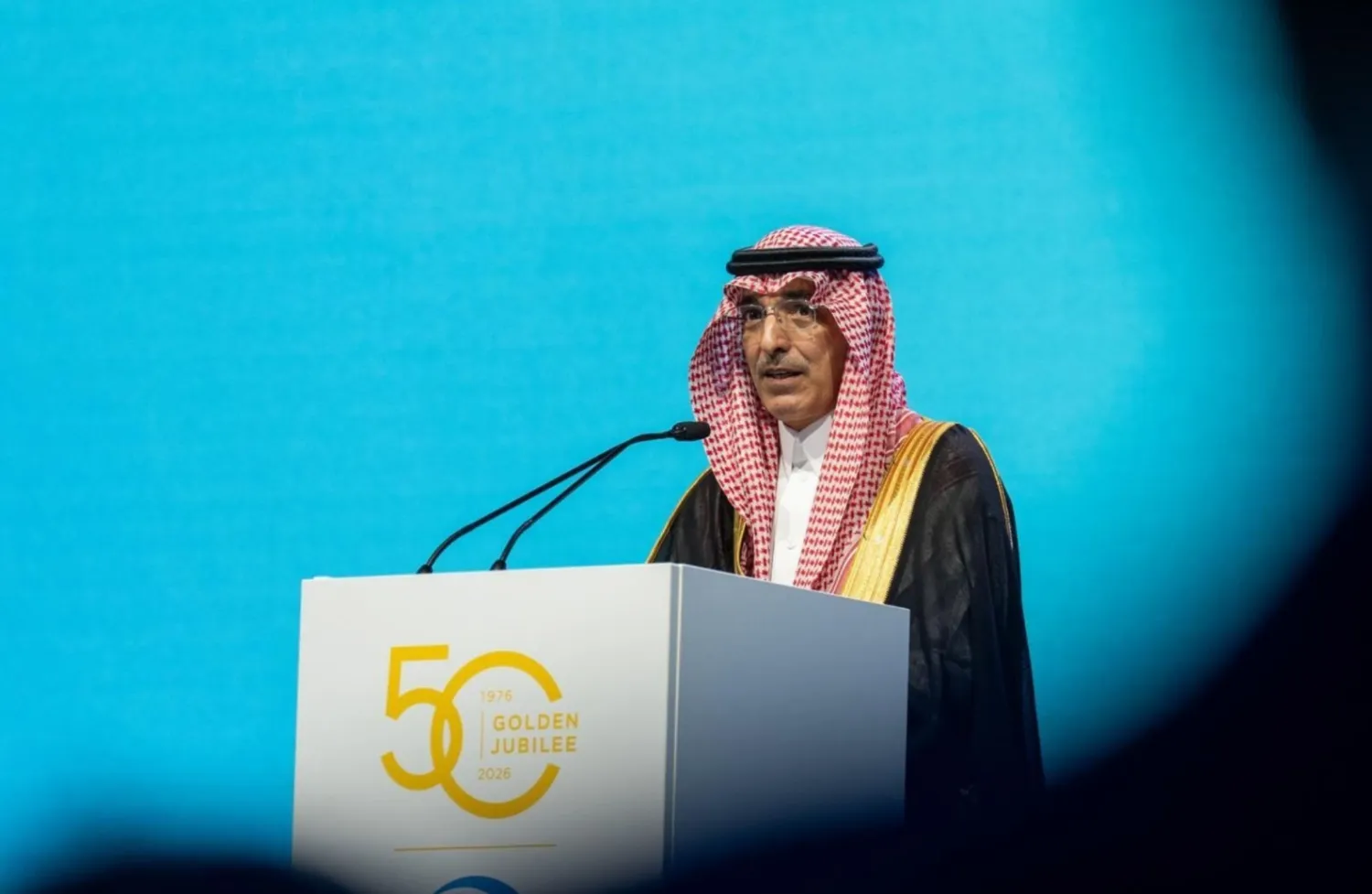

Al-Jadaan: Economic Resilience, Partnerships Are Key to Meeting Global Development Challenges

Saudi Finance Minister Mohammed Al-Jadaan addresses the OPEC Fund Development Forum in Vienna. (X)
TT

Al-Jadaan: Economic Resilience, Partnerships Are Key to Meeting Global Development Challenges

Saudi Finance Minister Mohammed Al-Jadaan addresses the OPEC Fund Development Forum in Vienna. (X)

Saudi Finance Minister Mohammed Al-Jadaan warned that the world is facing increasingly difficult economic conditions shaped by uncertainty, fragmentation, geopolitical conflicts, trade tensions, debt risks, and challenges related to energy security and broader security concerns, factors he said threaten to undermine global development goals.

Addressing the OPEC Fund Development Forum in Vienna, held to mark the 50th anniversary of the OPEC Fund for International Development (OFID), Al-Jadaan described the milestone as an opportunity not only to celebrate the institution’s achievements over the past half-century, but also to reflect on lessons learned and consider the challenges and opportunities that lie ahead.

Over the past five decades, the OPEC Fund has helped tackle some of the world’s most pressing development challenges, supporting sustainable development, economic growth, and prosperity while improving living standards in low- and middle-income countries, he noted. Its efforts have enabled millions to gain access to electricity, quality education, and clean energy solutions, while expanding economic opportunities and improving essential services.

Al-Jadaan outlined three priorities for preventing setbacks in global development progress.

The first is placing resilience at the center of development strategies. Rather than serving merely as a response to crises, resilience must become a long-term, proactive approach.

Building systems capable of withstanding shocks requires investment in infrastructure, energy, food security, healthcare, education, and institutional capacity, he argued. It also demands inclusive policies tailored to local needs that diversify sources of income, improve livelihoods, and stabilize fragile markets.

The second priority is strengthening partnerships. No country can confront development challenges alone, Al-Jadaan said, emphasizing the critical role of development finance institutions in mobilizing resources, sharing knowledge, and fostering innovation. The private sector, he added, remains essential for driving investment, creating jobs, and delivering practical solutions.

Greater cooperation among development partners can improve coordination, attract additional capital, and maximize development impact.

Turning to his third priority, Al-Jadaan stressed that trust and national ownership must remain at the heart of development efforts. Development financing is most effective when aligned with national priorities, responsive to local realities, and built on genuine partnerships.

Expanding the OPEC Fund’s activities and deepening cooperation with partner countries would help align financing strategies with national development plans, improve the efficiency of resource allocation, strengthen implementation, and deliver measurable results, he said.

Al-Jadaan also underscored the importance of candid feedback from development partners and their support for bold, long-term structural reforms that enhance resilience, growth, and prosperity.

Fifty years is not a limit to what can be achieved. It is the foundation on which we build, he stated. He added that stronger partnerships and shared commitments will help safeguard the gains of the past five decades and advance sustainable development in the decades ahead.



Euro Zone Yields Fall after Iran Raises Prospect of Hormuz Reopening

Euro banknotes (Reuters)
TT

Euro Zone Yields Fall after Iran Raises Prospect of Hormuz Reopening

Euro banknotes (Reuters)

Euro zone bond yields fell for a second straight day on Tuesday, hitting their lowest in almost two weeks after Iran raised the prospect of reopening the Strait of Hormuz and Washington hinted it could restart talks with Tehran, pushing oil prices lower.

Germany's 10-year bond yield, the benchmark for the bloc, fell 1 basis point to 3.44% after rising as much as 4 bps earlier in the session. It fell 7 bps on Monday as energy prices retreated.

A senior Iranian official told Reuters that the strait, which carried about a fifth of global energy supplies before the war, could reopen within seven days if the US also lifts its blockade of Iranian ports.

The official added that Iran's delegation to a UN meeting in New York this week has full authority to revive diplomacy over the conflict.

US Secretary of State Marco Rubio told NBC's "Today" show that Washington was open to speaking with Tehran.

The dip in energy prices helped pull yields lower globally after a surge in recent weeks fuelled by expectations of further interest-rate hikes to combat energy-driven inflation. Traders are pricing in around 35 bps of additional European Central Bank tightening this year, down from 40 bps on Friday.

Germany's two-year bond yield, which is sensitive to interest-rate expectations, fell 1 bp to 3.19%, following a 6-bp drop on Monday.

Rabobank senior rates strategist Lyn Graham-Taylor said lower oil prices following the Iranian comments were weighing on bond yields.

Brent crude futures were last down 1% to $100 a barrel after earlier falling to $97.40, the lowest in two weeks.


Libya's NOC Says Sharara Crude Pipeline Closure Losses at 130,000 bpd

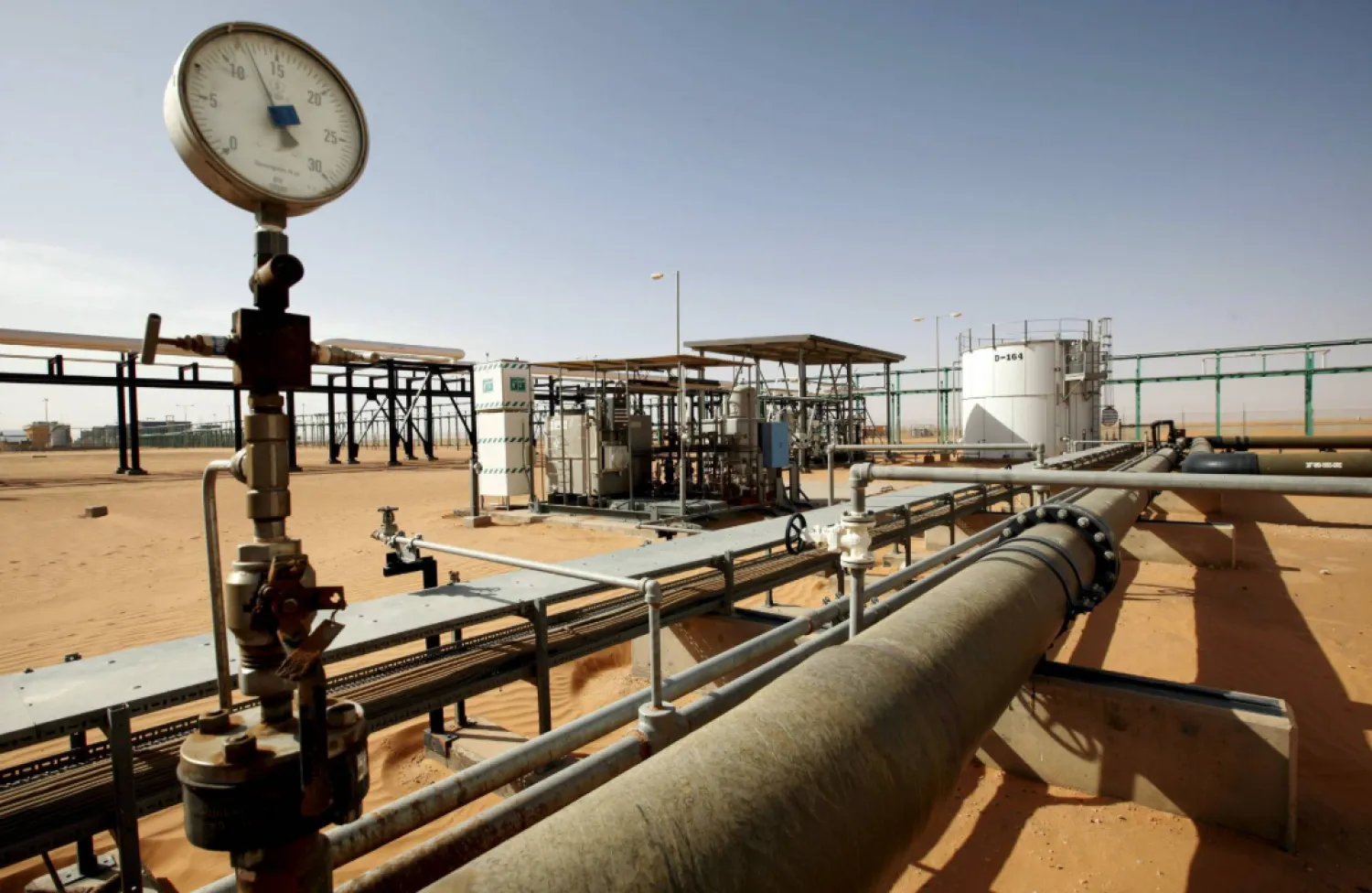
General view of the Sharara oil field in Libya (Reuters)
TT

Libya's NOC Says Sharara Crude Pipeline Closure Losses at 130,000 bpd

General view of the Sharara oil field in Libya (Reuters)

Libya's National Oil Corporation said on Tuesday that the Sharara-Zawiya crude loading pipeline closure has led to daily losses of about 130,000 barrels per day, Reuters reported.

An armed military group closed valve seven on the Sharara crude pipeline to Zawiya port on Monday, resulting in a significant decline in production at the Sharara oilfield, the National Oil Corporation said in a statement.


Sources: Saudi Arabia Restarts East-West Oil Pipeline

FILE PHOTO: A model of an oil pump is seen in front of a Saudi Arabian flag in this illustration taken January 9, 2026. REUTERS/Dado Ruvic/Illustration/File Photo
TT

Sources: Saudi Arabia Restarts East-West Oil Pipeline

FILE PHOTO: A model of an oil pump is seen in front of a Saudi Arabian flag in this illustration taken January 9, 2026. REUTERS/Dado Ruvic/Illustration/File Photo

Saudi Arabia has restarted operations at its East-West Pipeline and could resume exports from the Red Sea port of Yanbu later on Tuesday, three sources briefed on the matter said.

Drone attacks forced Saudi Arabia to shut its East-West Pipeline on September 13, halting crude loadings at the kingdom's Yanbu port.

The resumption of supplies on Tuesday helped to drive selling on global oil markets, traders said. Brent crude futures fell by more than $2 a barrel to its lowest since September 8.

Two trading sources said traders were getting ready for Saudi oil loadings by moving tankers to Egypt's Mediterranean Port Said for ship-to-ship transfers and also to Sidi Kerir.