


Oman Air Targets Tourists on New Singapore Route, Eyes North Asia Expansion

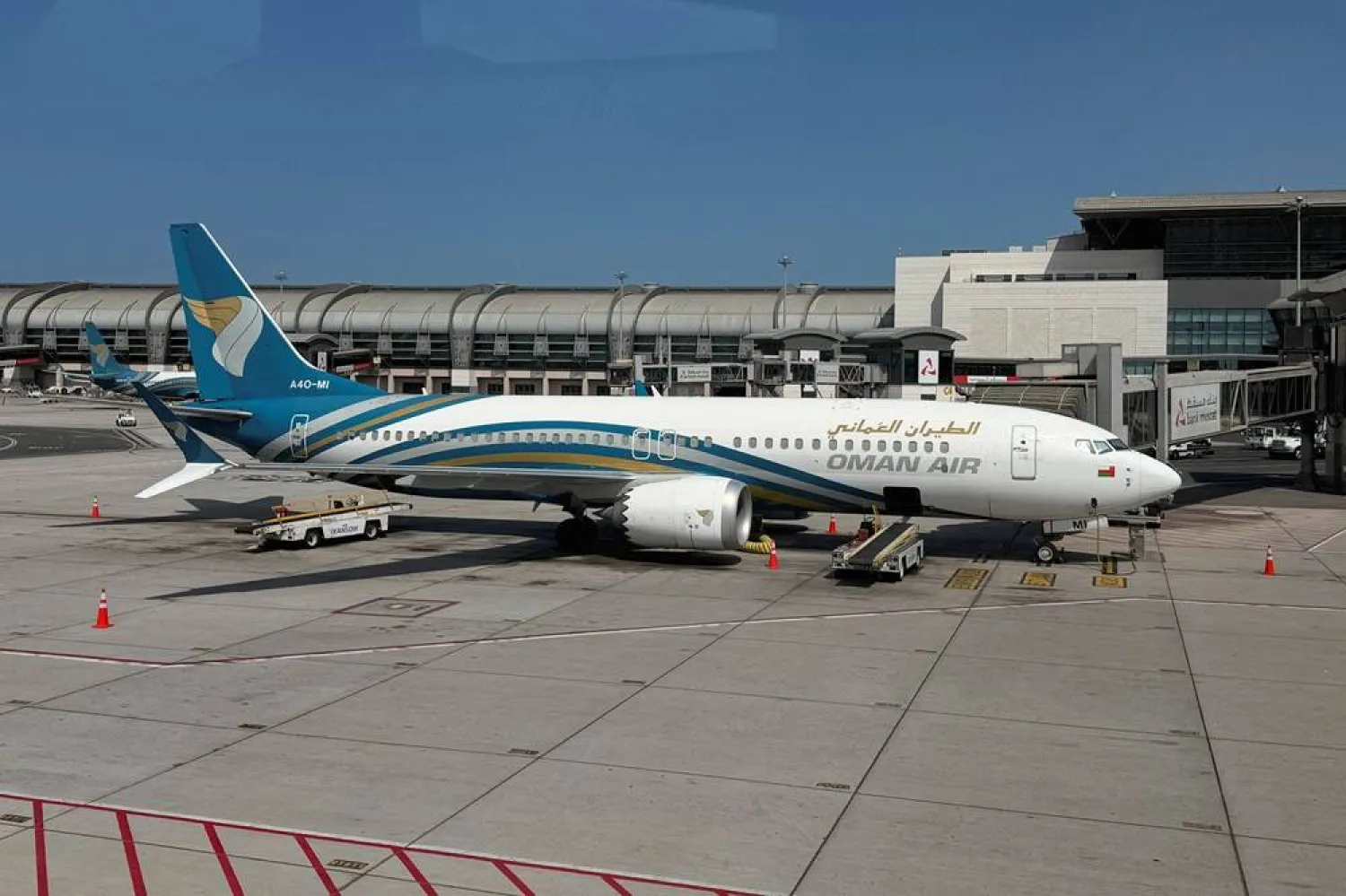
A Boeing 737 MAX 8 operated by Oman Air, on the tarmac at Muscat International Airport, amid the US-Israeli conflict with Iran, in Muscat, Oman, March 13, 2026. (Reuters)
TT

Oman Air Targets Tourists on New Singapore Route, Eyes North Asia Expansion

A Boeing 737 MAX 8 operated by Oman Air, on the tarmac at Muscat International Airport, amid the US-Israeli conflict with Iran, in Muscat, Oman, March 13, 2026. (Reuters)

Oman ‌Air is looking to capitalize on the Gulf state's appeal as a largely untapped tourism destination as it launches flights from Muscat to Singapore on Thursday and considers an expansion to North Asia over the next year, its CEO said.

The new nonstop Singapore service is underpinned by a lower cost base and the airline's year-old membership in the oneworld alliance to aid with connections, as serving the city-state with a stopover in Kuala Lumpur failed nine years ‌ago, Oman ‌Air CEO Con Korfiatis said in an ‌interview.

"Singapore ⁠is one of the ⁠major global hubs...and Singaporeans are among the most avid travelers in the world," he said. "Oman has moved from being a transit point...to now also being a tourist destination, and that has created a different market opportunity."

Korfiatis said the airline was targeting load factors, or the percentage of seats ⁠filled, in the mid-to-high 70% range in year ‌one for the Singapore route, ‌and first-month bookings were tracking above that level.

The eight-hour flight ‌will be one of the world's longest on a Boeing ‌737 MAX narrow-body and will run four days a week.

The launch comes as the government-owned airline has been executing a transformation plan since early 2024, cutting routes, renegotiating contracts, boosting fleet utilization ‌and reducing headcount.

The airline is also eyeing a return to North Asia for the first ⁠time in ⁠years, with Korfiatis expecting to announce at least one new nonstop destination in the region within 12 months.

He declined to name specific cities but described China, Japan and South Korea as markets of strong interest, citing their travelers' appetite for nature-based and off-the-beaten-track destinations.

Oman's airspace remained open throughout recent Middle East disruptions, giving the airline a brief advantage as passengers rerouted during the early weeks of the Iran war, Korfiatis said.

Load factors had still dipped by around 8 to 10 percentage points at the height of the disruption but had since mostly recovered, he added.



Saudi Arabia Moves to Strengthen Stability and Development in the Region

Saudi Arabia continues its initiatives to promote security and peace in the region... The Saudi flag is seen at a site in the city of Jazan (SPA).
TT

Saudi Arabia Moves to Strengthen Stability and Development in the Region

Saudi Arabia continues its initiatives to promote security and peace in the region... The Saudi flag is seen at a site in the city of Jazan (SPA).

At a time of growing uncertainty surrounding the global economy, amid the repercussions of the US-Iranian war, tensions related to the Strait of Hormuz, and risks facing shipping through several vital maritime routes, Saudi Arabia is intensifying its regional initiatives aimed at strengthening security and stability. The approach is based on a vision that links reducing geopolitical risks with creating the conditions necessary for growth, development, and attracting investment.

In this context, the "Makkah Agreement" between Saudi Arabia, Türkiye, and Pakistan stands out as one of the initiatives that specialists believe could contribute to strengthening regional stability and increasing confidence in the economic and investment environment in a region that occupies a pivotal position in global energy markets, trade, and supply chains.

Specialists who spoke to Asharq Al-Awsat said Saudi initiatives are part of a broader strategy aimed at building a more stable regional environment capable of withstanding shocks. They emphasized that strengthening security has a direct impact on the sustainability of energy supplies, the safety of shipping routes, and the movement of trade and investment, while also paving the way for broader economic integration and joint projects among countries in the region.

They also noted that the significance of Saudi initiatives extends beyond immediate security considerations to supporting development by reducing risk levels, strengthening investor confidence, and creating opportunities for new partnerships in energy, industry, technology, mining, logistics, and defense industries.

Stable Energy Supplies and Shipping

Fadl bin Saad Al-Bouainain, a member of the Shura Council, told Asharq Al-Awsat that the initiatives adopted by Saudi Arabia, foremost among them the "Makkah Agreement for Joint Defense" between Saudi Arabia, Pakistan, and Türkiye, could have an impact on the global economy, food security, and international trade, given the region's economic and strategic weight.

He added that the region exports nearly one-fifth of the world's oil needs, in addition to gas and agricultural nutrients, making its stability and security essential to ensuring the continuity of energy supplies and the safety of maritime shipping routes.

Al-Bouainain explained that Crown Prince Mohammed bin Salman places great importance on economic development as a foundation for the prosperity of peoples and states, with a focus on investment flows as one of the drivers of development, alongside strengthening the Kingdom's capabilities in the energy sector and maintaining its influential position within the global supply system.

He said Saudi efforts seek to achieve security and stability in the region in ways that positively affect both the Saudi economy and the economies of neighboring countries. Development, he noted, requires a stable foundation on which to build, while the defense agreement contributes to strengthening deterrence and reducing risks that could affect economic activity.

He pointed out that investors consider the stability of the investment environment a priority when making decisions. Accordingly, strengthening regional security and providing greater clarity over the economic outlook are factors that support the attractiveness of the Saudi market, given the diverse investment opportunities it offers.

According to Al-Bouainain, the "Makkah Agreement" sends reassuring messages to local and foreign investors and strengthens confidence in the sustainability of energy supplies and the protection of critical infrastructure. This could, in turn, affect the pace of projects, investment flows, and trade.

He stressed that Saudi Arabia is relying on "Vision 2030" and its development programs, which require substantial investment, making greater economic certainty and reduced geopolitical uncertainty important factors in supporting capital flows and project implementation.

He added that strengthening the regional security system could encourage investors to seize opportunities and participate in development projects, with the positive effects extending to the economies of the region as a whole, not just Saudi Arabia.

Al-Bouainain noted that the signing of the agreement after years of negotiations reflects the depth of relations between Saudi Arabia, Türkiye, and Pakistan and opens the way for a broader phase of cooperation, supporting efforts to establish security, stability, and prosperity.

He said the initiatives led by the Saudi Crown Prince have helped strengthen the role of diplomacy and political dialogue in addressing regional crises, alongside efforts to unify responses to challenges. This supports security and stability and provides a stronger foundation for economic and development programs.

Economic Integration Takes Shape

Saudi businessman Abdullah bin Zaid Al-Mulaihi, CEO of Saudi technology holding company Al-Tamayoz, said Saudi Arabia continues to work to strengthen confidence in both the domestic and regional economies. He noted that the "Makkah Agreement" is among the initiatives that could enhance the Kingdom's regional and international standing and open the way for a new phase of economic cooperation and integration.

Al-Mulaihi told Asharq Al-Awsat that Saudi steps to strengthen security and stability have a direct impact on the economic and investment environment. He said Saudi-Turkish-Pakistani rapprochement provides a foundation for developing joint political, economic, defense, and human cooperation.

He added that the Kingdom has established itself as an influential political and economic power by building strategic partnerships aimed at achieving shared interests and supporting regional security and stability.

Al-Mulaihi believes that Saudi Arabia's strategy of strengthening stability and building long-term partnerships helps create a more attractive environment for investment and opens opportunities for the private sector in industry, technology, energy, mining, logistics, defense industries, and trade.

He noted that Saudi Arabia has a large economy, a strategic geographic location, and ambitious transformation programs under "Vision 2030."

He said political and security rapprochement could develop into broader economic partnerships benefiting investors and business leaders, particularly through joint projects, knowledge and technology transfer, localization of industries, and increased trade.

Al-Mulaihi emphasized that the economy, development, and citizens are the direct beneficiaries of regional stability. He noted that the Kingdom's political strength and balanced partnerships give the private sector greater confidence and strengthen its ability to attract capital, technologies, and international partnerships.

He concluded that Saudi Arabia is pursuing a vision that combines protecting its interests, strengthening its security, and building the economy of the future. He considered the "Makkah Agreement" a factor that strengthens the Kingdom's position in shaping the region's security, development, and cooperation framework.

The Path to Sustainable Development

Abdulrahman Baashen, head of the Al-Shorouq Center for Economic Studies in Jazan, told Asharq Al-Awsat that Saudi Arabia is strengthening its international credibility by adopting initiatives aimed at reducing risks and supporting stability, including the "Makkah Agreement for Joint Defense." He believes the agreement could help increase economic certainty in the region following the repercussions of the US-Iranian war and tensions in the Strait of Hormuz.

Baashen added that the Saudi approach, which combines political, security, and economic action, supports regional balance and strengthens confidence in the Saudi economy and the region's business environment. This could be reflected in trade, investment, and international partnerships, particularly given the Kingdom's central role in global energy markets.

He expects the next phase to see increased trade and investment activity, particularly in defense-related technology industries, alongside the expansion of strategic partnerships with countries possessing advanced expertise and capabilities in these fields.

Baashen believes the agreement could provide a supportive framework for launching high-value economic projects and initiatives between Saudi Arabia, Türkiye, and Pakistan, with their impact extending to their international partners and laying broader foundations for economic integration and sustainable development among Riyadh, Ankara, and Islamabad.

He noted that developing partnerships in industry, technology, energy, supply chains, infrastructure, and transportation could turn the strategic rapprochement among the three countries into tangible economic opportunities and increase the region's ability to withstand external disruptions.

He stressed that the essence of Saudi initiatives lies in linking security with development. Reducing tensions and strengthening regional stability do not affect only the political sphere, but also extend to protecting trade flows and energy supplies, improving the investment environment, and providing a more sustainable foundation for regional economic growth.


Alphabet's Investment in SpaceX Multiplies 100-Fold to $94 Billion

The letters of the word "Alphabet" on a computer screen featuring a Google search page in an illustration (Reuters)
TT

Alphabet's Investment in SpaceX Multiplies 100-Fold to $94 Billion

The letters of the word "Alphabet" on a computer screen featuring a Google search page in an illustration (Reuters)

Alphabet's early bet on SpaceX has multiplied more than 100-fold, with the Google parent disclosing a stake worth about $94 billion at the end of June compared with the $900 million investment it said it made in Elon Musk's rocket company in 2015.

Alphabet has emerged as by far the largest single institutional holder of SpaceX following its $86 billion IPO in June, according to a Reuters analysis of quarterly filings made public so far.

The filings shed new light on the scale of positions acquired by SpaceX's backers as the company transitioned from a closely held startup to a publicly traded giant. Together with separate public disclosures on early investments, including Alphabet's, they also highlight how dramatically the value of some early investments in SpaceX has grown.

Because the 13F filing data is compiled once ⁠per quarter and disclosed ⁠within six weeks of quarter-end, the information is dated and will not capture any buying or selling done by these large investors since June 30.

There are other limitations as well, given the vast universe of SpaceX investments and the evolving schedule of when they stand to become eligible to be sold in public markets.

"It's very, very difficult to tease out which of these institutions were holding pre-IPO shares," said Steve Sosnick, market strategist at Interactive Brokers.

Alphabet is an exception because the company publicly disclosed that it invested $900 million in SpaceX ⁠in 2015, providing a rare benchmark against which to compare the value of its current holding.

Alphabet did not immediately respond to a request for comment. Sosnick added that the 13F filings did not reveal investors' lockup status or intentions with respect to realizing profits on pre-IPO positions.

FILE - The SpaceX logo is displayed on a building, May 26, 2020, at the Kennedy Space Center in Cape Canaveral, Fla. (AP Photo/David J. Phillip, File)

Alphabet held 551.2 million SpaceX shares at the end of the second quarter, according to the firm's filing, worth about $94.2 billion at SpaceX's June 30 share price of $170.86.

At Thursday's price, Alphabet's disclosed position would be worth about $77.9 billion, still about 86.5 times the size of Google's original investment. Fidelity Investments was the second-largest reported institutional holder, with 302.6 million SpaceX shares, followed by Gigafund Management with 171.8 million, Baillie Gifford with 51.4 million and BlackRock with 51.0 million.

Alphabet, Fidelity, Gigafund Management, Baillie Gifford and BlackRock, the five largest reported holders in the data, accounted for nearly three quarters ⁠of reported SpaceX ⁠shares, highlighting the concentration of reported institutional ownership among a handful of investors.

Separately, SpaceX said in a regulatory filing that Musk owned a 48.4% stake in the company. SpaceX went public on June 12 at $135 a share. Its shares have since retreated from their end-June level. SpaceX closed at $141.29 on Thursday, 4.7% above its IPO price but 17.3% below the June 30 close.

Sosnick told Reuters that SpaceX remains one of the most actively traded stocks among customers at Interactive Brokers, receiving a "fresh jolt of buying last week when market fears about what would happen when the first lockup expiry arrived proved to be unfounded."

Retail owners of SpaceX shares, who do not have to submit their holdings to the SEC, turned into net sellers of the stock on Friday for the first time since the IPO, according to data from Vanda Research.

The research firm, which tracks the activity of self-directed individual investors, calculated that this group sold a net $4.5 million on that day. SpaceX shares were down 3% on Thursday but have risen 30% since August 5.


Iraqi Daily Oil Exports in August Highest since Start of War

A view across Shatt al-Arab of the 'Bin Omar' oil field north of Basra, Iraq (Reuters)
TT

Iraqi Daily Oil Exports in August Highest since Start of War

A view across Shatt al-Arab of the 'Bin Omar' oil field north of Basra, Iraq (Reuters)

Iraq's average daily oil exports since the beginning of August are the highest since the outbreak of the Middle East war between Iran and the United States, which has choked off the Strait of Hormuz, the oil ministry said Friday.

Iraqi Oil Minister Bassem Mohammed Khudair told a press conference that "exports since the beginning of the month have reached a rate of two million barrels" per day, for a total of around 26 million barrels, saying the daily rate was achieved "for the first time since the crisis began".