
Moscow is moving to consolidate its economic influence in Syria by establishing a commercial logistics hub in the port of Tartous, a move that reflects a shift in its strategy from military presence to expanded economic weight.
The Russian move coincides with discussions over the future of Moscow’s military bases at Tartous and Hmeimim, as Washington plans to renew contracts and investments in the country.
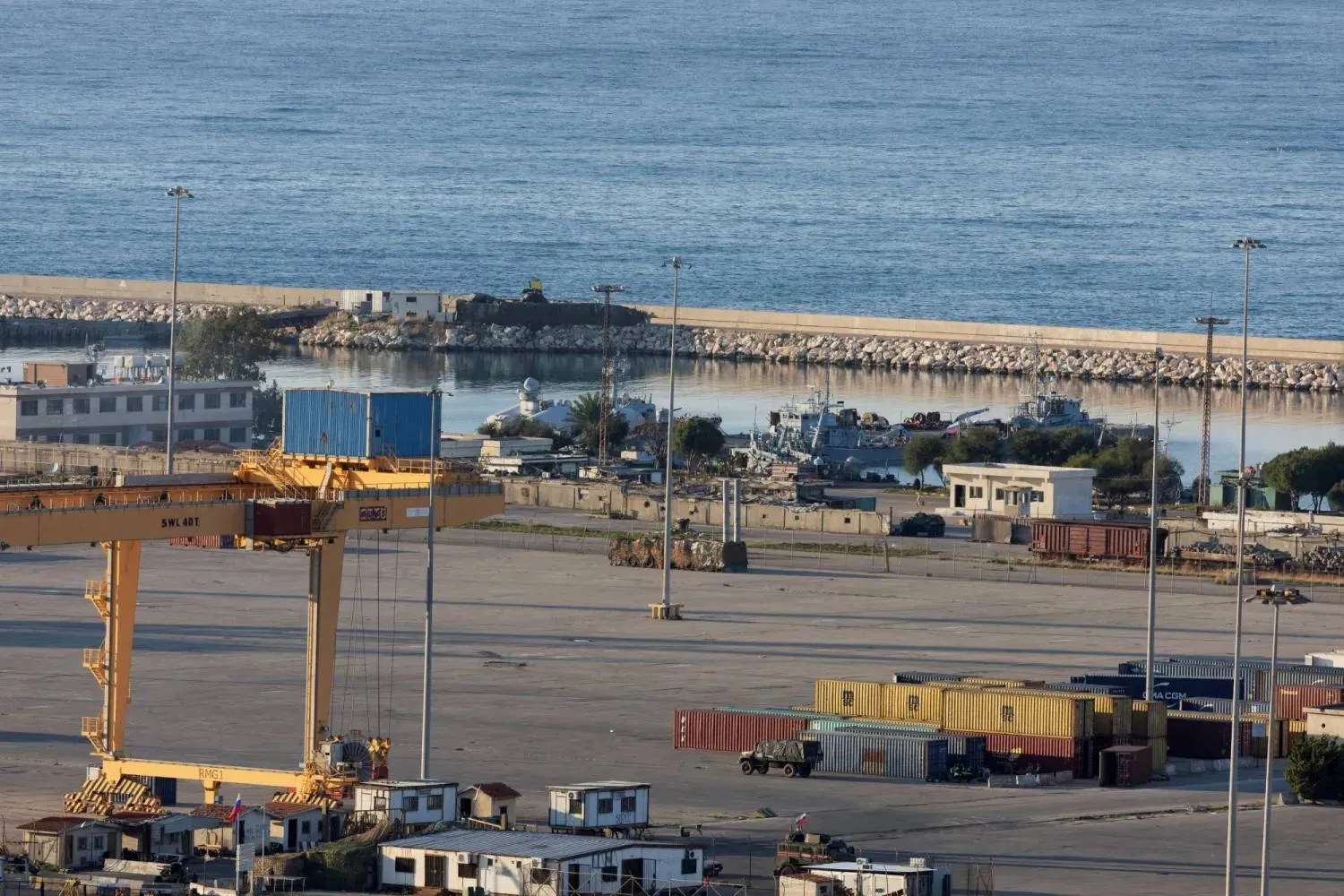
According to Reuters, Russia hopes by mid-July to have the commercial logistics hub up and running in one of two berths at the naval base it leases in the Tartous port, while keeping a military presence at the other.
The hub will handle a wide range of Russian goods including wheat and grains, and target initial cargo volumes of about 250,000 tons per month while operations were expected to begin with a 30,000-ton grain shipment.
“The project is central to Russian efforts to maintain and expand its influence in Syria through economic channels, after the overthrow of former president Bashar al-Assad in 2024 deprived Moscow of its staunchest ally in the Middle East,” Syrian officials told Reuters on Thursday.
But much more than business is at stake, with a battle for influence under way as Washington seeks ways to ensure not only that Syria awards contracts to US companies but also curbs Moscow's military presence.
The officials said Moscow and Syria are now negotiating over the future of Russia's bases at Tartous and Hmeimim.
In 2025, Syria's new government cancelled a 49-year contract granting Russian company Stroytransgaz the right to develop commercial facilities at Tartous. The United Arab Emirates' DP World secured an $800 million, 30-year concession agreement to redevelop and operate the port.
But on June 6, the Russian-Syrian Business Council, a body operating under Russia's Ministry of Industry and Trade, announced plans to establish an “assembly and distribution center for Russian goods” at Tartous.
Ossama Ajaj, general manager of Rus Line and adviser to the Russian-Syrian Business Council, said the hub will initially handle Russian wheat, grains, animal feed, vegetable oils, timber, steel, clinker, coal, rice, sugar and mineral oils.
He said the hub will operate from Pier No. 4 at Tartous port, in what he called a “restricted zone” of the naval base. The other berth remains dedicated to Russian naval operations.
The project aims to establish a regular maritime route between Russia's Black Sea port of Novorossiysk and Tartous, from where goods will be distributed across Syria and neighboring countries.
Ajaj identified Iraq and Jordan as the primary target markets, followed by Saudi Arabia, Kuwait, Qatar and Bahrain. He added that the project will be run by Syria's General Authority for Ports and Customs.
Ajaj told Reuters cargo volumes of about 250,000 tons per month were being targeted initially and operations were expected to begin in mid-July with a 30,000-ton grain shipment.
He suggested Russia would maintain a “reduced military presence.”
Ajaj and two officials from Syria's foreign ministry said the project was outlined at a January 28 meeting in Moscow between Syrian President Ahmed al-Sharaa and Russian President Vladimir Putin. The officials called the meeting a turning point in efforts to revive economic cooperation.
Foreign Ministry spokeswoman Maria Zakharova said in June that Moscow and Damascus were discussing a possible “reformatting” of Russia's military facilities in Syria and that cooperation between the two countries was developing actively.
The commercial logistics hub is set to increase Moscow's already significant economic role in Syria. Some 85% of Syria's imported wheat — 2.9 million tons for the 2025-26 season — comes from Russia and Russian-occupied Crimea, a Syrian customs document showed.
Reuters has also reported that Syria's reliance on Russian crude oil imports has increased since Assad's fall. It received about 16.8 million barrels of Russian oil in 2025 and an estimated 60,000 barrels per day in the first months of 2026.
The project could help Russia maintain influence regardless of the eventual shape of its military presence, said Nanar Hawach, a senior Syria adviser at International Crisis Group.
“Russia's hold on Syria rests on what it supplies and maintains, and on its (United Nations) Security Council vote, which gives it influence that outlasts any drawdown of troops,” he said.
“A logistics role reinforces that by keeping Russia physically present at the port, strengthening its hand while the future of the base is being decide,” he noted.
The US is meanwhile watching closely.
Congressman Joe Wilson last month secured an amendment to the Pentagon budget directing it to assess options for reducing Russia's influence in Syria and securing the departure of its forces from Tartous and Hmeimim.
“We closely monitor Russian-backed commercial and logistics projects in Syria and are concerned that such initiatives may not contribute to stability in the country,” a US State Department official said in response to Reuters questions.
The official said the US was encouraging Syria to engage “trusted corporate partners – especially US firms” during the country's recovery and reconstruction after its civil war, while urging Damascus to respect US sanctions on Russia.