

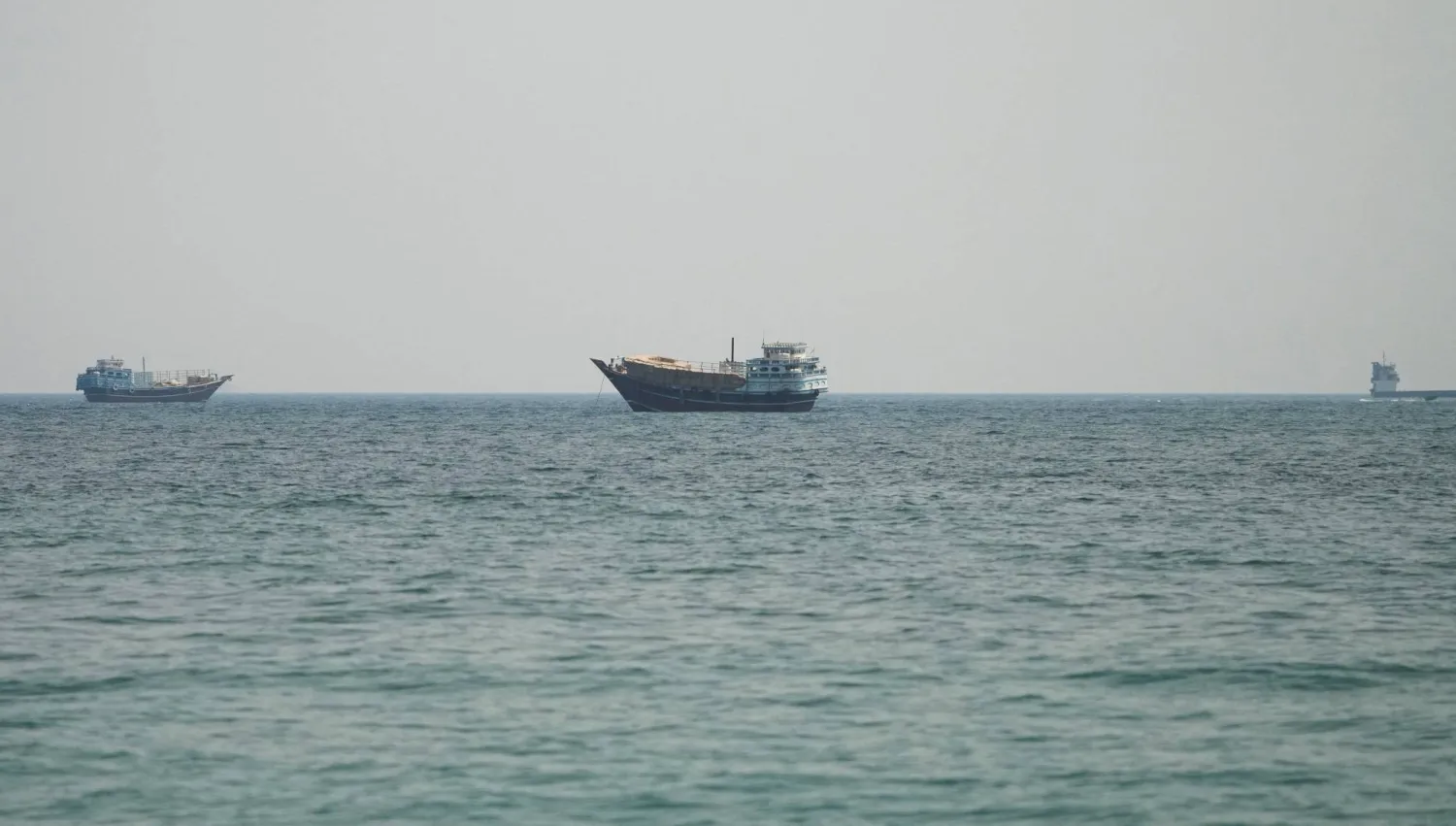

Oil Prices Rise as Hostilities Worsen in the Middle East

FILE PHOTO: Vessels at the Strait of Hormuz, as seen from Musandam,Oman, July 12, 2026. REUTERS/Stringer/File Photo
TT

Oil Prices Rise as Hostilities Worsen in the Middle East

FILE PHOTO: Vessels at the Strait of Hormuz, as seen from Musandam,Oman, July 12, 2026. REUTERS/Stringer/File Photo

Oil extended gains on Wednesday as President Donald Trump reimposed a naval blockade on all Iranian ports and Tehran launched strikes on US infrastructure in the region.

Brent futures climbed 99 cents, or 1.2%, to $85.72 a barrel at 0400 GMT. West Texas Intermediate futures gained 64 cents, or 0.8%, to $79.98 a barrel, Reuters reported.

Oil prices closed up 2% at a one-month high on Tuesday as attacks exacerbated a supply disruption in the Strait of Hormuz, through which about a fifth of the world's oil and liquefied natural gas passed prior to the beginning of the US-Israeli war on Iran.

"While the physical oil market remains adequately supplied, any further ⁠escalation involving the ⁠Strait of Hormuz or additional sanctions on Iranian exports could quickly tighten market sentiment and add further risk premiums," said Priyanka Sachdeva, senior market analyst at Phillip Nova.

Early on Wednesday, the US also began a fresh round of strikes "to continue degrading Iranian capabilities used to attack commercial shipping in the Strait of Hormuz," the US military said.

Tehran says it has ⁠again closed the strait after hostilities between Iran and the US reignited last week, fraying an already fragile truce reached in June after several months of fighting.

"I'll save the energy targets for last, but ultimately we'll hit energy targets," Trump told Fox News in an interview aired Tuesday night on "Special Report with Bret Baier".

The flare-up over the last few days has heightened doubts that a memorandum of understanding signed last month would lead to a permanent halt to the war.

"The chances of oil moving back toward $100 in the reasonably near term are still meaningful if hostilities intensify which damages energy infrastructure around the Gulf," Tim Waterer, chief market analyst at KCM Trade said, noting Brent prices could remain at $75-$80 a barrel if diplomatic efforts helped reopen the strait.

"For now, the risk premium is still embedded, but it's not a one-way bet given that there remain incentives for both sides to find a diplomatic solution."



Euro Zone Yields Fall after Iran Raises Prospect of Hormuz Reopening

Euro banknotes (Reuters)
TT

Euro Zone Yields Fall after Iran Raises Prospect of Hormuz Reopening

Euro banknotes (Reuters)

Euro zone bond yields fell for a second straight day on Tuesday, hitting their lowest in almost two weeks after Iran raised the prospect of reopening the Strait of Hormuz and Washington hinted it could restart talks with Tehran, pushing oil prices lower.

Germany's 10-year bond yield, the benchmark for the bloc, fell 1 basis point to 3.44% after rising as much as 4 bps earlier in the session. It fell 7 bps on Monday as energy prices retreated.

A senior Iranian official told Reuters that the strait, which carried about a fifth of global energy supplies before the war, could reopen within seven days if the US also lifts its blockade of Iranian ports.

The official added that Iran's delegation to a UN meeting in New York this week has full authority to revive diplomacy over the conflict.

US Secretary of State Marco Rubio told NBC's "Today" show that Washington was open to speaking with Tehran.

The dip in energy prices helped pull yields lower globally after a surge in recent weeks fuelled by expectations of further interest-rate hikes to combat energy-driven inflation. Traders are pricing in around 35 bps of additional European Central Bank tightening this year, down from 40 bps on Friday.

Germany's two-year bond yield, which is sensitive to interest-rate expectations, fell 1 bp to 3.19%, following a 6-bp drop on Monday.

Rabobank senior rates strategist Lyn Graham-Taylor said lower oil prices following the Iranian comments were weighing on bond yields.

Brent crude futures were last down 1% to $100 a barrel after earlier falling to $97.40, the lowest in two weeks.


Libya's NOC Says Sharara Crude Pipeline Closure Losses at 130,000 bpd

General view of the Sharara oil field in Libya (Reuters)
TT

Libya's NOC Says Sharara Crude Pipeline Closure Losses at 130,000 bpd

General view of the Sharara oil field in Libya (Reuters)

Libya's National Oil Corporation said on Tuesday that the Sharara-Zawiya crude loading pipeline closure has led to daily losses of about 130,000 barrels per day, Reuters reported.

An armed military group closed valve seven on the Sharara crude pipeline to Zawiya port on Monday, resulting in a significant decline in production at the Sharara oilfield, the National Oil Corporation said in a statement.


Sources: Saudi Arabia Restarts East-West Oil Pipeline

FILE PHOTO: A model of an oil pump is seen in front of a Saudi Arabian flag in this illustration taken January 9, 2026. REUTERS/Dado Ruvic/Illustration/File Photo
TT

Sources: Saudi Arabia Restarts East-West Oil Pipeline

FILE PHOTO: A model of an oil pump is seen in front of a Saudi Arabian flag in this illustration taken January 9, 2026. REUTERS/Dado Ruvic/Illustration/File Photo

Saudi Arabia has restarted operations at its East-West Pipeline and could resume exports from the Red Sea port of Yanbu later on Tuesday, three sources briefed on the matter said.

Drone attacks forced Saudi Arabia to shut its East-West Pipeline on September 13, halting crude loadings at the kingdom's Yanbu port.

The resumption of supplies on Tuesday helped to drive selling on global oil markets, traders said. Brent crude futures fell by more than $2 a barrel to its lowest since September 8.

Two trading sources said traders were getting ready for Saudi oil loadings by moving tankers to Egypt's Mediterranean Port Said for ship-to-ship transfers and also to Sidi Kerir.