Gold Falls as Mideast Conflict Dims Easing Inflation Hopes

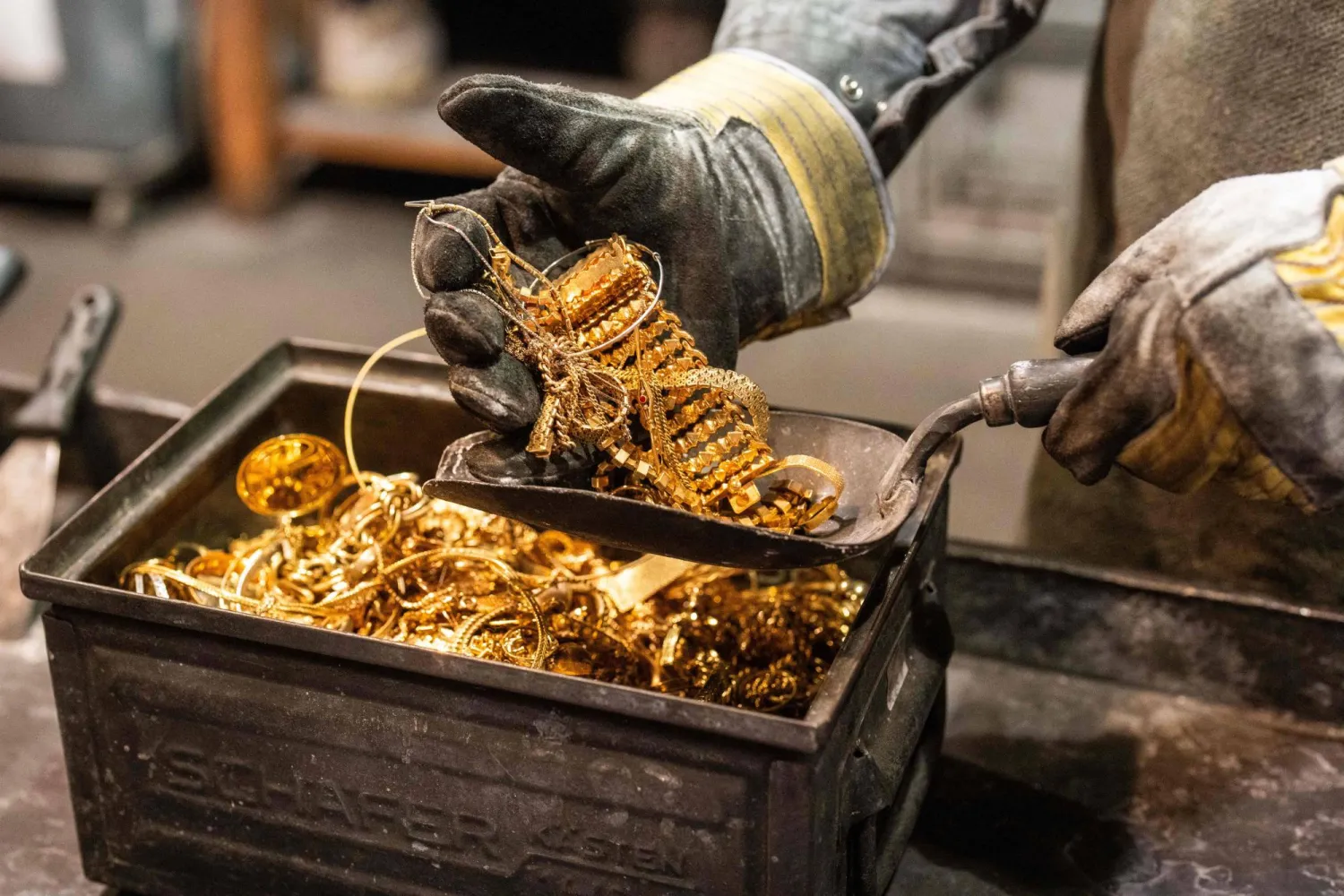
Gold jewelry being prepared before melting to produce gold bars at the Austrian gold and silver refinery 'Oegussa' in Vienna (AFP)
TT

Gold Falls as Mideast Conflict Dims Easing Inflation Hopes

Gold jewelry being prepared before melting to produce gold bars at the Austrian gold and silver refinery 'Oegussa' in Vienna (AFP)

Gold fell on Thursday as an escalating Middle East conflict fueled concerns that the US Federal Reserve could hike interest rates this year, overshadowing recent optimism over easing inflation.

Spot gold was down 0.8% at $4,029.29 per ounce by 0518 GMT. US gold futures for August delivery lost 0.4% to $4,034.40, Reuters said.

"June's inflation figures did not reflect the impact of the latest escalation ‌in the US-Iran ‌conflict, as the interim peace union reached ‌last ⁠month has effectively ⁠unraveled," said Jigar Trivedi, a senior research analyst at IndusInd Securities.

The US launched two waves of attacks on Iran's coastal defenses and missile sites on Wednesday after reimposing a naval blockade of its ports, while Iran struck back by targeting US military sites in neighboring countries in what it called an "existential war" ⁠with America.

Oil prices have risen 11% so ‌far this week, stoking concerns about ‌inflation and higher-for-longer interest rates. While gold is traditionally seen as an ‌inflation hedge, it loses its appeal in a high interest ‌rate environment.

US consumer and producer inflation slowed in June, amid a pullback in the cost of energy products, reinforcing evidence that inflation was subsiding before the recent escalation in the Middle East conflict.

The moderation ‌in inflation was, however, not enough to convince financial markets to rule out a Fed ⁠rate hike ⁠this year.

Traders are still pricing in bout a 73% chance of a December Fed hike, CME FedWatch Tool's data showed.

Fed Governor Lisa Cook said on Wednesday she is "prepared to act" if inflation does not soon begin to slow. Fed Chairman Kevin Warsh also declared his determination to bring inflation down without hinting at how.

Investors are now looking out for remarks from Dallas Fed President Lorie Logan and Fed Vice Chair Philip Jefferson, due to speak later in the day.

Elsewhere, spot silver fell 1.2% to $57.07 per ounce. Platinum eased 0.6% to $1,664.75 and palladium edged 0.4% lower to $1,308.49.


Saudi Ministry of Industry Participates in 63rd Damascus International Fair

26 August 2026, Syria, Damascus: People walk at the Damascus Fair Grounds during the opening ceremony of the 63rd Damascus International Fair. (dpa)
TT

Saudi Ministry of Industry Participates in 63rd Damascus International Fair

26 August 2026, Syria, Damascus: People walk at the Damascus Fair Grounds during the opening ceremony of the 63rd Damascus International Fair. (dpa)

The Saudi Ministry of Industry and Mineral Resources is participating in the 63rd Damascus International Fair, taking place from August 26 to September 4.

The participation aims to strengthen economic and industrial integration between the two countries, showcase the growth and development of Saudi industries, and expand access for Saudi goods and services to regional markets.

Saudi non-oil exports to Syria reached SAR1.23 billion in 2025, representing growth of more than 123% compared to 2024.

The fair serves as a key platform for fostering international investment partnerships across a wide range of economic sectors, particularly energy, industry, and technology.

The 63rd edition brings together around 1,000 entities from 60 countries, as well as Syrian ministries, institutions, and artisans, highlighting the fair’s significant economic and developmental impact.


Saudi Arabia, Pakistan Aim to Raise Agricultural and Food Exports to Reach $3 Billion

The Saudi and Pakistani delegations are seen in Islamabad. (SPA)
TT

Saudi Arabia, Pakistan Aim to Raise Agricultural and Food Exports to Reach $3 Billion

The Saudi and Pakistani delegations are seen in Islamabad. (SPA)

Saudi Arabia and Pakistan have agreed to bolster cooperation in the fields of food security and agriculture, as both sides look to increase the value of Pakistani agricultural and food exports to the Kingdom to $3 billion.

The announcement was detailed in a joint statement issued at the conclusion of a high-level Saudi delegation's official visit to Pakistan from August 26 to 28. Led by Saudi Minister of Environment, Water, and Agriculture Abdulrahman Al-Fadley, the delegation included senior officials from the ministry, the General Food Security Authority, and other relevant government entities.

The discussions focused on the rice, red meat, and fruit sectors, as well as fruit concentrates, green fodder, and water-efficient agricultural technologies.

Pakistani rice supplies to the Saudi market reached approximately 169,000 tons in 2025, with an estimated value of $163 million, while annual meat supplies totaled around 30,000 tons, valued at $167 million. Saudi Arabia has expressed its desire to double the volume of meat supplies in the future.

The two sides agreed to increase the share of Pakistani fruit exports and fruit concentrates in the Saudi market, empower the private sector, and facilitate communication between business leaders, alongside expanding mutual recognition of quality certificates.

The two sides also discussed opportunities to expand the green fodder trade and build long-term supply partnerships, while Saudi Arabia encouraged Pakistan to join the International Dates Council, an invitation welcomed by Islamabad.

During the visit, Saudi Arabia reviewed investment proposals from Pakistani companies across the livestock, agricultural manufacturing, and rice value chain sectors, with both sides agreeing to coordinate on exploring and exploiting these opportunities.

Both sides reaffirmed their commitment to strengthening their comprehensive strategic partnership. Pakistan welcomed the invitation to attend the 43rd Saudi Agriculture Exhibition, scheduled to be held in Riyadh in October, and both parties agreed to maintain ongoing coordination to follow up on the implementation of the reached understandings.


Hotels Reshape the Real Estate Investment Landscape in Makkah

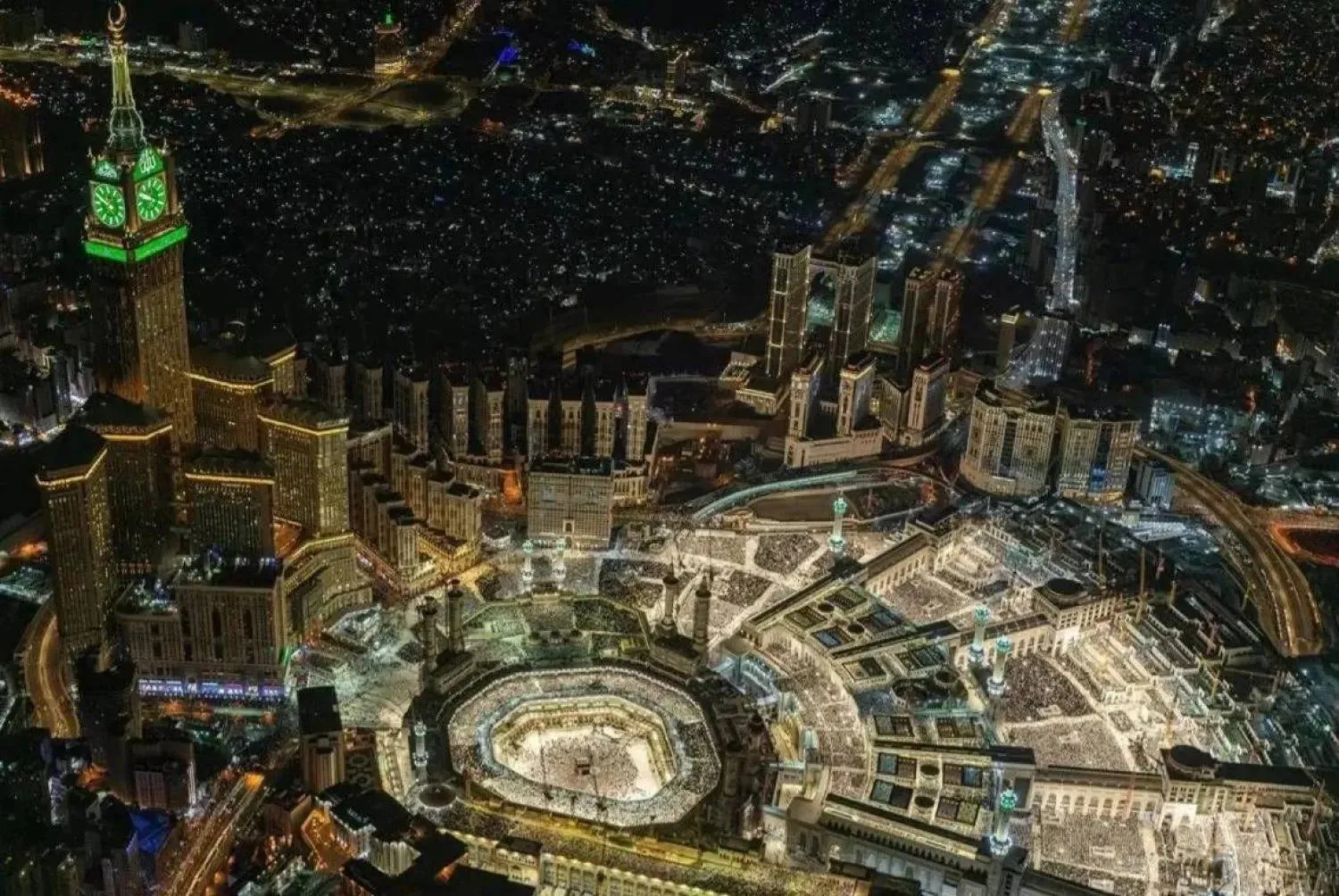
A night view of the Gran Mosque in the holy city of Makkah, Saudi Arabia. (SPA)
TT

Hotels Reshape the Real Estate Investment Landscape in Makkah

A night view of the Gran Mosque in the holy city of Makkah, Saudi Arabia. (SPA)

The real estate market in Makkah is witnessing an accelerating shift toward investment in hospitality assets, fueled by the growing numbers of Hajj and Umrah pilgrims and the expansion of the city's capacity. This trajectory is cementing hotels as a primary source of operational revenue for a number of real estate developers.

This comes at a time when the recovery in hospitality returns has reflected more clearly on the financial results of real estate companies, driven by improving occupancy rates and average room prices, particularly during the Hajj and Umrah seasons.

Sustained demand underpins hospitality boom

Financial and economic advisor Dr. Hussein Al-Attas told Asharq Al-Awsat that Makkah's hospitality sector is experiencing "one of its strongest historical phases."

The growth witnessed by the sector is underpinned by structural factors, foremost among which is the continuous increase in the number of Umrah pilgrims and visitors, alongside the gradual expansion of Hajj capacity and projects tied to Saudi Vision 2030, he added.

He stressed that the expansion of the Grand Mosque, alongside the development of transportation networks, roads, trains, and the enhancement of the visitor experience, has contributed to raising the efficiency of the hospitality ecosystem.

This, in turn, has reflected on occupancy rates and average room prices, with Al-Attas explaining that demand for hotels in Makkah has become more sustainable year-round with the growth of Umrah programs, no longer being limited to peak seasons.

This shift reflects the growing significance of hospitality operations within the business models of real estate firms operating in Makkah. This comes as developers pivot part of their focus away from the sale of lands and units toward the development of income-generating assets that can be retained and operated over the long term.

Hotels drive profitability

The performance of the Jabal Omar Development Company exemplifies the growing importance of hospitality operations in the financial results of Makkah real estate developers. The company returned to profitability in the second quarter of 2026 with a net profit of 158.1 million riyals, compared to a loss of 42.1 million riyals in the same period last year, while revenues increased by 42.5 percent to 715.2 million riyals.

The company attributed the revenue growth primarily to the sustained improvement in hotel performance, particularly during the Hajj season, alongside the opening of the "Rotana" hotel earlier this year, according to a disclosure published on the Saudi Exchange (Tadawul) website.

Al-Attas said hospitality operations have become the primary engine of profitability for a number of real estate companies in Makkah, after previously relying more heavily on land sales or the development of traditional real estate projects.

He explained that rising occupancy rates and improving average room prices support the operational revenues of hotels, while the recurring nature of these revenues provides companies with more stable cash flows compared to returns generated from asset sales.

Khaled Al-Mobid, CEO of Menassat Real Estate Company, stated in an exclusive comment to Asharq Al-Awsat that Makkah possesses an exceptional advantage represented by the sustained demand for hospitality.

He explained that the continuous influx of Hajj and Umrah pilgrims, alongside the objectives of Vision 2030, lends hospitality investment greater attractiveness compared to a number of other real estate assets, particularly in locations close to the Grand Mosque and projects linked to transportation and services.

Al-Mobid pointed to a shift in developer strategies away from focusing on the sale of real estate units toward developing income-generating assets, such as hotels and serviced apartments, alongside leveraging international hospitality brands.

A developer's focus is no longer confined to construction, but has extended to operational quality and asset management, as a project's value has become linked to its operational performance rather than its development cost alone, he remarked.

Rising supply tests the market's capacity to absorb growth

The expansion of hospitality investment in Makkah coincides with an increase in room supply, which may intensify competition among operators, particularly within categories witnessing the entry of new projects.

Al-Attas said that in the short term, this increase could exert limited pressure on pricing within certain segments if the new additions are concentrated within the same hotel tier. However, over the medium and long term, demand will be capable of absorbing a significant portion of this expansion, given government targets to boost the numbers of Umrah pilgrims and visitors, and Makkah's transformation into a destination welcoming growing influxes year-round.

According to Al-Attas, the volume of supply will not be the sole decisive factor, as the quality of the hospitality product, location, service standards, and the efficiency of revenue management will play a primary role in a hotel's ability to maintain high occupancy rates and returns.

Al-Mobid said that increasing room counts will not suffice to guarantee project profitability as competition intensifies, noting that a hotel's ability to maximize revenue per room and achieve operational efficiency will become more vital with new projects entering the market.

Operational efficiency key to maintaining margins

Conversely, Makkah's hospitality sector faces a series of challenges that could test investors' profit margins in the coming period, led by rising costs for land, construction, and operations, alongside wages, energy, maintenance, and financing costs, in addition to the need for qualified personnel to manage hospitality establishments efficiently.

Al-Attas said that rising operational costs and persistently high interest rates could exert pressure on companies, at a time when increased competition will force operators to focus more heavily on operational efficiency and boosting the guest experience to maintain profit margins.

Sustaining high occupancy rates outside of peak seasons presents another challenge for the sector, requiring the diversification of target markets and the attraction of new visitor segments in alignment with the expansion of Umrah programs and the objectives of Vision 2030.

Al-Mobid said future profitability hinges on product quality, operational efficiency, and maximizing revenue per room.

He stressed the importance of diversifying hotel tiers, leveraging modern technologies in revenue management, reducing operational costs, and delivering a premium hospitality experience.

With demand and supply expanding simultaneously, the future of hospitality investment in Makkah is pivoting toward a heavier reliance on asset operational efficiency, product quality, and location, rather than an increase in hotel capacity alone. This shifts developers' ability to manage assets and convert growing visitor numbers into sustainable cash flows into a decisive factor in the future.