

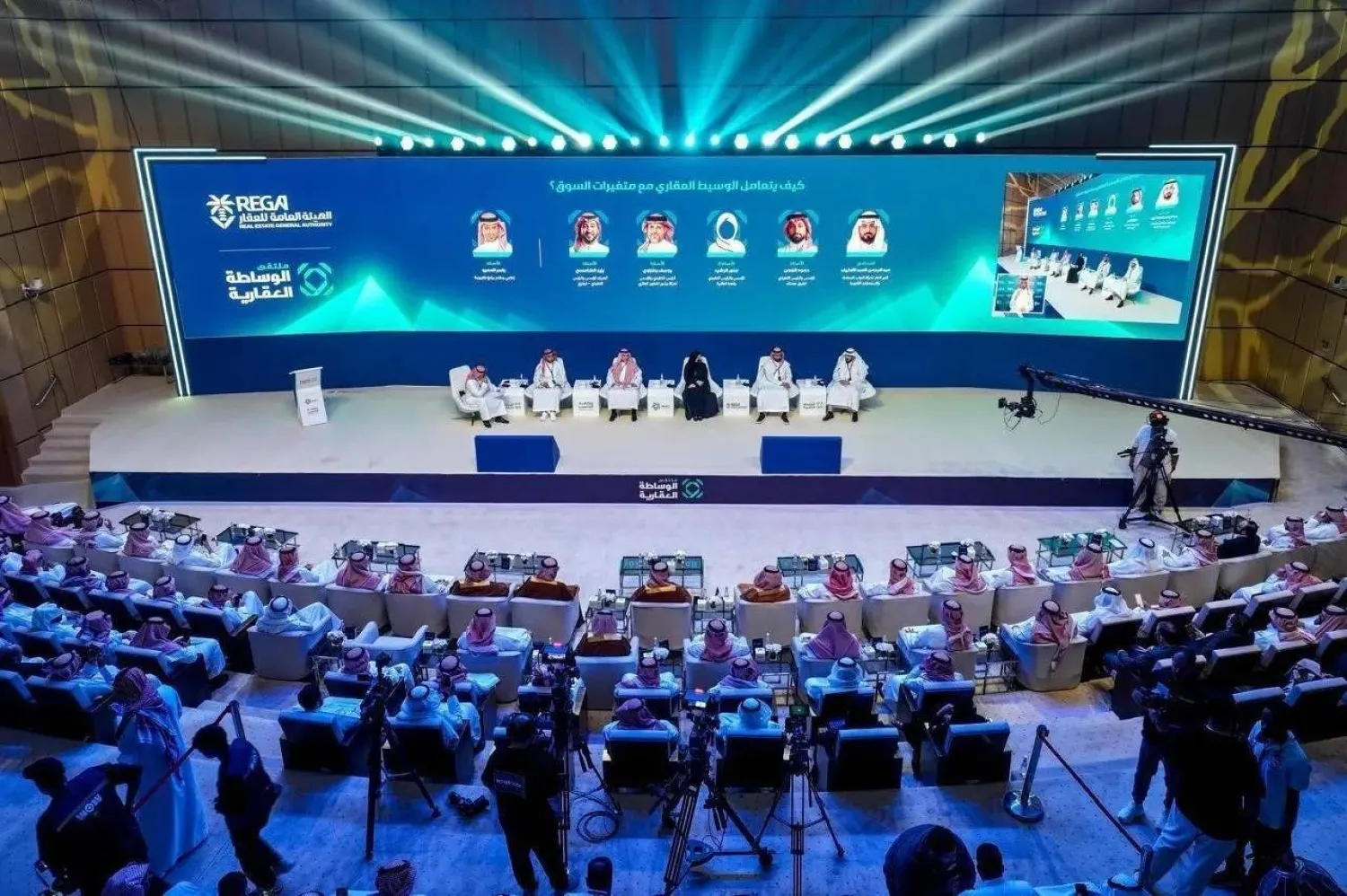

Saudi Arabia Announces Entry into Classification Phase, Real Estate Advertising Is Conditional on FAL License

A panel discussion is held at the Real Estate Brokerage Forum in Riyadh. (SPA)
TT

Saudi Arabia Announces Entry into Classification Phase, Real Estate Advertising Is Conditional on FAL License

A panel discussion is held at the Real Estate Brokerage Forum in Riyadh. (SPA)

The Saudi government announced during the Real Estate Brokerage Forum, which concluded its activities Sunday in Riyadh, the entry into the real estate classification phase, and the upcoming release of two draft guides for classifying real estate brokerage and marketing establishments and real estate auction establishments through the "Istitlaa" platform.

This aims to develop standards that enhance the clarity of establishment data and raise the quality of practice with the participation of the sector and the public.

The event also witnessed the announcement that real estate advertising will be restricted exclusively to those licensed to practice real estate brokerage and marketing activity through the FAL license.

The event revealed that the number of sales and rental transactions registered since the Real Estate Brokerage Law came into effect in Saudi Arabia has reached more than 13 million transactions, with a total value exceeding 1.6 trillion riyals ($426.6 billion).

These indicators highlight the size of the market in which the system operates, as well as the importance of the licensed broker's role in regulating the relationship between parties, documenting transactions, and enhancing the clarity of practice and service quality.

These figures emerged as the Real Estate General Authority (REGA) concluded the activities of the third edition of the Real Estate Brokerage Forum, marking three years since the Real Estate Brokerage Law came into effect.

The event was held in the presence of Chief Executive Officer of the Authority Engineer Abdullah bin Saud Al-Hammad with the participation of a number of experts, specialists, real estate brokers, brokerage establishments, and individuals interested in the real estate sector.

The forum reviewed the indicators of real estate brokerage activity from the time the law came into effect until the end of last June; the total number of real estate brokerage licenses issued to individuals and establishments reached more than 117,000 licenses, and the number of brokerage contracts reached 1.1 million.

The number of real estate advertisements exceeded 1.2 million advertisements, reflecting the expanding scope of licensed practice and the growing presence of documentation and regulated advertising in the real estate market.

The main session discussed the most significant changes in the real estate market and the tools that enable brokers to keep pace with them, foremost of which are the development of rules and regulations, real estate technologies and artificial intelligence, and changing consumer behavior.

Discussions also tackled the developmental and investment transformations taking place in the Kingdom and their implications for the future of real estate brokerage.

The speakers stressed that real estate rules and regulations have contributed to building a clearer contractual environment that preserves the rights of transacting parties.

They noted that a broker's professionalism is linked to knowledge, speed of execution, compliance with regulations, and understanding the scope of work, projects, and markets in which they operate.

They also said that the advanced digital infrastructure in the Kingdom grants brokers more efficient tools to verify and analyze data and to develop the customer experience.

The forum witnessed the announcement of the real estate brokerage levels track aimed at building a gradual professional qualification journey that raises practitioner readiness and combines regulatory knowledge with applied skills.

The real estate rules and regulations diploma was announced, which is offered by the Saudi Real Estate Institute in cooperation with the Institute of Public Administration. It aims to prepare specialized legal and regulatory competencies that meet the needs of the sector.

A cooperation agreement was signed between the Saudi Real Estate Institute and King Saud University to launch the Real Estate Fellowship Program.

The forum included awareness workshops addressing anti-money laundering and the role of the Saudi Real Estate Arbitration Center in settling real estate disputes.

The forum concluded with honoring the winners of the Real Estate Awareness Award, which aims to stimulate initiatives and programs to enrich specialized real estate content.

The Real Estate Brokerage Forum is held annually in conjunction with the anniversary of the Real Estate Brokerage Law coming into effect. It brings together practitioners, establishments, platforms, and specialists to discuss the profession's updates, exchange experiences, and review tracks and enablers that support the development of practice and elevate the quality of real estate services.



Saudi Arabia Drives September Surge in OPEC+ Output Despite Iran War Disruptions

An oil tanker at Ras Al-Khair port, north of Dammam, in 2019. REUTERS
TT

Saudi Arabia Drives September Surge in OPEC+ Output Despite Iran War Disruptions

An oil tanker at Ras Al-Khair port, north of Dammam, in 2019. REUTERS

OPEC+ crude output surged in September as Saudi Arabia ramped up production, despite continued disruption to oil shipments through the Strait of Hormuz caused by the Iran war, OPEC said in its monthly report on Tuesday.

The Organization of the Petroleum Exporting Countries raised its forecast for global oil demand growth in 2027 to 2.55 million barrels per day (bpd) from 2.36 million bpd, citing the need to replenish inventories depleted by war-related supply disruptions.

But it cut its demand growth forecast for this year for a sixth straight month, to 180,000 bpd from about 380,000 bpd in its August estimates.

OPEC+, which groups OPEC members and allies including Russia, pumped an average of 39.068 million bpd in September, up 903,000 bpd from 38.165 million bpd in August, the report showed.

Output has risen by about 1.36 million bpd since July, when it stood at 37.710 million bpd, according to the secondary sources OPEC uses to track production.

OPEC members drove the increase, raising output by about 920,000 bpd to 25.097 million bpd from 24.177 million bpd a month earlier. Production by participating non-OPEC countries fell by about 18,000 bpd.

Saudi Arabia leads surge

Saudi Arabia posted the alliance's largest production increase. Output climbed to 8.372 million bpd in September from 6.238 million bpd in August, a gain of more than 2 million bpd, according to figures the kingdom submitted to OPEC.

The increase comes as Saudi Arabia seeks to restore oil flows and strengthen the resilience of its exports against war-related disruptions. Aramco increased oil loadings at Gulf export terminals in September after an attack on the East-West pipeline disrupted shipments through the Red Sea.

Inventory rebuilding to support demand

OPEC expects global oil demand to rise by 2.55 million bpd in 2027 to average 108.3 million bpd, compared with 108.19 million bpd in last month's forecast.

The forecast assumes demand growth in 2026 will slow as currently expected, with the need to replenish depleted inventories supporting growth next year, OPEC said.

For 2026, the group expects demand growth of just 180,000 bpd. It also cut its fourth-quarter demand estimate to 107.73 million bpd from 107.85 million bpd in last month's report.

Demand in countries belonging to the Organisation for Economic Co-operation and Development is forecast to shrink by about 210,000 bpd this year, while demand in non-OECD economies is expected to grow by 390,000 bpd.

Oil supply from outside OPEC+ is forecast to grow by 640,000 bpd in 2026 and 620,000 bpd in 2027.

Russian output declines

Russian oil output fell by 38,000 bpd in September to 8.643 million bpd, the report showed, amid continued Ukrainian strikes on Russian energy infrastructure, including refineries.

Russian Deputy Prime Minister Alexander Novak said the country would trim oil production this year. Russia's Economy Ministry lowered its 2026 output forecast to a 17-year low amid the war with Ukraine.

Kazakhstan's production rose by 22,000 bpd in September to 1.851 million bpd, according to the OPEC report.


From Hydrogen to AI, Energy Leaders Map the Sector’s Global Future

A panel discussion examines challenges and opportunities at the World Petroleum Congress in Riyadh (Asharq Al-Awsat)
TT

From Hydrogen to AI, Energy Leaders Map the Sector’s Global Future

A panel discussion examines challenges and opportunities at the World Petroleum Congress in Riyadh (Asharq Al-Awsat)

Green hydrogen, artificial intelligence and strategic partnerships took center stage at the World Petroleum Congress in Riyadh, as sessions mapped the energy sector’s future amid rapid technological and industrial change.

Progress on clean energy projects, led by the NEOM Green Hydrogen Project, now 96% complete, intersected with the challenge of cutting emissions from transport, which accounts for about 30% of global energy demand.

The discussions highlighted a widening agenda: developing energy sources and reshaping how energy is produced and used to improve efficiency and sustain supplies.

Saudi Aramco said it plans to increase gas sales by 80% by 2030 compared with 2020 and 2021 levels, and to build and start operating six to seven gas and liquefied gas facilities between 2025 and 2027.

Decarbonization

Transport and logistics account for about 30% of global energy demand, Saudi Vice Minister of Transport and Logistics Services Rumaih Al-Rumaih told a conference session.

Decarbonization is a long journey that requires a broader energy mix, he said, stressing the need for available, reliable, affordable and safe supplies.

The Saudi Green Initiative provides a framework for reaching net-zero emissions by 2060, with transport playing a major role, Al-Rumaih said.

Saudi Arabia is expanding public transport and cutting urban emissions to meet its commitments, he added. The Riyadh Metro network spans 187 kilometers and has 85 stations.

Green hydrogen

National Development Fund Governor Abdulaziz Al-Arifi said the fund had provided financing and strategic support for the NEOM Green Hydrogen Project alongside local banks and other entities and organizations.

That support helped advance one of the clean energy sector’s leading projects, strengthening investment opportunities and local content, he told the conference.

ACWA Power Chairman Mohammad Abunayyan said local resources, knowledge and expertise accounted for about 90% of those used in new projects. He reaffirmed the company’s commitment to expanding investment and overcoming challenges on the ground in major global markets such as China.

At the same session, Saudi Aramco Executive Vice President of Gas Abdulkarim Al-Ghamdi discussed operational readiness and supply chains.

Resource localization under the company’s iktva program had reached levels ranging from more than 75% to 90%, he said, offering strong protection against external disruptions.

Saudi personnel and technological integration are the two pillars of sustained gas-sector growth and future resilience, he said.

Artificial intelligence

A panel at the 25th World Petroleum Congress explored how energy powers artificial intelligence, how the two sectors interact and how AI can sharpen decisions, improve operations and raise energy efficiency.

Speakers said development of the energy and electricity sectors under Vision 2030 aims to meet demand and attract investment, including in AI data centers that need reliable, competitively priced electricity.

The approach involves anticipating sectors’ needs and connecting them with investors. Speakers stressed the need to integrate infrastructure, data, technology and human expertise, drawing on Saudi Arabia’s strengths to develop solutions and bring them to global markets.

Smart meters

AI can improve forecasts of electricity loads and demand and detect grid faults early, helping planners respond faster, speakers said.

Smart meter data can track consumption, forecast bills, show electricity use by appliance and flag unusual usage.

In oil and gas exploration and resource development, particularly drilling, AI can analyze data in real time and combine engineering models with geological information.

This can speed up decisions, improve accuracy, shorten the gap between planning and execution, enhance safety and support risk assessments and investment decisions.

To expand these applications, companies must deliver tangible business value and integrate the tools into operations, speakers said.

They must also ensure data quality and timely collection, train personnel to assess outputs and keep people involved in final decisions, while using digital tools to reduce risks.


IMFC Extends Aljadaan's Term as Chair by One Year

Saudi Arabia's Finance Minister Mohammed Al-Jadaan speaks during a press briefing following a meeting of the IMFC (International Monetary and Financial Committee) at the 2026 IMF and World Bank Group Spring Meetings in Washington, DC, on April 17, 2026. (Photo by Kent Nishimura / AFP)
TT

IMFC Extends Aljadaan's Term as Chair by One Year

Saudi Arabia's Finance Minister Mohammed Al-Jadaan speaks during a press briefing following a meeting of the IMFC (International Monetary and Financial Committee) at the 2026 IMF and World Bank Group Spring Meetings in Washington, DC, on April 17, 2026. (Photo by Kent Nishimura / AFP)

The International Monetary and Financial Committee (IMFC) of the International Monetary Fund (IMF) announced a request for a one-year extension of Saudi Finance Minister Mohammed Aljadaan's term as Committee Chair after his current term ends on January 3, 2027.

The move aims to ensure continuity in the Committee's work and maintain momentum in advancing its key priorities, including important ongoing reforms.

In a statement issued Tuesday, the IMF said Committee members had asked Aljadaan to extend his term as Chair for an additional year and that he had agreed. Aljadaan was selected to chair the Committee for a three-year term beginning January 4, 2024.

Committee members expressed appreciation for Aljadaan's leadership, saying the extension would help ensure continuity and sustain momentum in addressing the Committee's key priorities, including its efforts on important ongoing reforms.

The IMFC is the primary policy advisory body of the IMF's Board of Governors and comprises finance ministers and central bank governors. It deliberates on major policy issues facing the Fund and the international monetary and financial system.

The Committee has 25 members, reflecting the composition of the IMF's Executive Board. Each member country, or group of member countries that elects an Executive Director to the Board, appoints a representative to the Committee.

The IMFC normally meets twice a year, once during the Spring Meetings and again in the fall, alongside the Annual Meetings of the IMF and World Bank Group.