
Acwa Field Services Acquires EthosEnergy's Steam Turbine Business

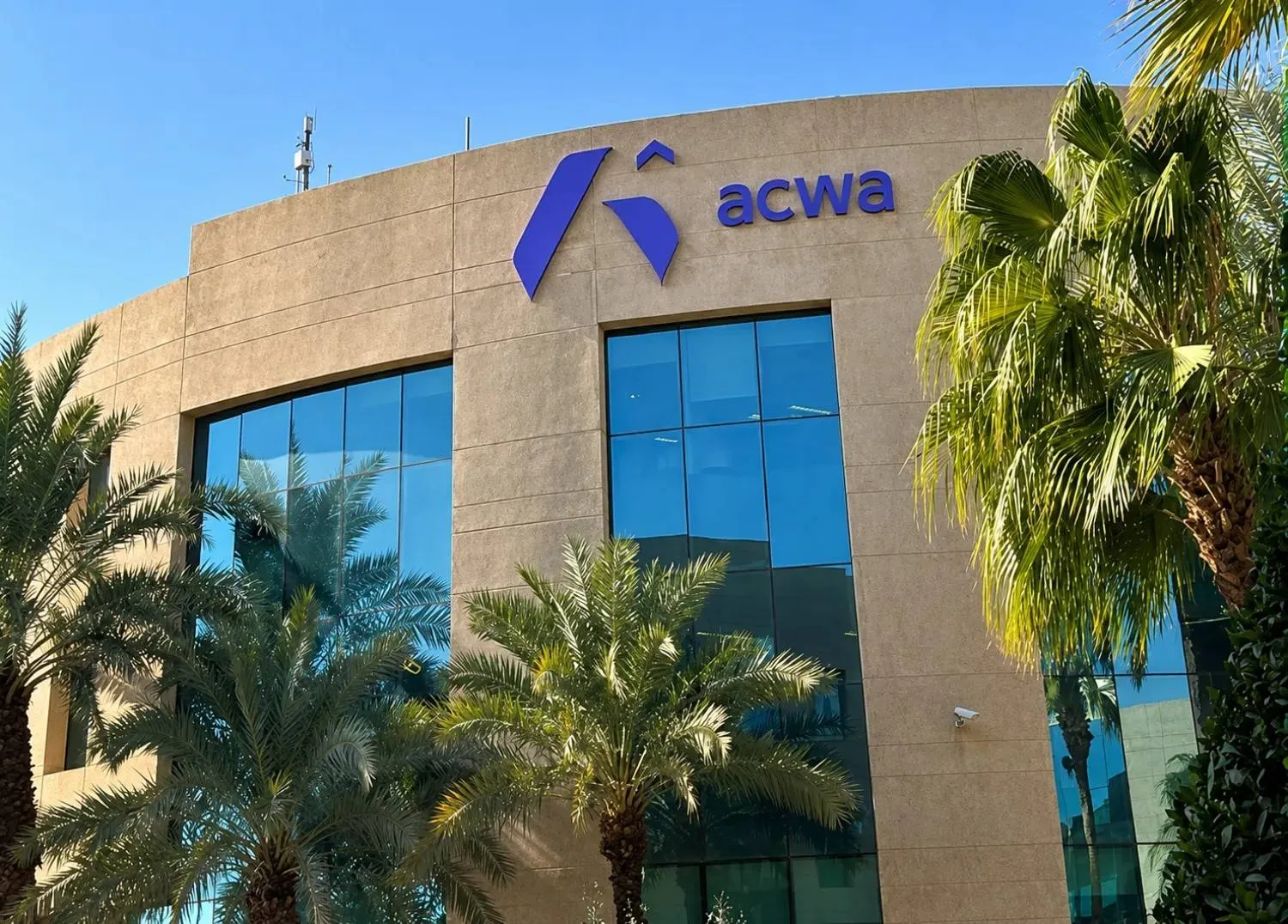
 The ACWA headquarters in the Saudi capital, Riyadh (Asharq Al-Awsat) 
 The ACWA headquarters in the Saudi capital, Riyadh (Asharq Al-Awsat) 
TT

Acwa Field Services Acquires EthosEnergy's Steam Turbine Business

 The ACWA headquarters in the Saudi capital, Riyadh (Asharq Al-Awsat) 
 The ACWA headquarters in the Saudi capital, Riyadh (Asharq Al-Awsat) 

Acwa Field Services, the field maintenance and technical services subsidiary of Saudi-listed Acwa, has acquired the steam turbine services business of EthosEnergy in Wrocław, Poland, the company announced on Monday.

The acquisition marks Acwa Field Services’ first entry into the European Union and forms the first step in a broader international growth strategy.

The deal transfers 85 employees, specialist equipment, intellectual property, established contracts and a contracted service backlog to Acwa Field Services, which will operate the business as Acwa Field Services Poland.

The two companies did not disclose the value of the deal, which will see Acwa Field Services acquire an established steam turbine services business with a skilled workforce, specialist equipment and a live contract base already operating in the market.

According to Acwa Field Services, the deal strengthens the company’s steam turbine field services capability, adds specialized engineering and technical expertise, and widens its execution footprint across Europe, providing a platform to grow both transactional and long-term contractual work in the region and beyond.

“Acwa Field Services is central to how we protect and extend the value of the assets we operate, while enhancing our competitiveness,” said Matthew York, President of Acwa Operations.

“This acquisition is a clear statement of intent. Owning a specialist maintenance capability, rather than contracting it out, gives us greater control over performance, cost, and reliability across our fleet,” he said.

According to York, acquiring EthosEnergy's steam turbine business in Poland gives Acwa Field Services the team, the technical depth, and the customer relationships to build a strong European service business.

EthosEnergy's Wrocław operation complements Acwa Field Services' existing offering and strengthens the platform on which the subsidiary intends to grow a portfolio of transactional and contractual work in Europe and beyond.

“As we continue reshaping EthosEnergy, this transaction supports our strategy to simplify our portfolio and strengthen our focus on core operations,” said Ana Amicarella, Chief Executive Officer of EthosEnergy.

She said the Steam Turbine Business in Wroclaw is joining an organization that aligns closely with its expertise and long-term growth ambitions.

“We are confident that, as part of Acwa, the business will continue delivering the exceptional service, technical excellence, and customer support for clients across the Oil & Gas, Power Generation, and Industrial Manufacturing sectors,” Amicarella noted.

Acwa Field Services Poland will operate as an integral part of the Acwa global group of companies, extending the subsidiary's reach into the wider power generation industry, including independent power producers, government utilities and the oil and gas sector.

Acwa's current portfolio spans 111 assets across 16 countries, representing 468.9 billion Saudi riyals ($125 billion) of assets under management, a foundation few private developers anywhere can match.



Norway's Sovereign Fund Proposes Deep Cuts to US Treasury Holdings

A general view of the Norwegian central bank in Oslo, Norway March 6, 2018. Picture taken March 6, 2018. REUTERS/Gwladys Fouche
TT

Norway's Sovereign Fund Proposes Deep Cuts to US Treasury Holdings

A general view of the Norwegian central bank in Oslo, Norway March 6, 2018. Picture taken March 6, 2018. REUTERS/Gwladys Fouche

The manager of Norway's $2.3 trillion sovereign wealth fund has proposed significantly cutting its exposure to US Treasuries as part of a wider shake-up of its bond investments to improve returns, according to a letter published this week.

Norges Bank Investment Management has recommended reducing its weighting to government bonds within its benchmark bond index to 50% from 70%, with US Treasuries, the biggest holding, getting the biggest cut, according to the letter.

The changes would mean cutting nearly $80 billion from the fund's current holdings of about $215 billion of US Treasuries as of the end of June, according to Reuters calculations.

Government bond markets have been under pressure recently, with long-term borrowing costs soaring as rising inflation and government debt levels spooked investors.

Norway's sovereign wealth fund, the world's largest, owns on average 1.5% of ⁠all listed companies ⁠globally. Its scale means that portfolio decisions can influence broader market flows. Any cuts to its bond holdings are unlikely to be implemented until several months into 2027 at the earliest.

The letter containing the fund's proposals was sent in response to questions from Norway's finance ministry about the wealth fund's investment strategy for bonds.

Norges Bank IM said it would await the ministry's response, and any changes would be done gradually to limit market impact and transaction costs.

The proposals will form part of recommendations to the ministry in January.

They will be discussed ⁠as part of the fund's annual white paper process next spring, after which the ministry will make a final recommendation to parliament which will then hold a hearing, a Norges Bank IM spokesperson said.

"We recommend that the government subindex of the bond index be reduced from 70% to 50%," Ida Wolden Bache, governor of Norges Bank, and Norges Bank IM CEO Nicolai Tangen wrote in the letter.

"A government share of 50% will be sufficient to cover the liquidity needs, including in periods of turbulence in financial markets."

The fund also proposed considering an increase in investments in unlisted assets in a separate letter, in part as a way to reduce concentration risks that have grown in its equity portfolio amid the boom in the share prices of a handful of US tech companies.

Under its current mandate the fund can own unlisted real estate and renewable energy assets, but it has a lower share of unlisted investments ⁠than comparable funds.

Norges Bank IM said the biggest change to its bond index would be investing in more non-government debt, including mortgage-backed securities, to give it better diversification and exposure to risk premiums.

The spokesperson said total US dollar exposure would remain around 50%, adding: "What changes is the mix inside the dollar market: less US government debt, correspondingly more US mortgage and government-related bonds."

Under the proposals, the bond index weighting to US government bonds would reduce from 34.1% to 21.9%, according to the letter, with the allocation to euro area debt falling more modestly from 16.8% to 14.1%.

The allocation to Japanese government bonds would increase from 4.6% to 7.4%, while the UK allocation would remain unchanged at 4.2%. The fund said the changes would align the index more closely with the broader market weightings.

While US Treasuries exposure would fall, the proposed allocation to US non-government debt would jump from 16.2% to 27.6%, meaning that the overall bond index's weighting to the US dollar would fall only slightly, from 52.9% to 52.5%.

Europe's biggest pension fund, Dutch fund ABP, cut the value of its own US Treasury holdings in the first quarter of this year, Reuters previously reported.


J.P. Morgan, BNP Paribas Forecast December ECB Rate Hike

FILE PHOTO: The logo of the European Central Bank (ECB) is pictured outside its headquarters in Frankfurt, Germany, April 26, 2018. REUTERS/Kai Pfaffenbach/File Photo
TT

J.P. Morgan, BNP Paribas Forecast December ECB Rate Hike

FILE PHOTO: The logo of the European Central Bank (ECB) is pictured outside its headquarters in Frankfurt, Germany, April 26, 2018. REUTERS/Kai Pfaffenbach/File Photo

J.P. Morgan and BNP Paribas said on Thursday they expect the European Central Bank to deliver another 25-basis-point rate hike in December, as persistent inflation risks and elevated energy prices strengthen the case for further tightening.

Both brokerages had previously expected the ECB's tightening cycle to end without a December rate increase.

The revised outlooks suggest borrowing costs in the euro zone will remain elevated for longer than previously anticipated, reflecting resilient regional economic ⁠growth and ongoing energy ⁠supply concerns.

"We think the persistence of the energy shock and the resilience of the economy make second-round effects more likely to materialize," said analysts at BNP Paribas in a note.

Markets have almost fully priced in ⁠a 25-basis-point interest rate hike by the European Central Bank at its September 10 policy meeting, indicating a 99.2% probability, according to data compiled by LSEG.

Oil prices eased but remained above $95 a barrel. At the same time, eurozone bond yields retreated from multiyear highs, following recent market pressure as the escalating conflict in Iran boosted energy prices, stoking fears of persistent inflation and ⁠tighter ⁠monetary policy.

According to Reuters, J.P. Morgan said "an interaction between more persistent energy price pressures, solid growth, sticky core inflation and a neutral rate that the ECB sees edging higher" would be the reason for a further rate hike in December.

BNP Paribas expects the ECB to hike interest rates by 25 bps at its meeting next week while leaving the door wide open to delivering more if evidence of second-round effects builds.


US Sanctions Turkish Bank, 2 Subsidiaries to Pressure Iran

ASHEVILLE, NORTH CAROLINA - SEPTEMBER 1: Treasury Secretary Scott Bessent arrives for a press conference as the 2026 G20 Financial meetings come to a close on September 1, 2026 in Asheville, North Carolina. Melissa Sue Gerrits/Getty Images/AFPages via AFP)
TT

US Sanctions Turkish Bank, 2 Subsidiaries to Pressure Iran

ASHEVILLE, NORTH CAROLINA - SEPTEMBER 1: Treasury Secretary Scott Bessent arrives for a press conference as the 2026 G20 Financial meetings come to a close on September 1, 2026 in Asheville, North Carolina. Melissa Sue Gerrits/Getty Images/AFPages via AFP)

The US Treasury Department said on Friday it imposed new Iran-related sanctions on a small Turkish investment bank and two subsidiaries as part of the Trump administration's effort to increase economic pressure on Iran.

The entities targeted are Instanbul-based investment bank Golden Global Yatirim Bankasi Anonim Sirketi, asset manager Golden Global Portfoy Yonetimi Anonim Sirketi, and asset leasing company Golden Global Varlik Kiralama Anonim Sirketi, according to the Treasury's Office of Foreign Assets Control.

The sanctions put all three entities on the Treasury's OFAC Specially Designated Nationals list, cutting them off from the dollar-based financial system.

The Treasury Department also issued a general license to allow the wind-down of transactions with the sanctioned entities.

In an interview with news outlet America's Voice News, US Treasury Secretary Scott Bessent ⁠said that the ⁠latest action "is code for you are out of business."

"And we will probably sanction another bank next week, and we are telling the financial system bad actors: 'We know who you are, you know who you are, it's over, and our allies are helping with this," he said.

Golden Global Yatrim Bankasi is the 35th-largest bank in Turkey by total assets, according to database TheBanks.EU, with total assets of 25,024.68 million Turkish lira ($516.63 million) in 2025.

The bank did not immediately respond to a request for comment.

The Treasury said in a statement that Golden Global was established for the purpose of enabling Iran's shadow banking network to transfer oil revenues from China to Türkiye,
where it could then be converted to cash and gold by money exchangers.

The Treasury said that Golden Global has knowingly offered to provide correspondent banking services to Iranian financial institutions, enabling transactions through accounts controlled by the Iranian Revolutionary Guard Corps Qods Force and its proxies.

The action is the latest in the Trump administration's campaign to economically pressure Tehran six months into the US-Israel war with Iran, which has pushed energy prices higher worldwide.

Bessent, who last month announced an "economic onslaught" against Iran's financial links around the world, has said Washington is seeking to force Tehran back to the negotiating table.

Last week, Washington moved to impose Patriot Act curbs ⁠on Egyptian lender Banque Misr's ⁠branches in the United Arab Emirates from US dollar transactions over their dealings with Iran. But the action fell short of full OFAC sanctions on the institution that did not affect Misr's head office or branches elsewhere.

In an interview with Reuters on Sunday, Bessent said the Treasury Department was likely to roll out new secondary sanctions every week, initially focusing on banks, as part of a broader campaign to intensify economic pressure on Iran.