


South Korea Sends 1st Container Ship Through Arctic Route

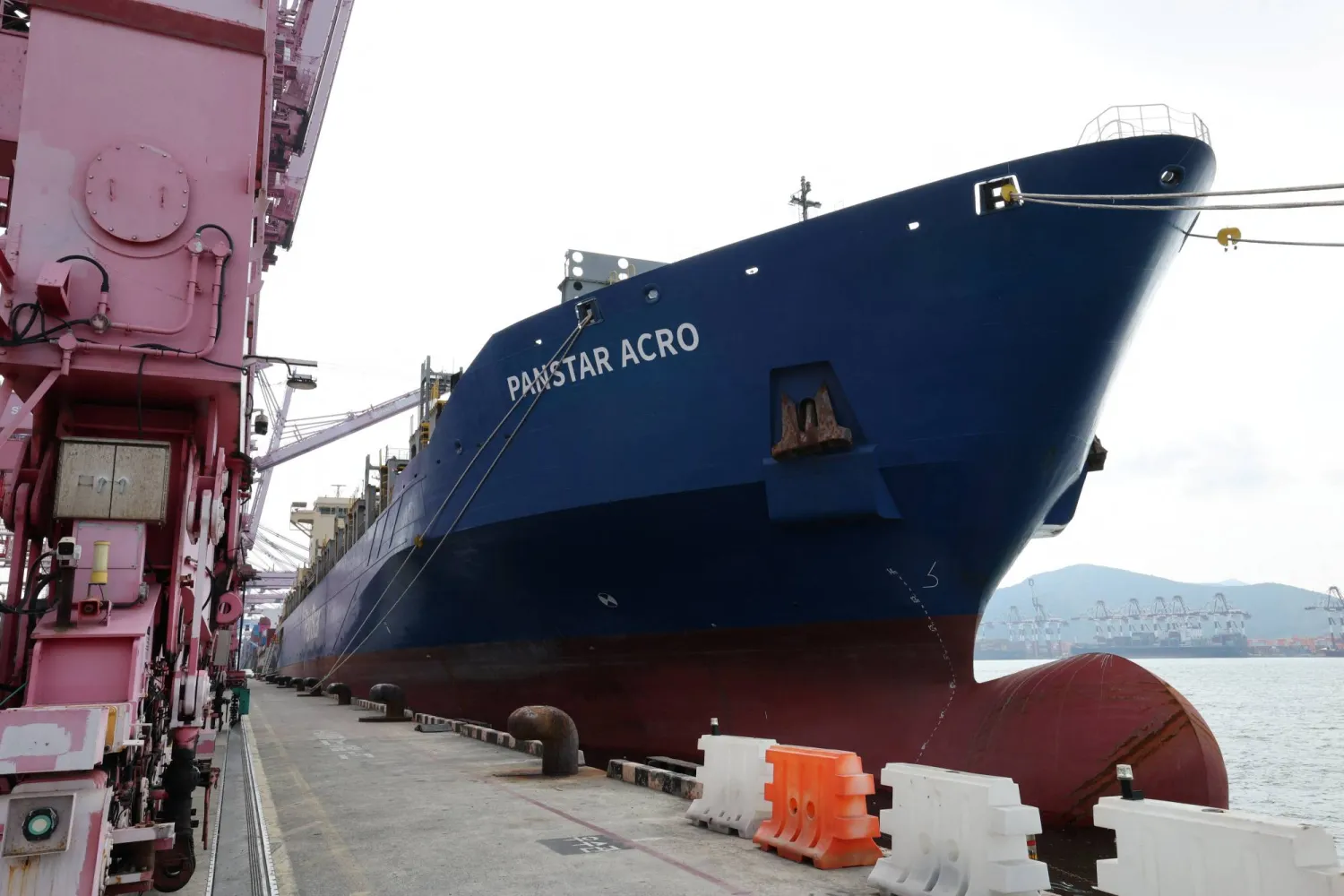
The container ship 'Panstar Acoro,' bound for Europe via the Arctic, docks at Busan port in South Korea on August 22, 2026 (Yonhap News Agency via Reuters)
TT

South Korea Sends 1st Container Ship Through Arctic Route

The container ship 'Panstar Acoro,' bound for Europe via the Arctic, docks at Busan port in South Korea on August 22, 2026 (Yonhap News Agency via Reuters)

South Korea sent its first trial container ship through the Arctic on Saturday, as the Middle East war rattles global shipping, while environmental groups warned the route could accelerate polar ice melt.

The Middle East conflict, sparked by US-Israeli strikes on Iran in February, has roiled global shipping, sending governments and shipping firms scrambling to seek alternative routes.

Sailing from Busan New Port, the "PanStar Acro" container ship is to sail to Europe via the Arctic, testing whether a route opened by melting sea ice can be commercially viable.

"We would like to inform you that the vessel for the Arctic route trial voyage departed" at 9:30 pm (1230 GMT), Seoul's oceans ministry said in a statement sent to AFP.

The ship is headed for Felixstowe in Britain, Rotterdam in the Netherlands and Gdansk in Poland before returning, with the voyage expected to take about 45 days, according to the ministry.

The voyage follows that of the Chinese container ship "Dubai Tower", which left the eastern port city of Ningbo for Europe this month, heading north through the Bering Strait before turning west along Russia's Arctic coast.

The usual maritime route between Asia and Europe runs through the Suez Canal, but travelling through the Arctic can cut the journey by around 7,000 kilometers (4,300 miles) and about 10 days, according to the Korea Institute for International Economic Policy.

South Korea's Vice Oceans Minister Nam Jae-hon said the Arctic route was "bound to become an alternative" to Middle Eastern shipping lanes -- as geopolitical risks and technological advances make it increasingly competitive.

Marc Lanteigne, a political science professor at the Arctic University of Norway, said the voyage -- coming soon after China's "Dubai Tower" began its own Arctic journey -- showed the Northern Sea Route (NSR) was becoming normalized as a "secondary maritime transit corridor".

A successful voyage would demonstrate South Korea's interest in "developing alternative shipping sea lanes", he told AFP, with concerns that it could fall behind as Chinese firms expand regular services through the increasingly viable Arctic route.

Some experts warn South Korean ships using the Arctic route could risk breaching Western sanctions on Russia -- currently a key security ally of North Korea -- as they would receive Russian navigation and weather services involving payments, albeit small ones.

South Korea's foreign ministry declined to comment when asked by AFP about the concerns involving Russia.

The oceans ministry said this week that "consultations with key relevant countries and agencies" have been completed to "implement administrative procedures necessary" for the voyage.

Vladimir Tikhonov, Korean Studies professor at the University of Oslo, said "strictly speaking, US and EU sanctions are not international law, unlike UN sanctions".

"And with continued uncertainty in the Middle East... South Korea may have few alternatives if the Arctic route proves economically viable," he told AFP.

Lanteigne said China's Northern Sea Route ambitions were more politically driven than South Korea's, with Beijing viewing the polar regions as "strategic new frontiers", raising Western security concerns.

Meanwhile, environmental groups warned growing traffic along the shorter NSR could accelerate Arctic sea ice loss already driven by global warming.

Major carriers including CMA CGM, MSC and Hapag-Lloyd have pledged to avoid Arctic shipping routes.

The NSR is believed to be accessible only during the time of year when the ice is melted enough to allow transits without icebreakers.

"The Northern Sea Route has become increasingly viable as the Arctic warms about four times faster than the global average, leading to a sharp decline in sea ice," South Korean environmental group Paran Ocean Citizen Science Center said in a statement last year.

"But making the route commercially viable would require further warming, putting the policy at odds with efforts to combat climate change."



Syria Central Bank Expects More Than $1 Billion to Establish New Banks

President Ahmad al-Sharaa issued a decree appointing Nebras Mohammad Wahid Khayyata as first deputy governor of the Central Bank of Syria. (X) 
TT

Syria Central Bank Expects More Than $1 Billion to Establish New Banks

President Ahmad al-Sharaa issued a decree appointing Nebras Mohammad Wahid Khayyata as first deputy governor of the Central Bank of Syria. (X) 

Syria expects more than $1 billion in foreign capital to flow into the country to establish new banks, Central Bank Governor Mohammad Safwat Raslan said, as the bank seeks to encourage investment, protect customers’ rights and open secure money-transfer channels through official institutions.

Raslan told state news agency SANA on Sunday that licensing requirements already exist for both Islamic and conventional banks. Key criteria include applicants’ experience and reputation and the founders’ financial solvency, as well as a requirement for a strategic banking partner to hold at least a 10 percent stake in the new bank.

The timeframe for granting licenses depends on applicants submitting the required documents and meeting the stipulated conditions, he explained. The Central Bank is working to ensure that preliminary licenses are issued within three to four months of receiving all requirements.

Raslan dismissed concerns about financial risks, noting that the law allows foreign investors to retain 60 percent of their paid-in capital in foreign currency. Investors’ rights to profits and their transfer are also protected, he added, pointing to the removal of all restrictions on buying, selling or transferring foreign currency.

On regulatory risks, Raslan stressed that the Central Bank issues its regulatory and supervisory decisions in accordance with international risk and accounting standards, meaning investors should find no difference between standards applied in Syria and those in their home countries.

The Central Bank is also encouraging international money-transfer providers to enter the Syrian market through Syrian financial institutions to create secure transfer channels for Syrians and foreigners and protect their rights and interests.

Daily and monthly transfer limits will be determined by agreements between Syrian financial institutions and banks or service providers abroad, according to the official.

Separately, President Ahmad al-Sharaa issued Decree No. 176 of 2026 appointing Nebras Mohammad Wahid Khayyata as first deputy governor of the Central Bank of Syria. The decree also repealed any provisions conflicting with its terms.


Riyadh to Host Global Energy Leaders for Talks on Markets, Supply

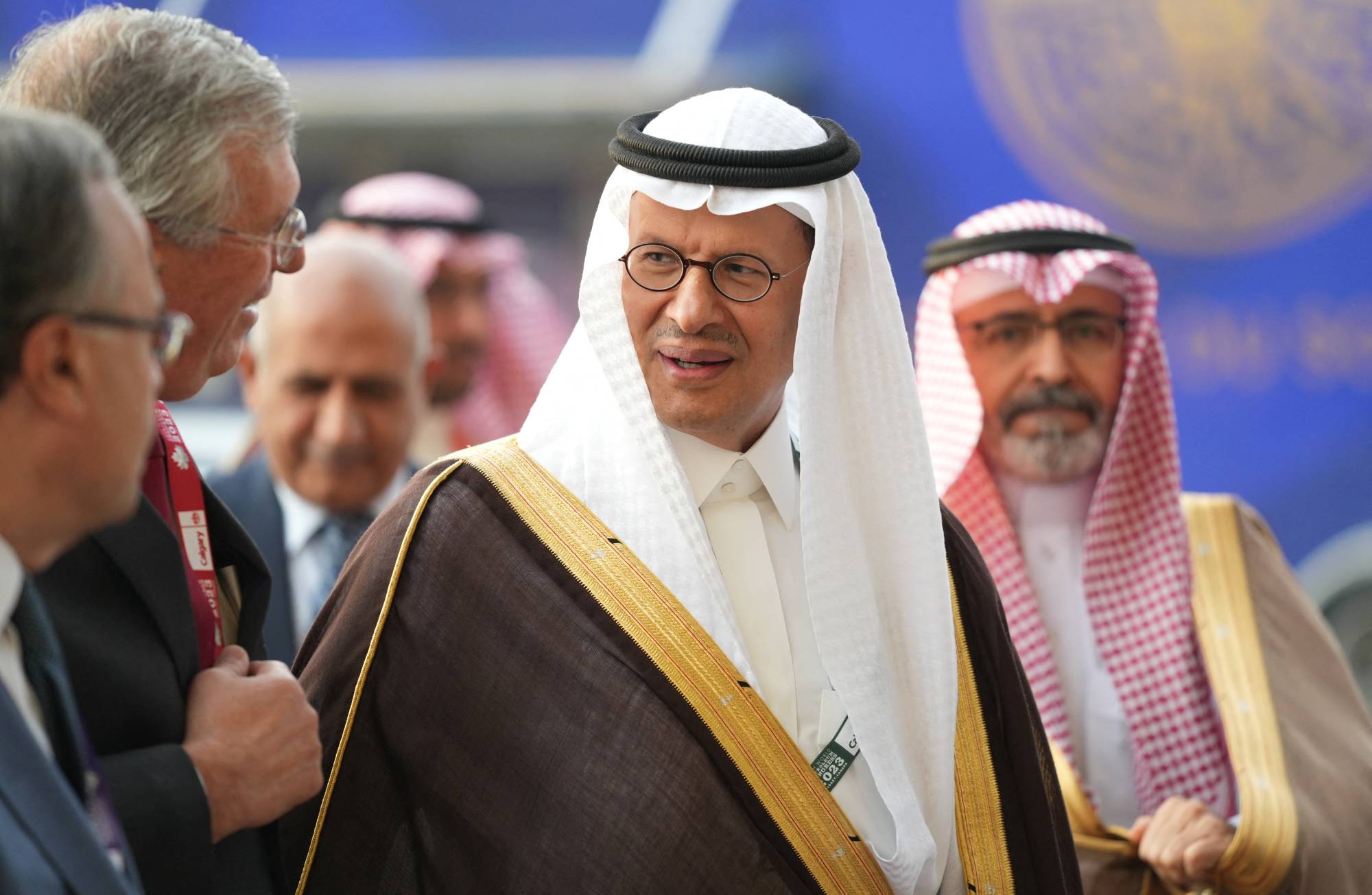
The Saudi Energy Minister during the opening ceremony of the 24th World Petroleum Congress in Calgary, Canada, in 2023 (Reuters)
TT

Riyadh to Host Global Energy Leaders for Talks on Markets, Supply

The Saudi Energy Minister during the opening ceremony of the 24th World Petroleum Congress in Calgary, Canada, in 2023 (Reuters)

Saudi Arabia will bring together some of the world’s most influential energy leaders in Riyadh from Oct. 11-15 for high-level talks on energy security, oil and gas markets, investment and the technologies reshaping the global energy industry.

At the heart of Riyadh Energy Week will be the 25th WPC Energy Congress, hosted by Saudi Arabia for the first time in the event’s nearly 90-year history. Held under the theme “Pathways to an Energy Future for All,” the congress will feature more than 30 ministerial, strategic and leadership sessions spanning global energy markets, investment and financing, artificial intelligence, critical minerals, carbon management, natural gas and the future energy mix.

The congress will run from Oct. 11-15 at the Riyadh Front Exhibition & Conference Center, with its official opening ceremony on Oct. 12. Organizers expect more than 25,000 participants, including 100 ministers, 500 CEOs and around 800 speakers, as well as representatives from about 1,000 companies. The exhibition will cover more than 50,000 square meters.

Riyadh Energy Week will also include an International Energy Forum ministerial meeting, Clean Energy Ministerial and Mission Innovation events, along with other sessions bringing together governments, international organizations and companies from across the energy value chain.

The Saudi Energy Minister upon his arrival to participate in the World Petroleum Congress in Calgary, Canada in 2023 (Reuters)

Global Government and Industry Leaders

Saudi Energy Minister Prince Abdulaziz bin Salman will formally open the congress on Oct. 12 alongside WPC Energy President Pedro Miras.

The executive program will include Saudi Economy and Planning Minister Faisal Alibrahim and Investment Minister Fahad Abduljalil Al-Saif, as well as Egyptian Petroleum and Mineral Resources Minister Karim Badawi, OPEC Secretary General Haitham Al Ghais, World Energy Council Secretary General and CEO Angela Wilkinson and International Energy Forum Secretary General Jassim Al Shirawi.

Leading industry speakers include ExxonMobil Chairman and CEO Darren Woods, TotalEnergies Chairman and CEO Patrick Pouyanne, Shell CEO Wael Sawan, BP CEO Meg O’Neill, Baker Hughes Chairman and CEO Lorenzo Simonelli, Siemens Energy CEO Christian Bruch, SLB CEO Olivier Le Peuch and ConocoPhillips President and CEO Andy O’Brien.

Prominent energy-market analysts will also participate, including S&P Global Vice Chairman Daniel Yergin, RBC Capital Markets’ Helima Croft, Carlyle senior adviser Jeffrey Currie, Energy Aspects founder and Director of Market Intelligence Amrita Sen and Rapidan Energy Group founder and President Bob McNally.

Energy Security and Markets

Energy security and global oil and gas markets will be among the congress’s main themes, with ministerial sessions bringing together representatives of producing and consuming countries to discuss market developments and the future of supply.

The agenda extends beyond oil and gas, with discussions on forces reshaping the industry, including AI and digitalization, critical minerals, energy-project financing, carbon management and renewables.

AI and digital transformation will feature prominently, with companies including Aramco, Siemens Energy, SLB, Hitachi Energy, Microsoft and Samsung E&A discussing the impact of digital technologies on energy operations, productivity and efficiency.

The discussions come as AI moves from experimental uses toward applications in operations, maintenance, data analysis and process optimization, while also driving increased demand for electricity and infrastructure to support expanding data centers.

A panel discussion at the 24th World Petroleum Congress in Calgary Canada in 2023

Saudi Arabia’s Economic and Energy Transformation

The congress will hold a ministerial session titled “Vision 2030: Economic Transformation and Global Competitiveness,” focusing on Saudi Arabia’s economic transformation and its growing role in the global energy system.

The agenda covers critical minerals and supply chains, carbon capture, utilization and storage, carbon markets, renewable energy and hydrogen, broadening the discussion from security of conventional fuel supplies to the technology, infrastructure and materials required for the future energy system.

The congress will also feature a technical program with more than 30 research and technical forums across five areas: primary energy supply, infrastructure, fuels and molecules, energy technologies and industry leadership.

Riyadh Energy Week will include specialized programs on the circular carbon economy, women in energy, young professionals, social responsibility, AI and digital transformation, as well as an Energy Hackathon and knowledge-sharing and networking events.


White House Releases List of Products US, China Could Tax Less

The White House is photographed, Sunday, Sept. 27, 2026, in Washington. (AP Photo/Allison Robbert)
TT

White House Releases List of Products US, China Could Tax Less

The White House is photographed, Sunday, Sept. 27, 2026, in Washington. (AP Photo/Allison Robbert)

The White House released Sunday lists of products that could benefit from lower tariffs under an arrangement with China affecting $30 billion in goods in each direction, without specifying the rates or timetable.

US President Donald Trump and his Chinese counterpart Xi Jinping concluded a summit on Friday, with their talks covering matters including trade.

The United States and China will review the lists "with a view toward providing reduced tariff treatment to those goods in a reciprocal manner," according to the terms released by the White House.

The US could reduce tariffs on 77 categories of Chinese goods including fireworks, Christmas ornaments, household goods and sports equipment, AFP reported.

China's import list includes more than 1,600 categories of American goods, including meats, grains, dairy, coal and timber.

The White House announced on Friday an agreement on "recommendations" for more favorable tariff treatment for these "non-sensitive goods," following Xi's visit to Washington.

Beijing confirmed the agreement on Saturday.

China also agreed to import at least 10 million metric tons of coal from the US in 2027 and 2028, the White House said.

Xi and Trump agreed to a trade truce last year during a meeting in South Korea, after a tit-for-tat fight that saw tariffs soar over 100 percent at one point.

The pact was originally due to expire in November but both sides have agreed to extend it until January 10, according to US Treasury Secretary Scott Bessent.
