


Trump Announces Deal for Huge US Stake in Venezuelan Oil Reserves

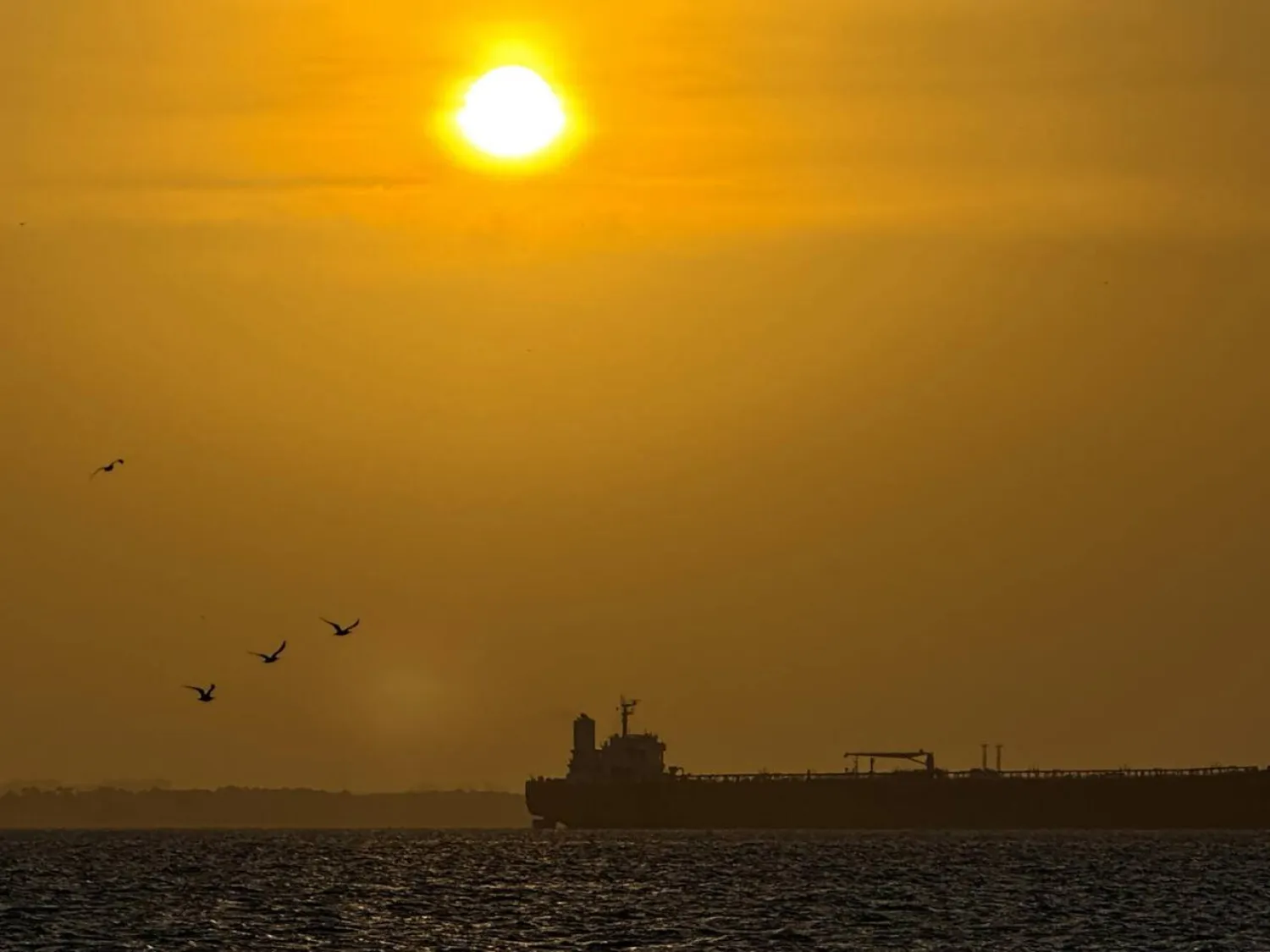
View of an oil tanker at the Maracaibo Lake in Maracaibo, Venezuela, on March 9, 2026. Margioni BERMÚDEZ / AFP
TT

Trump Announces Deal for Huge US Stake in Venezuelan Oil Reserves

View of an oil tanker at the Maracaibo Lake in Maracaibo, Venezuela, on March 9, 2026. Margioni BERMÚDEZ / AFP

President Donald Trump said Friday his administration has reached a huge oil deal with Venezuela that gives the United States majority control of 65 billion barrels of proven petroleum reserves.

The deal -- which Trump proclaimed as "the biggest oil deal in world history" -- will bring nearly $100 billion in private investment to Venezuela, US and Venezuelan officials said.

Venezuela has the world's largest proven oil reserves. Its government has operated under intense pressure and close scrutiny from the Trump administration since the US ousted and captured long time ruler Nicolas Maduro in January, said AFP.

Washington allowed his vice president, Delcy Rodriguez, to stay on and serve as interim leader so long as she toes the US line.

Trump has made no secret of his desire to secure Venezuelan oil for the US, and in his post announcing the deal on his Truth Social platform, he said it will more than double US oil reserves.

Interim leader Rodriguez confirmed what she called a "historic agreement" that would "have a significant impact on the rebirth of our nation."

Writing on social media, she hailed potential investment of "more than $100 billion and more than $209 billion in tax revenue for the State."

Trump said Secretary of State Marco Rubio and Defense Secretary Pete Hegseth had reached the deal with Rodriguez "through a partnership with private business."

"This Transaction will greatly strengthen the already growing relationship between Venezuela and the United States!" Trump wrote.

- Many questions remain -

Rubio said the deal demonstrated how "President Trump's bold foreign policy is driving America First wins: securing stable reserves and low-cost oil in our Hemisphere and lowering gas prices here at home."

"For the Venezuelan people, this deal will bring nearly $100 billion in private investment, support thousands of high-paying jobs, and drive the reconstruction of Venezuela's economy," Rubio wrote on X, without providing further details.

Jorge Pinon, a senior researcher at the Energy Institute at the University of Texas at Austin, said the agreement was unconventional and many questions remained about how the oil assets would be transferred, "not to a private enterprise, but to another country."

"We don't know how the transfer would take place," he said. "Is it a sale? Is it a title transfer? Is it only transferred once the reserves are actually produced?"

The news site Axios had reported Thursday that the two countries were in talks on a dozen productive oil fields with 90 billion barrels of proven reserves -- about a third of Venezuela's total proven reserves of 300 billion barrels.

In return for a US ownership stake, private companies, including American firms, would develop the fields and return more oil revenue to Venezuela, according to Axios.

Axios also said the deal would more than double US oil reserves at a time when the US strategic petroleum reserve is at a 40-year low.

High gasoline prices for Americans is a major political issue for Trump, whose approval ratings have fallen ahead of November's midterm elections after launching a war on Iran that has disrupted global oil supplies.

The Trump administration has been urging US companies to invest in Venezuela, but they remain wary due to dilapidated infrastructure and past appropriation of assets of foreign investors by the government in Caracas.

Chevron, the only US oil company that was still operating in Venezuela when Maduro was ousted, said in July that it had raised its daily crude production to 280,000 barrels and plans to increase output by 50 percent by the end of 2028.

John Kilduff, energy expert at Again Capital, said the biggest problem for companies to operate in Venezuela is "the safety and security of your investment."

He said if the US is now going to control or own the oil fields, the goal would be "to establish a sort of state zone where US companies can go in, operate, and not be impacted, and hopefully eliminate the political risk that otherwise goes with investing in Venezuela."



Saudi Arabia to Host Fifth Innovation Driven Water Sustainability Conference

Hosting IDWS 2026 reflects an advanced stage in the development of Saudi Arabia's water sector - SPA
TT

Saudi Arabia to Host Fifth Innovation Driven Water Sustainability Conference

Hosting IDWS 2026 reflects an advanced stage in the development of Saudi Arabia's water sector - SPA

The Kingdom of Saudi Arabia will host the fifth Innovation Driven Water Sustainability Conference (IDWS 2026) from December 14 to 16, 2026, at the Ritz-Carlton, Jeddah. Organized by the Saudi Water Authority, the conference will bring together leaders, policymakers, investors, innovators, researchers, and specialists from across the water sector to connect innovation with investment and implementation and expand international partnerships in addressing water challenges.

The conference is expected to attract more than 10,000 participants from over 140 countries, with more than 250 speakers, while the accompanying exhibition will feature over 150 global brands.

The conference will bring together representatives of investment funds, financial institutions, and banks, along with investors, water service providers, and industry and technology leaders, to connect financing with solutions and implementation needs, help channel capital, and scale up the deployment of solutions and technologies.

The conference will focus on moving innovations from research and development to implementation and scale-up. In this context, it will host the fourth edition of the Global Prize for Innovation in Water, with total prizes of $10 million across its various stages. The prize supports ideas and solutions addressing key challenges in the water sector, from early-stage research to market-ready solutions.

This year, the prize will introduce a new category focused on water conservation and improved water-use efficiency, encouraging innovations that contribute to demand management and the wider adoption of solutions and technologies that support sustainability.

The conference will also feature Miyahthon, a water hackathon that brings together innovators to develop scalable, implementable solutions, along with technical workshops, the accompanying exhibition, and the Global Water Innovations Launchpad, where innovators and startups can showcase their technologies, products, and solutions to experts, investors, and industry leaders.

Scientific papers will cover seven approved themes: Desalination Technologies and Energy Integration; Water Reclamation, Reuse and Circular Systems; Industrial Water: Sectors, Systems and Solutions; AI, Digital, Autonomous and Cyber-Resilient Water Operations; Agriculture and Food System Water; Water Infrastructure, Networks and Asset Management; and Water Quality & Emerging Contaminants.

This year, the conference agenda will expand to include an eighth theme through a strategic partnership with the Produced Water Society, bringing specialized expertise in the management, treatment, and reuse of water associated with production operations and broadening the exchange of relevant expertise, solutions, and technologies among specialists from Saudi Arabia and around the world.

Hosting the conference in Saudi Arabia gives these themes a practical dimension by drawing on the Saudi water sector's experience in integrated water resources management, improving the efficiency of the water supply system, promoting water reuse, harnessing research and innovation, and building engineering capabilities.

Hosting IDWS 2026 reflects an advanced stage in the development of Saudi Arabia's water sector, which has progressed from developing water systems and improving their efficiency to expanding its role in research, innovation, and the development of technologies and solutions, connecting them with implementation and investment needs, and sharing Saudi expertise and capabilities regionally and internationally.

The conference provides a platform that brings together knowledge, expertise, financing, and technology to accelerate the development of solutions that enhance the efficiency of water services, supply reliability, and resource sustainability, while expanding the deployment of water solutions in Saudi Arabia and around the world.


Real Estate Authority to Asharq Al-Awsat: Strong Interest from International Investors in Saudi Market

Participants at the Saudi Luxury Real Estate Exhibition in London listen to a presentation on one of the projects (Asharq Al-Awsat)
TT

Real Estate Authority to Asharq Al-Awsat: Strong Interest from International Investors in Saudi Market

Participants at the Saudi Luxury Real Estate Exhibition in London listen to a presentation on one of the projects (Asharq Al-Awsat)

Saudi Arabia's real estate market is entering a new phase of openness to international capital, driven by new regulations governing non-Saudi ownership of property and defining the geographic areas where such ownership is permitted. The move reinforces the Kingdom's efforts to establish itself as a global destination for real estate investment, amid growing interest from international investors and investment funds.

Government entities and a number of real estate development companies are seeking to attract investors to the Saudi market through participation in the inaugural Saudi Luxury Real Estate Exhibition, in strategic partnership with the General Real Estate Authority. The event brings together a number of Saudi real estate developers, along with investors, family offices and industry specialists from Britain and international markets.

Taiseer bin Mohammed Al-Mufarrej, official spokesman for the General Real Estate Authority, said the authority's participation in the Saudi Luxury Real Estate Exhibition reflects its role in raising awareness of the Kingdom's new real estate regulatory framework, particularly the recently approved system governing non-Saudi ownership of property, as well as informing investors about the geographic areas designated for ownership.

Al-Mufarrej told Asharq Al-Awsat that the authority's presence at the exhibition goes beyond explaining the new regulations to include direct engagement with investors, answering their questions and clarifying the process for beneficiaries, whether they are buyers, investors or real estate brokers, through to the completion of transactions related to non-Saudi ownership.

He noted that the Saudi Properties platform serves as a key channel for real estate transactions covered by the new system. The authority is using its participation to familiarize investors with the "customer journey" and the mechanisms for using the platform, providing a clearer picture for those seeking to enter the Saudi market and capitalize on the opportunities available.

International Funds Show Interest

The authority's participation was not limited to its exhibition booth. Alongside the event, it organized a series of workshops, panel sessions and roundtables aimed directly at investors, in cooperation with a number of Saudi government entities and private-sector institutions.

Al-Mufarrej revealed that a roundtable was held specifically for international investment funds, with participation from the Saudi-British Business Council. The initiative reflects growing interest in attracting institutional capital to Saudi Arabia's real estate sector, while broadening the investor base targeted by the new regulations.

He said the meetings provided an opportunity for direct dialogue with investors and for hearing their questions about ownership mechanisms, available opportunities and the nature of the market, at a time when the sector's regulatory environment is undergoing changes aimed at enhancing transparency and making the market more attractive to investors both inside and outside the Kingdom.

Riyadh and Jeddah... Makkah and Madinah

According to Al-Mufarrej, the authority's participation demonstrated a high level of interest in the system governing non-Saudi property ownership, from both investors and exhibition visitors seeking real estate in the Kingdom.

He noted that interest is not limited to Riyadh and Jeddah, but also extends to Makkah and Madinah, which are attracting particular attention because of their religious significance and the distinctive nature of real estate demand in the two cities.

"We have seen a very significant impact in raising awareness among investors, visitors and even those looking for property in the Kingdom," he said, noting that inquiries covered the country's major cities, foremost among them Riyadh and Jeddah, as well as Makkah and Madinah.

These developments take on added significance as Saudi Arabia seeks to increase the real estate sector's contribution to the economy and diversify investment channels, alongside major projects, urban expansion and the population and economic growth taking place across the Kingdom's cities.

A "Global Destination for Real Estate Investment"

Al-Mufarrej described attendance at the exhibition as strong, pointing to a notable presence of investors, media outlets and influencers. He viewed this as evidence of the changing perception of the Saudi real estate market among overseas investors.

He said the response to the exhibition "clearly demonstrates that the Kingdom of Saudi Arabia has become a destination for real estate investment in the world," pointing to strong demand among investors and prospective property buyers, whether for investment, ownership or residential purposes.

International interest in the sector comes as Saudi Arabia's real estate market undergoes a broad restructuring of its regulatory and investment framework. The focus is shifting from simply offering real estate opportunities to building a more transparent and accessible environment for investors, beginning with clarity over the areas where ownership is permitted and extending to the procedures and platforms through which investment transactions are conducted.

Al-Mufarrej said the timing of the exhibition coincided with these transformations, making it a platform for raising awareness of the new regulations and engaging directly with investors. He described the event as having come "at a very appropriate time" and contributing to greater awareness of the Kingdom's ownership system.

The growing presence of international investors reflects a broader shift in the Saudi market. Real estate opportunities are no longer driven solely by domestic demand. The Kingdom is increasingly positioning its property sector as a channel for attracting international investment, leveraging regulatory reforms, major projects and the transformation of Saudi cities under the objectives of Saudi Vision 2030.


Gold Inches Lower ahead of Fed Chair Warsh's Jackson Hole Remarks

A man walks past a gold shop at the Grand Baazar in Istanbul - AFP
TT

Gold Inches Lower ahead of Fed Chair Warsh's Jackson Hole Remarks

A man walks past a gold shop at the Grand Baazar in Istanbul - AFP

Gold prices ticked lower on Friday, with investors awaiting Federal Reserve Chair Kevin Warsh's remarks at the Jackson Hole symposium later in the day to gauge the central bank's monetary policy direction.

Spot gold was down 0.1% at $4,594.61 per ounce by 1203 GMT. It touched a more than three-month high of $4,696.18 on Tuesday, following the US. Treasury's announcement of support measures for long-duration bonds.

US gold futures lost 0.4% at $4,647.20, Reuters reported.

"I think price action has been pretty constructive recently, and we're not seeing a great deal of movement because we're waiting for Warsh's speech at Jackson Hole," said Kyle Rodda, senior financial market analyst at Capital.com.

Fed officials shared their concerns about the US inflation landscape on Thursday, as central bankers gathered in Jackson Hole. Kansas City Fed President Jeffrey Schmid and Cleveland Fed President Beth Hammack reiterated their belief that the central bank needs to raise interest rates to help curb inflation.

The policymakers spoke a day after data showed that the Personal Consumption Expenditures Price Index, the central bank's main inflation gauge, stood at 3.7% in the 12 months through July.

Traders see a 36% chance of a US rate hike in September and a 74% chance by December, according to the CME FedWatch tool. Fed Chair Warsh is scheduled to speak at around 1400 GMT.

Gold tends to lose appeal in a high interest rate environment as it offers no yield.

"It's quite possible that we will see gold recapture the $5,000 mark, at least by the end of the year. But again, it all depends on the changing language of the Fed and what they do with policy," said Rodda.

Gold discounts in India, meanwhile, plunged this week, as demand fell sharply on market speculation that the government could consider rolling back a recent hike in import duties.

Spot silver rose 1.5% to $70.32 per ounce, platinum was up 2.6% at $1,894.85 and palladium gained 4.4% to $1,409.74 an ounce, with all metals on track for a weekly gain.