





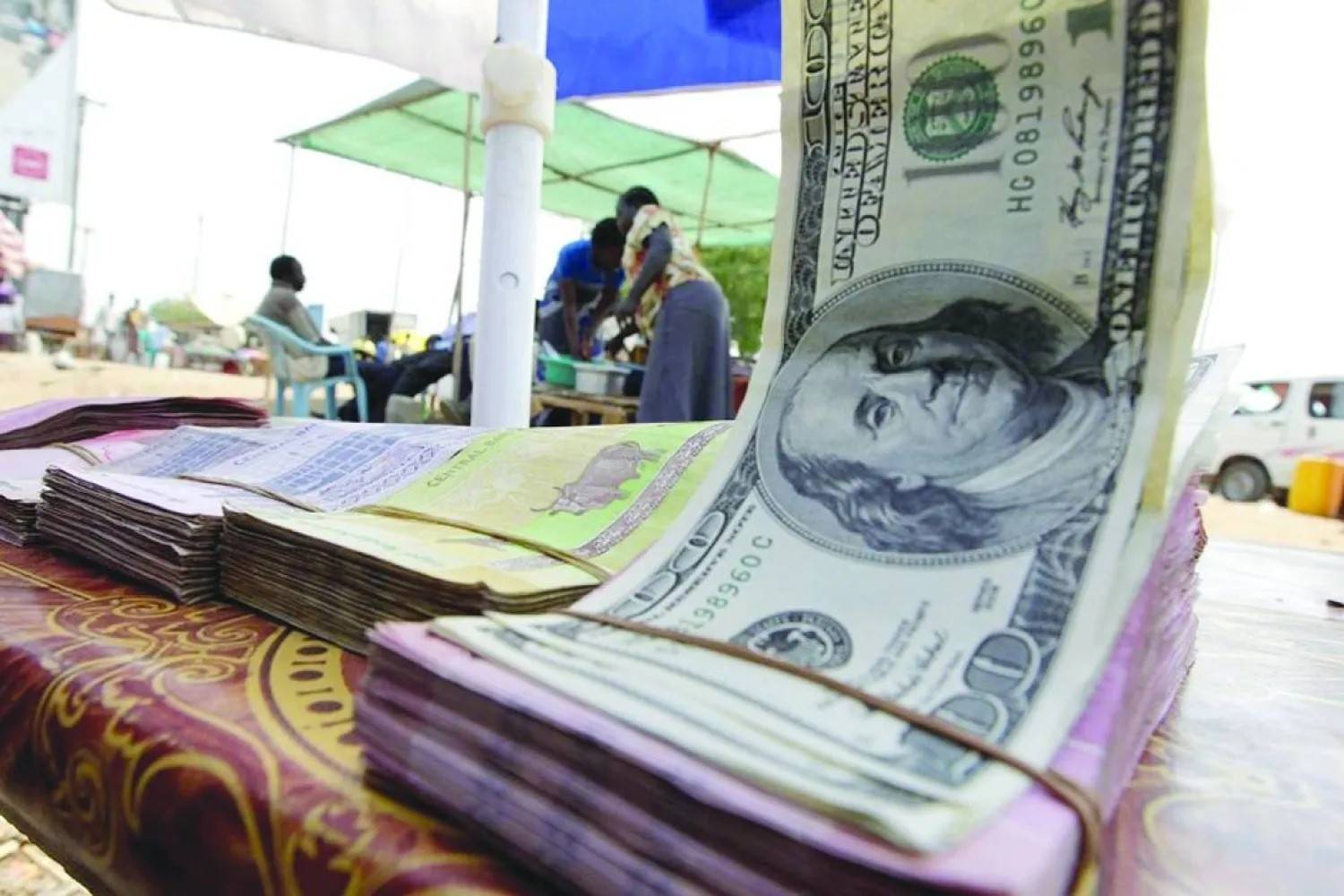
Sudan has entered a new phase of economic turmoil after its currency, the pound, fell sharply against foreign currencies, with the dollar trading above 9,000 pounds in some parallel-market transactions in recent days.
The pound later temporarily recovered some of its losses, but severe volatility disrupted markets, prompting some traders to suspend sales and close their shops.
Exchange-rate movements illustrate the scale of the deterioration. The dollar, which traded at about 4,400 pounds on the parallel market in June, surged to more than 9,000 pounds at the height of this month’s September turmoil.
The number of pounds needed to buy one dollar has nearly doubled in about three months.
Rates quoted by several banks remained far below those on the parallel market, reflecting a widening gap between the official banking rate and the price at which traders obtain foreign currency outside the banking system.
After a limited improvement on Friday, the dollar again rose above 8,000 pounds on Saturday amid a shortage of US currency in banks.
Sovereign Council Chairman and army chief General Abdel Fattah al-Burhan directly linked the economic crisis to the war.
“The battle has taken many forms,” Burhan said after Friday prayers in Khartoum’s Burri district. He described the economic crisis, rising prices and scarcity of resources as “part of this battle” and pledged that Sudan would emerge “victorious, just as we drove the rebellion out of Khartoum and other cities.”
Exchange-rate, market and gold-production figures suggest that the “economic battle” is more complicated than controlling currency speculators. It involves the wartime economy, shortages of foreign currency, declining production, foreign-trade imbalances and gold smuggling.
Prices surge
The pound’s depreciation is having a direct effect on people’s lives.
During a tour of markets in Khartoum and Wad Madani on Sept. 18, local broadcaster Radio Tamazuj reported that the price of a 50-kg sack of sugar had risen to 470,000 pounds from 380,000 pounds, an increase of about 24%.
A sack of flour climbed to 120,000 pounds from 80,000 pounds, an increase of about 50%.
The broadcaster said most of the shops visited during the tour were closed. Traders had stopped selling because prices were changing so rapidly that they could not determine how much it would cost to replace the goods they sold.
Closures spread to other cities. Local reports from Atbara in River Nile state said that a growing number of shops had closed and traders were refusing to sell. Reports from Duwaim said about three-quarters of shops had closed, citing local traders.
In Tamboul in Gezira state, activists circulated a local account describing the city’s market as almost at a standstill, with shops closed and goods scarce.
The account put the price of a 50-kg sack of sugar at 600,000 pounds, a sack of sorghum at 500,000 pounds, a 36-pound container of cooking oil at 400,000 pounds and a sack of flour at 150,000 pounds.
The prices could not be independently verified, nor could it be confirmed whether the closures affected the entire market.
The crisis is reflected in the experience of grocery store owner Ibrahim Idris, who said his capital was no longer sufficient to stock the range and quantities of goods he had previously sold.
Idris said the price of a 36-pound container of cooking oil had risen to nearly 350,000 pounds from about 170,000 pounds over the past month, more than doubling.
Customers were buying smaller quantities, he said, while increasing numbers were asking to purchase goods on credit.
Nahla Khalifa, a homemaker from Omdurman, previously told Asharq Al-Awsat that her family had often gone without meat, milk and vegetables, while obtaining medication for her husband, who has diabetes, had become increasingly difficult.
Osman al-Jundi, a supervisor of community kitchens, or takayas, in Khartoum, told Asharq Al-Awsat days before the sharp currency decline that falling donations, rising prices and the pound’s depreciation had forced several free kitchens to close.
Only two kitchens in his area were still operating daily, he said, even as the number of people in need continued to grow. They included displaced people from Kordofan, as well as children, women, older people and people with disabilities.
Gold production declines
The sharpest contradiction emerges in Sudan’s gold sector.
According to data from the Sudanese Mineral Resources Company, recorded gold production exceeded 70.15 metric tons in 2025. That included about 58.38 tons from traditional mining, roughly 5.68 tons from mining-waste processing companies and about 5.96 tons from concession companies.
However, the amount of gold entering official export channels was far below recorded production.
Data attributed to the Central Bank of Sudan showed that about 14.7 tons of gold, worth nearly $1.54 billion, were exported in 2025. In a separate estimate, the finance minister said about 20 tons had entered official channels.
The difference cannot be treated entirely as smuggled gold because of existing stockpiles, domestic consumption and trade, as well as differences in how the data are calculated. It nevertheless reveals a substantial gap between recorded production and the amount appearing in official exports.
An official at the Sudanese Mineral Resources Company previously estimated that about 48% of the country’s 2024 gold production had been smuggled, depriving the banking system of a significant source of foreign currency.
Gold is also intertwined with the war. A study by the Chatham House think tank said both sides in the conflict had benefited from the gold economy and its production and trading networks, although through different methods and in different areas of influence.
The study linked gold-sector revenues to the warring parties’ ability to finance operations and obtain resources, weapons and supplies.
That does not mean all proceeds from official gold exports are used for military spending. The state also uses foreign currency to finance imports of fuel, wheat and other goods and necessities.
A further contradiction has emerged within the gold sector itself.
Twenty-three mining companies have threatened to begin gradually suspending production on Sept. 30 and halt it entirely on Oct. 1 in protest against the Central Bank of Sudan’s mechanism for purchasing gold.
The companies say they produce about 17% of the country’s gold and that the central bank’s purchase price does not cover rising fuel, transportation, wage and operating costs caused by the pound’s depreciation.
The distortions extend beyond the gold market.
While the dollar rose above 9,000 pounds in some transactions in government-controlled areas, it traded at about 4,600 pounds in cash in Nyala. Its price through transfers using the Bankak banking application reached about 6,500 pounds.
The cash price of the dollar in Nyala was, therefore, at roughly the same time, about half the rate recorded in some markets in government-controlled territory.
That does not mean the economy in areas controlled by the paramilitary Rapid Support Forces is stronger.
Experts and traders attribute much of the difference to the shortage of banknotes, or cash liquidity, in Darfur, as well as different trade routes and foreign-currency flows. Markets in western Sudan are also linked to Chad, Libya and South Sudan.
The difference within Nyala itself — 4,600 pounds in cash versus 6,500 pounds via bank transfer — illustrates the distortions created by the liquidity crisis.
Seeking solutions
As the pound’s decline accelerated, the National Committee for Economic Management, headed by Prime Minister Kamil Idris, formed a committee led by Finance Minister Gibril Ibrahim to address the exchange-rate crisis.
The announced measures include increasing agricultural, livestock and mining production; encouraging manufacturing and exports; reducing imports; regulating the gold trade and combating smuggling; requiring exporters to repatriate export proceeds; and confronting currency speculation and foreign-exchange trading outside official channels.
But the figures present those measures with a clear test.
The dollar has risen above 9,000 pounds despite previous interventions. Gold production has exceeded 70 tons, yet far smaller quantities have appeared in official exports. Companies producing 17% of the country’s gold are threatening to halt operations, while shops have closed because traders can no longer set stable prices for their goods.
The contradiction between Burhan’s pledge to prevail in the “economic battle” and the economic data is stark: Sudan produces more than 70 tons of gold annually but suffers from a shortage of foreign currency.
The dollar trades above 9,000 pounds in one market and at about 4,600 in another, while flour prices in some markets rose by 50% during the latest bout of volatility.
For Sudanese people, the question is therefore no longer merely when the dollar will fall. It is how much real value the pound retains — and how much food and medicine it will be able to buy the following day.


