


France Gets Ready to Say ‘Merci’ to World War II Veterans for D-Day’s 80th Anniversary This Year 

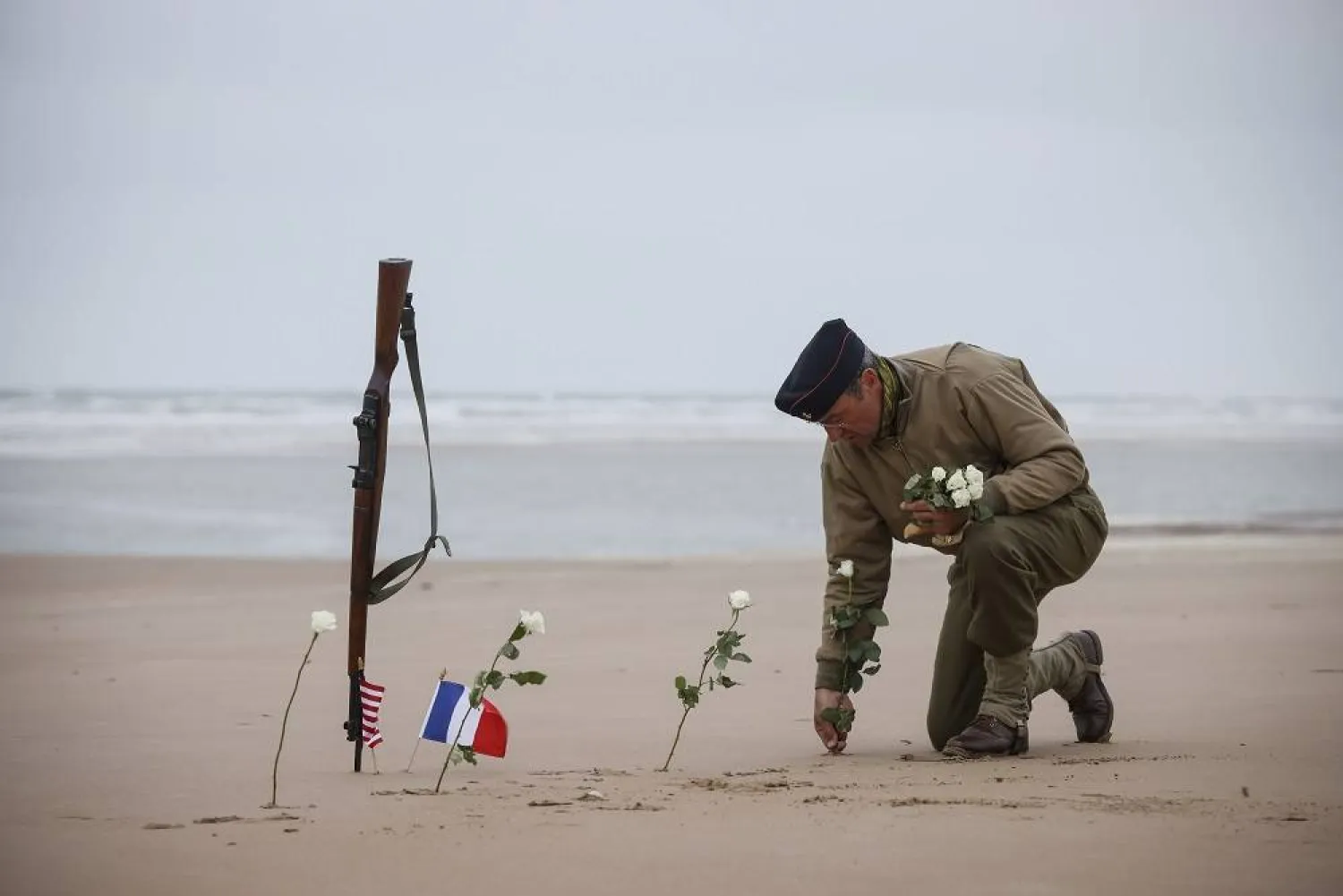
A World War II reenactor plants roses on Omaha Beach in Saint-Laurent-sur-Mer, Normandy, France, June 6, 2023. (AP)
TT

France Gets Ready to Say ‘Merci’ to World War II Veterans for D-Day’s 80th Anniversary This Year 

A World War II reenactor plants roses on Omaha Beach in Saint-Laurent-sur-Mer, Normandy, France, June 6, 2023. (AP)

France is getting ready to show its gratitude toward World War II veterans who will return, many for the last time, to Normandy beaches this year for 80th anniversary commemorations of D-Day to mark the defeat of the Nazis.

A ceremony at Omaha Beach, with many heads of state expected to be present, will be honoring the nearly 160,000 troops from Britain, the US, Canada and other nations who landed in Normandy on June 6, 1944.

French President Emmanuel Macron said Friday that D-Day celebrations, alongside the Paris Olympics, will be "France’s rendezvous with the world."

It will be an occasion for the French to say "merci," or "thank you," to veterans, some of whom will make a long trans-Atlantic journey, despite advanced age, fatigue and physical difficulties.

"We will never forget. And we have to tell them," Philippe Étienne, chairman of the Liberation Mission, the specially created body that organizes the 80th anniversary commemorations, told The Associated Press.

As a former ambassador of France to the United States, Étienne recalled his "strong emotion" when handing veterans the Legion of Honor, France’s highest distinction.

"They were 18, 20, 22 when they liberated our country, when they gave us back our freedom," he said. "Now 80 years later, they’re 100, 98, 102. It’s really incredible. Those are really courageous, humble people. They must feel our gratitude."

The link between the last witnesses of the war and the youth will also be at the heart of the anniversary.

"What we want above all, when the last witnesses, the last fighters, the last veterans are still with us, is to give their testimonies to our young people," Étienne added.

In the past couple of years, commemorations also have taken a special meaning as war is raging again in Europe since Russia’s full-scale invasion of Ukraine on Feb. 24, 2022.

Gen. Michel Delion, director-general of the Liberation Mission, said "that the message is more for the whole population than only for soldiers. Because the price of liberty is something that any citizen of any democratic nation needs to understand."

"The civilians were part of this (World War II) conflict because they suffered and they supported fighters. And we need to have this cohesion of our nations, of our populations to be able to answer to any question ... or any danger we could face tomorrow or today," he added.

Russian President Vladimir Putin, who had been present for the 70th anniversary of D-Day, wasn't expected to be invited this year. Putin didn't attend the 75th anniversary in 2019.

Countries like France that have signed and ratified the Rome Statute that created the International Criminal Court are obligated to arrest Putin, who was indicted for war crimes connected to the deportation of children from Ukraine, if he sets foot on their soil.

Étienne said that the commemorations, including some academic events, "will surely not ignore the sacrifices of everybody who ... was involved in the liberation of Europe, including in the East, because the Nazi regime was defeated both from the West and from the East."

He stressed the fact that "populations of the former Soviet Union, Russians in particular, but also Ukrainians and others, participated in this liberation."

Other key events will include celebrations of the Allied landing in Provence, in southern France, and the liberation of Paris, both in August, as well as the liberation of Strasbourg, at the border with Germany, in November, and the commemoration in May 2025 of the surrender of Nazi Germany to Allied forces.

Ceremonies will also allow France to pay tribute to Resistance fighters, to soldiers who came from its then colonial empire in Africa and to the civilians who suffered during the war.

Already across France, "we feel that there's a very strong mobilization to remember this very important period in history," said Fabien Sudry, deputy director-general of the Liberation Mission. "We feel it in the contacts we have, in the trips we make, with many local and regional authorities involved."

French authorities are notably considering launching a nationwide operation to collect family documents, objects and audiovisual material related to World War II that would help keep the memory alive.

Qassim Region Principality Illuminated in Green in Celebration of Founding Day

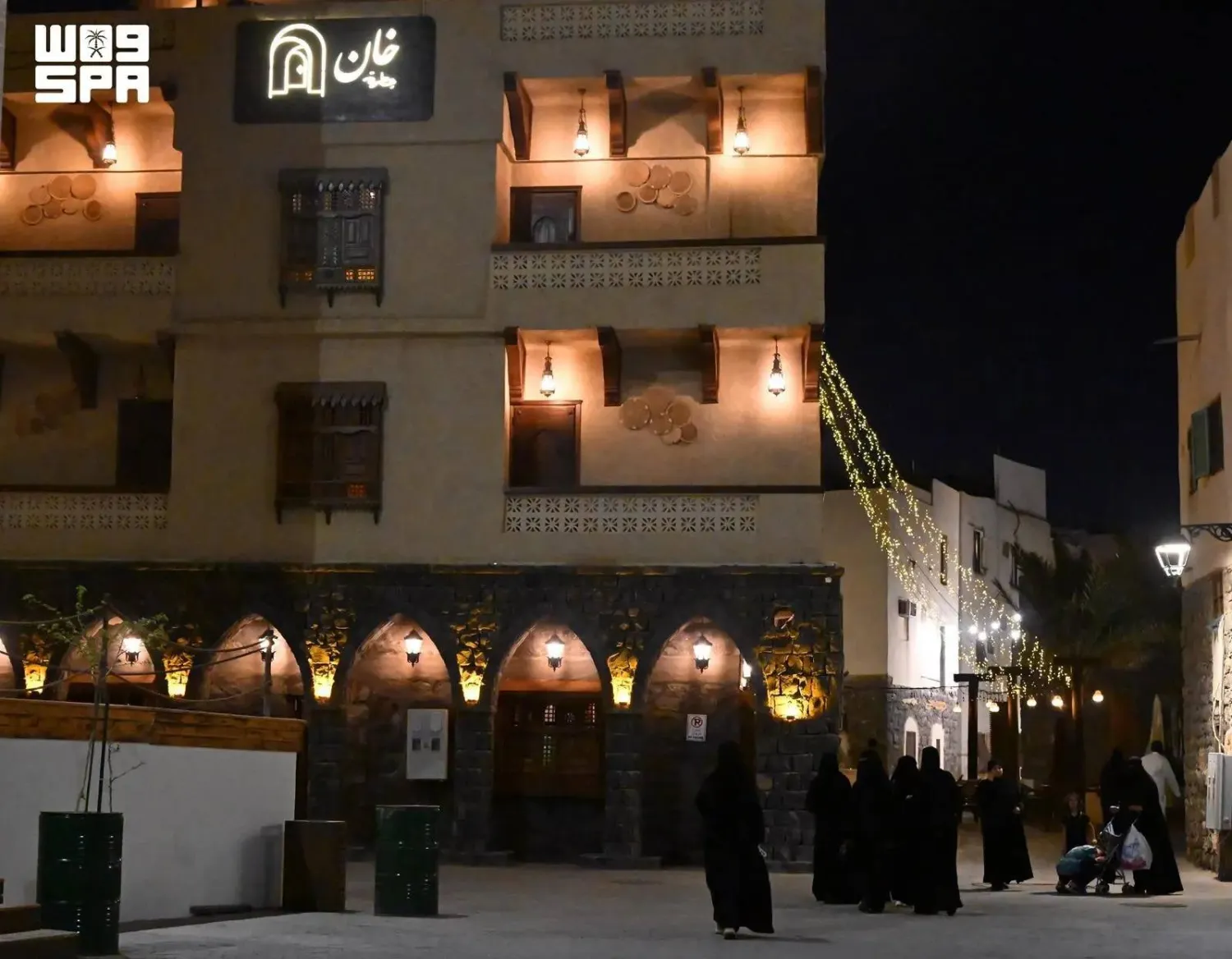
The Qassim Region Principality illuminated in green marking Founding Day - SPA
TT

Qassim Region Principality Illuminated in Green in Celebration of Founding Day

The Qassim Region Principality illuminated in green marking Founding Day - SPA

The Qassim Region Principality building was illuminated in green in celebration of Founding Day.

The scene reflected pride in the historical roots of the Saudi state and embodied feelings of belonging on this cherished national occasion, SPA reported.

The illumination affirms the deep historical significance of Founding Day, marking 299 years since the establishment of the First Saudi State by Imam Mohammed bin Saud.

It also reflects the enduring principles upon which it was founded, including unity, stability, and state-building. These foundations culminate in the security, stability, and prosperity that the Kingdom of Saudi Arabia enjoys today under its wise leadership.


Prince Mohammed bin Salman Project Restores Century-Old Uqlat Al-Suqur Mosque in Qassim

The renovation utilized traditional mud, stone, and wood to preserve the mosque's authentic Najdi architectural style. (SPA)
TT

Prince Mohammed bin Salman Project Restores Century-Old Uqlat Al-Suqur Mosque in Qassim

The renovation utilized traditional mud, stone, and wood to preserve the mosque's authentic Najdi architectural style. (SPA)

The Prince Mohammed bin Salman Project for the Development of Historical Mosques has completed the restoration of the Uqlat Al-Suqur Mosque in Qassim Region, revitalizing a heritage landmark dating back to 1922, reported the Saudi Press Agency on Saturday.

Originally the only mosque in the area, it served as a vital religious and social hub for education and community governance.

The renovation, executed by specialized Saudi firms, utilized traditional mud, stone, and wood to preserve its authentic Najdi architectural style.

The project increased the mosque's area to 544 square meters, expanding its capacity to 250 worshippers while maintaining its historical identity.

The initiative aligns with Vision 2030 to preserve the Kingdom's urban heritage and boost the cultural and religious significance of its historical mosques for future generations.


Tomb More Than 1,000 Years Old Found in Panama

This handout picture released by Panama’s Ministry of Culture shows an archaeologist working inside a pre-Hispanic tomb approximately 1,200 years old, discovered at the El Cano Archaeological Park in Cocle, Panama, on February 20, 2026. (Handout / Panama’s Ministry of Culture / AFP)
TT

Tomb More Than 1,000 Years Old Found in Panama

This handout picture released by Panama’s Ministry of Culture shows an archaeologist working inside a pre-Hispanic tomb approximately 1,200 years old, discovered at the El Cano Archaeological Park in Cocle, Panama, on February 20, 2026. (Handout / Panama’s Ministry of Culture / AFP)

Archaeologists have discovered a tomb more than a thousand years old in Panama containing human remains alongside gold and ceramic artifacts, the lead researcher told AFP on Friday.

The discovery was made at the El Cano site in the Nata district about 200 kilometers (124 miles) southwest of Panama City.

Scientists and archaeologists have already unearthed other remains of pre-Hispanic cultures in the region that has been excavated for two decades.

The skeletal remains were found surrounded by gold objects and pottery decorated with traditional motifs, pointing to these being "high-ranking" individuals, archaeologist Julia Mayo told AFP, adding that the tomb was built between 800 and 1000 AD.

"The individual with the gold was the one with the highest social status in the group," she said.

That body was found with two bracelets, two earrings, and pectoral jewelry that featured bats and crocodiles, she added.

The El Cano archaeological site is linked to the societies that inhabited the central provinces of Panama between the 8th and 11th centuries.

"This is where they buried their dead for 200 years," said Mayo.

Nine other tombs "similar" to the one found on Friday had already been found at the site, she added.

Panama's Ministry of Culture said the discovery was "of great importance for Panamanian archaeology and the study of pre-Hispanic societies of the Central American isthmus," referring to the land that connects North and South America.

According to experts, these excavations demonstrate that death did not represent an end for these societies, but a transition to another phase where social status remained important.