


Maryse Condé, Prolific ‘Grande Dame’ of Caribbean Literature, Dies at Age 90

French writer Maryse Condé reacts after being awarded the New Academy's Literature Prize at a ceremony in Stockholm, Sweden, on Dec. 9, 2018. (Christine Olsson/ TT News Agency via AP, File)
TT

Maryse Condé, Prolific ‘Grande Dame’ of Caribbean Literature, Dies at Age 90

French writer Maryse Condé reacts after being awarded the New Academy's Literature Prize at a ceremony in Stockholm, Sweden, on Dec. 9, 2018. (Christine Olsson/ TT News Agency via AP, File)

Maryse Condé, an acclaimed French-language novelist from Guadeloupe who in novels, stories, plays and memoirs imagined and redefined the personal and historical past from 17th century New England to contemporary Europe, has died at age 90.

Condé, winner in 2018 of an "alternate" Nobel Prize, died Monday night at a hospital in Apt, outside Marseille. Her longtime editor, Laurant Laffont, told The Associated Press that she had suffered from a neurological illness that impaired her vision to the point of having to dictate her final novel. But she still enjoyed a 90th birthday celebration, in February, when she was joined by family and friends.

"She was smiling, she was joyous," said Laffont, who otherwise remembered her as a woman of uncommon intensity and generosity. "It was a wonderful farewell, a truly great sendoff."

Condé, who lived in Luberon, France in recent years, was often called the "grande dame" of Caribbean literature. Influenced by Frantz Fanon, Aimé Césaire and other critics of colonialism, she was a world traveler who probed the conflicts between and within Western culture, African culture and Caribbean culture, and the tensions between the desire for liberation and what the author would call "the trap of terrorism and simplistic radicalization."

With her husband, Richard Philcox, often serving as her English-language translator, Condé wrote dozens of books, ranging from historical explorations such as "Segu," her best known novel, to the autobiographical stories in "Tales from the Heart" to fresh takes on Western literature. She reworked "Wuthering Heights" into "Windward Heights," and paired a West Indian slave with Hester Prynne of "The Scarlet Letter" in "I, Tituba, Black Witch of Salem."

"A historian is somebody who studies the facts, the historical facts — somebody who is tied to what actually happens," she explained in an interview included in the back section of "I, Tituba," published in 1992. "I am just a dreamer — my dreams rest upon a historical basis. Being a Black person, having a certain past, having a certain history behind me, I want to explore that realm and of course do it with imagination and my intuition. But I am not involved in any kind of scholarly research."

The mother of four children (with first husband Mamadou Condé), she was nearly 40 when she published her first novel and almost 50 when "Segu" made her an international name. "Segu," released in French in 1984 and in the United States three years later, was set in an 18th century African kingdom and followed the fates of a royal advisor and his family as their community is upended by the expansion of the slave trading industry.

She continued the story in "The Children of Segu," but rejected additional volumes, explaining to one interviewer that her spirit "had journeyed to another world." Over the following decades, her fictional settings included Salem, Massachusetts ("I, Tituba"), Jamaica ("Nanna-Ya") and Paris and Guadeloupe for "The Wondrous and Tragic Life of Ivan and Ilana."

Condé received numerous awards over the second half of her life, among them the Commandeur de l’Ordre des Arts et des Lettres from the French government, the US-based Hurston & Wright Legacy Award and the New Academy Prize for literature, an informal honor presented in 2018 in place of the Nobel, which was sidelined for the year amid allegation of sexual harassment by prize committee members.

"She describes the ravages of colonialism and the post-colonial chaos in a language which is both precise and overwhelming," New Academy judge Ann Pålsson said at the time. "The dead live in her stories closely to the living in a ... world where gender, race and class are constantly turned over in new constellations."

In the mid-1990s, Condé joined the faculty at Columbia University as a professor of French and Francophone literature. She also taught at the University of Virginia and UCLA among other schools before retiring in 2005, around the same time French President Jacques Chirac named her head of the French Committee for the Memory of Slavery.

Conde was married twice, most recently to Philcox, a British academic whom she met in the late 1960s in Senegal.

Born Maryse Boucolon at Pointe-à-Pitre, Guadeloupe, she was one of six children (two others died) raised in a relatively prosperous and educated family, where French was favored over Creole and the poetry of Victor Hugo over local folklore. Condé was a writer from early on, creating a one-act play at age 10 about her mother, reporting for local newspapers in high school and publishing book reviews for a student magazine in college, the Sorbonne Nouvelle in Paris.

She was admittedly isolated as a young woman, and would remember how her family "prided itself on being picture perfect in public." But in her teens, she became politicized after reading "Black Shack Alley," a 1950 novel by Joseph Zobel about the coming of age of a boy contending with white oppression in colonial Martinique, a way of life Condé knew little about.

"Today, I am convinced that what I later called somewhat pretentiously ‘my political commitment’ was born at that very moment," she wrote in "Tales from the Heart," published in 1998. "Reading Joseph Zobel, more than any theoretical discourse, opened my eyes. I understood that the milieu I belonged to had absolutely nothing to offer and I began to loathe it. I had become bleached and whitewashed, a poor imitation of the little French children I hung out with."

Like many young idealists in the 1960s, she moved to Africa, spending much of the following decade in Ghana, Guinea and other newly independent countries. She would discover, like many of her contemporaries, that African leaders could be as oppressive as colonial leaders, experiences she drew upon for her debut novel, "Heremakhonon," published in 1976.

"When I was in Guinea, there was a department store with that name (Heremakhonon)," Condé told Howard University professor Francoise Pfaff during an interview that appears in Pfaff’s "Conversations with Maryse Condé," published in 1996. "In theory, this store offered everything people needed, but it had nothing except Chinese toys of poor quality. For me it was a symbol of independence."

Whether in Guadeloupe, Paris, Africa or the US, she often felt apart from the general population; the author liked to say that she didn’t write in French or Creole, but in her own language, "Maryse Condé." She drew as much from oral history as from written history, navigating between the lost and dying worlds that oral tradition represented and the new world of mass media and what she called the "totally modern lifestyle."

Head of France's Versailles Palace Takes over Louvre

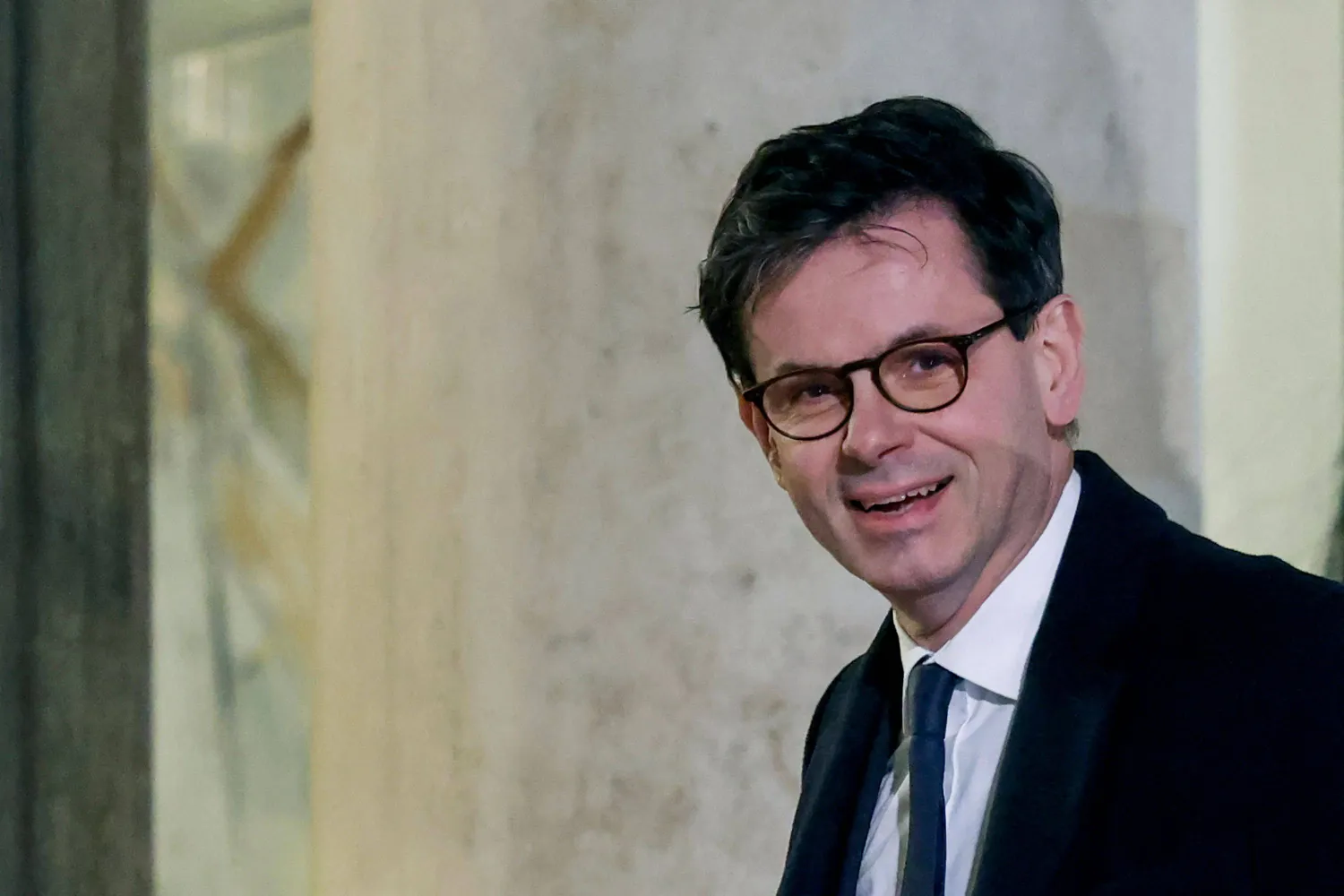
(FILES) President of Chateau de Versailles Christophe Leribault arrives at the Elysee Palace, in Paris on February 27, 2024. (Photo by Ludovic MARIN / AFP)
TT

Head of France's Versailles Palace Takes over Louvre

(FILES) President of Chateau de Versailles Christophe Leribault arrives at the Elysee Palace, in Paris on February 27, 2024. (Photo by Ludovic MARIN / AFP)

French President Emmanuel Macron has appointed Christophe Leribault, the ⁠current head of the ⁠Versailles Palace, as ⁠director of the Louvre museum in Paris, the French government spokesperson said ⁠on ⁠Wednesday. 

The appointment came following the resignation of Laurence des Cars after a $100-million robbery at the museum last year.

Leribault, 62, is an art historian and museum director specializing in 18th century art. He has led major Paris institutions, including the Petit Palais, and the Musee d'Orsay.

In 2024, he was appointed president of the Palace of Versailles, one of the most visited tourist sites.

On Tuesday, des Cars sent her resignation to Macron, which was accepted, following a string of scandals including the brazen theft of French crown jewels valued at $100 million in October.

Des Cars was appointed as director of the Louvre Museum in 2021. She had been under rising pressure since the October robbery, which is currently the subject of an inquiry.

Four suspects are in police custody, including the two suspected thieves, but the eight of the stolen items have not been found.

The Louvre, a former royal palace and home to some of the world's most iconic pieces of art, including Leonardo Da Vinci's "Mona Lisa", receives around nine million visitors a year.

Since the theft the museum has taken several emergency measures.

Separately, Annick Lemoine, who heads the Petit Palais, will take over as director of the Musee d'Orsay, according to the official journal published on Wednesday.


One Million Works Catalogued in Art UK Database

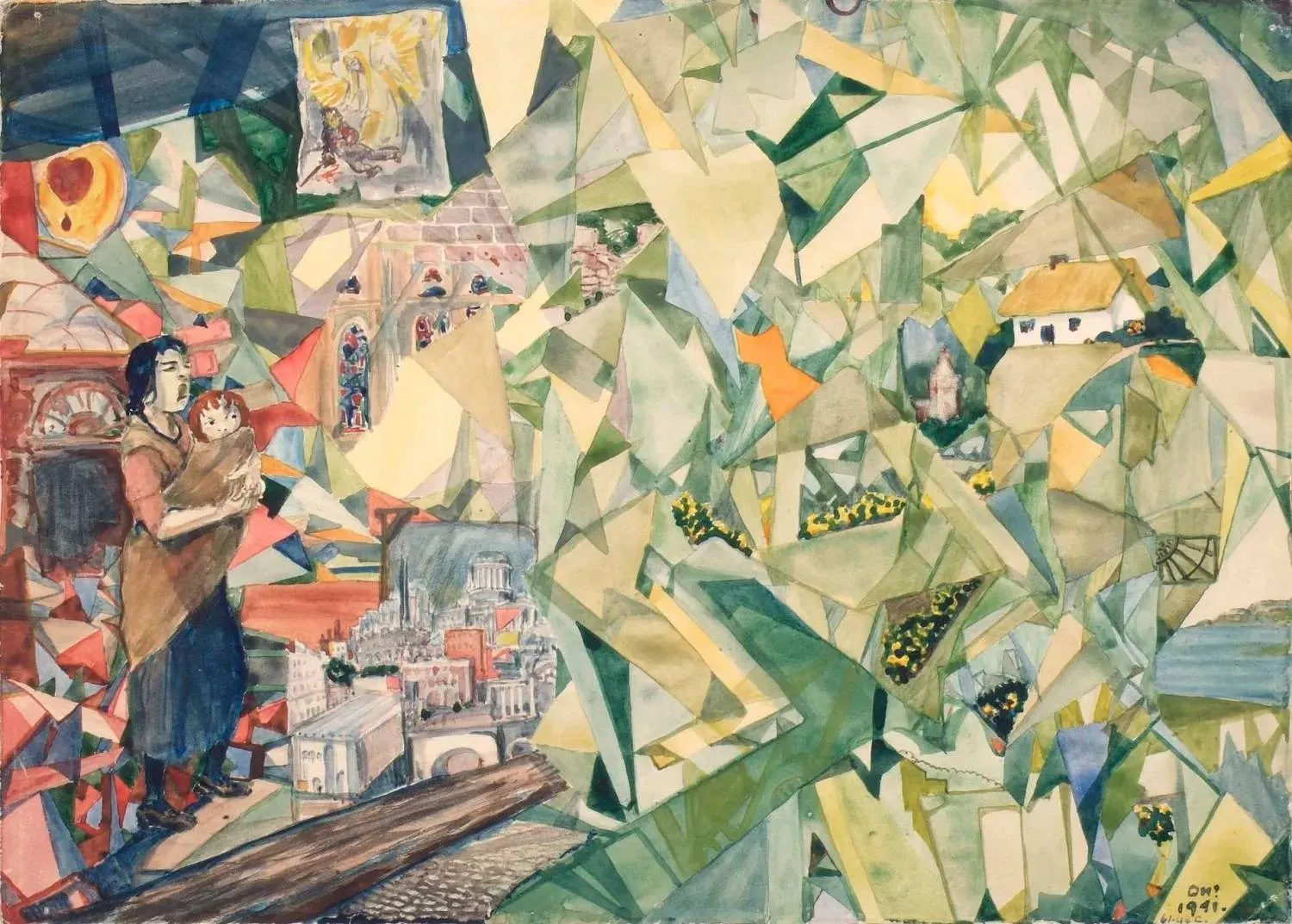
Osborne Henry Mavor’s “Let Eric Remember” from Aberdeen Art Gallery. (Aberdeen archives, gallery & museums/Art UK)
TT

One Million Works Catalogued in Art UK Database

Osborne Henry Mavor’s “Let Eric Remember” from Aberdeen Art Gallery. (Aberdeen archives, gallery & museums/Art UK)

From a bronze Rodin sculpture of Eve outside a Nando’s in Harlow to more than 6,000 artworks by JMW Turner, to a crumpled-up piece of A4 paper owned by Manchester Art Gallery, the UK’s public art collection is a wonderful and varied thing.

It is huge, as demonstrated by the charity Art UK, which has announced it has reached a million artworks on its database and appointed a new chair who said: “We’ve only scratched the surface,” according to The Guardian.

Ben Terrett, a former director of design for the UK government, has been announced as the new chair of a charity that is celebrating its 10th anniversary.

Art UK began with a mission to digitally catalogue the UK’s paintings. Over the years that has been expanded to include drawings, watercolors, ceramics, sculptures, stained glass, banners, architectural drawings and street murals.

It is a huge, encyclopedic, fun resource, which lends itself to going down any number of rabbit holes. Type in the word “mosquito”, for example, and you discover 53 listings, from large technical drawings of actual mosquitoes, to paintings of de Havilland Mosquito planes from the second world war, to a sculpture in a North Yorkshire forest celebrating the Women’s Timber Corps – lumberjills – who felled and sawed the wood used to make the planes.

Or search Martin Creed, the artist who won the Turner prize for a work where the lights in a room go on and off, and you find 24 of his works in public collections, including his crumpled-up ball of paper in Manchester.

The database is an incredible resource that should be so much better known, Terrett said. “It’s a great thing,” he said. “It is one of those ideas that you’re really glad it exists because if it didn’t, you’d think somebody should do that.

“One of my jobs as chair is to help raise that profile, because probably not enough people hear about it. It’s digitizing all the public artworks in the UK and there’s a really obvious side to that, which is the Tate and places like that,” he added.

“But there’s loads of other places like hospitals and council buildings ... places like that are public and have incredible artworks in them that people don’t get to see or don’t know exist,” he noted.

The database, Terrett said, shines light on just how many artworks are never seen because they are in storage.

Terrett, who was made a CBE by the king last week, led the design team that launched gov.uk and is the CEO and co-founder of the consultancy Public Digital.

He said his childhood experiences had fed his passion for widening access to the arts and design.

“I grew up in a small village in Wiltshire,” he said. “There weren’t museums, there weren’t art galleries and getting access to that kind of stuff was really difficult. I went to a comprehensive school with a great art teacher and a great art department, but you very much had to push yourself to find out more about this stuff.”

He believes it is even harder for children today: “Creative education in state schools has been decimated.”

There is also evidence that interacting with the database encourages people to visit galleries in person.

Recent additions to the database, which helped it towards the million figure, include a 1951 stencil by Henri Matisse at the University of Lancaster; a Gwen John flower painting at National Museum Cardiff; a Venice canal painting by Mary Hagarty at the Victoria Art Gallery in Bath; and a portrait titled “Reverie” by David Foggie at the University of Dundee.

The board of Art UK said it was looking forward to Terrett’s fresh thinking and insights to help it “reach new audiences, embrace new technologies and creative opportunities, build its income base, its international profile and its following.”

Terrett said he remained convinced the internet was a force for good. “It’s hard to believe that these days. It’s hard to hold on to that belief. But it still is. I think in the world it’s still a net positive. And this is just a really nice example of where the internet really is doing good,” he added.


Louvre Museum’s Director Resigns in Wake of Jewels Heist in Paris

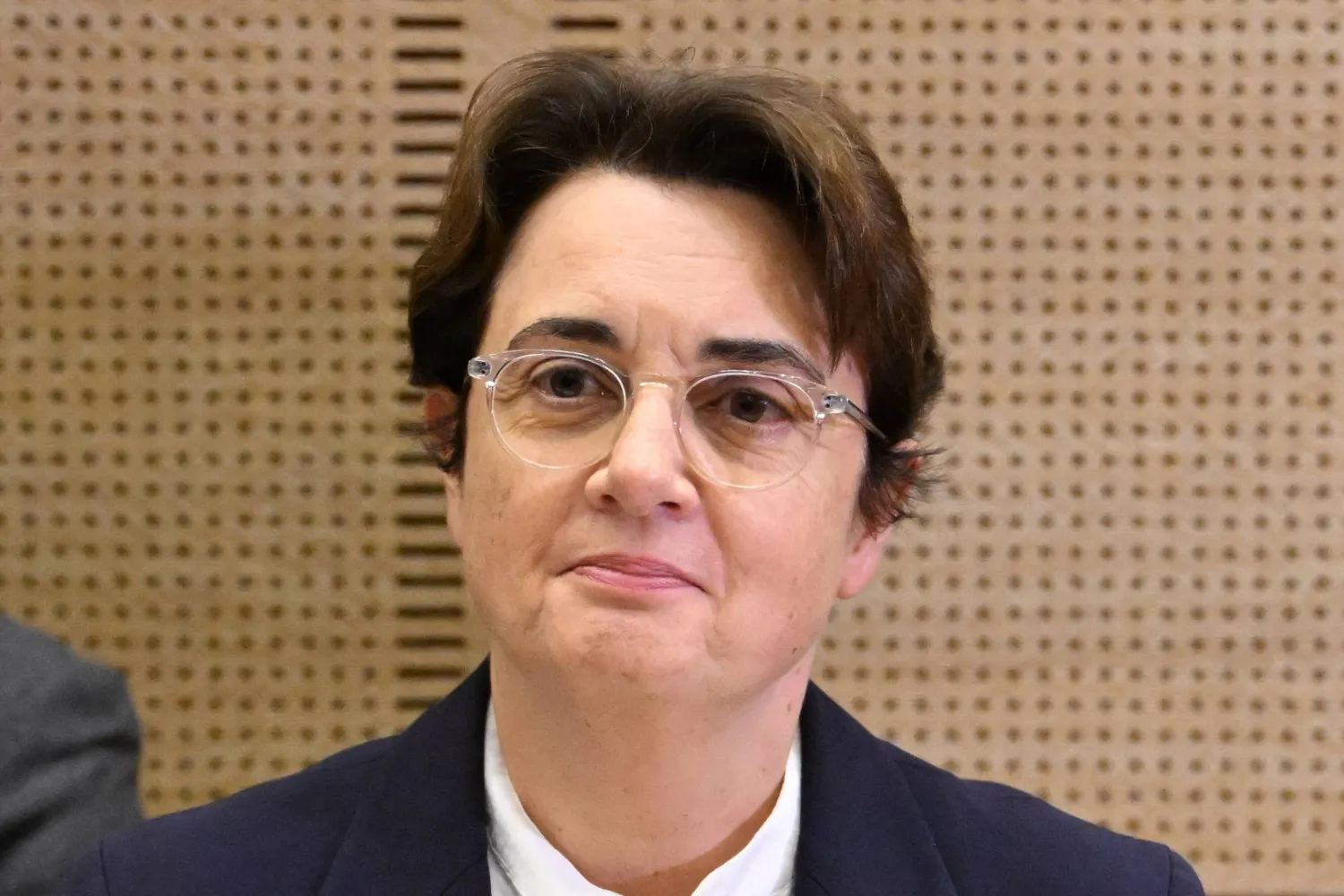
Laurence des Cars, director of Le Louvre museum, poses before a hearing at the Culture commission of the Senate, three days after historic jewels were stolen in a daring daylight heist, Oct. 22, 2025 in Paris. (AP)
TT

Louvre Museum’s Director Resigns in Wake of Jewels Heist in Paris

Laurence des Cars, director of Le Louvre museum, poses before a hearing at the Culture commission of the Senate, three days after historic jewels were stolen in a daring daylight heist, Oct. 22, 2025 in Paris. (AP)

The director of the Louvre Museum who had been under fire since the stunning and embarrassing heist of the French Crown jewels in October has stepped down from the position, French President Emmanuel Macron ’s office said Tuesday.

The office said in a statement that Macron accepted the resignation of Laurence des Cars, and that he praised the move as “an act of responsibility at a time when the world’s largest museum needs calm and a strong new impetus to carry out major projects involving security upgrades, modernization” and other initiatives.

Thieves took less than eight minutes in October to steal 88 million euros ($102 million) worth of crown jewels in a weekend heist at the world’s most visited museum, shocking the world.

Des Cars was named director of the Louvre, one of the museum world's most prestigious posts, in 2021.

She had offered to resign on the day of the robbery but was refused by the culture minister.

“I saw a tragic, brutal, violent reality for the Louvre, and as the person in charge, after all the hard work done by the teams that day — it felt right to offer my resignation,” she said in November.

Macron thanked des Cars for “her work and commitment” and said he wanted to give her a new mission focused on cooperation among major museums, the statement said.

It didn't say if she accepted.