Saudi Arabia: Farasan Islands Host 20th Hareed Festival in Celebration of Culture

This vibrant annual event celebrates the arrival of parrotfish in the islands' shallow waters. SPA
TT

Saudi Arabia: Farasan Islands Host 20th Hareed Festival in Celebration of Culture

This vibrant annual event celebrates the arrival of parrotfish in the islands' shallow waters. SPA

The Farasan Islands, a string of coral islands nestled 40 kilometers off the coast of Jizan in the Red Sea, are abuzz with activity as they host the 20th edition of the Hareed (parrotfish) Festival, the Saudi Press Agency reported Sunday.
This vibrant annual event, held in late April and early May, celebrates the arrival of parrotfish in the islands' shallow waters, SPA said.
For generations, the Farasan people have cherished this natural phenomenon, transforming it into a social gathering that goes beyond the fish. The festival showcases the islands' unique customs, traditions, folk games, and handicrafts. It also throws a spotlight on Farasan's remarkable tourism potential and historical sites.
Festival visitors may have a glimpse at the islands' rich cultural heritage. One of the highlights is "Al-Dana", a captivating form of vocal art that is one of Farasan's oldest folk traditions. It is a poignant expression of longing that arose from the hardships endured by sailors on extended pearl-diving expeditions. The challenges faced by these brave men fueled this art form, which is deeply rooted in Farasan's cultural identity, SPA said.
The festival also provides a platform for Farasan residents to showcase their traditional handicrafts. Visitors get to see the production of fishing traps and nets, the intricate weaving of palm fronds, the creation of bags and rugs, and the art of hat knitting.
A dedicated area at the Hareed fishing site caters to families and children; there, participants can experience the thrill of catching parrotfish using a traditional method that involves setting up barriers to prevent the fish from escaping. This competition, a centuries-old tradition, allows families to connect with the island's fishing heritage.
Just five kilometers from Farasan Grand Island lies Al-Qassar Village, a captivating destination that draws many visitors. This heritage village, built with stone and palm leaves, boasts the largest palm oasis in the archipelago. Al-Qassar served as a summer retreat for Farasan residents, who would travel by camel to spend a three-month getaway during the season of Al-Asef, the northwestern summer wind that comes after the Hareed fishing season.
Famous for its abundance of fresh groundwater, Al-Qassar Village comprises around 400 houses. These unique dwellings with stone walls and roofs made of palm tree planks, leaves, Doum palm, or Anisotes trisulcus branches topped with algae and mud, show traditional building techniques designed to withstand the elements.



Qassim Region Principality Illuminated in Green in Celebration of Founding Day

The Qassim Region Principality illuminated in green marking Founding Day - SPA
TT

Qassim Region Principality Illuminated in Green in Celebration of Founding Day

The Qassim Region Principality illuminated in green marking Founding Day - SPA

The Qassim Region Principality building was illuminated in green in celebration of Founding Day.

The scene reflected pride in the historical roots of the Saudi state and embodied feelings of belonging on this cherished national occasion, SPA reported.

The illumination affirms the deep historical significance of Founding Day, marking 299 years since the establishment of the First Saudi State by Imam Mohammed bin Saud.

It also reflects the enduring principles upon which it was founded, including unity, stability, and state-building. These foundations culminate in the security, stability, and prosperity that the Kingdom of Saudi Arabia enjoys today under its wise leadership.


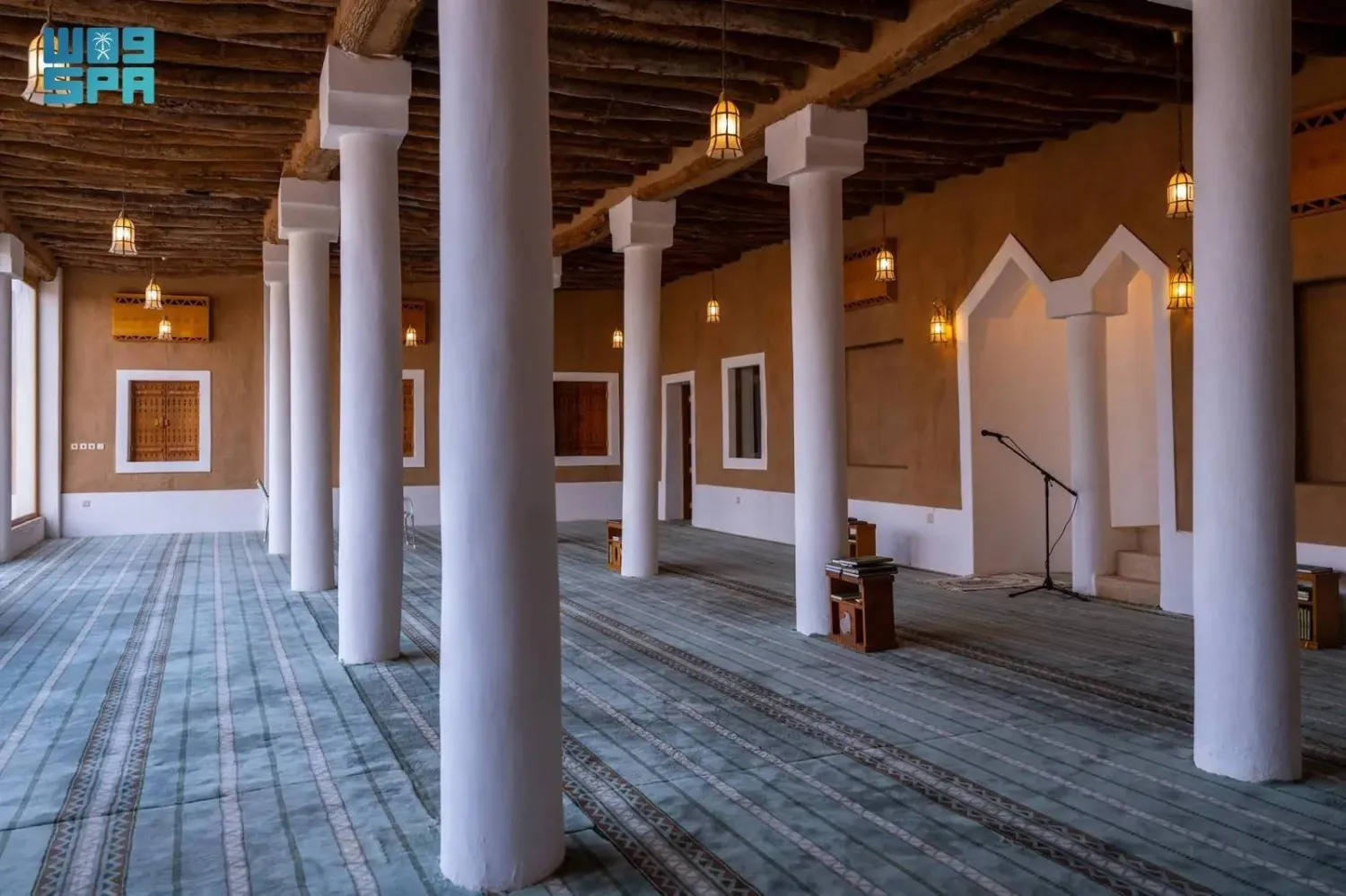
Prince Mohammed bin Salman Project Restores Century-Old Uqlat Al-Suqur Mosque in Qassim

The renovation utilized traditional mud, stone, and wood to preserve the mosque's authentic Najdi architectural style. (SPA)
TT

Prince Mohammed bin Salman Project Restores Century-Old Uqlat Al-Suqur Mosque in Qassim

The renovation utilized traditional mud, stone, and wood to preserve the mosque's authentic Najdi architectural style. (SPA)

The Prince Mohammed bin Salman Project for the Development of Historical Mosques has completed the restoration of the Uqlat Al-Suqur Mosque in Qassim Region, revitalizing a heritage landmark dating back to 1922, reported the Saudi Press Agency on Saturday.

Originally the only mosque in the area, it served as a vital religious and social hub for education and community governance.

The renovation, executed by specialized Saudi firms, utilized traditional mud, stone, and wood to preserve its authentic Najdi architectural style.

The project increased the mosque's area to 544 square meters, expanding its capacity to 250 worshippers while maintaining its historical identity.

The initiative aligns with Vision 2030 to preserve the Kingdom's urban heritage and boost the cultural and religious significance of its historical mosques for future generations.


Tomb More Than 1,000 Years Old Found in Panama

This handout picture released by Panama’s Ministry of Culture shows an archaeologist working inside a pre-Hispanic tomb approximately 1,200 years old, discovered at the El Cano Archaeological Park in Cocle, Panama, on February 20, 2026. (Handout / Panama’s Ministry of Culture / AFP)
TT

Tomb More Than 1,000 Years Old Found in Panama

This handout picture released by Panama’s Ministry of Culture shows an archaeologist working inside a pre-Hispanic tomb approximately 1,200 years old, discovered at the El Cano Archaeological Park in Cocle, Panama, on February 20, 2026. (Handout / Panama’s Ministry of Culture / AFP)

Archaeologists have discovered a tomb more than a thousand years old in Panama containing human remains alongside gold and ceramic artifacts, the lead researcher told AFP on Friday.

The discovery was made at the El Cano site in the Nata district about 200 kilometers (124 miles) southwest of Panama City.

Scientists and archaeologists have already unearthed other remains of pre-Hispanic cultures in the region that has been excavated for two decades.

The skeletal remains were found surrounded by gold objects and pottery decorated with traditional motifs, pointing to these being "high-ranking" individuals, archaeologist Julia Mayo told AFP, adding that the tomb was built between 800 and 1000 AD.

"The individual with the gold was the one with the highest social status in the group," she said.

That body was found with two bracelets, two earrings, and pectoral jewelry that featured bats and crocodiles, she added.

The El Cano archaeological site is linked to the societies that inhabited the central provinces of Panama between the 8th and 11th centuries.

"This is where they buried their dead for 200 years," said Mayo.

Nine other tombs "similar" to the one found on Friday had already been found at the site, she added.

Panama's Ministry of Culture said the discovery was "of great importance for Panamanian archaeology and the study of pre-Hispanic societies of the Central American isthmus," referring to the land that connects North and South America.

According to experts, these excavations demonstrate that death did not represent an end for these societies, but a transition to another phase where social status remained important.