


Trinidad and Tobago Reckons with Colonialism in a Debate on Statues, Signs and Monuments of Its Past 

A vandalized statue of Christopher Columbus towers over Columbus Square in Port of Spain, Trinidad and Tobago, Wednesday, Aug. 28, 2024. Officials in the Caribbean island nation are reviewing on whether to remove statues, signs and monuments that reference European colonization. (AP)
TT

Trinidad and Tobago Reckons with Colonialism in a Debate on Statues, Signs and Monuments of Its Past 

A vandalized statue of Christopher Columbus towers over Columbus Square in Port of Spain, Trinidad and Tobago, Wednesday, Aug. 28, 2024. Officials in the Caribbean island nation are reviewing on whether to remove statues, signs and monuments that reference European colonization. (AP)

In a small auditorium in the seaside capital of Trinidad and Tobago, Christopher Columbus and other colonial-era figures came under scrutiny late Wednesday in a lengthy debate punctuated by snickers, applause and outbursts.

The government had asked residents of the diverse, twin-island nation in the eastern Caribbean if they supported the removal of statues, signs and monuments with colonial ties and how those spaces should be used instead. One by one, people of African, European and Indigenous descent stepped up to the microphone and responded.

Some suggested a prominent Columbus statue be placed in a museum. Others requested it be destroyed and that people be allowed to stomp on the dusty remains. One man encouraged officials to round up statues of colonial figures and create a “square of the infamous.”

The majority of the more than two dozen people who spoke, and dozens of others commenting online, supported removal of colonial-era symbols and names.

“It’s an issue about how after 62 years of independence ... we continue to live in a space that reflects the ideals and the vision and the views of those who were our colonial masters,” said Zakiya Uzoma-Wadada, executive chair of the islands’ Emancipation Support Committee.

Trinidad and Tobago is the latest nation to embrace a global movement that began in recent years to abolish colonial-era symbols as it reckons with its past and questions if and how it should memorialize it as demands for slavery reparations grow across the Caribbean.

The public hearing was held just a week after the government announced it would redraw the nation’s coat of arms to remove Christopher Columbus’ three famous ships — the Pinta, the Niña and the Santa María – and replace it with the steelpan, a popular percussion instrument that originated in the Caribbean nation.

Others pushed for further changes on Wednesday night.

“What the hell is the queen still doing on top of the coat of arms? Please let us put her to rest,” said Eric Lewis, who identifies as a member of the First Peoples, also known as Amerindians.

Trinidad and Tobago was first colonized by the Spanish, who ruled it for nearly 300 years before ceding it to the British, who governed it for more than 160 years until the islands’ independence in 1962. The colonial imprint remains throughout streets and plazas, with a statue of Christopher Columbus dominating a square of the same name in the capital of Port of Spain.

The islands’ National Trust calls it “one of the greatest embellishments of our town,” but many differ.

“It’s disrespectful to those who were the victims of him. The people suffered tremendously,” said Shania James as she called for the statue to be placed in a museum. “His atrocities should not be forgotten.”

But a handful of people dismissed concerns about how their ancestors were treated, including tour guide Teresa Hope, who is Black.

“They survived, and I survived, and we will keep on moving,” she said, adding that if the actions of historical figures were scrutinized, “everything would get knocked down.”

Rubadiri Victor, president of the Artists’ Coalition, said his country should instead erect statues and monuments to honor some of the more than 200 Trinbagonians who represent the best of the islands.

“We are stumbling and tripping over heroes,” he said. “To have produced so much genius, and that lineage is nowhere present in the landscape.”

Among the suggestions of people to honor was Nobel Prize-winning author V.S. Naipaul; Cyril Lionel Robert James, a historian and journalist; and Kwame Ture, who helped spearhead the Black Power movement in the US Others suggested that prominent Amerindians and more local women be honored, including Patricia Bishop, an educator and musician and Beryl McBurnie, a teacher credited with promoting and saving Caribbean dance.

The debate was scheduled to continue soon in the sister island of Tobago, with the government having received nearly 200 submissions overall so far on what it should do.


Tomb More Than 1,000 Years Old Found in Panama

This handout picture released by Panama’s Ministry of Culture shows an archaeologist working inside a pre-Hispanic tomb approximately 1,200 years old, discovered at the El Cano Archaeological Park in Cocle, Panama, on February 20, 2026. (Handout / Panama’s Ministry of Culture / AFP)
TT

Tomb More Than 1,000 Years Old Found in Panama

This handout picture released by Panama’s Ministry of Culture shows an archaeologist working inside a pre-Hispanic tomb approximately 1,200 years old, discovered at the El Cano Archaeological Park in Cocle, Panama, on February 20, 2026. (Handout / Panama’s Ministry of Culture / AFP)

Archaeologists have discovered a tomb more than a thousand years old in Panama containing human remains alongside gold and ceramic artifacts, the lead researcher told AFP on Friday.

The discovery was made at the El Cano site in the Nata district about 200 kilometers (124 miles) southwest of Panama City.

Scientists and archaeologists have already unearthed other remains of pre-Hispanic cultures in the region that has been excavated for two decades.

The skeletal remains were found surrounded by gold objects and pottery decorated with traditional motifs, pointing to these being "high-ranking" individuals, archaeologist Julia Mayo told AFP, adding that the tomb was built between 800 and 1000 AD.

"The individual with the gold was the one with the highest social status in the group," she said.

That body was found with two bracelets, two earrings, and pectoral jewelry that featured bats and crocodiles, she added.

The El Cano archaeological site is linked to the societies that inhabited the central provinces of Panama between the 8th and 11th centuries.

"This is where they buried their dead for 200 years," said Mayo.

Nine other tombs "similar" to the one found on Friday had already been found at the site, she added.

Panama's Ministry of Culture said the discovery was "of great importance for Panamanian archaeology and the study of pre-Hispanic societies of the Central American isthmus," referring to the land that connects North and South America.

According to experts, these excavations demonstrate that death did not represent an end for these societies, but a transition to another phase where social status remained important.


When in Rome: Budapest Pizzeria Offers Time-Travel Twist with Ancient Rome-Inspired Pie

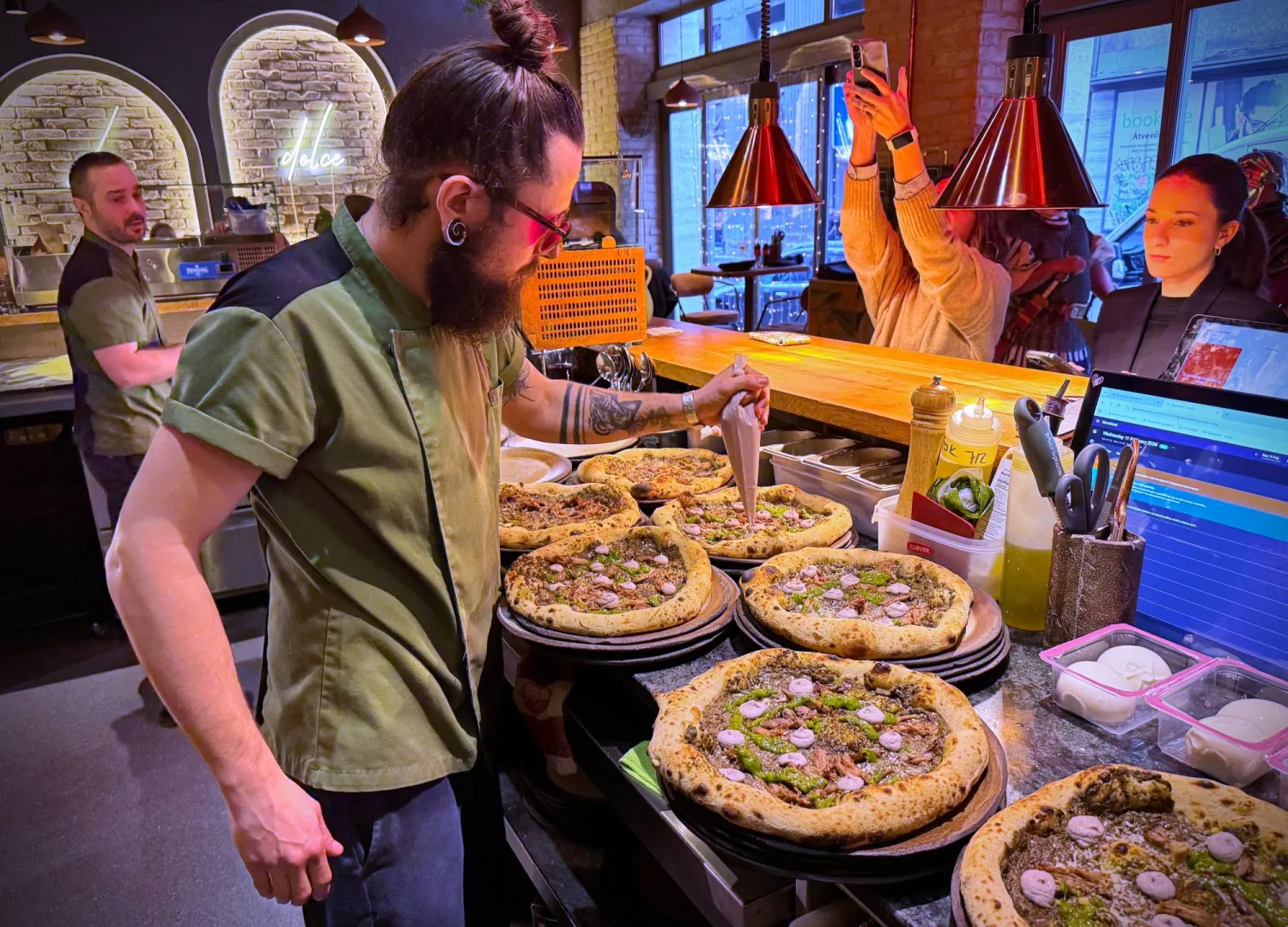
László Bárdossy, head chef of the Neverland Pizzeria adds topping on the restaurant's Roman-era pizza in Budapest, Hungary, on Feb. 11, 2026. (AP)
TT

When in Rome: Budapest Pizzeria Offers Time-Travel Twist with Ancient Rome-Inspired Pie

László Bárdossy, head chef of the Neverland Pizzeria adds topping on the restaurant's Roman-era pizza in Budapest, Hungary, on Feb. 11, 2026. (AP)

In Hungary’s capital, a city best known for its goulash, a pizzeria is inviting diners to travel back two millennia to a time before tomatoes, mozzarella or even the word “pizza” were known in Europe.

At Neverland Pizzeria in central Budapest, founder Josep Zara and his team have created a limited-edition pie using only ingredients that would have been available in ancient Rome, long before what we know today as pizza ever existed.

“Curiosity drove us to ask what pizza might have been like long ago,” Zara said. “We went all the way back to the Roman Empire and wondered whether they even ate pizza at the time.”

Strictly speaking, they did not. Tomatoes arrived in Europe centuries later from the Americas, and mozzarella was as yet unknown. Some histories have it that the discovery of mozzarella led directly to the invention of pizza in Naples in the 1700s.

But Romans did eat oven-baked flatbreads topped with herbs, cheeses and sauces, the direct ancestors of modern pizza, which were often sold in ancient Roman snack bars called thermopolia.

In 2023, archaeologists uncovered a fresco in Pompeii depicting a focaccia-like flatbread topped with what appear to be pomegranate seeds, dates, spices and a pesto-like spread. The image made headlines around the world, and sparked Zara’s imagination.

“That made me very curious about what kind of flavor this food might have had,” he said. “That’s where we got the idea to create a pizza that people might have eaten in the Roman Empire, using only ingredients that were in wide use at the time.”

Zara began researching Roman culinary history, consulting a historian in Germany as well as the ancient cookbook De re coquinaria, thought to have been authored around the 5th century. Following his research, he compiled a list of historically documented ingredients to present to the pizzeria's head chef.

“We sat down to imagine what we might be able to make using these ingredients, and without using things like tomatoes and mozzarella,” Zara said. “We had to exclude all ingredients that originated from America.”

Head chef László Bárdossy said the constraints forced the team into months of experimentation, and a few false starts.

“We had to discard a couple ideas,” Bárdossy said. “The fact that there wasn’t infrastructure like a water system at the time of the Romans made things difficult for us, since more than 80% of pizza dough is water. We had to come up with something that would have worked before running water.”

The solution: helping the dough rise using fermented spinach juice. Ancient grains such as einkorn and spelt, widely cultivated in Roman times, formed the base, and the dough ended up slightly more dense than that of most modern pizzas.

The finished pie is topped with ingredients associated with Roman aristocratic cuisine, including epityrum, an olive paste, garum, a fermented fish sauce ubiquitous in Roman cooking, confit duck leg, toasted pine nuts, ricotta and a grape reduction.

“Our creation can be called a modern pizza from the perspective that we tried to make it comprehensible for everyone,” Bárdossy said. “Although we wouldn’t use all its ingredients for everyday dishes. There is a narrow niche that thinks this is delicious and is curious about it, while most people want more conventional pizza, so it’s not for everyday eating. It’s something special.”

For Zara, the project reflects Neverland Pizzeria’s broader philosophy.

“We’ve always liked coming up with new and interesting things, but tradition is also very important for us, and we thought that these two things together suit us,” he said.

However, he added, there is a modern boundary the restaurant will not cross.

“We do a lot of experimentation with our pizzas. But of course, we definitely do not use pineapple,” he said.


Jeddah's Red Sea Museum Announces Ramadan Program 

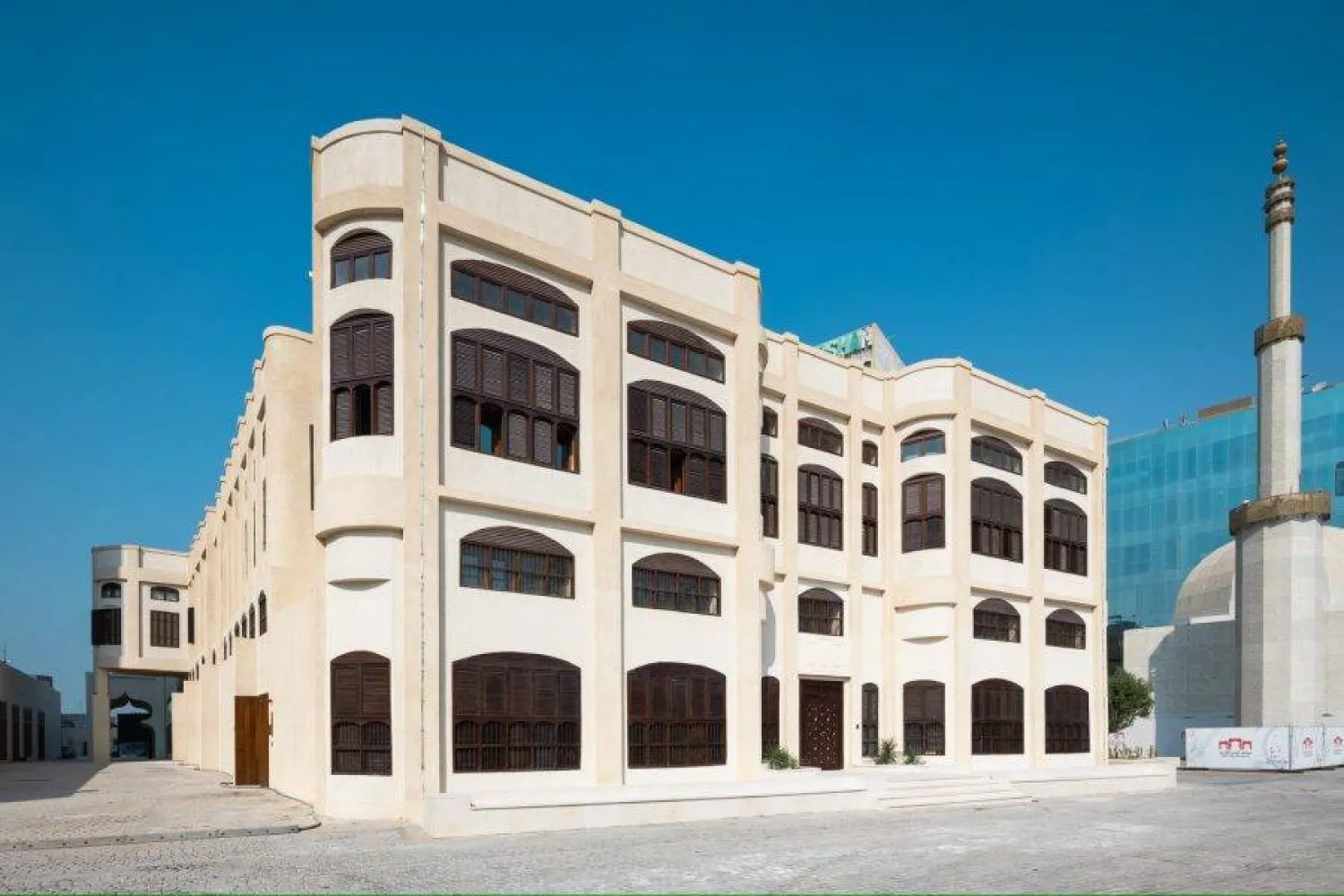
The Red Sea Museum. (Red Sea Museum)
TT

Jeddah's Red Sea Museum Announces Ramadan Program 

The Red Sea Museum. (Red Sea Museum)

Jeddah's Red Sea Museum announced on Thursday a curated program of creative and cultural activities for the holy month of Ramadan, running from February 22 to March 14.

Led by local artists, artisans, and cultural practitioners, the museum's Ramadan program includes contemplative workshops, storytelling sessions, outdoor community gatherings, and musical performances that honor the spirit of reflection, creativity, and connection.

The series of engaging sessions creates space for visitors to explore traditional crafts, contemporary storytelling, and cultural heritage through hands-on experiences blending creativity and reflection.

Curated for families, artists, and visitors of all backgrounds, the program runs alongside "Sunken Treasures: The Maritime Heritage of the Red Sea," the museum's major temporary exhibition opening on February 25, which explores how archaeological discoveries reveal centuries of trade, navigation, and human connection across the Red Sea.

In celebration of Founding Day on February 22, the "Inspirational Threads: Makkah & Madinah" contemplative embroidery workshop invites participants to engage with archival black-and-white photographs of the Red Sea, Makkah, and Madinah. Through basic embroidery techniques, participants can embellish these images with Islamic geometric and symbolic motifs, adding layers of color, texture, and meaning while reflecting on devotion, memory, and connection.

The "Radiance in Pieces: Mosaic Lantern" hands-on workshop on February 24 explores the tradition of Islamic mosaic art through the creation of illuminated lanterns inspired by Red Sea heritage. Children and families will learn how small, colorful pieces come together to form meaningful geometric designs, blending creativity, cultural heritage, and reflection.

The opening evening of "Sunken Treasures: The Maritime Heritage of the Red Sea" on February 25 features a panel discussion with archaeologists, scientists, and historians exploring the maritime heritage of the Red Sea.

The "One Big Table - Ramadan Gathering" on March 5 brings everyone together in a shared space where families, friends, and neighbors celebrate the spirit of Ramadan.

On March 7, the "From Sand to Porcelain" painting workshop invites participants to paint calligraphy on fine porcelain using natural sand collected from Jeddah to add subtle texture and depth. While learning basic porcelain painting techniques, participants will engage in a reflective, hands-on experience that encourages mindful creation, resulting in a personal keepsake that embodies devotion, place, and the spirit of Ramadan.

In the spirit of International Women's Day on March 8, the "Ramadan Spirit: Thread & Needle" hands-on punch needling workshop explores Ramadan iconography through traditional symbols, including the crescent, star, and lantern. Participants will create textured textile pieces while learning basic punch needle techniques, celebrating both the holy month and the creative contributions of women to traditional textile arts.

On March 14, the "Spirit of Ramadan and the Tale of Jabir Al-Khawatir" storytelling session for children and families explores Ramadan as a season of compassion and healing, reminding people that the spirit of the holy month lives in small acts of care and human connection.