


Publishers from Palestine, Lebanon and Sudan Exempted from SIBF 2024 Participation Fees

Sharjah International Book Fair (SIBF) logo
TT

Publishers from Palestine, Lebanon and Sudan Exempted from SIBF 2024 Participation Fees

Sharjah International Book Fair (SIBF) logo

Publishers from Palestine, Lebanon and Sudan will be exempt from participation fees at the 43rd edition of the Sharjah International Book Fair (SIBF), the Sharjah Book Authority (SBA) announced Friday.

This initiative aligns with Sheikh Dr. Sultan Bin Mohammed Al Qasimi, Member of the Supreme Council and Ruler of Sharjah’s vision to foster the growth of Arab publishers and safeguard the region's heritage for future generations. It reflects the Sharjah Ruler's committed and ongoing support for the industry, providing it with the necessary tools and platforms to continue to thrive and be the engine for promoting Arab language, literature and culture worldwide.

SBA Chairperson Sheikha Bodour Al Qasimi stressed that Arab publishers in the region are facing unprecedented challenges, and there is an urgent and critical need to unite efforts to abate the severe hit the industry has taken in the past year.

Highlighting that the future of Arab culture is directly shaped by the strength, efficiency and resilience of its publishing sector, the SBA Chairperson has called for all possible support to enable the industry to overcome its current challenges.

She added: "Sharjah has been, and will always remain, an inclusive haven for Arab culture and intellectuals. The emirate's unwavering commitment to the Arab cultural project is reflected in all our policies and practices. We sincerely hope that future editions of the Sharjah International Book Fair will find our culture, intellectuals and nations thriving in the best possible state."

The exemption is part of Sharjah's central role in enhancing the resilience and efficiency of the Arab publishing sector, ensuring its continuity in uplifting communities, and promoting knowledge and awareness, particularly in light of the targeting, restrictions and blockades faced by publishers, libraries, and cultural institutions, isolating them from their Arab and global counterparts.

Ukraine's 'Origami Deer' Sculpture Rescued from Frontline Tours Europe

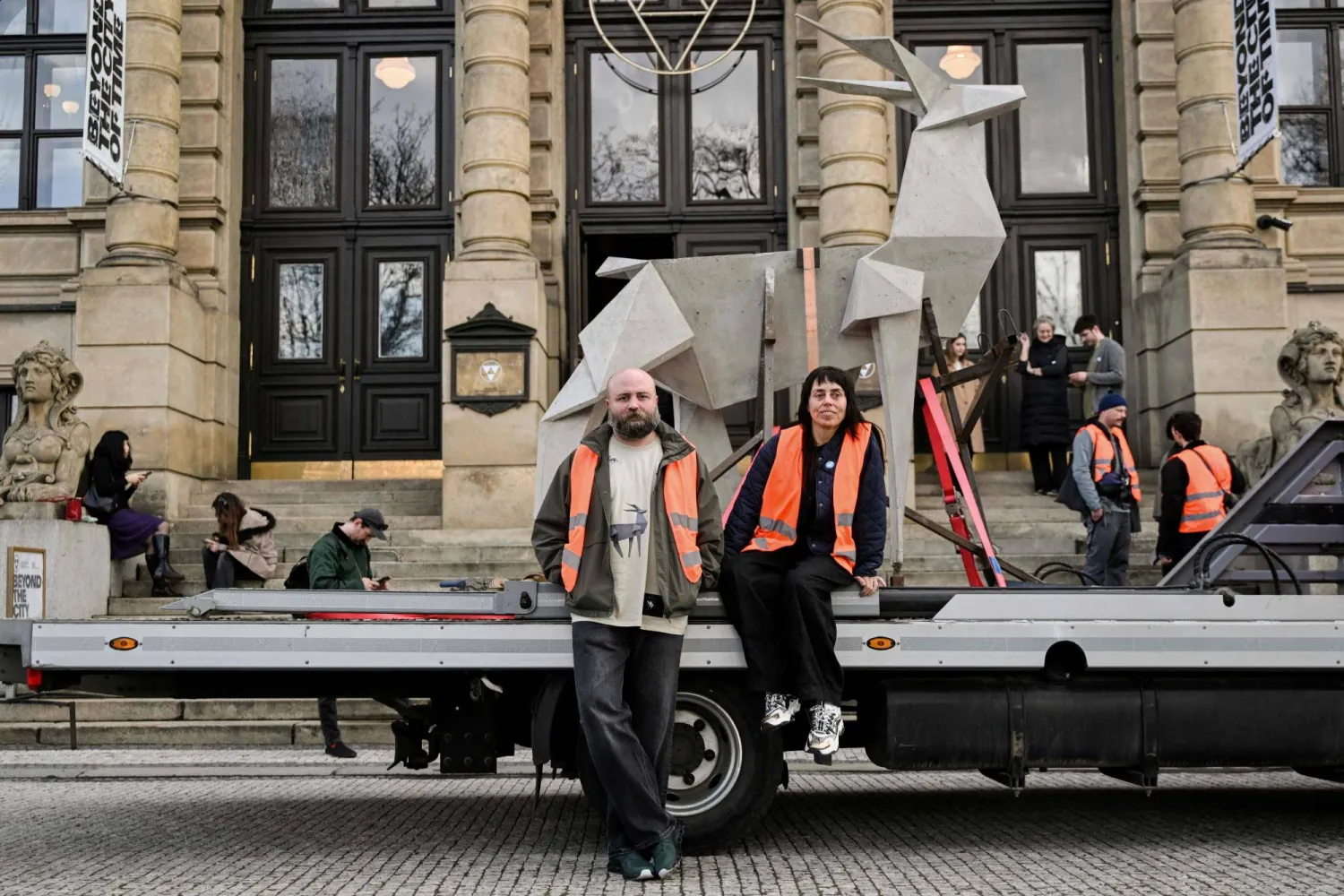
Ukrainian artist Zhanna Kadyrova (R) and Ukrainian curator of the 'Security Guarantees' project Leonid Marushchak pose in front of the 'Origami Deer' sculpture in Prague on March 12, 2026. (Photo by Michal Cizek / AFP)
TT

Ukraine's 'Origami Deer' Sculpture Rescued from Frontline Tours Europe

Ukrainian artist Zhanna Kadyrova (R) and Ukrainian curator of the 'Security Guarantees' project Leonid Marushchak pose in front of the 'Origami Deer' sculpture in Prague on March 12, 2026. (Photo by Michal Cizek / AFP)

An "Origami Deer" statue rescued from a Ukrainian city destroyed and occupied by Moscow's army is touring six European countries before featuring at the 61st Venice Biennale, which has sparked outrage over the inclusion of Russian artists.

Ukrainian artist Zhanna Kadyrova created the concrete work with her colleague Denys Ruban in 2019 for a park in the eastern city of Pokrovsk to replace a Soviet-era military plane displayed there.

In 2024, Kadyrova and historian Leonid Marushchak removed the deer, shaped like a paper origami, as Russian troops closed in and then occupied Pokrovsk.

The sculpture will be the main feature of the Ukrainian pavilion, named Security Guarantees, at the Venice Biennale.

It will feature alongside Russian exhibits at the event that started in 1895 and comprises festivals, art and architecture exhibitions running from May 9 to November 22.

The decision to invite Russian artists, banned from the 2022 and 2024 editions after Moscow's full-scale invasion of Ukraine, has sparked international uproar with the European Union threatening to cut funding for the Biennale.

"It's very important for us to see how the entire world reacts to the situation, supporting us and opposing Russia's participation," Marushchak told AFP.

"If the Russians want to show their culture, they might as well organize a biennale in Pokrovsk which they have destroyed," he added.

En route to Venice, the deer has been exhibited in Warsaw, Vienna and Prague and will continue on to Berlin, Brussels and Paris.

Displaced from its pedestal, the deer symbolizes "millions of Ukrainians who have lost their home" and moved abroad, Kadyrova told AFP during a stopover in Prague.

The resemblance to paper origami refers to the Budapest Memorandum of 1994 which saw Ukraine yielding its nuclear arsenal to Russia in exchange for security guarantees that did not materialize.

"So it's no more than paper," Kadyrova said.

Marushchak has been evacuating works of art from eastern Ukraine since the war started.

He has saved scores of objects, often taking huge risk with his team, to protect them from looting or theft.

One of the most dramatic rescue operations involved a 700-year-old stone lion statue evacuated from a museum in Bakhmut in 2023, just before the Russian army took the city, as Marushchak's car was hit by a shell on the way out.

"Other evacuations were difficult in that we didn't succeed as much as we wanted because the front line was too close and the danger was too big," Marushchak told AFP.

The Venice Biennale typically attracts more than 600,000 visitors to pavilions set up by participating countries.

Kadyrova said the Ukrainian team was not planning any protest over Russia's participation as "it's up to politicians".

"But I hope that some community will gather to pressure the Biennale, pressure Italy, and I hope that it will not happen."


'Talking Drum' Looted by France in 1916 Back in Ivory Coast

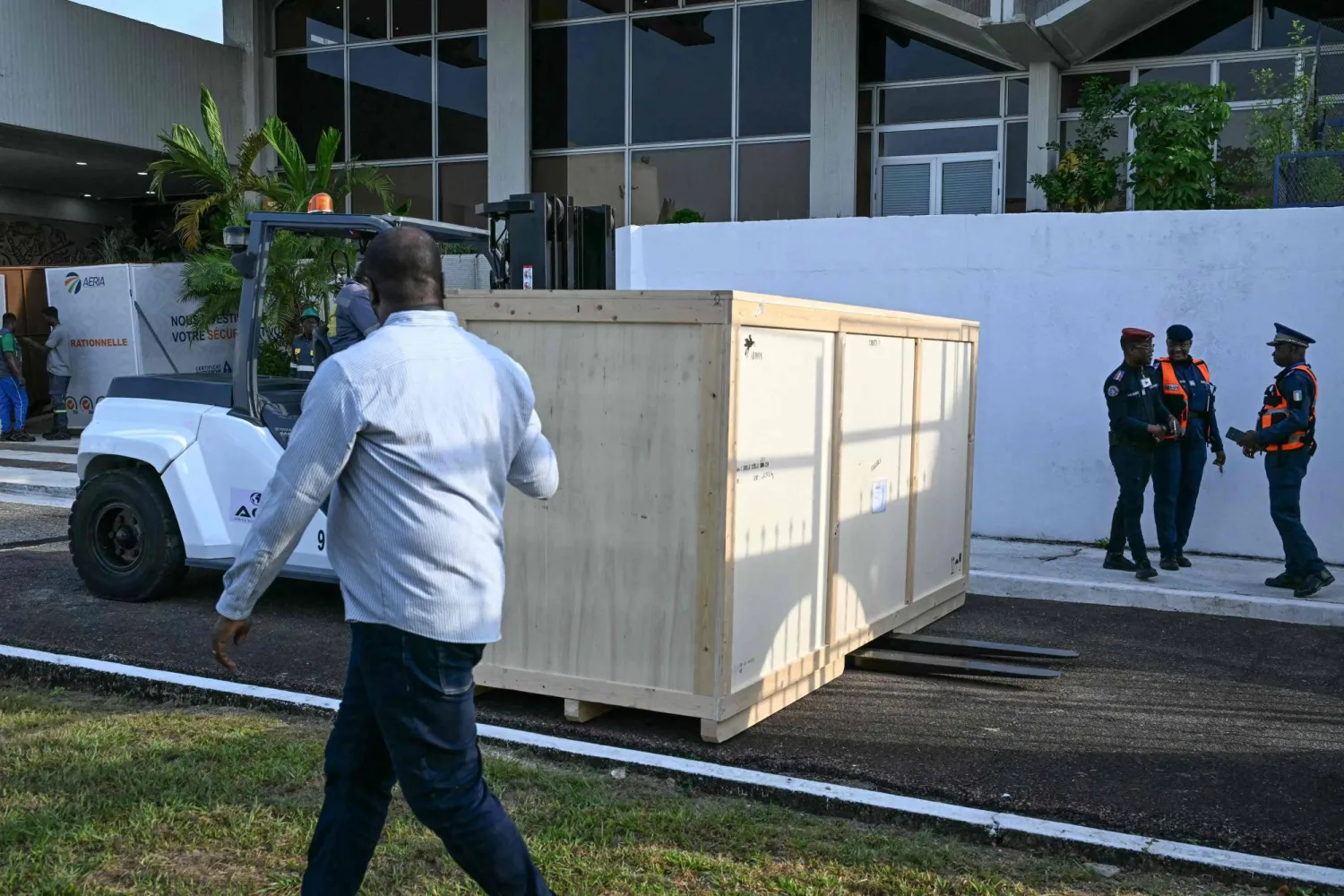
A crate containing the Djidji Ayokwe drum, at the airport in Abidjan, Ivory Coast. (Photo by Issouf SANOGO / AFP)
TT

'Talking Drum' Looted by France in 1916 Back in Ivory Coast

A crate containing the Djidji Ayokwe drum, at the airport in Abidjan, Ivory Coast. (Photo by Issouf SANOGO / AFP)

The Djidji Ayokwe "talking drum", which was looted by French colonial troops in 1916 and taken to France, arrived back in Ivory Coast Friday, in the latest repatriation of stolen artifacts.

The wooden drum, more than three meters (10 feet) long and weighing 430 kilos (950 pounds), was used by the Ebrie tribe to transmit messages.

It was officially handed over on February 20 after France's parliament approved removing the artifact from the national museum collections to enable its return.

Ivory Coast had asked in late 2018 for the return of the Djidji Ayokwe among 148 works of art taken during the colonial period.

It arrived aboard a specially chartered plane at Ivory Coast's main city Abidjan and remained inside a huge wooden crate stamped "fragile", AFP journalists saw.

"It's an historic day and I feel deep emotion," Culture Minister Francoise Remarck said, welcoming its arrival at the airport, where the Ebrie community also sang and played drums.

"We are living a moment of justice and remembrance," the minister added.

French President Emmanuel Macron promised in 2021 to send the drum and other artifacts back home to the west African country.

It is one of hundreds of objects France is preparing to send back to Africa, with the efforts set to be accelerated by the passing of a new law to authorize mass repatriations.

"We are happy and relieved to know that this sacred piece of our culture is back on its native land," Aboussou Guy Georges Mobio, an Ebrie village chief, told AFP.

The drum will initially be held in a "safe space" to allow it to acclimatize, the culture minister said.

It is due to go on display at the Museum of Civilizations in Abidjan which has been specially renovated.

The "talking drum" was used by the Ebrie community to warn of danger, mobilize for war or call villagers to ceremonies.

It was seized by colonial authorities in 1916 before being shipped to France in 1929 and exhibited in Paris.

Senegal and Benin have also asked for the repatriation of their treasures.

In late 2020, the French parliament adopted a law providing for the permanent return to Benin of 26 artifacts from the royal treasures of Dahomey.

The return of cultural artifacts taken from ex-colonies in Africa and elsewhere has become a sensitive issue, with museums, institutions and collectors in Europe and the United States facing pressure to give them back.


Red Sea Fund Launches Second Round to Support Film Projects in Production Stage

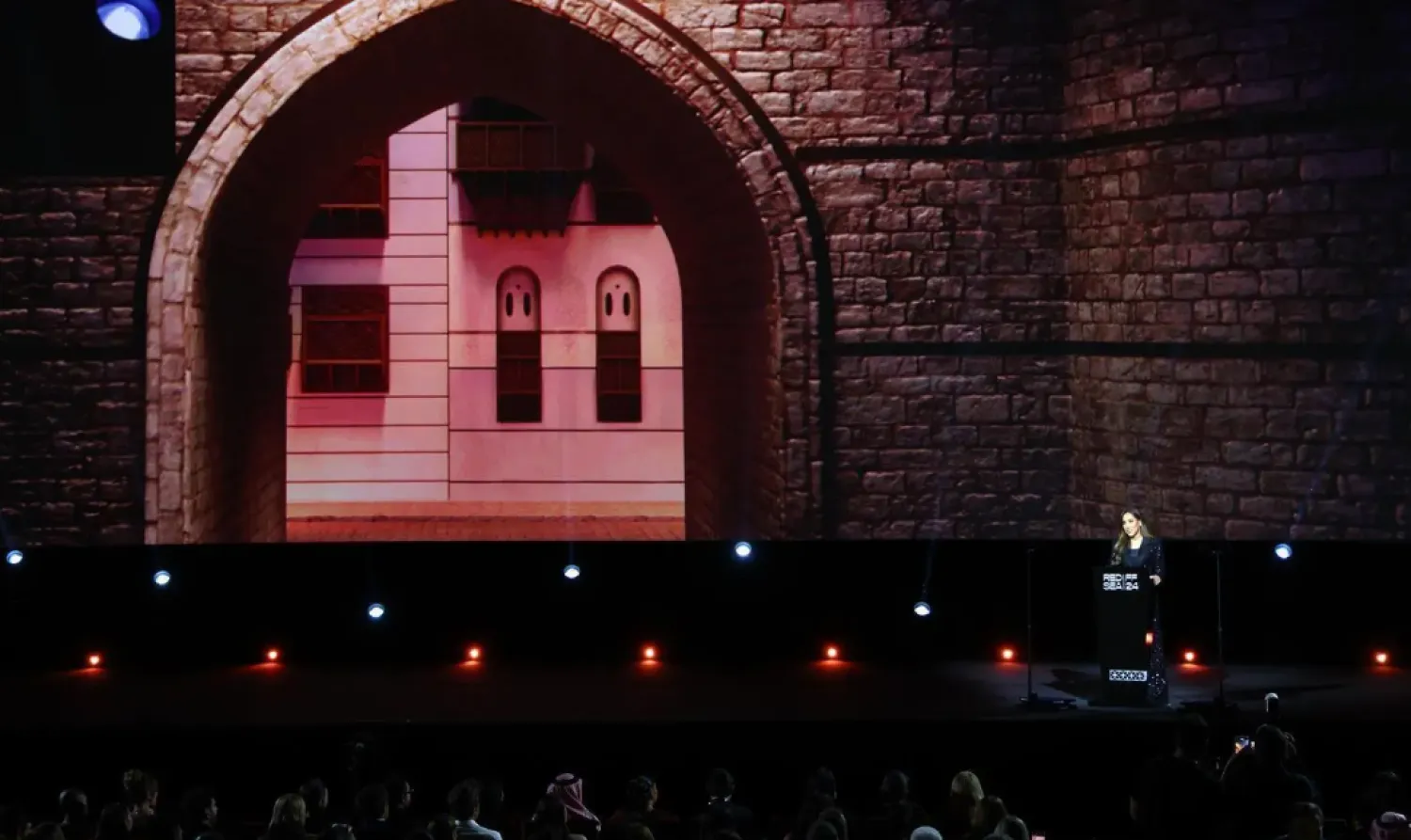
File photo of the fifth day of the Red Sea International Film Festival - SPA
TT

Red Sea Fund Launches Second Round to Support Film Projects in Production Stage

File photo of the fifth day of the Red Sea International Film Festival - SPA

The Red Sea Fund, affiliated with the Red Sea Film Foundation, announced the opening of applications to support film projects in the production stage within the second round of this year’s support program, which will continue until March 21, as part of its efforts to enhance the cinema industry and empower innovators in the region, SPA reported.

The round aims to support promising cinematic voices from the Kingdom and the Arab world, as well as filmmakers from Africa and Asia, through financial grants that help complete film projects and present their creative narratives globally, with a special focus on projects ready to enter production and begin filming.